How Should Buyers Quantify Near-Net-Shape Value for a Multi-Feature Cast Housing?
Buyers should quantify near-net-shape value by comparing the total finished-part route for the same drawing, volume and acceptance standard. Measure billet or stock consumption, material removed, machine setups, fixtures, tool access, cycle time, integrated features, casting tooling, yield, secondary machining, finishing and inspection. Casting creates value only when the formed geometry removes more downstream burden than the casting route adds.
The comparison should begin with a controlled fully machined housing baseline. Use the same alloy requirement where technically possible, the same critical dimensions, surface condition, quantity bands and delivery state. Comparing an unfinished casting with a finished machined housing hides machining, deburring, coating and inspection costs on the casting side.
Establish the Fully Machined Baseline
Break the machined route into material and operations. Record starting stock dimensions and mass, finished mass, roughing and finishing time, number of orientations, soft jaws or dedicated fixtures, long-reach tools, side-hole access, thread operations, deburring, cleaning and inspection. A deep enclosure cavity may create a high removal ratio, while side ports and internal bosses may require several setups even if their cut time is modest.
Do not use machine hourly rate alone. Setup labor, fixture development, tool replacement, work-in-process, inspection between setups and scrap after late operations all affect the delivered part. At low quantity, machining may still win because it avoids production tooling and accepts rapid revisions. The baseline must therefore be calculated at prototype, pilot and annual-volume bands rather than one unsupported break-even number.
Keep design assumptions visible. If a machined version uses sharp internal corners that a casting would replace with radii, or if a cast version adds draft and changes boss geometry, the alternatives are not the same drawing. Record each accepted DFM change and confirm that assembly space, load path, seal boundary and appearance remain acceptable.
Count What the Cast Preform Removes and What It Adds
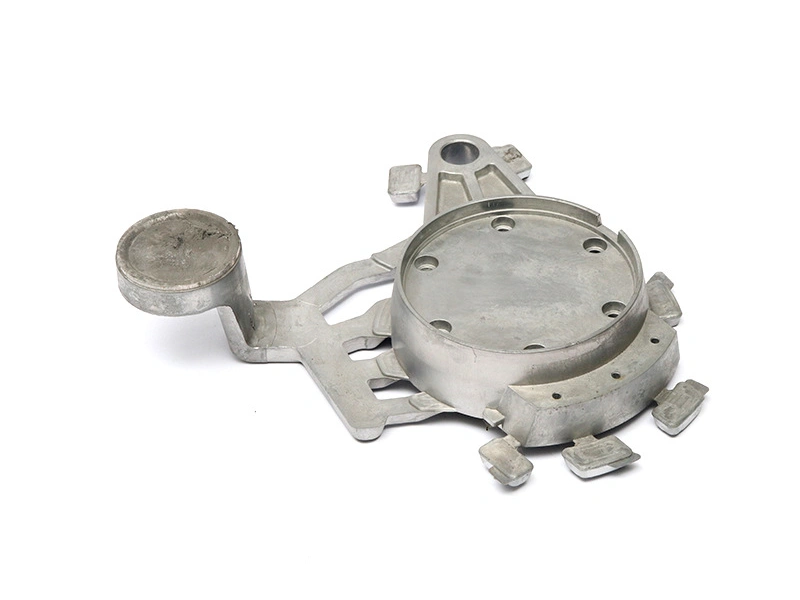
A casting can integrate the outer wall, cavity, ribs, bosses, standoffs, curved contours and pilot openings in one preform. Quantify the operations avoided by each feature. A formed rib may eliminate roughing but not a precision mounting pad. A cast pilot may reduce drilling load but not final hole position or thread quality. A near-net gasket land may still require complete cleanup and flatness control.
Then add casting-specific costs: pattern or die, tool maintenance, samples, process development, trim, deburring, yield loss, machining stock, fixtures, opened-porosity disposition, finish trials and repeat inspection. For custom metal casting, tool cost should be allocated over a realistic demand horizon and expected revisions, not an optimistic lifetime volume that purchasing has not approved.
Housing Feature | Fully Machined Burden | Potential Cast-Preform Value | Evidence to Quantify It |
|---|---|---|---|
Deep enclosure cavity | High material removal, chip evacuation and long roughing cycle | Forms most cavity volume near net shape | Removed mass, roughing time, cast wall variation and cleanup stock |
Rib network | Multiple narrow toolpaths and internal-corner limits | Integrates stiffness features in the preform | Machining time avoided, fill evidence and rib dimensional need |
External bosses | Leaves large local stock or requires separate attached features | Forms local mass for drilling or threading | Boss fill, stock, pull-out duty and final hole process |
Side ports | Additional orientation, fixture access and datum transfer | May form a pilot or surrounding reinforcement | Operations actually removed versus final drilling still required |
Seal face | Direct finishing from stock | Usually little value beyond providing controlled stock | Cleanup, flatness, roughness and leak-test result |
Curved outer contour | Three-dimensional finishing and excess stock | Forms the contour with limited secondary work | Surface requirement, draft acceptance and finishing scope |
Approve Near-Net-Shape Value With Total-Part Evidence
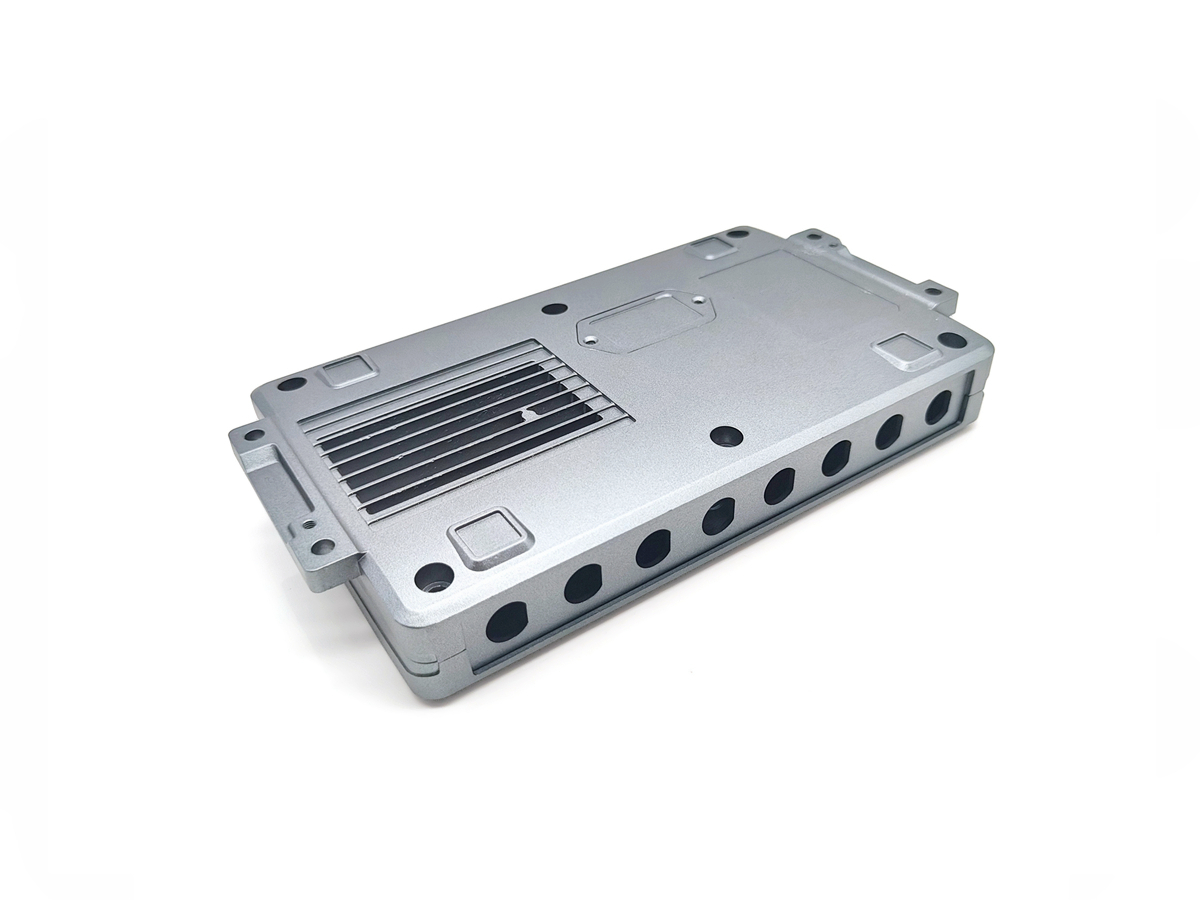
Consider a hypothetical ribbed control housing with a deep cavity, four standoffs, two side ports and one gasket land. The machined baseline uses three orientations and removes most of the starting block. The cast alternative forms the cavity, ribs and standoffs, but still machines the gasket, ports and mounting datums. The correct comparison is not “casting versus CNC price”; it is total route cost and risk at each quantity band.
Run a sensitivity table for annual demand, design-change probability, tooling amortization period, cast yield, machining cycle and inspection. If the result changes dramatically with one optimistic assumption, the decision is not robust. A production route should also include the cost of holding replacement tooling, maintaining fixtures and revalidating after a material, tool or process change.
Confirm value on production-intent samples. Record raw and finished mass, machining time by operation, first-pass yield, dimensional results, finish outcome and any rework. Use the same delivery condition and acceptance rules for both routes. A casting that lowers machine time but increases leak-test failures or cosmetic sorting may not improve total cost.
Before committing tooling, request an application-specific DFM review that identifies formed features, machined features, stock, datums, tool actions and validation gates. The buyer can then approve near-net-shape value as a documented manufacturing case: identified operations removed, identified costs added, a defensible volume range and finished-part evidence tied to the same drawing.