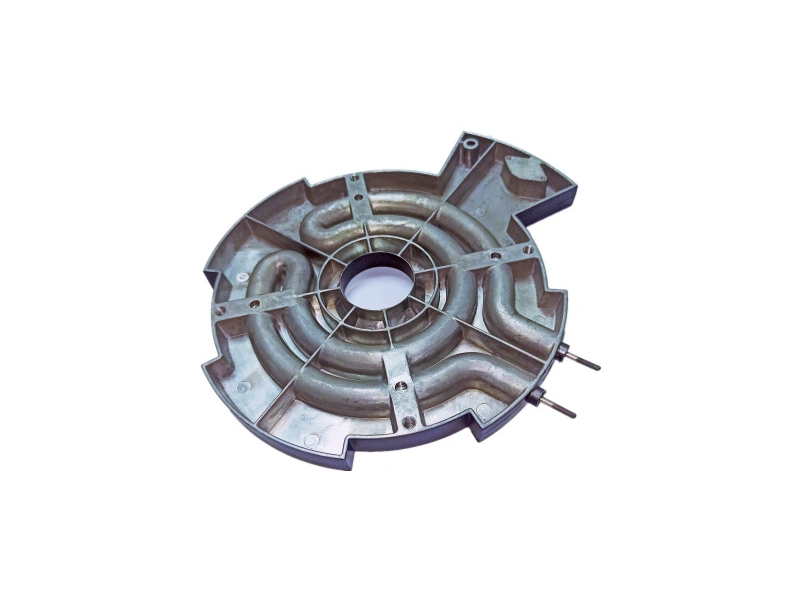
Zinc die casting services are often used for small, complex, decorative, and precision metal parts that require stable dimensions, good surface quality, and repeatable batch production. Buyers commonly need these services for hardware, electronic housings, lock parts, automotive trim, consumer product components, medical device housings, and industrial small parts.
However, choosing a zinc die casting service should not be based only on the lowest quotation. A professional supplier should be able to review the design, recommend the right zinc alloy, build stable tooling, control die casting production, handle CNC post-machining, manage surface finishing, inspect quality, support assembly, and scale production when demand increases.
For buyers sourcing custom zinc die cast parts, the real question is not only whether a supplier can cast zinc parts. The more important question is whether the supplier can manage the complete manufacturing chain from drawing review to ready-to-use delivery.
Buyers searching for zinc die casting services usually already have a clear project need. They may need to produce small complex metal parts, find a zinc alloy die casting supplier, compare zinc with aluminum or plastic, or confirm whether a drawing is suitable for Zamak die casting.
In many cases, the buyer is not only looking for raw castings. They may also need tooling, CNC machining, surface finishing, decorative coating, inspection, assembly, packaging, and repeat production support. This makes supplier evaluation more important than simply comparing unit prices.
Buyer Search Intent | What It Usually Means | Service Capability Needed |
|---|---|---|
Zinc die casting services | The buyer needs a supplier that can manufacture zinc die cast parts. | Die casting production, tooling support, finishing, and quality control. |
Custom zinc die casting services | The buyer has drawings, samples, or application-specific requirements. | DFM review, alloy selection, tooling planning, and custom production support. |
Zinc die cast parts supplier | The buyer needs a long-term supplier for repeat parts. | Batch consistency, inspection records, production capacity, and stable delivery. |
One-stop zinc die casting services | The buyer wants to reduce supplier coordination risk. | Integrated casting, machining, finishing, assembly, and packaging. |
A strong supplier should help buyers move from “Can this part be cast?” to “Can this part be produced consistently, finished correctly, assembled reliably, and delivered on schedule?”
Professional zinc die casting services should include more than die casting production. For custom metal parts, each step affects the next one. Poor design review can create tooling problems. Weak tooling can create casting defects. Unplanned coating thickness can affect assembly. Missing inspection standards can cause batch variation.
That is why buyers should evaluate the complete service scope before choosing a supplier.
Service Area | Buyer Needs | Why It Matters |
|---|---|---|
Design review | Confirm whether the drawing is suitable for zinc die casting. | Reduces tooling changes, casting defects, and production delays. |
Zinc alloy selection | Select Zamak or other zinc alloys based on function and appearance. | Affects strength, hardness, dimensional stability, surface finishing, and cost. |
Tool and die making | Build stable molds for repeat production. | Controls detail reproduction, parting lines, defects, and long-term consistency. |
Zinc die casting production | Produce parts efficiently and consistently. | Affects defect control, cycle stability, and production output. |
CNC post-machining | Machine critical holes, threads, faces, and assembly features. | Ensures functional dimensions and reliable assembly fit. |
Surface finishing | Apply plating, painting, powder coating, polishing, or decorative coating. | Controls appearance, corrosion resistance, coating thickness, and final value. |
Quality inspection | Check dimensions, appearance, coating, function, and batch consistency. | Reduces incoming inspection failures and long-term quality disputes. |
Assembly and packaging | Deliver usable components instead of unfinished castings. | Reduces buyer-side secondary operations and supplier management work. |
A complete zinc die casting service should focus on final part delivery, not only raw casting production. This is especially important for zinc die cast components that require cosmetic finishing, functional machining, or assembly.

Zinc die casting services are especially useful when buyers need small complex parts, fine details, metal appearance, decorative finishing, stable dimensions, and repeat production. However, buyers should still compare zinc die casting with aluminum die casting, plastic injection molding, CNC machining, and sheet metal fabrication before confirming the production route.
Option | Better For | Limitation |
|---|---|---|
Zinc die casting services | Small complex parts, decorative components, precision hardware, repeat production parts. | Heavier than aluminum and less suitable for large lightweight structures. |
Lightweight housings, structural components, heat sinks, and larger parts. | May not be the best option for very fine decorative details or plated small parts. | |
Plastic injection molding | Lightweight plastic shells, insulating parts, and plastic consumer components. | Limited metal feel, strength, and premium plating appearance. |
Low-volume high-precision solid parts and prototype testing. | Higher cost for complex high-volume parts with detailed cast geometry. | |
Sheet metal | Simple thin-wall panels, covers, brackets, and flat structures. | Limited for detailed three-dimensional shapes and integrated small features. |
If a project requires small detailed geometry, metal strength, decorative surface quality, stable tolerances, and high-volume repeatability, zinc die casting services can be more suitable than machining every part from solid material or using plastic for parts that need a metal feel.
Zinc alloy selection is one of the first technical decisions in zinc die casting services. A supplier that only quotes the part without discussing alloy selection may miss important risks related to strength, hardness, surface finishing, wear resistance, dimensional stability, or final use environment.
Common zinc die casting alloys include Zamak 3, Zamak 5, Zamak 7, ZA-8, and Zamak 2. The right choice depends on part geometry, assembly requirements, surface treatment, and working conditions.
Zinc Alloy | Suitable Service Scenario | Buyer Concern |
|---|---|---|
General zinc die casting services, hardware, housings, small components. | Dimensional stability and balanced general performance. | |
Parts requiring higher strength and hardness. | Structural small parts, load-related components, and durable hardware. | |
Thin-wall parts, complex details, and appearance-sensitive components. | Flowability, fine detail reproduction, and surface quality. | |
Parts requiring better strength and wear resistance. | Mechanical parts and functional components with higher performance needs. | |
High-strength and wear-related applications. | Should be evaluated with actual load, surface treatment, and production conditions. |
Material selection should also be connected with surface finishing and assembly planning. A decorative zinc part may need excellent surface quality and plating compatibility, while a mechanical zinc part may require better hardness, wear resistance, and post-machined functional features.
Tooling capability is one of the biggest differences between strong and weak zinc die casting services. The mold determines how well the part fills, where the parting line appears, how visible surfaces are protected, how air escapes, how the part is ejected, and whether the supplier can maintain consistency during long-term production.
A professional tool and die making for zinc die casting process should include DFM review, parting line planning, gate design, venting, ejector pin layout, slider or insert planning, multi-cavity evaluation, trial mold validation, mold maintenance, and mold life control.
Tooling Capability | What Buyers Should Check | Why It Matters |
|---|---|---|
DFM review | Can the supplier identify casting risks before tooling? | Reduces mold modification, production delay, and quality issues. |
Parting line planning | Can visible surfaces avoid obvious parting lines? | Important for decorative zinc die cast parts and plated components. |
Gate and venting design | Can the mold support complete filling and air escape? | Reduces short fill, porosity, flow marks, and surface defects. |
Ejector pin layout | Can ejector marks avoid cosmetic or functional areas? | Protects appearance and reduces secondary finishing problems. |
Slider or insert planning | Can complex holes, grooves, or undercuts be formed? | Supports small complex zinc die cast components. |
Mold material and maintenance | Can the supplier select and maintain suitable tooling material? | H13 mold steel for zinc die casting may be considered when durable tooling performance is needed. |
For long-term sourcing, buyers should not treat tooling as a separate one-time cost. Tooling quality affects sample approval, production stability, surface quality, inspection results, and repeat order reliability.
Many zinc die cast parts require both post-machining and surface finishing before they can be used in final products. Even when zinc die casting provides good as-cast accuracy, critical functional areas may still require CNC machining, drilling, tapping, reaming, or surface control.
Typical areas that may need post-machining for zinc die casting services include threaded holes, hinge holes, locating holes, sealing surfaces, assembly faces, insert areas, mating surfaces, and precision bores. These areas should be defined before tooling so machining allowance and datums can be planned correctly.
Manufacturing Step | Common Requirement | Buyer Risk If Not Planned |
|---|---|---|
Threads, precision holes, hinge areas, mating faces, locating features. | Poor assembly fit, unstable fastening, misalignment, or functional failure. | |
Surface preparation, coating, polishing, protection, and appearance control. | Cosmetic defects, coating failure, corrosion risk, or inconsistent finish. | |
Color control, protection, and decorative appearance. | Color variation, poor adhesion, masking problems, or coating damage. | |
Durable coated surfaces for protection or appearance. | Coating thickness may affect holes, threads, and assembly clearance. | |
Premium visual effect for visible components. | Base casting defects may become more visible after finishing. |
One-stop service becomes valuable when machining and finishing must work together. If zinc casting, CNC machining, plating, coating, and assembly are handled by separate suppliers, responsibility can become unclear when a finished part does not fit or does not meet cosmetic expectations.
Quality control in zinc die casting services should include more than final visual inspection. Buyers should check whether the supplier controls incoming material, first article inspection, dimensional accuracy, thread quality, surface appearance, coating thickness, functional assembly, batch traceability, tooling maintenance, and packaging.
For precision zinc die casting services, small dimensional changes or coating variation can affect assembly and product reliability. A good quality system should define inspection points from sample approval to mass production.
Quality Item | Why Buyers Should Check It | Control Method |
|---|---|---|
Critical dimensions | Affect assembly, movement, alignment, and final product function. | CMM inspection, fixture inspection, gauges, and sampling plans. |
Surface appearance | Affects decorative part value and customer acceptance. | Visual standards, cosmetic defect limits, polishing control, and finishing checks. |
Threads and holes | Affect fastening, positioning, and assembly reliability. | Thread gauges, plug gauges, torque checks, and post-machining inspection. |
Coating thickness | Affects corrosion protection, appearance, and assembly clearance. | Surface finishing inspection, coating thickness measurement, and masking control. |
Batch consistency | Affects long-term supply stability and repeat order reliability. | Process records, sampling inspection, tooling maintenance records, and traceability. |
Quality control should also include packaging inspection, especially for decorative zinc die cast parts. A part can pass casting and finishing inspection but still be scratched or damaged during packaging and transportation if the supplier does not plan protection correctly.
When comparing zinc die casting service suppliers, buyers should look beyond basic quotation. A low unit price may hide risks if the supplier outsources tooling without control, lacks alloy selection knowledge, has weak finishing capability, or cannot manage post-machining and inspection.
A strong supplier should be able to explain how the part will move through design review, tooling, casting, CNC machining, surface finishing, inspection, assembly, and mass production. A weak supplier may only quote the casting blank without identifying downstream risks.
Supplier Capability | Strong Zinc Die Casting Service | Weak Service Risk |
|---|---|---|
Engineering support | Reviews drawings, structure, tolerances, finishing, and assembly risks. | Only quotes according to the drawing without DFM feedback. |
Tooling capability | Designs, builds, tests, modifies, and maintains die casting molds. | Outsourced tooling may create communication and quality control gaps. |
Alloy knowledge | Recommends suitable zinc alloys based on function and finishing needs. | Uses one default material without evaluating application risks. |
CNC support | Controls holes, threads, faces, datums, and assembly features. | Post-machining responsibility may become unclear. |
Finishing support | Controls surface preparation, coating, painting, polishing, and cosmetic standards. | Surface finishing failure may cause rework, rejection, or delivery delay. |
Inspection system | Provides dimensional, visual, coating, thread, and batch inspection control. | Batch quality may be unstable after sample approval. |
Can deliver assembled zinc die casting components when required. | Buyers need to coordinate secondary suppliers and solve fit problems alone. | |
Mass production ability | Supports stable long-term output and repeat orders. | Samples may pass, but production may become unstable. |
For custom zinc die casting services, buyers should evaluate the supplier’s complete manufacturing control instead of focusing only on casting price. The right supplier should help reduce total project risk, not only lower the first quotation.
One-stop zinc die casting services can reduce project risk by keeping design review, tooling, die casting, CNC machining, surface finishing, inspection, assembly, and packaging under one coordinated workflow. This is especially useful for parts that combine cosmetic surfaces, tight functional features, and repeat production needs.
A one-stop zinc die casting services model helps reduce drawing communication errors, tooling and casting responsibility gaps, CNC machining disputes, coating thickness problems, multi-supplier lead time conflicts, quality traceability issues, appearance rework, and packaging risks.
Project Risk | Common Cause | How One-Stop Service Helps |
|---|---|---|
Tooling and casting mismatch | Mold supplier and casting supplier are not aligned. | Tooling and production teams review mold design together. |
CNC dimension dispute | Machining supplier receives castings without proper datums or allowance. | Casting and machining plans are connected before tooling starts. |
Surface finishing failure | Cosmetic surfaces, coating thickness, or polishing needs were not planned early. | Finishing requirements are reviewed during design and tooling stages. |
Assembly problems | Coating thickness, burrs, holes, or thread quality affect final fit. | Machining, finishing, and assembly checks are managed in one workflow. |
Batch quality variation | Process records, tooling maintenance, and inspection plans are disconnected. | Production data and quality records support long-term traceability. |
Delivery risk | Multiple suppliers create schedule conflicts. | Integrated production planning improves timeline control and delivery coordination. |
If a project involves zinc die cast parts, CNC machining, decorative finishing, assembly, or repeat production, integrated zinc die casting services are usually more suitable for long-term cooperation than separating each manufacturing step across different suppliers.
Zinc die casting services should be evaluated as a complete manufacturing capability, not only as a casting process. Buyers should check whether the supplier can support design review, zinc alloy selection, tooling, die casting production, CNC post-machining, surface finishing, inspection, assembly, packaging, and mass production.
For small complex metal parts, decorative zinc components, precision hardware, plated parts, and repeat production projects, choosing an integrated zinc die casting supplier can reduce project risk and improve long-term stability.
Evaluation Area | Key Buyer Question | Recommended Supplier Capability |
|---|---|---|
Design review | Can the supplier identify zinc die casting risks before tooling? | DFM review, drawing analysis, tolerance review, and finishing planning. |
Material | Can the supplier recommend the right zinc alloy? | Zamak 3, Zamak 5, Zamak 7, ZA-8, and application-based alloy selection. |
Tooling | Can the supplier control mold design and maintenance? | Tool and die making, trial mold support, repair, and long-term tooling management. |
Machining | Can functional dimensions be controlled after casting? | CNC machining, post-machining, fixture design, thread and hole inspection. |
Finishing | Can appearance and coating requirements be controlled? | Surface finishing, painting, powder coating, decorative coatings, and cosmetic standards. |
Quality | Can production remain consistent after sample approval? | CMM inspection, visual inspection, coating checks, batch records, and traceability. |
Delivery | Can the supplier support repeat orders and final components? | Assembly, packaging, mass production zinc die casting services, and one-stop delivery support. |
How Can Buyers Compare Zinc Die Casting Services Beyond Basic Quotation?
How Should Buyers Evaluate the Service Scope of a Zinc Die Casting Supplier?
How Do Zinc Die Casting Services Manage Tooling, Sampling and Production Handover?
How Can Buyers Confirm a Zinc Die Casting Service Can Handle Cosmetic and Functional Parts?
How Should Quality Control Be Planned Across Zinc Die Casting Services?