Is AC4C the Same as A413 Aluminum?
AC4C and A413 aluminum are often compared as related casting designations, but they should not be treated as automatically identical for every project. A buyer must confirm the governing standard, chemical limits, product form, casting process, delivered condition, and acceptance requirements before calling one designation an equivalent to the other. Similar use in a supplier catalog is not enough to establish technical or commercial equivalence.
The correct answer depends on what the part and drawing require. If a customer drawing names AC4C, the supplier should quote that designation or submit a controlled alternative for approval. If the drawing names A413, the same discipline applies. The comparison should include the finished geometry, machining, surface treatment, pressure or load function, and inspection evidence. A material label cannot be separated from the route that produces the part.
Compare the Controlling Specification
Start with the source document. Determine whether AC4C or A413 is being used as a formal standard designation, a regional shorthand, an internal purchasing code, or a supplier's stock description. Check the element limits, permitted impurities, product form, condition, and test requirements in the applicable specification. If the part is die cast, also confirm that the specification is appropriate to that process rather than assuming that a designation used for another casting route transfers unchanged.
Record the comparison in the RFQ. Identify the named material, proposed alternative, exact source specifications, and the features that could be affected. If the substitute changes chemistry, fluidity, machining response, corrosion behavior, finish response, or internal-quality expectations, those changes need engineering review. An “equivalent” note without a basis creates ambiguity for purchasing, quality, and the supplier.
Do Not Confuse Name With Process
A part made from a related alloy designation can still differ because of casting method, die or mold design, section geometry, filling, cooling, trim, and heat treatment. High-pressure die casting, gravity casting, sand casting, and low-pressure casting do not create the same microstructure or internal condition. The buyer should state which route is intended and whether the material requirement applies to the melt, the casting, or the final machined component.
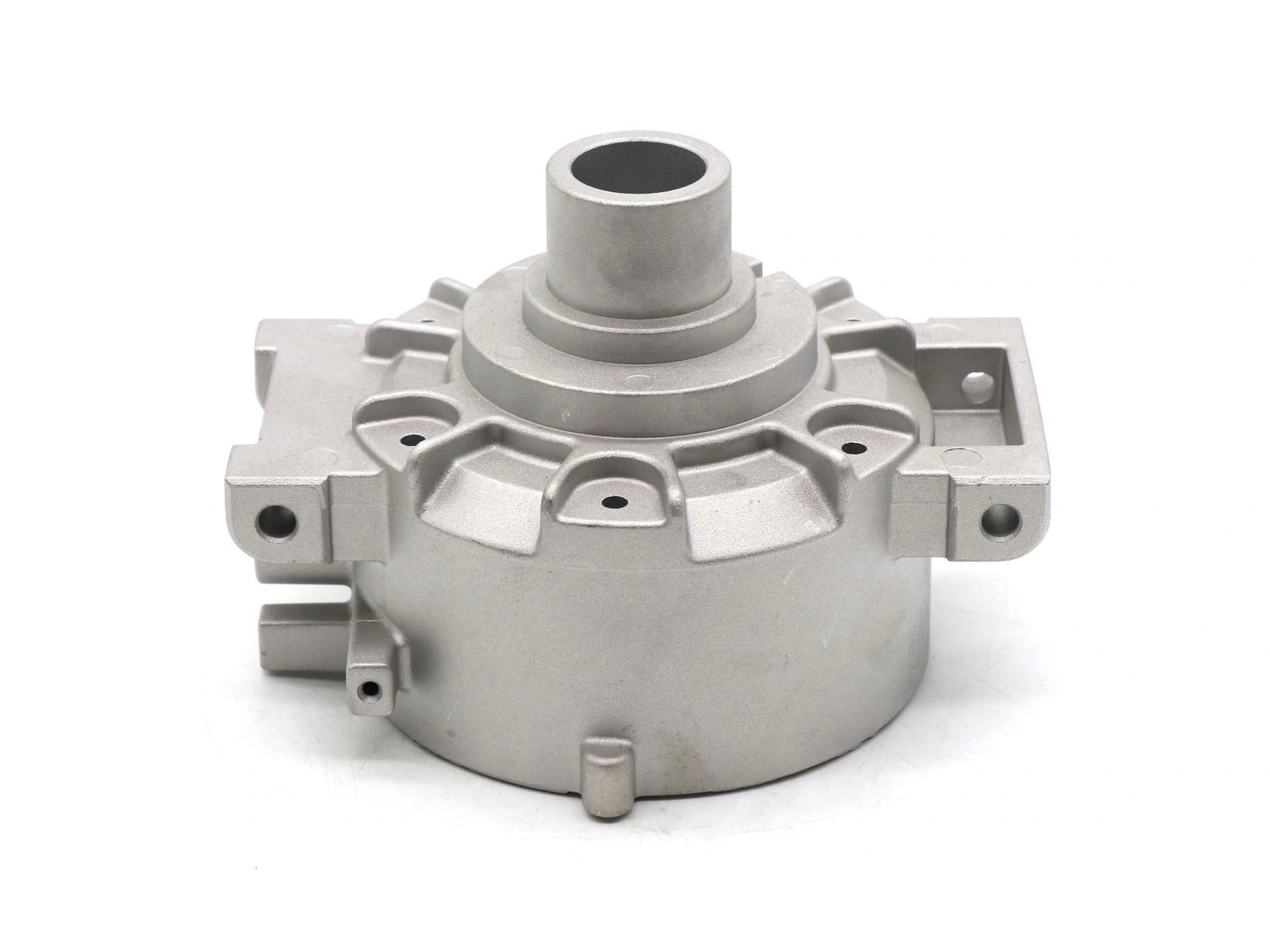
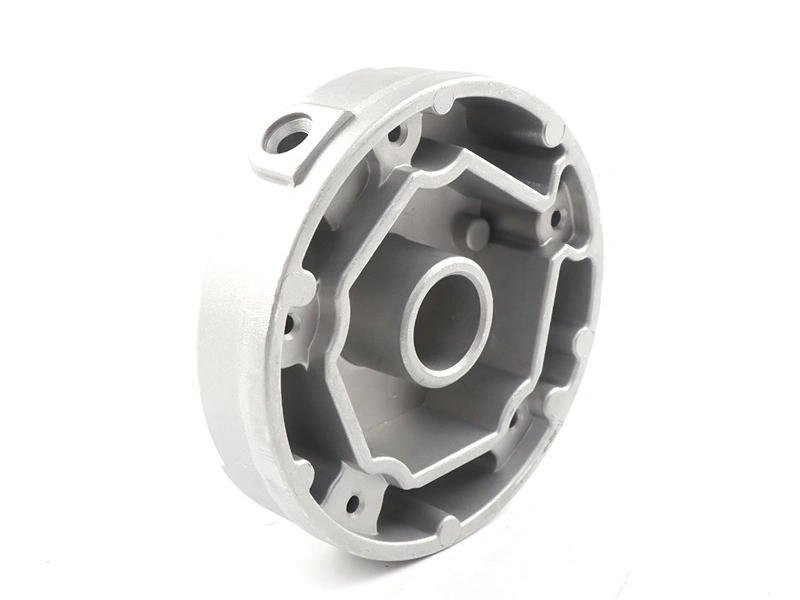
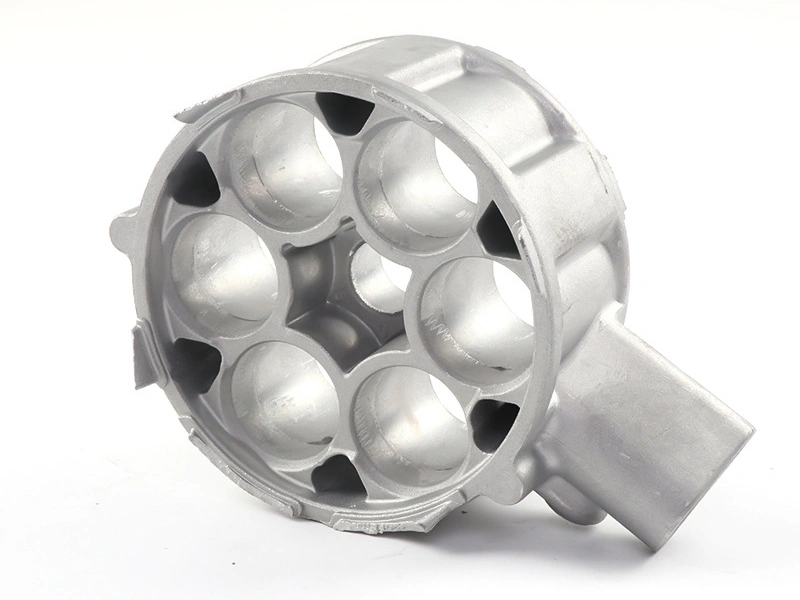
For a housing or bracket, inspect the sections that matter: thin walls, rib junctions, bosses, flanges, deep pockets, and machined pads. A designation comparison made on a simple coupon cannot prove that the alternative will behave the same in the production part. Review the proposed route through AC4C aluminum die casting and ask which design and process assumptions remain open.
Check Machining and Finish Effects
Machining can expose differences that are invisible in a raw casting. Bores, gasket lands, threaded holes, and datum faces may remove the outer casting skin and reveal a discontinuity. Cutting behavior, burr formation, tool wear, surface texture, and dimensional stability can also differ between a named grade and a proposed substitute. The drawing should identify the stock, datums, final dimensions, and inspection state.
Surface treatment is another boundary. Polishing, conversion treatment, powder coating, plating, or painting can reveal local texture or respond differently to surface constituents. If the part has a visible face, grounding pad, or protected interface, approve the alternative on production-representative geometry. Do not use a supplier's catalog photograph as proof that a different designation will produce the same finish.
Comparison item | What can change | How to close the question |
|---|---|---|
Specification | Element limits, impurities, condition, and test basis | Record the controlling standard and material certificate requirements |
Casting route | Filling, cooling, internal condition, and distortion | Review actual tool, process, and representative samples |
Machining | Stock removal, burrs, tool behavior, and exposed subsurface condition | Run the intended operation and inspect the finished interface |
Finish | Texture, appearance, adhesion, and coating response | Approve a sample with the actual preparation and finish |
Control an Equivalent-Material Request
If a supplier requests permission to use AC4C in place of A413, or A413 in place of AC4C, require a written deviation or engineering change. It should name the old and new designation, the source specifications, the reason, the affected features, the process changes, the evidence required, and the effective lot or date. Existing inventory should be identified so that parts made under different material bases are not mixed without review.
For a pressure, fatigue, sealing, or load-bearing part, define the validation needed for the alternative. For a cosmetic or general-purpose part, define the appearance, machining, and dimensional checks that matter. The same equivalence decision may be acceptable for one component and unsuitable for another.
What Buyers Should Write
Write the exact designation, applicable standard, process, condition, inspection records, and alternative-approval rule in the RFQ. If the grade is open, ask the supplier to compare candidates against the part function and finished route. AC4C and A413 may be close in a particular application, but only a documented specification and representative evidence can establish whether the comparison is valid for the part being purchased.