Is Brass Suitable for Potable Water Fittings?
Brass can be suitable for a potable-water fitting when the exact alloy, product design, manufacturing route, surface condition, and applicable drinking-water requirements are approved for the intended contact. “Brass” by itself is not a compliance declaration. A buyer must identify the governing market or customer requirement, confirm the proposed material and any restrictions on alloy constituents, and verify the completed fitting rather than relying on color, a generic alloy family, or a supplier's broad capability statement.
The decision also depends on the part's function. A connector, valve body, adapter, manifold, or threaded fitting may expose different surfaces to water. A fluid-contact bore can behave differently from an external cosmetic face. Threads and seals can retain deposits. A pressure boundary can contain a casting discontinuity that is not visible before machining. The approval scope should identify the material, fluid-contact surfaces, pressure features, finish, cleaning, and inspection state.
Define the Actual Requirement
Before selecting an alloy, record where the part will be sold or installed, what customer specification applies, and whether the fitting carries treated, heated, or intermittent water. Include pressure, temperature, flow, stagnation, cleaning, storage, and contact duration where they affect the application. The product owner or compliance team should identify the applicable regulation or certification route. The supplier can provide material and process records, but those records do not replace the customer's responsibility to define the approval requirement.
Do not infer approval from a material name alone. Different grades within a brass family can have different composition limits, machining behavior, casting behavior, and suitability for fluid contact. An alternative alloy should be reviewed against the same contact and documentation requirement. If the requirement is uncertain, do not release the material as potable-water compliant. Mark the assumption and obtain a decision from the responsible product team.
Control Casting and Machining
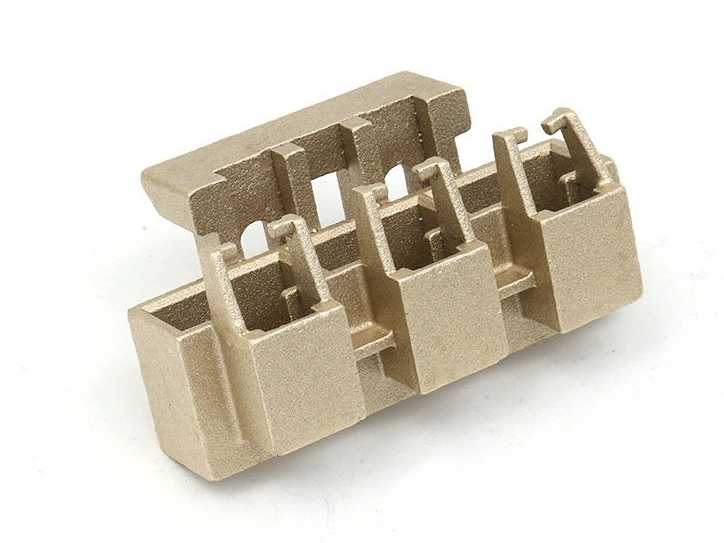
A suitable alloy still needs a controlled casting process. The drawing should show the pressure boundary, cored passage, threaded port, valve seat, gasket land, and any fluid-contact surface. Gates, parting lines, flash, cold shuts, inclusions, shrinkage, and connected porosity should be considered in the casting review. A fitting can look clean on the outside and still contain an internal condition that becomes relevant when a bore or thread is machined.
Machining should define datums, allowance, final geometry, burr removal, cleaning, and inspection. A deep bore may expose a discontinuity. A rough thread can retain chips or sealant. A seat can leak if its position or surface is not controlled. The finished component, not only the rough casting, is the relevant state for a water-contact assessment. Neway's copper-alloy casting route should be quoted with the finished fitting scope if machining and inspection are part of the deliverable.
Release item | Question to answer | Evidence to retain |
|---|---|---|
Material | Does the exact alloy meet the defined contact requirement? | Material designation, lot traceability, and required records |
Fluid path | Are bores, seats, threads, and walls identified? | Released drawing and finished-part inspection |
Cleanliness | Are chips, residues, and process contaminants controlled? | Cleaning method, inspection, and packaging condition |
Function | Does the completed fitting seal and hold the required pressure? | Defined leak or pressure test and disposition record |
Review Finish and Assembly Materials
Some fittings use plating, conversion, paint, polishing, or another surface treatment. The finish may affect appearance, cleanability, corrosion exposure, dimensions, and the behavior of the water-contact interface. The specification should identify coated and uncoated areas, surface preparation, masking, film control, adhesion or appearance criteria, and any restriction on contact with the fluid. A finish cannot compensate for a pore, poor seat, or contaminated internal passage.
Review the complete assembly. Pipe, fasteners, springs, inserts, sealants, gaskets, lubricants, and cleaners can introduce dissimilar-metal or chemical interactions. A thread may be damaged during installation and expose the substrate. A sealant may trap deposits. The representative assembly should be considered when those effects could influence leakage, corrosion, cleanliness, or approval.
Use the post-process service scope to state the finish and cleaning condition, but do not accept a vague “food safe” or “potable” phrase in place of the applicable requirement and evidence. The product record should connect the material, casting, machining, surface treatment, and final inspection.
Verification and Document Control
Verification should be selected to answer the actual release question. Material records support alloy identity. Dimensional inspection checks the water path, wall, thread, seat, and gasket land. Leak or pressure testing checks a defined integrity requirement. A corrosion or contact exposure may be needed when the application requirement calls for it. Cleanliness checks should reflect the finished internal surfaces and packaging state. No single document proves every part of the claim.
Keep the released alloy, drawing, finish, cleaning method, supplier process, inspection plan, and change history aligned. If the alloy, plating, seal, cleaner, pipe material, or casting route changes, review whether the earlier approval remains valid. Do not extend evidence from a decorative sample to a pressure or water-contact part without checking geometry and assembly.
RFQ Inputs for Potable-Water Brass Fittings
Send the drawing and model, exact alloy or approved material range, target market, water-contact definition, pressure, temperature, flow, mating materials, threads, seals, finish, cleaning, packaging, quantity, and required records. Mark all fluid-contact features and identify whether the quote covers a casting, machined fitting, finished component, or assembled product. Ask the supplier to list assumptions and exclusions.
Ask how the supplier will verify material identity, casting soundness, machined interfaces, cleanliness, and final function. If the supplier proposes an alternative brass, require a comparison against the same contact restriction and evidence plan. The decision should be made before tooling or production release, because changing an alloy after the casting route and machining fixtures are established can alter more than material cost.
So, brass is not automatically unsuitable or automatically approved for potable water. It can be a viable choice only within a defined contact requirement and a controlled finished-part process. The buyer should approve the exact alloy and records, identify the water path, verify casting and machining quality, and test or document the finished assembly as required by the application.