What Is Brass 380 Used for in Die Casting?
Brass 380 can be used for selected copper-zinc alloy cast components when the part needs a combination of strength-related performance, machinability, metallic appearance, and a defined corrosion or service response. Suitable uses must be decided from the component function and qualified casting route. The grade name alone does not prove pressure tightness, wear life, corrosion life, or universal suitability. A housing, fitting, valve component, hardware part, and decorative item can require different evidence even when all are described as Brass 380 die castings.
Buyers should start with the environment and the interfaces. Identify whether the part contacts water, chemicals, lubricants, dissimilar metals, or a cleaning process. Mark bores, threads, sealing faces, mounting pads, wear surfaces, and visible areas. State which surfaces will be machined, polished, plated, painted, or left as-cast. Those details determine whether Brass 380 is a reasonable candidate and what the supplier must prove.
The intended production quantity matters because tooling and process development are part of the decision. A geometry that is economical with a dedicated die may be handled differently for a limited run or a prototype. If the part will later change to another alloy or process, keep that possibility visible in the design review. The first approved sample should represent the route and finished condition that the buyer intends to purchase.
Component Types to Consider
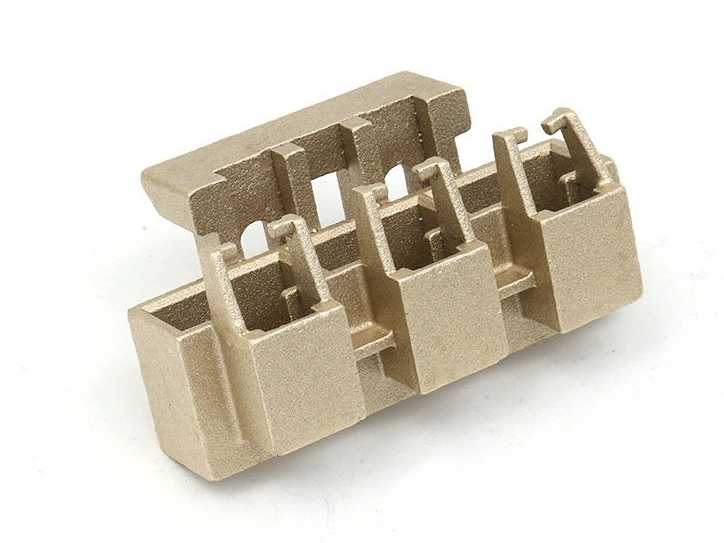
Brass 380 may be considered for cast hardware, covers, fittings, brackets, housings, and other shapes where a copper-alloy material and a machinable finished feature are useful. The route must suit the geometry. A thick boss, thin wall, deep pocket, or narrow passage can create filling, solidification, or machining concerns. A part designed for aluminum or zinc die casting may not transfer directly to a Brass 380 process because melting practice, tool thermal load, wear, and surface behavior differ.
Threads and bores deserve special attention. The rough casting may provide a pilot or boss, while the finished thread or bore is produced by drilling, tapping, boring, or another operation. The final feature should be inspected from the functional datum. If a part relies on a cored passage, the core must leave stable stock and the finished wall must be checked. Do not choose the alloy by looking only at the outside shape.
Service Environment Sets the Limit
Copper-zinc alloys can respond differently to water chemistry, salts, cleaners, galvanic contact, temperature, and stress. Brass 380 should be reviewed against the actual exposure rather than described as corrosion-proof. If the part carries fluid or pressure, define the medium, pressure range, temperature, cycles, sealing arrangement, and test condition. The grade may be a candidate, but the casting process and internal quality still need to support the finished boundary.
Wear is also application-specific. A rotating or sliding surface may need a different alloy, insert, surface treatment, lubrication strategy, or machining finish. A decorative surface may prioritize polishability and appearance, while a concealed bracket may prioritize geometry and assembly. The correct choice follows the failure mode that matters to the customer.
Potential use | Decision question | Evidence to plan |
|---|---|---|
Machined housing or cover | Can the casting leave stable stock for bores, faces, and threads? | Machining datum, stock map, final dimensions, and assembly check |
Fitting or fluid component | Will the finished boundary remain sound under the defined medium and test? | Internal-risk review, final machining, leak or pressure test, and lot record |
Hardware or bracket | Do strength, fastener load, finish, and corrosion conditions fit? | Material record, geometry review, finish approval, and functional test |
Visible decorative component | Can the alloy and surface route produce the approved appearance? | Representative finish sample, edge review, cleaning, and appearance limit |
Casting and Finishing Must Be Quoted Together
The Brass 380 die-casting route should be reviewed with tool design, gates, vents, cooling, ejection, trimming, machining, and finish. A material that looks suitable in a datasheet may create a different tool-wear or surface-preparation question in production. If the part is plated or polished, inspect the actual cast surface and the transitions around ribs, bores, parting lines, and trim zones.
Include the finished state in the purchase scope. A casting-only quote, a machined-part quote, and a plated-part quote are different commercial offers. Their quality evidence should not be compared as though they describe the same component.
When Brass 380 Is Not the Answer
Another copper alloy, aluminum, zinc, steel, or a different production route may be more appropriate when the required pressure, conductivity, wear, corrosion, temperature, or finish evidence cannot be obtained with Brass 380. That is not a rejection based on the name; it is a consequence of the application and the available validation plan. Document any alternate grade and its affected requirements before production.
Brass 380 is best treated as a candidate material for a defined part and process. Its use is approved when the alloy record, casting route, machined interfaces, surface treatment, service condition, and inspection evidence agree.
When the purchase is for a finished component, include the post-machining scope in the comparison. A casting-only price does not answer whether the required bores, threads, faces, or seal surfaces can be delivered.