Which Electric Vehicle Components Are Best Suited to Metal Casting?
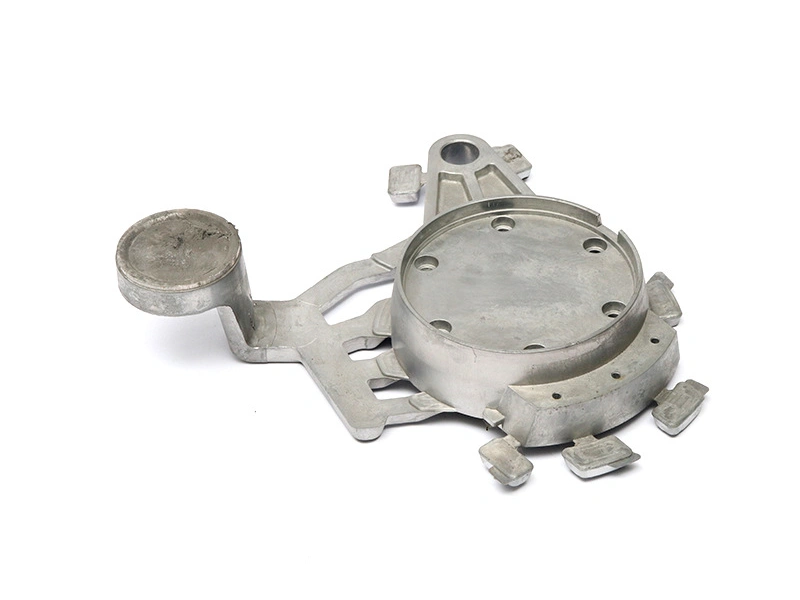
Electric vehicle components are best suited to metal casting when they need three-dimensional load paths, integrated bosses or passages, stable mounting interfaces and repeat quantities that justify tooling or pattern investment. Structural brackets, motor or power-electronics housings, thermal carriers and complex connector supports are common candidates. Suitability still depends on project-specific loads, sealing, corrosion, thermal duty and validation.
A component is a weak casting candidate when its geometry is mainly constant-section, flat and easily formed, when annual demand cannot support the proposed tooling, or when the required properties and tolerances would force most of the shape to be machined away. Buyers should compare a finished casting route with fabrication, extrusion, forging and billet machining before authorizing tooling.
Screen Geometry Before Choosing a Casting Route
Casting creates value through shape. A bracket with several attachment planes can place ribs between loads, support bosses and include cable-clearance features in one blank. A housing can combine a cover flange, internal standoffs, connector openings and external heat-dissipation geometry. If those features would otherwise require several joined parts, casting may simplify the assembly and reduce interface variation.
The same geometry also creates manufacturing constraints. Deep pockets need draft and ejection access. Long thin walls need a feasible filling path. Heavy bosses connected to thin walls can increase shrinkage and distortion risk. A broad sealing flange requires stiffness, controlled machining stock and a defined leak boundary. The buyer should ask for a DFM review tied to the selected process rather than approving a CAD shape because it merely looks castable.
Match Component Families to Their Functional Risks
Component Family | Why Casting May Fit | Critical Risk to Define | Buyer Validation Decision |
|---|---|---|---|
Battery module bracket or equipment carrier | Ribs, bosses and mounting planes can follow several load paths | Local stress, interface flatness, distortion and joint corrosion | Define datums, load cases, assembly state and risk-selected evidence |
Motor or gearbox-adjacent housing | Complex outer form can surround locating bores and internal clearances | Bore relationship, stiffness, vibration response and sealing where applicable | Specify final machined geometry and project functional tests |
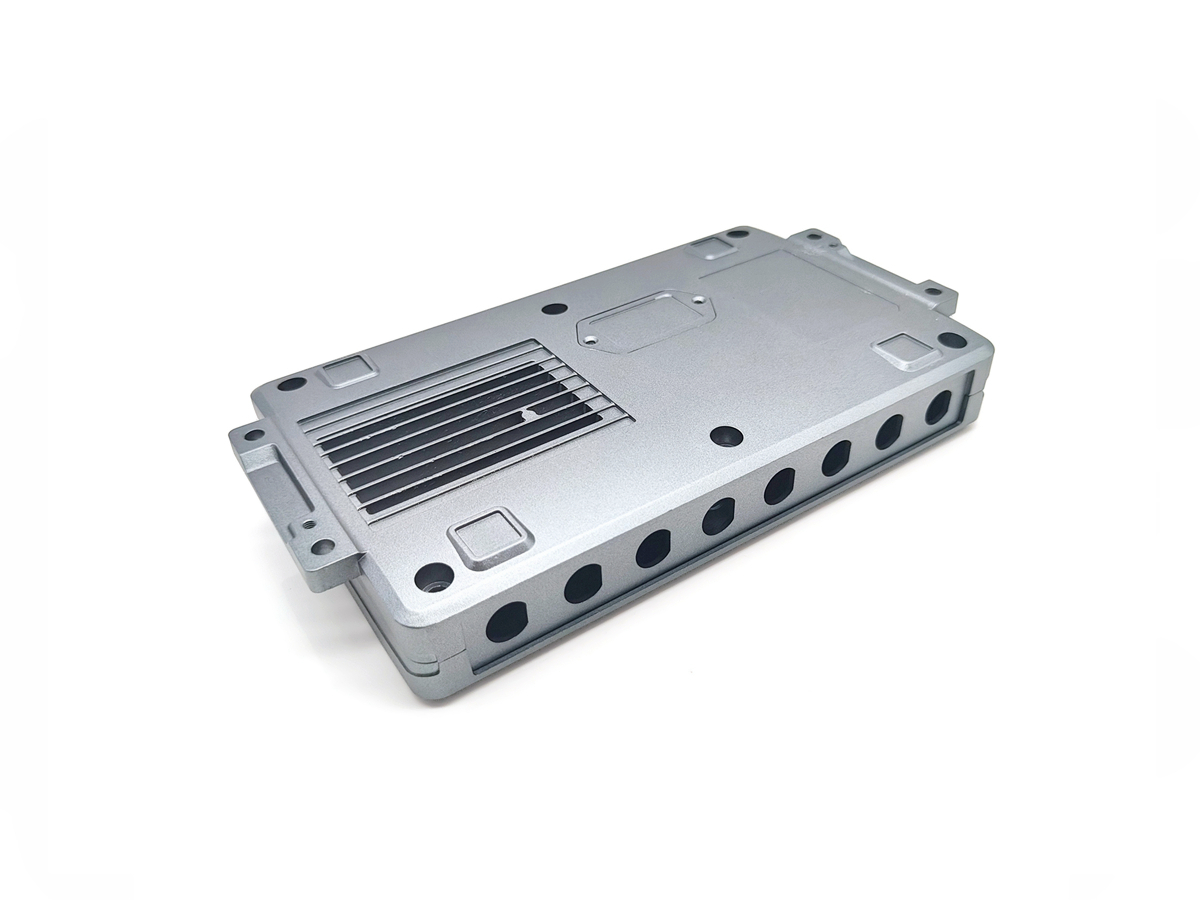
Inverter or charger enclosure | Mounts, cover flange, connector zones and thermal features can be integrated | Flange flatness, machined leak paths, thermal contact and corrosion | Map the delivered boundary and validate only to named conditions |
Thermal carrier or fluid-distribution body | Passages, ports, fins and attachment points can share one structure | Wall integrity, flow restriction, flatness and cleanliness | Define flow, leak, thermal and cleaning evidence from function |
Connector or cable-support casting | Small bosses, protective walls and multiple orientations can be formed together | Thread integrity, edge damage, electrical isolation and dissimilar-metal contact | Specify location, retention, finish and environmental checks as applicable |
Structural components benefit from casting only when ribs and section depth serve real load paths. A thicker wall everywhere is not a substitute for analysis. The buyer should identify loads at each attachment, allowable deflection, assembly torque, restraint and service environment. Any structural conclusion must remain limited to the specific component classification, material condition, load case and validation method.
Thermal and electronic housings need a similarly narrow definition. A visible fin field does not establish heat-transfer performance, and a continuous-looking wall does not establish leak integrity. The drawing should name thermal-contact lands, sealing faces, ports, connector interfaces and post-machined conditions. Aluminum die casting may fit intricate production geometry, but its process assumptions and porosity strategy must match those functions.
Recognize When Another Process Fits Better
Sheet-metal fabrication can fit a tray, cover or frame dominated by bends and accessible welds, especially at lower volume or when design changes remain likely. It can also provide separate replaceable panels. The trade-off is more joints, heat-affected distortion and sealing work. Buyers should compare weld access, datum accumulation, corrosion at seams and inspection burden with the casting alternative.
Extrusion can fit rails, heat sinks and enclosures with a nearly constant cross-section. It avoids a complex cavity die and can provide efficient longitudinal fins, but transverse bosses, closed three-dimensional passages and multiple mounting planes require secondary operations or attached parts. Forging may be considered where a compact load-bearing part needs a property route aligned with directional working, while geometry integration is less important.
Billet CNC machining can be the better early route for very low quantities, evolving geometry or highly accessible material properties. It removes tooling delay and supports rapid revisions, but material waste and cycle time can become unattractive as volume rises. Additive or prototype processes may help evaluate packaging and assembly, yet their results should not be assumed to qualify a later casting route.
Use a Finished-Route Comparison for the Sourcing Decision
A cable-junction mounting frame illustrates the route screen. It has two connector planes, four bolted feet and a protective wall. A casting concept integrates the wall, bosses and feet. A fabricated concept uses bent sheet, welded blocks and machined pads. The correct comparison includes finished mass, joint count, connector position, corrosion treatment, fixture count, tooling cost, expected lot pattern and the evidence needed after all operations.
If the design is stable and recurring demand supports the tool, the integrated casting may reduce parts and locate the connector planes from shared datums. If connector positions are still changing or demand remains small, fabrication or machining may preserve flexibility. Neither route is released until its own dimensional, environmental and assembly risks have an agreed validation plan.
Ask suppliers to quote the same deliverable: cast or formed blank, machining, deburring, inserts, finish, function tests, inspection, marking and packaging. A blank price cannot be compared with a finished-part price. A relevant automotive aluminum casting reference may prompt questions about machining and durability, but it does not establish application fit for the new component.
The purchasing action is to issue a one-page route screen before tooling approval. List geometry integration, function, material constraints, annual and order quantities, expected design stability, downstream operations, major failure risks and required evidence. Authorize casting only when its integration and production benefits remain credible after those finished-route costs and project-specific validation obligations are included.