Casting vs Forging: Which Process Lowers Production Costs
Casting usually lowers production cost when complex geometry, internal passages, thin sections or part consolidation avoid extensive machining and assembly. Forging usually lowers cost when a relatively solid shape needs dependable fatigue, impact or highly stressed-section performance and the forged grain flow permits a smaller, simpler or longer-lived component. Neither process is inherently cheaper. Compare functionally equivalent designs at the same alloy, demand and acceptance boundary, then calculate cost per accepted delivered component.
A casting and a forging should rarely share identical geometry. Casting places molten metal into a mold and creates properties through solidification, while forging plastically deforms solid stock and can orient grain flow around the part. A valid comparison allows each route to use geometry suited to its process. Quoting one drawing unchanged can make the favored process look artificially expensive or technically weak.
Define functional equivalence first
Start with load cases, stiffness, fatigue spectrum, impact, operating temperature, corrosion, pressure or leak duty, wear, electrical or thermal needs and service life. Mark the consequence of failure and identify the surfaces that transfer load. These requirements determine whether casting, forging or both remain technically credible.
Do not compare a lightweight ribbed casting with a solid forging only by mass or piece price. The casting may integrate covers, bosses and passages; the forging may carry higher local stress with less section. Compare the delivered assembly, including fasteners, joints, seals, machining and field maintenance. The cheaper blank is not always the cheaper product.
What casting changes in the design
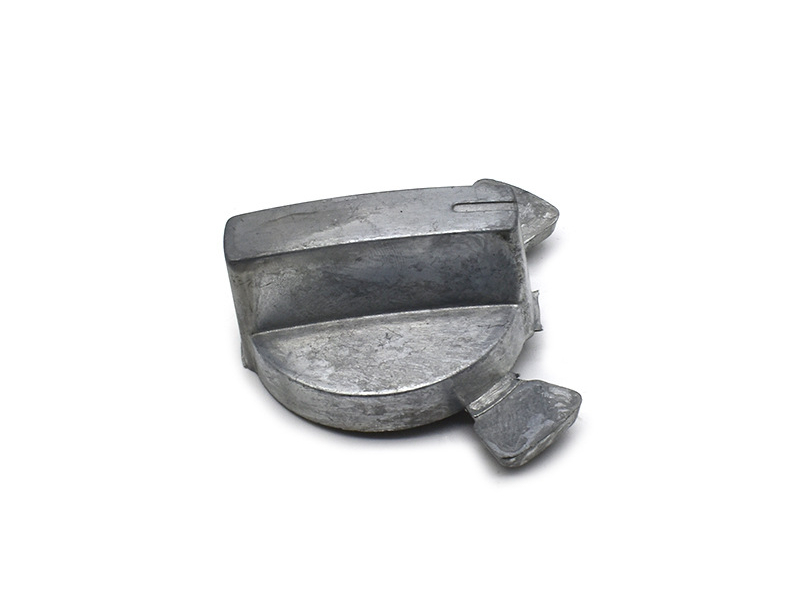
Metal casting offers several process families rather than one cost structure. Sand casting uses expendable molds and can accommodate large envelopes, broad alloy choices and internal cores. Permanent-mold and low-pressure routes use reusable dies for suitable geometries. High-pressure die casting fills a steel die rapidly and can produce thin walls, integrated detail and high output. Investment and centrifugal casting serve other combinations of alloy and geometry.
Solidification governs casting quality. Feed paths, thermal gradients, section changes and melt handling affect shrinkage, gas entrapment, oxide films, inclusions, hot tearing and distortion. A technically sound casting design uses gradual transitions, controlled heavy sections, practical gates and feeders or overflows, and inspection tied to the relevant defect. The term cast does not predict quality without the route and control plan.
What forging changes in the design
Forging compresses and redirects solid metal through open dies, impression dies, rings, rolls or cold-forming tools as applicable. Properly developed flow can follow a shaft, eye, web or load path and improve resistance to some fatigue and impact failures. That benefit depends on billet quality, reduction, temperature, die fill, flash, trimming and heat treatment. It is not created simply by labeling a part forged.
Forging is best suited to shapes that metal can flow into without folds, laps, underfill or excessive die load. Draft, generous transitions, split location and preform sequence matter. Deep pockets, thin webs, sharp corners and enclosed channels may require multiple operations or later machining. Complex forged geometry can consume the property advantage through expensive tooling and poor process stability.
Select alloy, product form and route together
Use exact material standards. Casting and wrought or forging grades are not interchangeable even when their common names look similar. Chemistry, heat treatment, grain structure, section size and specimen location affect properties. A forged grade may not fill a mold well, and a casting grade may not be supplied as suitable forging billet.
Ask both suppliers to propose a valid grade against the same functional envelope. For casting, confirm chemistry, melt controls, process route and cast-product test location. For forging, confirm billet source, reduction and flow plan, heat-treatment condition and property orientation. Material certificates alone do not prove that the finished component meets the design duty.
Geometry often decides the cost winner
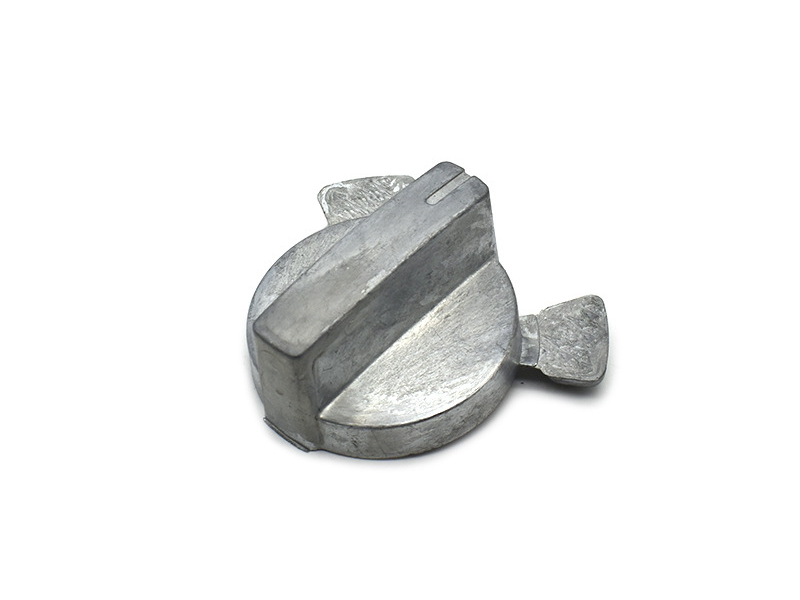
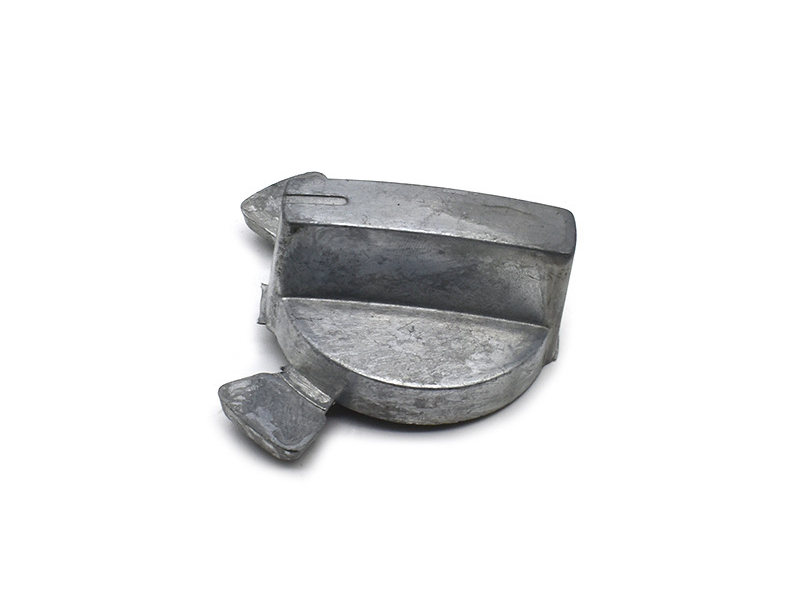
Casting gains economic leverage from shape creation. Housings, pump bodies, heat-management structures and covers can integrate ribs, bosses, mounting features and passages. This may eliminate weldments, fasteners and large amounts of cutting. Sand casting can use cores for passages, while aluminum die casting can integrate thin features and repeatable external detail where the flow path is credible.
Forging gains leverage from simpler load-carrying shapes. Shafts, rings, connecting features, hubs and gear blanks may need fewer material-property concessions than a casting. A forging can still require substantial machining to create holes, teeth, sealing surfaces or final datums. If most of the forged envelope becomes chips, compare a near-net preform, a different split, or a cast-and-machine route.
Compare tooling and launch work
Casting tooling may include patterns, core boxes, dies, slides, trim tools, inserts, cooling, fixtures and gauges. Forging can require blocker and finisher dies, preform tooling, trim dies, heating and handling equipment, fixtures and gauges. Initial price depends on part size, material, projected rate, tool life, die actions and change risk. Generic tooling ranges do not support an award.
Request tooling ownership, maintenance, replaceable inserts, major-repair terms, storage and transfer information. Include simulation, samples, destructive development work and qualification. The tool-and-die scope should identify exactly what the buyer receives and which production assumptions support the price.
Measure material utilization honestly
Casting consumes metal in gates, runners, risers, biscuits and overflows depending on the route. Forging consumes billet allowance, flash, crop ends, scale and machining stock. Internal returns may be recoverable, while oxidation, contamination or alloy controls limit reuse. Neither process automatically has superior yield.
Calculate purchased metal per accepted part. Include density and redesign: a lighter aluminum casting and a steel forging are not comparable by yield percentage alone. For expensive alloys, request net mass, starting or shot mass, recoverable return, external scrap credit and loss assumptions. A high nominal yield can still lose money if late-stage quality yield is poor.
Cycle time must follow the complete route
High-pressure casting can have a short casting cycle, yet trimming, leak testing, machining or coating may constrain delivery. Hot forging may use rapid press strokes, while billet heating, transfer, scale removal, trimming and heat treatment determine total output. Open-die work follows another pattern. Comparing seconds per stroke with seconds per shot is not a capacity model.
Ask for accepted pieces per hour or shift through the full manufacturing route. Include cavity count, press or machine availability, batch heat treatment, inspection and planned maintenance. A single high-speed cell does not protect launch if a unique die or downstream fixture has no capacity backup.
Count machining, finish and assembly
Identify which dimensions can remain as formed and which require post-machining. Casting stock must clean up despite draft, distortion and local surface condition. Forging stock must cover die mismatch, scale, decarburization if relevant and flow variation. Both routes need stable datums and enough allowance without wasting material.
Machining cost follows setups, accessibility, cutting tools, workholding, burr control and inspection. Casting can reduce the machined envelope through integrated geometry; forging can provide a consistent load-bearing blank but may need extensive removal. Compare the operation sheet, not the vague phrase near net shape.
Surface protection and appearance may include blasting, conversion, plating, painting or other post-processing. Preparation, masking, rack points and heat exposure can change cost and performance. Specify final zones and tests for both routes.
Compare different defect mechanisms
Casting risks include shrinkage, gas, oxide films, inclusions, cold shuts, hot tears and surface-connected porosity. Forging risks include laps, folds, underfill, bursts, die mismatch, improper flow, decarburization or heat-treatment variation as applicable. Either route can contain unacceptable defects; forging should not be described as defect free, and casting should not be rejected merely because porosity is possible.
Map each critical zone to a failure mode and test. Visual inspection, dimensional measurement, radiography, ultrasonic testing, penetrant or magnetic-particle inspection, sectioning, hardness and mechanical tests provide different evidence. Material, geometry and flaw orientation determine effectiveness. Use available testing equipment only through a written method and acceptance criterion.
Pay only for mechanical performance the part needs
Forging can be valuable where cyclic load, impact, fracture resistance or highly stressed directional sections govern. Its flow and low-discontinuity process can reduce design risk when properly controlled. Still, heat treatment, surface condition, grain-flow orientation and transitions determine actual performance. A generic forged strength claim cannot replace finished-part evidence.
Casting can meet demanding duties when alloy, route, geometry and quality controls are matched to the load. Low-pressure, gravity, sand, investment, vacuum-assisted HPDC and other routes produce different defect populations and property conditions. Do not rank them without the part. Place critical loads away from thermal hot spots and gates or feeders where the process review indicates risk.
Review forging flow against the actual load path
A forging drawing should show intended parting, preform sequence and grain-flow direction around eyes, fillets and section changes. Flow that follows the principal load can support fatigue resistance; severed flow at a heavily machined surface or an unfavorable fold can remove that advantage. Ask the forge to explain where billet ends, flash and die closure lie relative to highly stressed zones.
Macroetch, sectioning or other suitable metallographic evidence can confirm flow during development. Finished-part mechanical tests should sample the orientation and section that control design. A tensile bar taken from a convenient low-stress location does not prove fatigue behavior at a machined fillet. This evidence belongs in forging cost because development sections, sample forgings and test coupons consume real material and capacity.
Compare heat treatment and dimensional recovery
Both cast and forged routes may require solution treatment, quench, aging, normalizing, quench-and-temper or stress relief depending on alloy. Heat treatment changes strength and hardness but can also distort thin walls, long shafts and asymmetric sections. The quote should state condition at each machining stage and whether straightening is expected.
Review furnace batch size, traceability, quench transfer, section response and property sampling. Forging does not remove heat-treatment variation; casting does not make distortion inevitable. Locate machining datums so movement can be recovered without excessive stock. Include rejected straightening, reheat limits and dimensional reinspection in cost when these are credible risks.
Consider a hybrid structure when functions conflict
Some assemblies contain a complex low-stress envelope and one concentrated load path. A cast housing with a forged shaft, ring or insert can assign shape creation to casting and fatigue duty to forging. The concept is worthwhile only when the added interface costs less than forcing one process to satisfy both extremes.
Price the insert, placement or assembly, machining relationship, retention method, galvanic or thermal effects and inspection. If an insert is cast in, address cleanliness, preheat, bonding or mechanical lock and movement during fill. If assembled later, address tolerance stack, press load, fasteners, seals and serviceability. Hybrid does not mean free performance; it moves risk to the interface.
Include fatigue and lifecycle cost without inventing savings
If field failure drives high service, warranty or safety cost, include it in the decision. Use verified load spectra, environmental exposure and failure consequence. Forging may justify greater conversion cost when it enables a smaller section or reduces a known fatigue risk. Casting may reduce lifecycle cost by eliminating joints, leak paths and assembly errors.
Do not insert an assumed failure-rate reduction. Compare validated fatigue curves, component tests, inspection plans and field evidence relevant to the exact material and route. Where evidence is immature, assign a validation task or risk allowance rather than claiming a lifecycle benefit.
Avoid treating all casting as one option
A casting-versus-forging study should first select a credible casting route. A large low-volume steel component may point to sand or investment casting, while a thin high-volume housing may point to HPDC. Zinc die casting can fit detailed hardware, and copper-alloy casting can serve conductivity, wear or corrosion functions under suitable process conditions.
Each route carries distinct tooling, yield, rate and quality assumptions. If a supplier compares forging only with an unsuitable casting process, the result is predetermined. Ask the engineering team to show why the proposed casting family fits alloy, geometry and acceptance.
Use demand shape and change risk
Provide prototype, launch, annual, lifetime and peak demand, plus order frequency and service-spares need. Closed-die forging and HPDC can both require major tooling; sand casting or open-die approaches can reduce capital under other conditions. No fixed volume threshold selects the process because part size, dies, material, cavities, press rate and downstream work differ.
Design maturity matters. A low-volume manufacturing route may protect a changing program, but prototypes made by machining, soft tools or another alloy do not validate final casting or forging structure. Document which conclusions transfer and which must be repeated.
Normalize the cost comparison
Decision area | Casting question | Forging question | Common comparison basis |
|---|---|---|---|
Geometry | What features, cores or passages are formed? | What preforms, die stages and machining are needed? | Functionally equivalent delivered design |
Material | Cast grade, melt practice and property location? | Billet grade, reduction, flow and heat treatment? | Same service and acceptance requirements |
Yield | Shot, gates/feeders and stage quality yield? | Billet, flash/crop, scale and stage quality yield? | Purchased metal per accepted part |
Tooling | Mold/die, cores, slides, trim and maintenance? | Preform, blocker/finisher, trim and maintenance? | One-time cost at realistic demand |
Downstream | Machining, finish, tests and assembly? | Heat treatment, machining, finish and tests? | Accepted delivered component |
Build a two-route RFQ package
Send a functional specification plus route-specific drawings or allow suppliers to propose them. Include CAD, material envelope, quantities, load cases, critical zones, heat treatment, tolerances, machining, finish, tests, documentation, packaging, destination and launch timing. Ask each supplier to list exclusions and identify required versus optional design changes.
Separate tooling, development, validation and recurring price. Require net and starting material mass, expected stage yields, accepted production rate, maintenance, tool ownership and capacity. Compare quotations with the same commercial terms and approval plan. A single unit-price line conceals the assumptions that decide the winner.
Use decision gates before committing capital
At concept, reject routes that cannot meet alloy, geometry or property needs. At preliminary design, compare route-specific CAD, mass, tooling and operation maps. Before tool release, close DFM actions, material condition, critical zones, inspection and demand assumptions. After first samples, approve only when dimensions, defects and functional tests support the process model.
Record what would reverse the selection: lower lifetime demand, a new fatigue load, an added passage, a tighter leak criterion or a supply constraint. This sensitivity review prevents sunk tooling cost from becoming the reason to retain the wrong process. It also gives procurement a controlled basis for handling quote changes after design maturity.
Choose the lower-risk total cost
Select casting when its shape freedom and consolidation save more than its tooling, process control and quality costs. Select forging when material flow and stressed-section performance save more than its preform, dies and machining costs. If both routes pass, calculate program cost at conservative and expected demand, then challenge the largest risk with representative trials.
The defensible answer is often conditional: casting for a complex integrated housing, forging for a fatigue-loaded link, or a forged insert assembled into a casting when each material path serves a different function. The objective is not to prove one process superior. It is to purchase the least costly validated component over the program life.
FAQs
What successful cases does Newway have in copper alloy die casting?
What is difference in electrical conductivity between copper and aluminum die castings?
In plumbing, how many years of corrosion resistance can brass die castings typically provide?
Which post-processing can further enhance the wear resistance of copper die castings?
For both high strength and excellent electrical conductivity, which copper alloy is recommended?