Can aluminum die castings replace steel in load-bearing machinery?
Aluminum die castings can replace some steel load-bearing machinery parts, but only after the component is redesigned and validated for aluminum. A direct shape-for-shape substitution is usually a weak assumption because aluminum has lower density and lower elastic modulus, while strength, fatigue, creep, wear, threads and casting integrity depend on the selected alloy and process. The correct decision is based on load path and failure modes, not weight alone.
Begin with the existing steel part's real duty
Document forces, moments, bearing loads, bolt preload, impact, vibration, thermal gradients and accidental overload. Separate strength from stiffness: a part can remain below its yield limit yet deflect enough to misalign a shaft, open a seal or change gear contact. Identify whether the steel part also supplies wear resistance, a hardened surface, weldability, magnetic behavior, grounding or heat capacity.
Then review the full assembly. Mating steel fasteners, bearings, bushings and copper conductors can create local pressure, thermal expansion or galvanic issues. Maintenance practices matter as well. Repeated bolt service, field impact or exposure to alkaline cleaner may control suitability even when the nominal static load is modest.
Compare failure modes, not just tensile strength
| Design question | Why aluminum differs | Possible response | Evidence |
|---|---|---|---|
| Will deflection remain acceptable? | Lower elastic modulus can increase movement in the same geometry | Increase section depth, add ribs, close an open section or shorten load span | Analysis and displacement measurement under defined restraint |
| Will cyclic life be adequate? | Local casting condition and notch geometry affect fatigue response | Reduce stress concentration, move defects away from load path and validate representative parts | Component or justified specimen fatigue test |
| Will joints survive? | Threads and bearing faces can need more local support | Increase engagement, use inserts or redesign joint geometry | Torque-tension, pullout or joint cycling as applicable |
| Will hot load remain stable? | Strength and time-dependent deformation change with temperature | Review alloy, section, preload and thermal path | Temperature-conditioned load or durability test |
| Will surfaces resist wear? | Aluminum may not replace a hardened steel contact directly | Use a bushing, insert, coating or separate wear element | Wear test under actual load, lubrication and contamination |
Use die casting to redesign the architecture
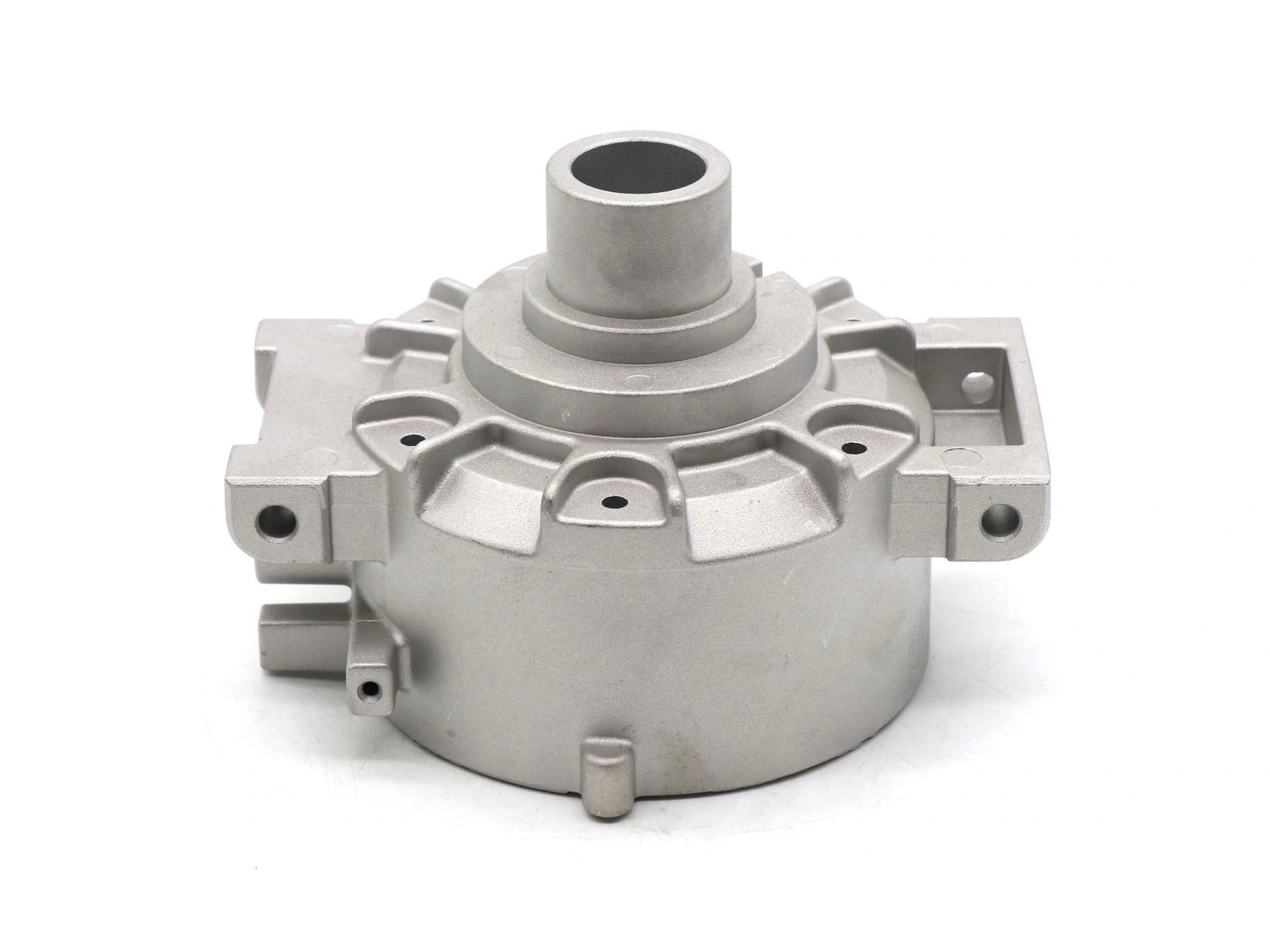
The opportunity is often feature integration. HPDC can combine ribs, bosses, covers, mounting pads, cable routes and thermal features that required several steel pieces. That may reduce assembly operations and place material farther from the neutral axis, improving stiffness efficiency. It also introduces parting lines, draft, ejector marks, flow paths and local wall constraints that must be considered in the structural model.
A pre-tooling DFM review should connect structural features with fill and ejection. Very heavy rib intersections can create local thermal and integrity risks. Thin isolated ends can be difficult to fill. A slide used to reproduce a steel undercut adds tool cost and a witness line. The replacement should exploit the process rather than reproduce every steel detail.
Select alloy and local interfaces deliberately
Aluminum die casting includes several alloy options, but no grade solves every load condition. Choose from the service temperature, corrosion environment, casting geometry, machining, finish and available validation data. Do not use a handbook ultimate tensile value as the sole design allowable.
For bolted joints, define clamp load, washer or flange area, thread form, engagement and number of service cycles. For bearing seats, define interference, wall stiffness, operating temperature and retention method. For wear, consider replaceable steel or bronze elements. Isolate galvanically dissimilar materials where the environment makes the couple relevant.
Check mass and cost at assembly level
Aluminum density creates a mass opportunity, but added section, inserts and coating reduce the simple material-ratio saving. Calculate the redesigned casting plus all retained hardware. Compare center of gravity and dynamic response, not only total mass. A lighter moving component may reduce inertia; a lighter base may instead reduce damping or stability.
Commercial comparison should include die, casting, trimming, machining, inserts, finish, inspection, assembly, maintenance and expected volume. Steel fabrication may remain preferable for low demand or frequent revisions. HPDC may become attractive where feature integration and repeated production offset dedicated-tool investment. The answer depends on the demand profile and full production route.
Validate the replacement in stages
First validate assumptions through analysis and prototype geometry. A machined prototype can check fit and some load behavior but does not reproduce HPDC flow or internal condition. Next test production-intent castings for dimensions, relevant internal regions, proof load, fatigue, thermal duty, joint performance and assembly behavior. Use loads, fixtures and acceptance limits that match the product requirement.
Finally, confirm production controls. Identify key casting regions, machining datums, cavity traceability, inspection frequency and reaction plan. If strength relies on a local region remaining free of a defined discontinuity, specify the region, inspection method and acceptance reference. General visual approval cannot carry that requirement.
Decision inputs
Existing steel material, process, mass and failure history.
Loads, restraints, deflection limits, temperature, vibration and service life.
Wear, thread, bearing, sealing, welding, grounding and maintenance functions.
Packaging available for ribs or greater section depth and all mating components.
Annual demand, change outlook and validation budget.
Test methods and production evidence required to approve replacement.
Use aluminum when the redesigned system meets stiffness, strength, durability, interface and environmental requirements with representative evidence, and when the complete commercial route supports the program. Retain steel or use a hybrid structure where wear, compact stiffness, temperature or low-volume economics remain decisive.