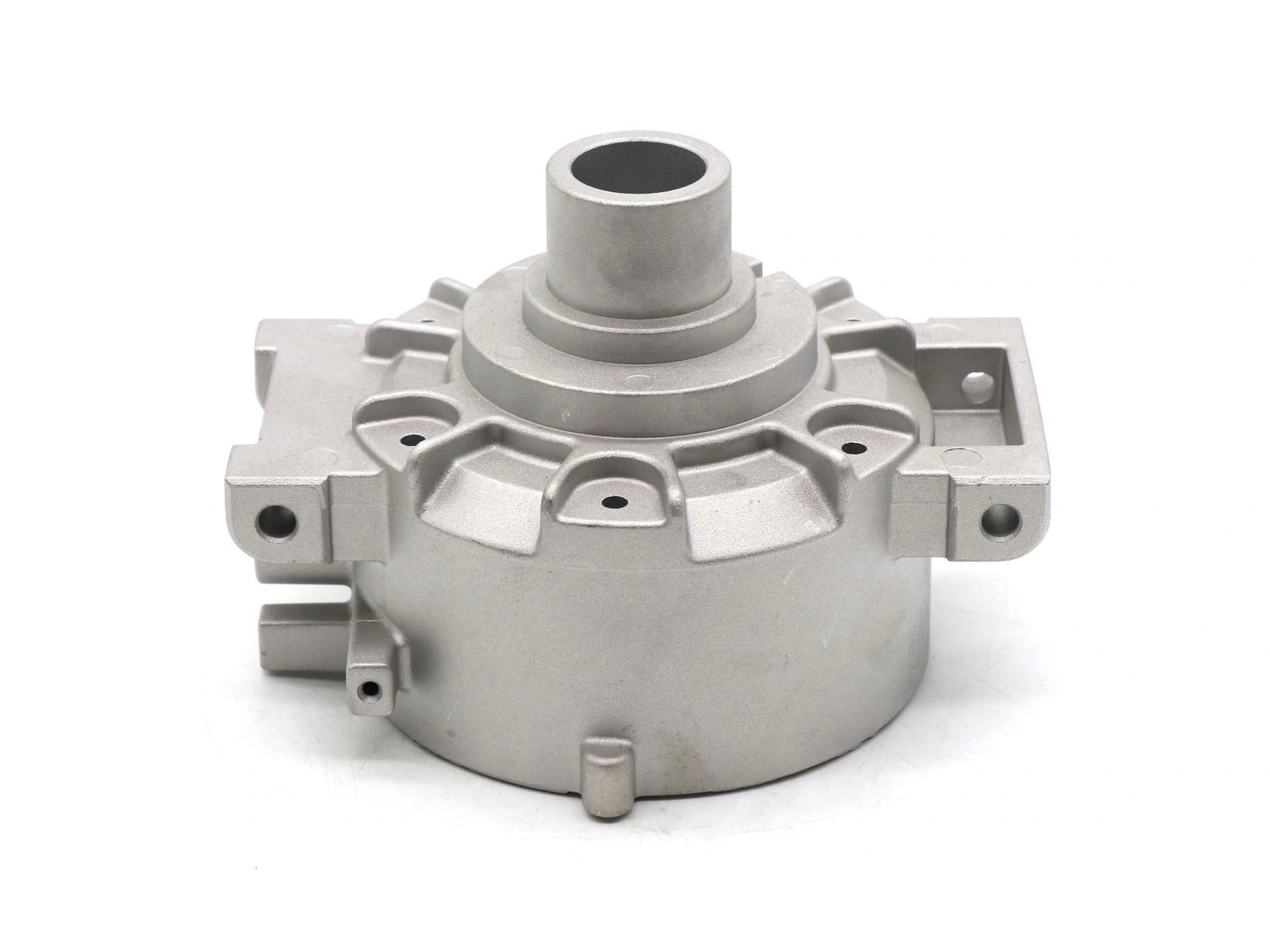
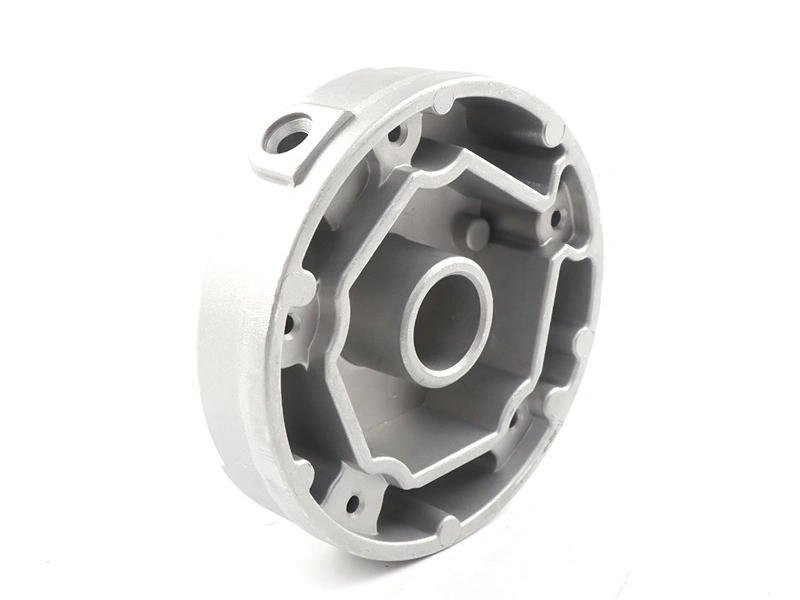
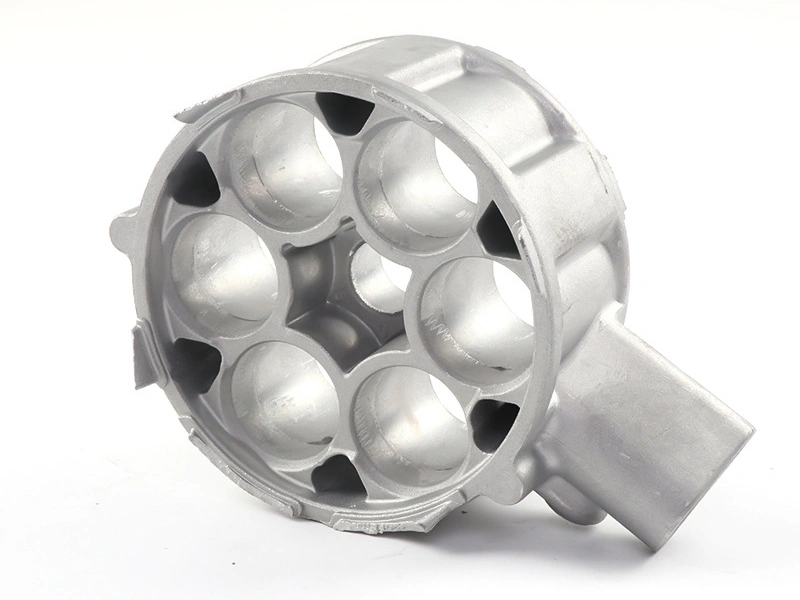
Does Die Cast Aluminum Material Affect CNC Machining Cost?
Yes, die-cast aluminum material can affect CNC machining cost, but alloy is only one cost driver. Silicon-rich hard particles, copper content and the resulting microstructure influence tool wear, cutting edge behavior, chip formation, burrs and attainable surface condition. The casting's porosity, stock distribution and hardness consistency can matter just as much. Operation count, access, fixtures, cycle time, washing and inspection complete the cost picture.
Most surfaces should remain as cast when they meet function. Machine only features that require a bore, thread, sealing face, datum or finish beyond the qualified as-cast capability. Asking for full machining "for precision" can add setups and expose subsurface pores without improving the product.
How alloy chemistry reaches the cutting edge
Silicon supports casting fluidity and wear behavior in many aluminum casting alloys, but hard silicon particles can abrade cutting tools. Higher-silicon candidates can therefore change insert grade, cutting speed, tool life and surface-finish strategy. Copper and other constituents also influence strength, hardness and chip behavior. The effect is not a universal ranking: microstructure, heat history, section cooling and tool choice determine what the machine sees.
A material name without a governing specification is weak cost input. Chemistry ranges and allowed impurities differ, while A383 and ADC12 should not be treated as automatically equivalent. The machining supplier needs the actual standard, expected material condition and substitution controls. A change that remains acceptable to the casting cell may still alter tool life, burr formation or finish.
Casting quality can dominate machining risk
HPDC creates a dense surface skin over an interior whose soundness varies with filling and solidification. Deep cuts may expose entrapped-gas pores or shrinkage voids. Gas and shrinkage have different causes: venting and metal-front behavior influence gas entrapment, while local feeding and hot spots influence shrinkage. Adding stock and cutting deeper is therefore not a reliable way to obtain a sound surface.
Place sealing and load-bearing machined faces with gate, overflow and thermal layout in mind. During trials, machine representative parts from every relevant cavity to production depth. A part that looks sound as cast is not evidence for a sealing face hidden below the skin. Where consequences justify it, use section cuts, imaging, leak tests or pressure tests alongside machining trials.
Where material affects the machining quote
Cost item | Material or casting mechanism | Buyer control |
|---|---|---|
Cutting tools | Hard particles and hardness variation influence wear and edge life | Quote using the named alloy and representative trial castings |
Cycle time | Stable cutting conditions may change with stock, chips, burrs and surface target | Define only required operations and measurable finish |
Fixtures | Thin castings can distort if clamped on weak or variable surfaces | Agree cast and machined datums, supports and clamping zones |
Yield | Machining can reveal local pores, oxide folds or dimensional movement | Trial by cavity at final depth and set functional acceptance |
Inspection | Process variation affects bores, threads, flatness and sealing faces | Specify datum scheme, stage, sampling and gauge method |
The buyer should ask for the CNC machining scope by setup and feature. This makes clear whether cost comes from the alloy, an inaccessible design, repeated re-clamping or an unnecessary tolerance. It also exposes features that could be cast near net, formed with a slide, moved to a better tool direction or consolidated into one setup.
Stock, datums and tolerances must be coherent
Machining stock must cover casting variation without driving the cut into avoidable porosity or requiring long cycles. There is no universal allowance: feature size, local flow, die deflection, trim condition, distortion, datum choice and process capability determine it. Define stock after DFM and verify it with a dimensional study from production-intent cavities.
A good datum scheme allows the fixture to locate repeatably on stable cast surfaces. If the casting rocks, clamps across a thin wall or references flash-prone edges, machining variation can be blamed incorrectly on material. Mark tolerances only where fit, sealing, motion or another function requires them. State whether inspection occurs after machining, coating or assembly because later processes can affect dimensions.
The casting-to-CNC planning guide helps separate as-cast and machined features. That allocation should be frozen before the tool's cavity compensation and machining fixtures are finalized.
Finish and cleanliness add material-related cost
A machined sealing face may require a controlled roughness, flatness and cleaning condition. A bearing bore may need roundness and position. Threads need gauge acceptance and burr control. These are operation-specific requirements, not a general request for a "smooth CNC finish." Silicon particles or exposed pores may affect the achieved surface, while chips trapped in internal passages can create an assembly or leak risk.
Define deburring and washing after the machining route is known. If the part is coated, identify masking and whether final dimensions apply before or after coating. Do not polish or coat over a pore and assume the functional defect is repaired. Surface treatment can protect a qualified substrate but cannot restore missing load-bearing metal or seal an uncontrolled leak path.
How to compare two alloys for CNC cost
Run both candidates through the same operation list, fixture concept, tool strategy, stock depth, inspection and acceptance criteria. Record cutting time, tool changes, burrs, dimensional stability, exposed defects and cleaning results. Use enough samples from relevant cavities to distinguish a repeatable material effect from one abnormal casting.
Keep the trial identity: alloy standard and lot, tool revision, cavity, machine settings, aging time and machining program. A result does not automatically transfer to another source or process condition. For an alloy such as A413, for example, the silicon-related machining discussion still needs evidence from the actual component and operation.
Buyer decision
Include alloy in the CNC cost model, but do not use it as the sole explanation. Freeze the exact specification, minimize operations, design stable datums, place stock with the casting process and machine trial parts to final depth. Compare suppliers on accepted finished-part cost, including tools, fixtures, cycle, inspection and porosity-related yield. That is more defensible than selecting the lowest casting price and discovering the real machining cost after tooling.