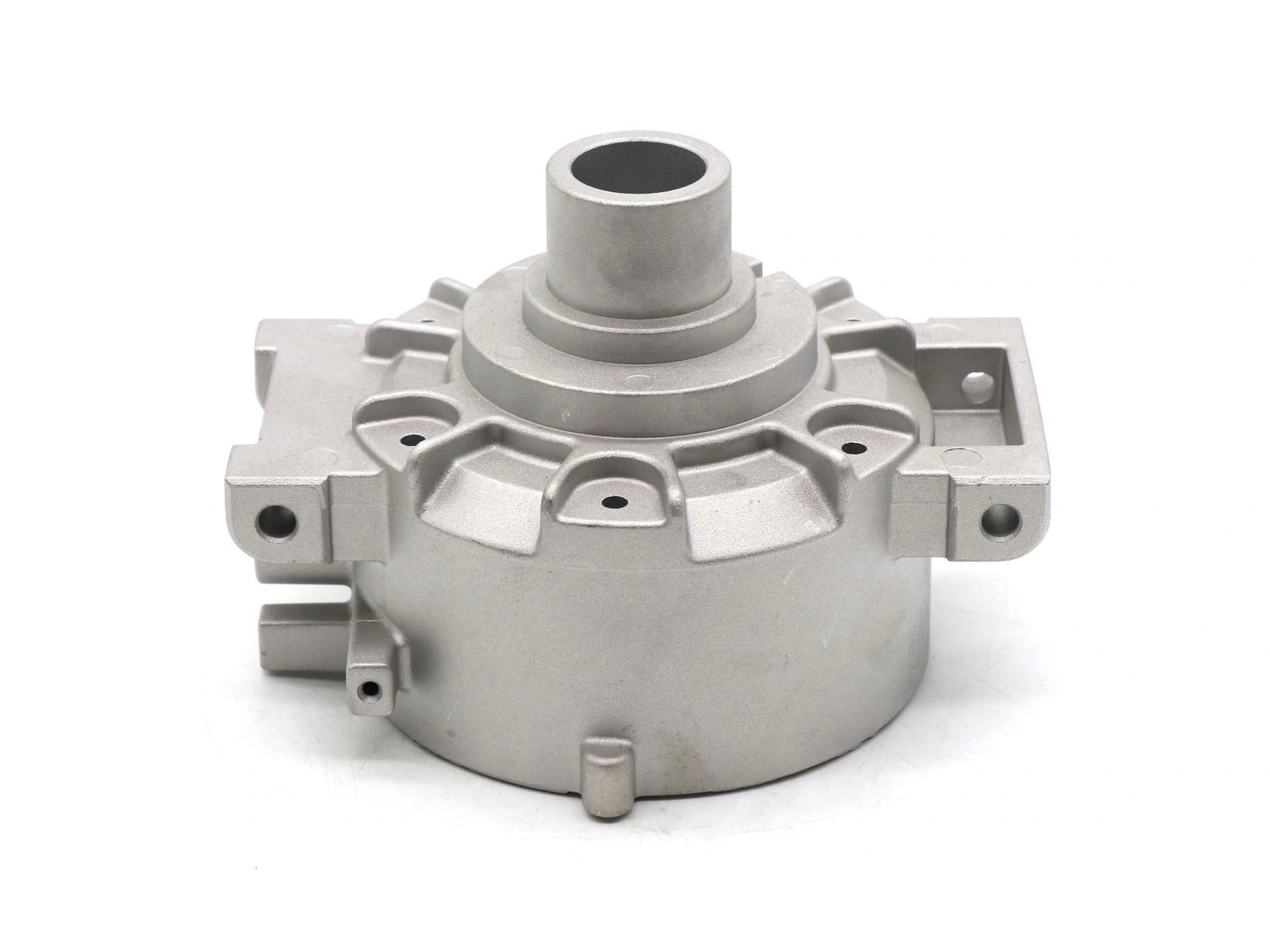
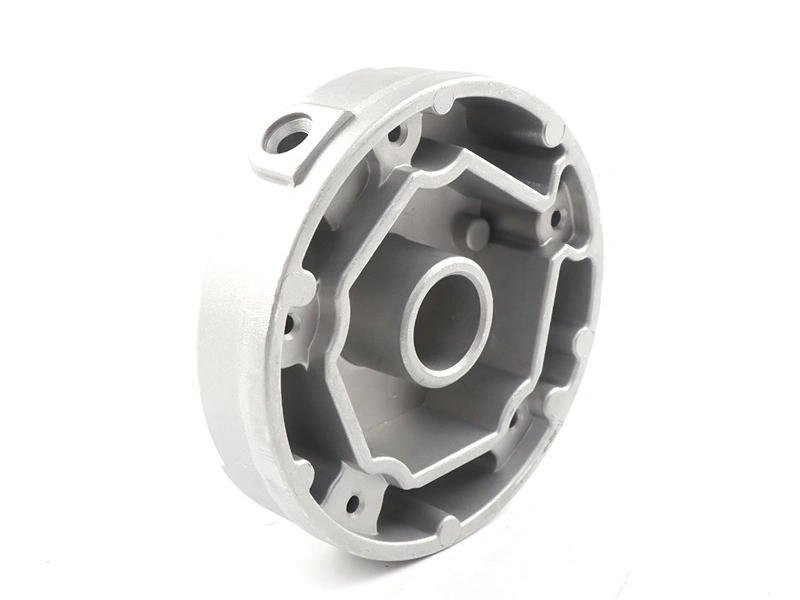
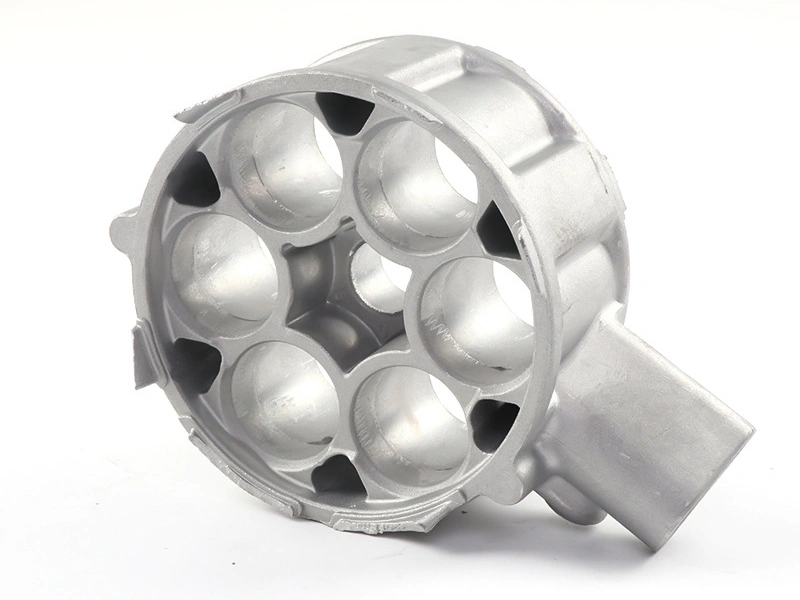
How Does Die Cast Aluminum Material Affect Part Strength and Weight?
Die-cast aluminum material affects part strength through chemistry, microstructure, solidification and compatibility with the selected casting route. It affects weight through density, but common aluminum die-casting alloys are close enough in density that wall thickness, ribs, bosses, draft, stock and integrated features often have a larger effect on finished mass. Choosing a nominally stronger alloy does not automatically create a stronger or lighter component.
The useful question is whether a defined alloy-process-geometry combination carries the actual loads with sufficient margin at the required mass. Verify that combination on representative castings. A handbook tensile value may describe a standard specimen, temper or section that does not reproduce the pores, oxides, cooling rate, machined skin or stress concentrations in the production part.
Alloy changes strength potential, not proven part strength
Silicon, copper, magnesium and other constituents influence castability, hardening response, corrosion behavior and mechanical properties. Their effect depends on chemistry limits and material condition under a named standard. "Aluminum" is too vague for a structural drawing, and a supplier's proposed substitution should be reviewed as a material and process change rather than accepted from a similar trade name.
Process history determines how much of the alloy's potential appears in the component. Filling pattern can fold oxide films or trap gas. Poorly fed hot spots can develop shrinkage porosity. Thick sections and thin walls cool differently and can have different microstructures. Gate removal, trimming, straightening, machining and thermal exposure can introduce or reveal local weaknesses. High injection pressure does not cancel those effects.
Conventional HPDC also needs caution when heat treatment or welding is proposed. Entrapped gas can expand during heating and cause blistering. A heat-treated property from another casting route should not be assigned to a conventional HPDC component without a route-specific process and test record.
Geometry usually controls more weight than grade
Finished weight is material density multiplied by actual volume, less removed stock and plus any inserts or coatings. Since candidate aluminum casting alloys occupy the same broad density range, changing grade without changing geometry may produce only a modest mass difference. Redesign can have a larger effect: remove nonfunctional stock, use ribs to maintain stiffness, combine brackets or covers, and place material along the load path.
That redesign is constrained by casting. A very thin wall may not fill across a long path. A thick rib or boss can create a hot spot. Abrupt transitions concentrate both solidification risk and mechanical stress. Draft and ejector support need space, while machining stock adds mass before it is removed. The lightweight die-cast part design discussion is therefore a geometry and manufacturing review, not just an alloy-density exercise.
How strength and weight interact
Decision variable | Effect on strength or mass | How to verify it |
|---|---|---|
Alloy and material condition | Sets a property range and influences casting response | Named specification, chemistry certificate and route-specific evidence |
Wall and rib layout | Controls section stiffness, load path, filled volume and local hot spots | Analysis, DFM, tool trials and dimensional study |
Gas or shrinkage porosity | Reduces effective load-bearing area and can create leak paths | Risk-based sectioning, imaging, machining trial, leak or proof test |
Machining | Removes mass and casting skin; can expose pores or create notch-sensitive details | Machine representative parts to final depth and test after machining |
Service temperature and time | Can reduce retained strength or change deformation under sustained load | Product-relevant thermal and load test at defined conditions |
A stronger alloy can support a lighter design only if engineering analysis permits reduced sections and the casting process can reproduce them. If geometry cannot change because of filling, impact, sealing or stiffness constraints, the stronger chemistry may add no weight benefit. It may still add value for proof load, thread strength or temperature performance, but that benefit needs a defined requirement.
Distinguish strength, stiffness and durability
Buyers sometimes request higher tensile strength when the actual issue is deflection. Elastic stiffness among aluminum alloys may not change enough to solve a flexible cover; section depth, rib orientation and boundary conditions can matter more. An impact problem may depend on ductility and stress concentration. A bolted joint may fail by local crushing, thread stripping or boss cracking. A warm, continuously loaded bracket may require creep or retained-property evaluation rather than a room-temperature short-term tensile value.
State the failure mode. Use proof load for permanent deformation, fatigue testing for repeated cycles, torque testing for threaded joints, burst or leak testing for pressure boundaries, and thermal cycling where expansion or retained strength matters. Test the finished part when local geometry and casting quality control the result.
How to validate a lighter design
First, compare candidate designs with consistent boundary conditions and realistic material data. Second, run DFM with the proposed aluminum alloy family and machine range so fill paths, hot spots, gate access and ejector support are visible. Third, trial every production cavity and measure the relevant sections. Fourth, test castings after the same machining, coating, aging and assembly sequence intended for production.
Keep evidence traceable to tool revision, cavity, machine, alloy lot and downstream route. A passing sample from a prototype process does not prove that a production die will create the same microstructure or porosity distribution. Likewise, a specimen certificate confirms chemistry or specimen properties, not the load capacity of every casting.
Buyer decision
Use alloy selection to establish feasible strength and process behavior, then use geometry to place only the material the part needs. Compare mass from the final CAD model, not density alone. Approve strength with tests tied to the real failure mode and service conditions. If a proposed alloy change does not enable a validated geometry change or improve a specified function, it should not be credited with an automatic strength-to-weight advantage.