What aluminum alloys are most effective for LED lighting applications?
The most effective aluminum die-casting alloy for an LED lighting application is the one that meets the fixture's thermal target while still filling the housing, fins, seal and optical features reliably and supporting corrosion protection, machining, strength, appearance, supply, and cost. A380/ADC12-family, A360, and AlSi12-family materials are common screening candidates, but none is universally best. Higher published thermal conductivity does not guarantee a cooler LED if contact resistance, fin airflow, porosity, coating, or geometry dominates.
Translate the luminaire into alloy requirements
Provide LED and driver losses, junction or component limits, board and interface construction, casting temperature targets, ambient range, orientation, airflow, solar load, enclosure volume, IP requirement, corrosion/UV exposure, optical datums, loads, appearance, finish, quantity, and regulatory constraints. Weight each requirement. An indoor decorative downlight may prioritize color and texture; a street luminaire may prioritize corrosion, sealing, impact, and retained thermal performance; a compact high-output fixture may be dominated by heat spreading.
Separate the thermal functions. The alloy must spread heat through the base, but fin geometry and ambient conditions reject it. The board-to-casting interface may contribute more resistance than the difference between two reasonable alloys. Model the complete chain, then use alloy conductivity as one verified input rather than the sole selection criterion.
Screen common alloy families conditionally
Candidate family | Why it may enter the shortlist | Questions before selection |
|---|---|---|
A380 or ADC12 family | Established general-purpose HPDC route, useful castability and mechanical balance for many housings | Is measured thermal performance enough? Does outdoor corrosion require a different chemistry or stronger finish system? |
A360 | Often screened where filling and corrosion behavior are weighted alongside thermal function | Can the supplier control the exact specification? Do strength, machinability, finish and sourcing fit? |
AlSi12 family | Fluidity may help selected thin or detailed geometries through the applicable casting route | Which standard/condition is quoted? Are properties and surface response proven on the proposed process? |
Special high-conductivity HPDC alloy | May reduce spreading resistance where thermal density justifies it | What are the tradeoffs in die filling, mechanical margin, corrosion, finish, price, recycling and supply qualification? |
Do not treat ADC12 and A383, or similarly named Al-Si grades, as automatically interchangeable. Confirm chemistry limits, impurity controls, source, standard, condition, supplier route, and evidence. Alloy listings support screening but do not define the approved luminaire material.
Check castability against the thermal geometry
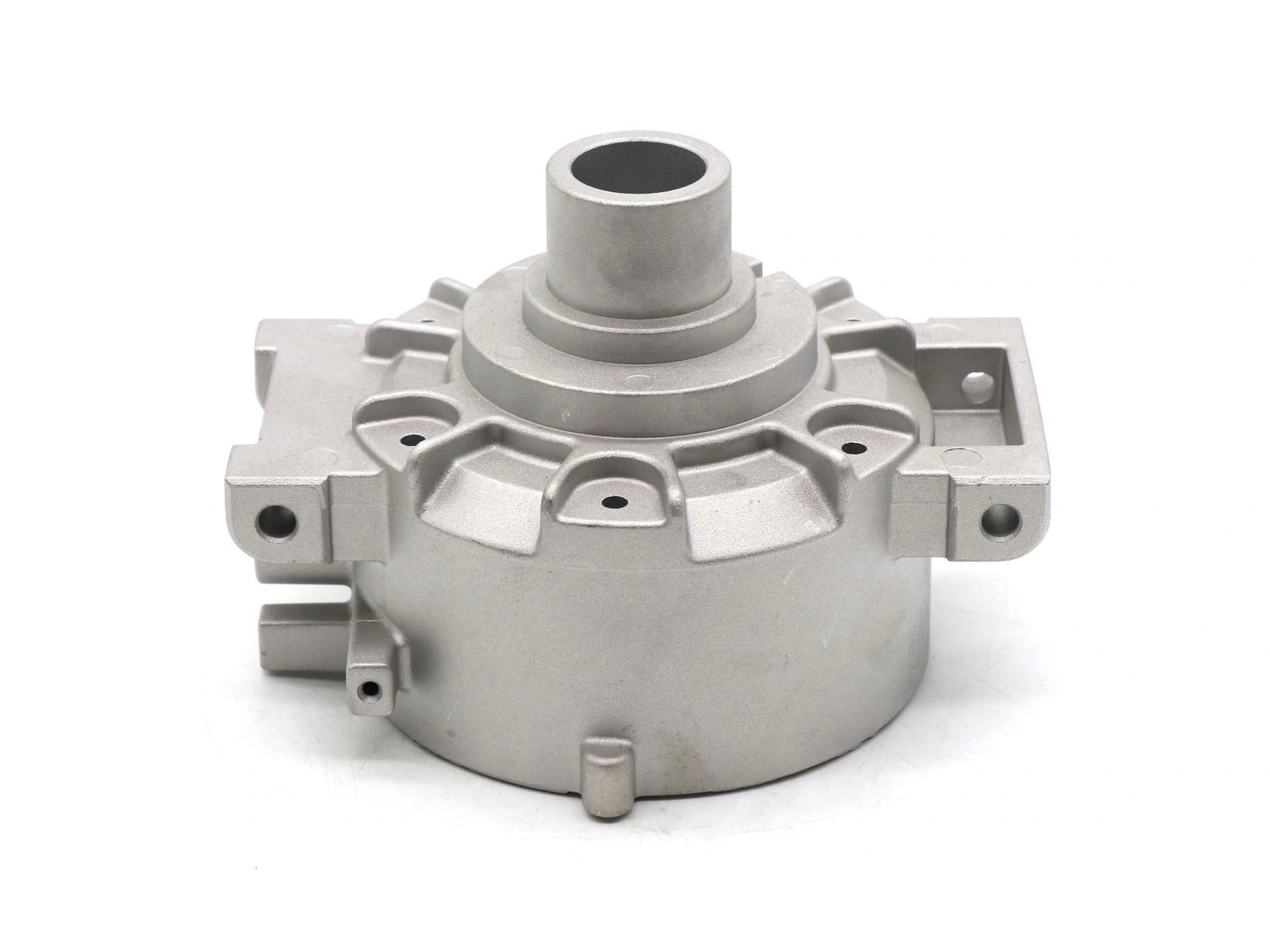
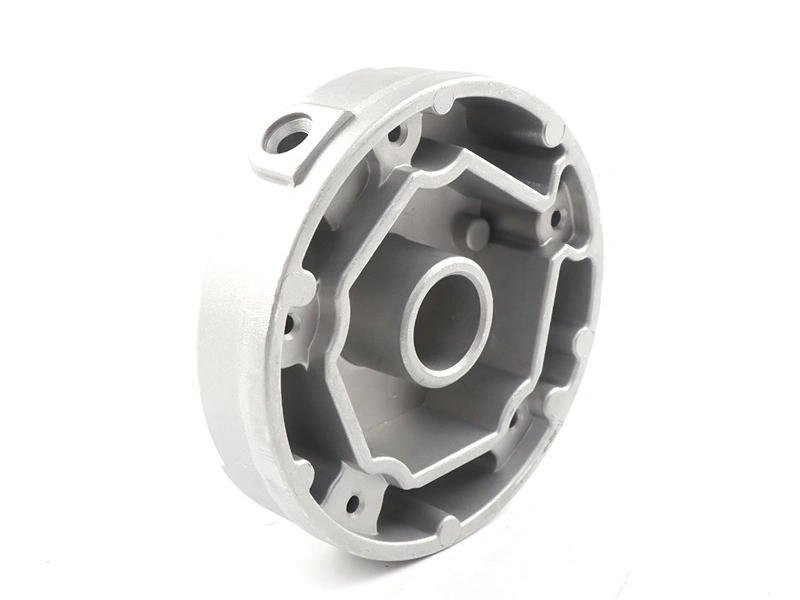
Thin fins, tall fins, narrow spacing, a broad thermal base, thick bosses, and distant flow paths create competing filling and shrinkage conditions. Review gate, overflow, vent, cooling, draft, ejection, die-steel strength, and trim. An alloy with attractive conductivity that produces incomplete fins or unstable porosity can deliver worse production thermal performance than a slightly less conductive alloy with repeatable geometry.
Map the LED module pad, seal land, lens seat, grounding pad, connector bores, and visible zones. Keep flow joins, ejector marks, parting lines, and known porosity risks away from those features where possible. Machine only functional interfaces that require it; machining exposes the casting interior and can alter corrosion and contact.
Include finish and corrosion in the alloy choice
Outdoor and damp fixtures need pretreatment and coating selected for the exact alloy and environment. Copper-bearing phases, silicon and other intermetallics, porosity, release residue, and machined surfaces affect corrosion and appearance. Anodized die casting may not match wrought aluminum in color or uniformity. Powder or liquid coating still needs controlled cleaning, pretreatment, edge coverage, cure, masks, and repair.
Keep coatings off defined thermal contacts unless their resistance is included and qualified. Protect masked grounding, seal, or machined zones from corrosion and galvanic contact. Stainless fasteners, copper conductors, conductive gaskets, and carbon-containing materials require assembly-level review; alloy selection alone cannot stop galvanic attack.
Validate thermal data on production-intent parts
Ask what the quoted thermal value represents: nominal handbook data, separately cast specimen, supplier coupon, or production section. Verify chemistry and measure representative material when the difference is decision-critical. Then instrument complete luminaires using production-intent LED boards, interface material, castings, machining, finish, fasteners, optics, seals, drivers, orientation, and ambient conditions.
Compare junction-related temperature, board and driver temperatures, input power, light output, and thermal stabilization. Include dimensional and process extremes, multiple cavities, and environmental aging where relevant. A single polished sample does not establish repeatable performance. The approved alloy is the grade whose controlled production variation maintains the luminaire acceptance case.
Issue a weighted alloy RFQ
The RFQ should provide thermal model and loads, fixture envelope, fin and interface geometry, ambient/orientation/airflow, LED and driver limits, corrosion/IP exposure, electrical needs, optical datums, finish and appearance, loads, demand, tests, traceability, and changes. Ask the supplier to return exact designation/specification, chemistry window, source, property basis, DFM risks, alternatives, finish compatibility, validation samples, production controls, exceptions, and total-cost effect.
ADC12 information can inform a common baseline, but selection remains conditional. The most effective alloy is not the highest number in one property column; it is the castable, controlled material that helps the complete LED fixture meet thermal, environmental, optical, mechanical, electrical, appearance, and cost requirements.