What Is the Best Die Cast Aluminum Material for Custom Parts?
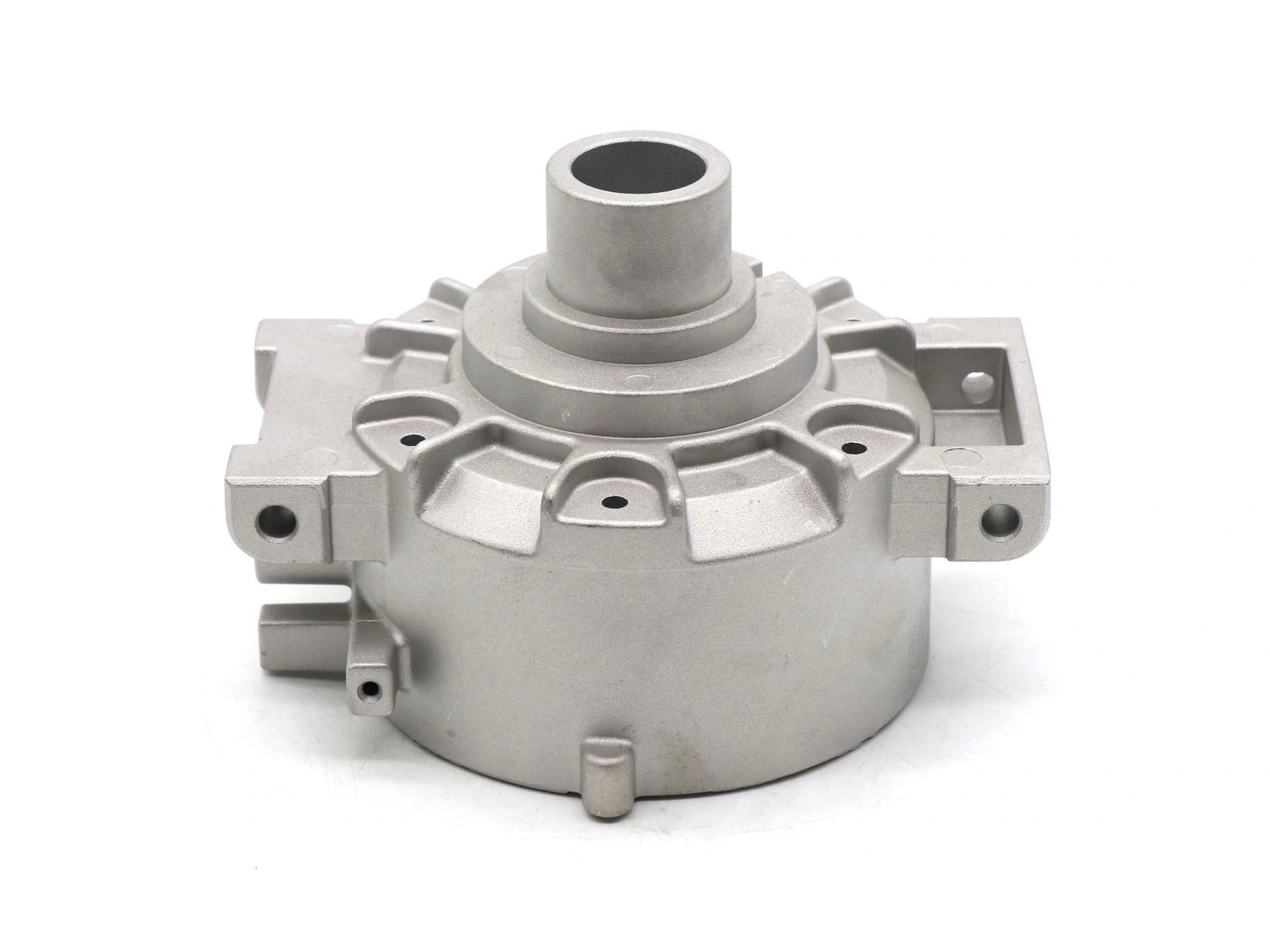
There is no universally best die-cast aluminum material for custom parts. The best choice is the alloy, governing specification and casting route that satisfy the part's loads, temperature, geometry, corrosion exposure, machining, finish and cost requirements with acceptable production evidence. A380, A360, A413 and A383 or ADC12 can all enter a conventional high-pressure die-casting shortlist, but none is automatically best and the names are not freely interchangeable.
Start with the finished component rather than the strongest data-sheet value. Published properties may come from a specimen or material condition that does not represent a thick boss, thin wall, pore-sensitive sealing face or finished production casting. Buyers should approve a material only after the proposed tool, process and downstream operations have produced representative parts that pass the relevant tests.
Define what "best" means for the part
A material recommendation needs a ranked set of requirements. For a general housing, filling complex geometry and controlling total finished cost may lead. For an outdoor enclosure, corrosion and coating compatibility may carry more weight. For a pump body, local soundness around machined passages and the specified pressure test can be decisive. A structural bracket needs service loads, fastener forces, temperature and fatigue conditions, not simply a request for "high strength."
Weight usually does not separate common aluminum die-casting alloys as much as geometry does. Wall sections, ribs, bosses, machining stock and integrated functions dominate finished mass. Thermal performance, ductility, wear, joining and cosmetic appearance can create different priorities. Record which requirements are pass/fail and which may be traded, otherwise two suppliers can recommend different alloys while answering different questions.
How common candidates enter the shortlist
Candidate direction | Reason to evaluate it | Boundary to check |
|---|---|---|
A380 family | Practical general-purpose balance for many HPDC housings, covers and brackets | Confirm corrosion, ductility, thermal, machining and finish needs on the actual part |
A360 family | May be considered where corrosion behavior or elevated-temperature performance deserves emphasis | Confirm filling, ejection, tool interaction and cost for the proposed geometry |
A413 family | High silicon content can support fluid filling and pressure-containing applications | Review machining wear, mechanical tradeoffs, joining and cosmetic expectations |
A383 or ADC12 direction | Often shortlisted for intricate conventional HPDC geometry | Name the exact standard and chemistry; do not assume A383 and ADC12 are equivalent |
A356 direction | May suit a heat-treatable gravity, low-pressure or specialized casting route | Do not treat it as a routine drop-in conventional HPDC alternative |
The aluminum alloy overview is useful for screening. A buyer still needs the governing standard, chemistry limits and material condition. If a supplier writes "A383/ADC12," ask which one will appear on the certificate and what substitution rule applies. Commercial shorthand is not sufficient change control.
The casting route can change the answer
An alloy cannot be evaluated independently of the way molten metal fills and solidifies. Conventional HPDC offers complex near-net geometry and productive cycle rates, but rapid filling can entrap gas. Vacuum assistance, gate and overflow layout, venting, die temperature and shot settings influence local soundness. High pressure by itself does not prove low porosity, strength or precision.
Gravity permanent-mold and low-pressure routes have different filling, solidification, geometry and production implications. Heat treatment or welding also requires route-specific review. Entrapped gas in a conventional HPDC casting can expand during a thermal cycle and cause blistering. If the design relies on a heat-treated property, the RFQ must identify the route, temper and finished-part validation rather than merely naming a heat-treatable alloy.
Check geometry, machining and finish together
Long thin flow paths, isolated heavy bosses and abrupt section changes can defeat an otherwise reasonable alloy selection. The supplier should mark fill-sensitive zones, hot spots, gate access and vent paths during DFM. Gas porosity and shrinkage porosity are different mechanisms, and either can be exposed when a bore or sealing face removes the casting skin.
For machined features, compare silicon-rich hard particles, likely tool wear, burr behavior, stock depth and local pore exposure. For visible surfaces, compare casting skin and the complete preparation and coating route. High-silicon or copper-bearing die-cast alloys should not be expected to anodize with the same color uniformity as wrought cosmetic aluminum. Representative finished samples are more useful than an unqualified promise of "good surface finish."
Evidence that confirms the choice
A certificate can verify reported chemistry against the named specification, but it cannot prove local mechanical performance, pressure tightness or appearance. Build a validation plan around the failure consequence. It may include dimensional studies by cavity, section cuts or radiography in risk zones, machining trials to final stock depth, leak or burst tests, proof loads, thermal tests and finished cosmetic samples.
Measure at the stage stated on the drawing: as cast, after natural aging, after machining, after coating or after assembly. Record tool revision, cavity, machine, alloy lot and downstream route. Trial evidence applies to that identified combination. A change in chemistry, source, machine, die repair, machining depth or finish can justify revalidation.
What to send for a defensible recommendation
Provide revision-controlled 2D and 3D data, service loads and temperature, environment, mass target, function-driving datums, leak or joining requirements, machined features, visible zones, finish system, forecast and program life. Ask the supplier to return a named alloy and standard, casting route, DFM findings, open assumptions, proposed tests and prohibited or approval-controlled substitutions.
The A380 material page and the corresponding A360 material page can frame two common options, but a grade page cannot select the material for an unseen component. The best die-cast aluminum material is the controlled choice that passes the product's real acceptance plan at an acceptable finished-part cost.