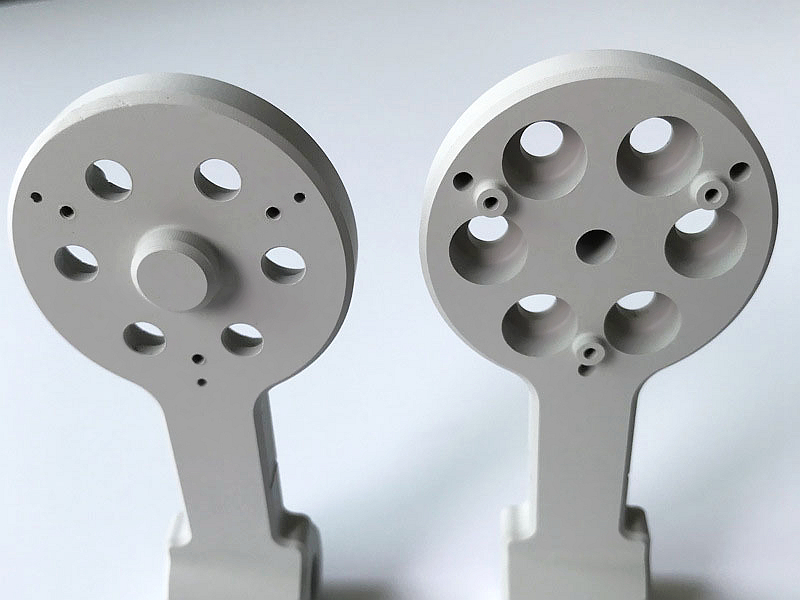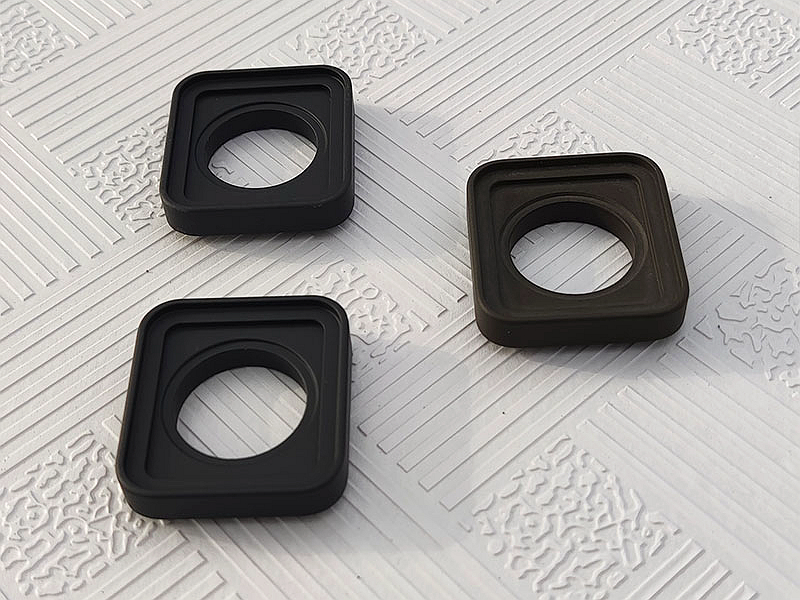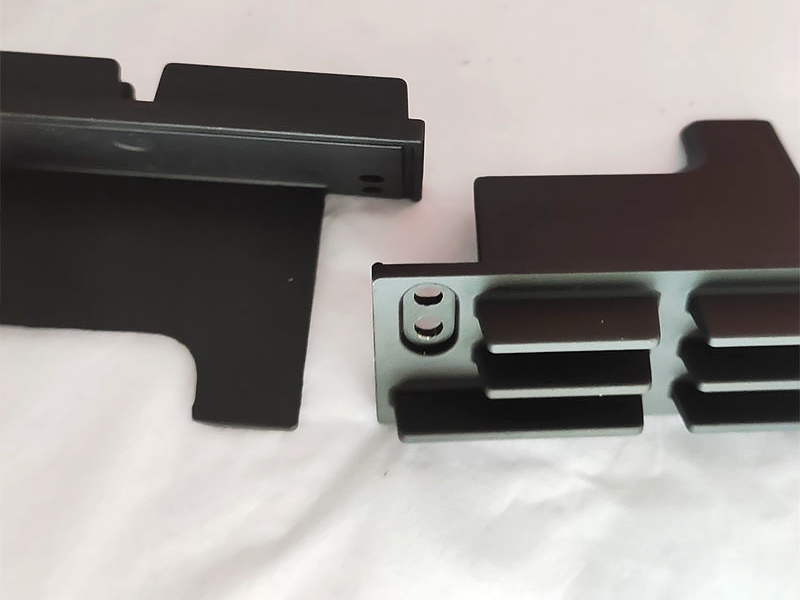
Does Micro-Arc Oxidation Change Assembly Fits?
Yes. Micro-arc oxidation converts the aluminum it treats, and the oxide it forms sits both above and below the original surface. A ±0.02 mm seat on an ADC12 frame therefore moves after coating, unless that face is masked before the part enters the bath.
A Film That Grows Into the Part
Micro-arc oxidation does not lay a coating on the metal; it converts the metal already there. Discharges in the electrolyte break the oxide down at local spots, and each spot rebuilds as crystalline alumina. Part of that build stands above the original skin, part goes below it into the substrate. Nothing else sits between film and metal: no plated underlayer, no adhesive line, no edge to peel from. That same structure moves dimensions: the surface that leaves the bath is not the one that entered it.
On ADC12 to ASTM B85, silicon phases do not convert the way the aluminum matrix does, so film builds unevenly across a cast surface. How much stands out and how much goes in is set by electrolyte, current and time.
What That Does to a 0.02 mm Fit
A film that grows both ways spends tolerance at both faces at once. On a bore, outward growth closes the diameter while inward growth eats the wall behind it. On a seat, outward growth stands the face off its partner. The joint seat target is ±0.02 mm, a band 0.04 mm wide. A face that moves 0.02 mm outward has spent the whole plus side of it.
The practical check is a pin, not arithmetic on a brochure. A pin that entered a bore before coating can bind after it, and the same pin shows which growth direction dominates there. A cover panel with no mating face takes the film like paint and nothing moves. Put both on one drawing and only one needs masking.
Mask Threads, Fits, Grounds, Datums
Four classes get masked before the bath: threads, fits, grounding points and datums. Each fails a different test. Film on a thread crest shrinks the effective diameter until a go gauge will not enter. Film on a fit closes a bore or stands a seat proud of its partner. Film on a grounding pad turns a conductor into an insulator, because the oxide does not carry current. Film on a datum face moves the plane the part is measured from, so CMM readings before and after coating do not match.
Feature | Drawing value | Unit | Film effect | Mask |
|---|---|---|---|---|
Joint seat | ±0.02 | mm | Stands the face off | Yes |
Seat flatness | 0.03 | mm | Copies cast texture | Yes |
Thread | Go/no-go | gauge | Shrinks crest diameter | Yes, plug |
Grounding pad | Bare metal | contact | Insulates the joint | Yes, tape |
Datum face | 0.03 | mm | Moves datum plane | Yes |
A missed thread still looks like a thread, so the coating line passes it and the bolt finds it at assembly. Recovery is a ream to the next size up, which changes the fastener callout. That is why the mask list belongs on the drawing and in the surface finishing package, not in a message to the shop.
Why Film Thickness Is Still Pending
Thickness on this frame is still to be measured on coupons from the production bath, so no figure goes on the drawing yet. Electrolyte chemistry, current density, treatment time and alloy set the result, and a value quoted for a different alloy describes a different bath.
The drawing can still pin the measurement: one coupon per bath, readings at agreed points, a film thickness gauge in the inspection plan. Masking cannot wait for that reading, because a face left bare on purpose is a decision and a face coated by accident is a rework job. A gauge reading on a real coupon settles the number; a supplier promise does not.
Salt Spray: Fix the Spec Before the Number
Salt spray hours are still to be measured, and the order of work matters more than the figure. An hours value means something only beside a standard, a coupon preparation, the film on it and an accept rule. A frame that runs in cutting fluid and humid air does not live in salt fog.
Corrosion starts where the film is thin or missing, so a masked border and a cut edge are the places to look, and a fully coated panel is the wrong witness. Fix the standard, the coupon and the accept rule now; fill the hours once the first article has been measured.
Then put it on the drawing: masked features named one by one, coated faces named as coated, thickness read on production coupons with a film thickness gauge. Add a go/no-go check on threads after coating and a CMM pass on the seats.