What finishing options prevent oxidation in high-humidity HVAC environments?
For copper-alloy HVAC components in high humidity, the useful options are controlled bare/passivated surfaces, selective tin or nickel-based plating where those systems fit the function, and organic barriers on external non-thermal surfaces. The best option depends on whether the concern is harmless tarnish, active corrosion, appearance, solderability, electrical contact or condensate exposure. Do not coat an active heat-transfer face or sealing surface without accounting for added resistance and dimensional change.
Identify the damage mechanism first
Copper naturally changes color in air, and discoloration alone may not reduce HVAC function. The investigation should distinguish uniform tarnish from pitting, dezincification in brass, stress-corrosion cracking, galvanic attack, crevice corrosion or chemical residue. High relative humidity is only part of the environment; condensed water chemistry, chlorides, cleaning agents, sulfur compounds, temperature cycles and contact with aluminum or steel can determine the actual mechanism.
Improve drainage and ventilation before relying on finish. Avoid upward-facing pockets, wet crevices and unsealed dissimilar-metal joints. Remove flux, machining coolant and fingerprints with a controlled cleaning process. A coating applied over contamination can trap the cause of corrosion rather than solve it.
Match finish to surface function
Surface function | Finish direction | Main tradeoff | Verification focus |
|---|---|---|---|
Active thermal face | Clean bare surface or a specifically modeled thin system | Barrier layers can add contact or conduction resistance | Assembly thermal performance after exposure |
External cosmetic housing | Clear or pigmented organic barrier where temperature permits | Cut edges, chips and adhesion at casting defects | Appearance, adhesion and project humidity/condensate cycle |
Solderable or brazed area | Compatible selective metallic finish or protected bare joint preparation | Finish can alter wetting and joint metallurgy | Joint procedure, residue removal and leak integrity |
Electrical contact or grounding pad | Contact-specific plating and masking | Contact resistance, porosity and fretting | Resistance before and after environmental conditioning |
Internal refrigerant passage | Usually controlled material and cleanliness rather than a generic coating | Residue, flaking and fluid compatibility | Compatibility, cleanliness and flow/leak evidence |
Understand what plating can and cannot do
Tin systems may support solderability or selected atmospheric protection. Nickel-based layers may provide a harder barrier or serve as an underlayer in a specified stack. Their suitability depends on substrate chemistry, pretreatment, thickness distribution, porosity, subsequent heat exposure and the fluid or atmosphere. Plating a porous or contaminated casting does not make the underlying pressure wall sound.
Edges, recesses, threaded areas and deep passages may receive different deposit thickness from open faces. Mark rack or contact locations and masked surfaces. If a seal groove is plated, include buildup in its dimensional chain. If machining occurs after plating, the exposed edge needs evaluation. The site's overview of post-processing services can identify process families, but it is not a project coating specification.
Use organic barriers selectively
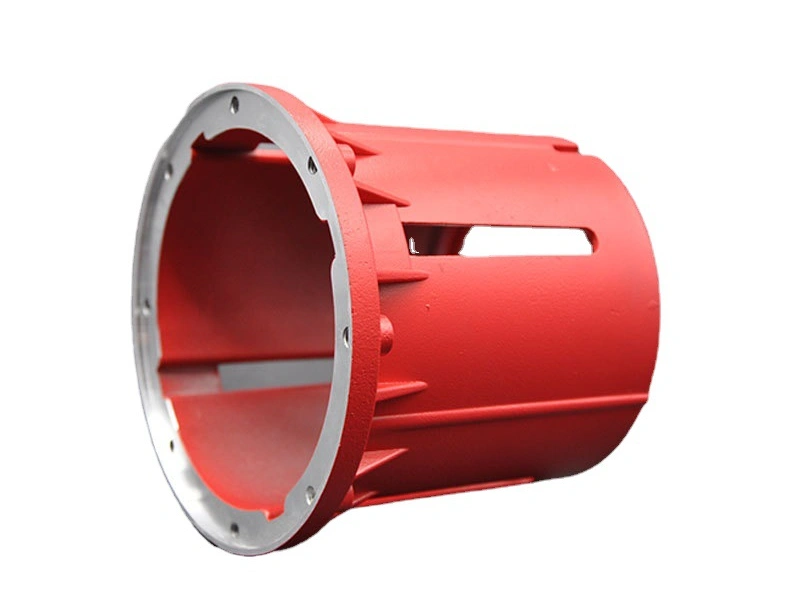
Paint, powder or clear organic coatings can isolate an external casting from humid air and improve appearance. They are generally better suited to covers, brackets and inactive external areas than to brazing surfaces, gasket lands, threads, grounding pads or the main heat path. Cure temperature must be compatible with prior joints, seals and alloy condition.
Specify pretreatment, color or appearance where relevant, masked zones, cure controls and repair policy. Sharp edges and casting surface discontinuities can reduce coverage. An external barrier also needs drainage because water entering through damage can remain trapped at a crevice.
Map condensation before selecting the finish
Review the installed orientation and transient operating states, not only the laboratory humidity value. A cold port can condense water while the surrounding housing remains dry; insulation edges and fastener recesses can hold that water after shutdown. Mark first-wet, continuously wet and drying surfaces on the assembly. This map guides drainage, seal placement and selective coating and shows where a dissimilar-metal couple is actually exposed.
Include service operations in the map. Cleaning sprays, coil treatments and replacement tools can damage an otherwise suitable barrier. Where damage is plausible, define inspection access and a compatible repair method. A finish that performs on a flat coupon but cannot be inspected or repaired at the installed crevice may not reduce field risk.
Validate against the real HVAC exposure
Choose conditioning from the installation: cyclic condensation, wet-dry exposure, salt-bearing outdoor air, cleaning chemical contact, thermal cycling or a combination. Neutral salt fog may be a comparative process check for some coatings, but it does not represent every condensate chemistry and should not be translated directly into years of service.
Inspect more than color. Check adhesion, blistering, underfilm creep, pitting, mass or dimensional change where relevant, joint integrity, electrical resistance and thermal performance. Test after machining and assembly so cut edges, fasteners and masked transitions are represented. The general principles in anti-corrosion coating selection should be converted into project-specific acceptance criteria.
What to specify in the RFQ
Provide exact copper alloy and route, exposure location, condensate or chemical information, temperature range, mating metals, active thermal areas, joining processes, seals, appearance zones and expected maintenance. On the drawing, identify coated, uncoated, masked and post-machined regions. State any electrical, thermal, soldering or brazing function that the finish must preserve.
Ask for the complete finish stack, pretreatment, thickness range where function requires it, masking method, inspection, environmental conditioning and change control. The correct finish prevents the specified functional damage without compromising heat flow, seals or joints. In many HVAC designs, good drainage, compatible materials and selective protection are more dependable than coating every visible copper surface.