When Is Stripping and Recoating Safer Than Applying a Second Powder Layer?
Stripping and recoating is safer than applying a second powder layer when the first film has uncertain adhesion, contamination, under-cure, widespread defects, incompatible chemistry or excessive existing thickness. A second layer is only defensible when the first layer is sound, compatible, clean, within the total-film limit and the added cure will not damage the part or its fit.
Neither route is automatically low risk. Stripping can attack aluminum, alter roughness, round edges or leave chemical residue in pores and blind holes. Recoat can conceal the failed interface while narrowing holes and raising total thermal exposure. The choice requires evidence about the existing stack and the delivered function.
What Must Be Proven Before a Second Layer?
Confirm the defect mechanism and the integrity of the first film. Measure current dry-film thickness by zone, identify fracture location, review cure history and check powder supplier compatibility. Clean and prepare the existing film with an approved method; do not assume that a visually clean surface is suitable for intercoat adhesion.
Condition | Second Layer | Reason |
|---|---|---|
Sound film with isolated approved appearance issue | May be considered | Needs compatibility, total DFT and color trial |
Unknown adhesion | Do not proceed | New layer cannot strengthen a weak substrate interface |
Contaminated first layer | Do not proceed | Contamination remains trapped |
Under-cured first layer | Requires coating-system review | Extra heat is not a validated cure correction |
Fit already near limit | Usually unsuitable | Added build can block assembly |
Which Risks Make Stripping Unacceptable?
Chemical strippers may attack the substrate or remain in connected pores. Mechanical removal can change a sealing land, sharp edge, texture or machined dimension. Thermal stripping can exceed alloy, insert, adhesive or product limits. The stripping supplier should provide a route compatible with the alloy and geometry, followed by residue removal and renewed preparation.
After stripping, inspect dimensions, surface state, pores, threads and masking interfaces before recoating. The part has returned to a new incoming condition; it cannot skip the controlled post-process preparation route merely because it was once coated.
How Total Film Build and Heat History Affect the Decision
Add the measured existing film and expected recoat build at every fit-critical zone. Check bores, slots, threads, texture and mask transitions. Multiple cures can alter gloss or color and may affect inserts, plugs or sealants. Part-metal temperature records are needed because oven air alone does not define the casting's heat history.
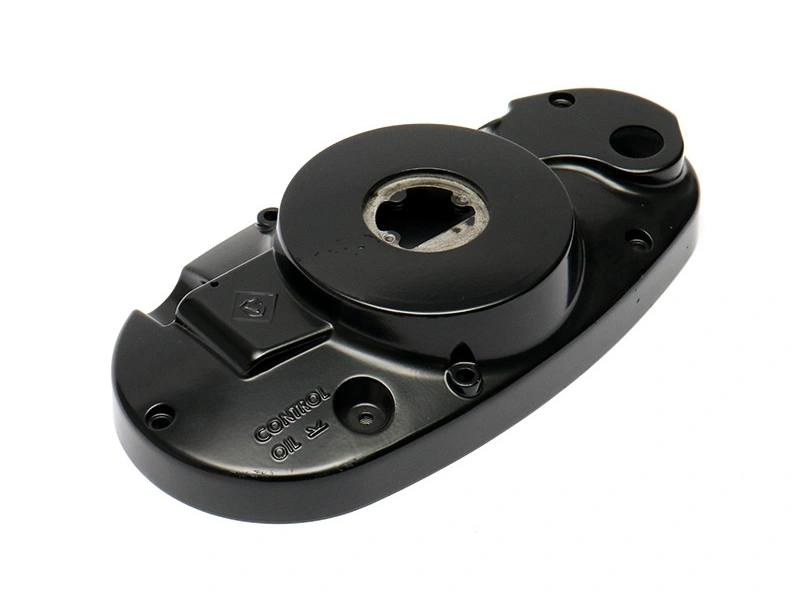
For a hypothetical coated cover, an exterior flat has a color mismatch but the film is adherent and below the local maximum. A controlled recoat trial may be possible. If the same cover also has peeling around machined holes, stripping or scrap becomes more defensible because the first interface is not sound. This is a decision example, not a production result.
When Scrap Is Safer Than Either Recovery Route
Scrap becomes the rational choice when coating history is unknown, the substrate has already been attacked, a functional dimension cannot be restored, repeated heat exceeds product limits or the defect mechanism remains active after recovery. Pressure-containing, sealing, grounding or safety-related interfaces may justify a more conservative boundary than a hidden decorative surface.
Cost comparison should include stripping, renewed preparation, coating, repeated inspection, schedule disruption and the probability of another rejection. Saving the original casting value is not economical if recovery consumes more resources than a traceable replacement or creates field risk.
A scrap decision should still feed corrective action. Record why recovery was rejected and preserve representative evidence. Otherwise the same defect can recur while the organization knows only that parts were discarded.
Buyer approval is especially important when recovered and first-pass parts would be mixed in one shipment, because their coating and heat histories are no longer equivalent.
How to Release the Final Reworked Part
The rework traveler should identify original defect, root-cause status, chosen route, removal method if used, surface preparation, powder lot, total cure history, final thickness map and repeated functional checks. Color and gloss need a master comparison because recoated parts can differ from first-pass production.
The powder coating quality plan should also limit the number of authorized coating cycles. Unlimited repeat recoat is not process control. Parts with uncertain history should be quarantined until their stack and thermal exposure are reconstructed or they are scrapped.
Final Release Item | Evidence |
|---|---|
Substrate condition | Post-strip inspection or approved retained first film |
Coating stack | Original and added layers with powder identity |
Total DFT | Mapped readings at cosmetic and fit zones |
Thermal exposure | Recorded cure cycles and product-limit review |
Function | Threads, bores, seals and grounding rechecked |
Corrective action | Prevention of the original defect |
Stripping is preferable when keeping the first layer would preserve an unknown failure beneath the finish. A second layer is preferable only when the existing film is proven suitable and the complete stack remains within dimensional, thermal and coating-system limits.