
AC4C Aluminum Casting Alloy: A413 Equivalence, Fluidity and Machined Features
AC4C aluminum casting alloy should be selected from the part requirement and the governing material specification, not from a name match alone. Buyers often compare AC4C with A413 or other aluminum-silicon casting alloys because they are considering fluidity, thin sections, corrosion behavior, machining, or pressure-related service. Those comparisons can be useful, but AC4C and A413 should not be treated as interchangeable without checking chemistry, product form, casting process, temper or condition, and the acceptance documents required by the project.
The practical question is whether the alloy can fill the planned geometry, support the required finished features, tolerate the service environment, and fit the supplier's casting route. AC4C aluminum die casting should be reviewed together with wall transitions, gating, machining allowance, surface finish, and inspection. If a drawing names A413, AC4C, or an internal material code, the RFQ should state which designation controls and how an alternative will be approved.
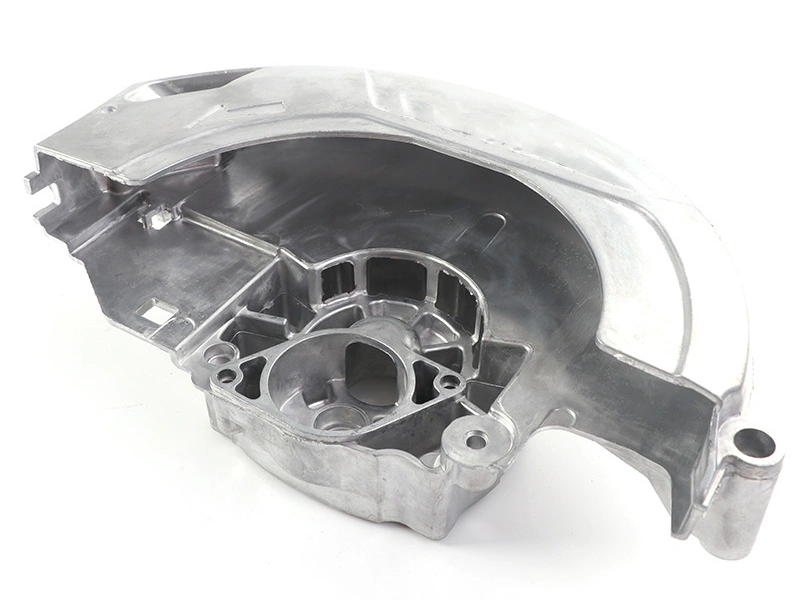
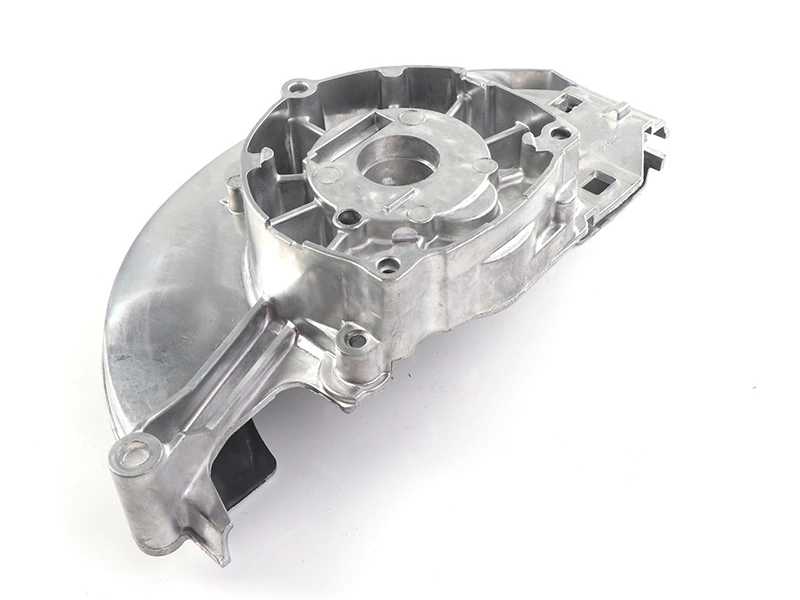
What AC4C Means in an RFQ
AC4C is a material designation used in an aluminum casting context, but its commercial meaning depends on the standard and product form named by the buyer. A raw alloy ingot, a die-cast component, a gravity-cast component, and a machined finished part are not the same deliverable. The drawing should identify the material standard, any required chemistry range, condition or heat-treatment state, mechanical requirements, and the certificate or test record expected.
Do not let an internal code hide the actual requirement. If the buyer's engineering team chose AC4C because of fluidity, write that as the reason and identify any linked requirements such as thin walls, pressure tightness, corrosion exposure, or machinability. If the buyer chose it because a legacy component used the alloy, provide the old material record and define what must remain equivalent. That helps the supplier assess a replacement without guessing.
When A413 appears in the same discussion, ask the supplier to compare the two designations against the current standard and the actual casting route. A common trade name, a regional designation, and a specification number may describe similar or different chemistry windows. The correct evidence is a controlled material comparison, not a search result or a verbal statement that the alloys are “the same.”
Buyer question | Why it matters for AC4C | Evidence to request |
|---|---|---|
Which standard controls? | Designation meaning can change with region and product form | Material standard, chemistry range, condition, and certificate format |
Why was AC4C selected? | Fluidity, corrosion, machining, strength, and finish needs may conflict | Design requirement and the test or inspection that verifies it |
Is A413 an alternative? | Similar names do not prove equivalent performance or process behavior | Controlled comparison and written engineering approval |
What part state is delivered? | As-cast, machined, heat-treated, and finished states have different risks | Process route, condition, dimensional report, and final inspection plan |
Silicon and Copper Change the Design Conversation
Aluminum-silicon alloys are often considered for their casting behavior because silicon can improve fluidity and influence solidification. Copper additions can affect strength, hardness, machinability, and corrosion response. The balance depends on the exact alloy range and process condition. Do not turn those general relationships into a universal ranking. The buyer should connect the alloy choice to the part's geometry, environment, machining, finish, and inspection.
A fluid alloy can make a thin or detailed feature easier to fill, but it does not eliminate air entrapment, shrinkage, poor venting, or local section problems. An alloy with higher strength potential may require a different heat-treatment or condition and may respond differently to machining or finishing. If the part contains sealing faces, threaded bosses, or thin walls, review the alloy and the process as one decision.
Corrosion should be evaluated against the actual environment. Water, salt, cleaners, temperature, dissimilar-metal contact, and trapped moisture can affect the finished part. A coating or conversion treatment may help, but surface treatment cannot be used to prove that the underlying material and casting quality are suitable. Identify the exposed zones and the test or inspection needed for the application.
Fluidity Does Not Replace Gating and Venting
AC4C or an A413 comparison must be made with the proposed casting geometry. Thin walls, long flow paths, narrow ribs, isolated bosses, and deep pockets each create a different filling problem. The gate and runner system should deliver metal to the critical sections while allowing air to escape. A material choice that looks good on a data sheet can still fail if the die parting, vent, overflow, or cooling approach is poor.
Ask the supplier to map the fill path and to identify the last-fill zones. A gate near a cosmetic surface may leave a trim mark. A gate near a machined pad may affect the machining allowance. A vent at a sealing boundary may require a changed parting or a tighter trim plan. The die design should account for these trade-offs before steel is cut.
Heavy sections deserve the same attention as thin sections. A boss, rib intersection, or flange can remain hot and feed the surrounding material unevenly. Use gradual transitions, hollow bosses where appropriate, and a defined machining allowance. If pressure tightness is important, identify where porosity or a connected discontinuity would create a leak path and plan evidence for that zone.
Machined Features and AC4C Selection
Machining response is part of the alloy decision. Silicon-rich structures can influence tool wear and surface finish, while local porosity or inclusions can appear when a face is cut. A buyer should not judge machinability only from a bulk material label. The machining operation, tool, speed, fixture support, stock, feature size, and final surface requirement all matter.
Post-machining should be defined for bores, threads, gasket lands, bearing seats, connector openings, and datum pads. The drawing should identify pre-machining and final dimensions where the relationship affects acceptance. Too little stock can leave an incomplete face or casting defect. Too much stock can expose more internal discontinuity and increase cycle time.
Fixtures should locate the part from functional datums and support thin sections without distortion. A cast face may have draft or variation and should not automatically be used as the precision reference. Inspect the finished feature relationship, not just isolated diameters. A bore can be within size and still be misplaced relative to a sealing face or mounting hole.
Feature | AC4C project risk to consider | Buyer specification |
|---|---|---|
Thin wall | Fill, air entrapment, distortion, and surface condition | Wall map, gate review, and representative casting inspection |
Machined bore | Porosity exposure, tool wear, position, and fit | Datum scheme, stock, bore requirement, and assembly trial |
Sealing land | Connected porosity, flatness, and surface texture | Leak boundary, machining plan, and leak or surface test |
Threaded boss | Local section change, thread integrity, and coating or insert effects | Thread method, insert requirement, torque or fit test, and inspection |
Surface Finish and Corrosion Planning
AC4C components may be painted, powder coated, converted, polished, or left as-cast depending on the application. The chosen finish depends on the alloy, surface texture, porosity, cosmetic zone, and service environment. A coating can hide a small visual mark while highlighting a broad texture change, and a metallic finish can expose pits or release-agent residue. The base casting must be prepared for the actual finish.
Masking is required where coating would interfere with threads, bores, gasket lands, grounding pads, or precision datums. State no-coating zones in the drawing. If a surface needs to be machined after finishing, confirm that the substrate and sequence can support it. The finish specification should name color, gloss, texture, visible zones, thickness or build where relevant, and the inspection method.
Do not use the alloy name as a corrosion guarantee. Evaluate salt, moisture, chemicals, temperature, and galvanic contacts. If a conversion or coating system is required, approve it on a production-representative casting rather than a flat coupon. This is particularly important when the casting contains ribs, bosses, parting lines, and machined areas.
AC4C Inspection and Material Verification
Material verification should establish that the supplied metal corresponds to the specified designation and condition. Depending on the customer requirement, evidence may include supplier certificates, chemistry testing, lot identification, hardness or mechanical testing, and traceability records. The applicable method and acceptance limit should be agreed before production. A certificate is useful, but it does not replace dimensional, surface, or functional inspection of the casting.
Dimensional inspection should use the same datums as the drawing. For a cast part, check the features that affect machining, assembly, sealing, and finish. Internal quality should be evaluated where the function requires it. A visual inspection of an external face cannot prove the soundness of a machined pressure boundary. Sectioning, radiographic inspection, leak testing, or functional tests may be considered for defined risks.
When an alternative alloy is proposed, expand the validation to the linked characteristics. A change in chemistry can affect fill, machining, corrosion, coating appearance, and strength. Do not approve it using only a material certificate. The appropriate evidence depends on the reason AC4C was selected and the consequences if that reason is not preserved.
How to Quote an AC4C Project
Send the controlled drawing, 3D model, material designation and standard, casting process, part quantity, lot size, wall map, machined features, surface finish, service environment, pressure or load function, inspection requirements, and records needed. If A413 or another alloy is being considered, state it as a comparison request, not as an automatic substitution. Include the reason for the comparison and the person responsible for approval.
Ask the supplier to state the assumed alloy condition, casting route, gates and vents, machining allowance, fixtures, finish sequence, and inspection. Request a clear note on which properties depend on the final drawing, geometry, quantity, and test plan. This lets the purchasing team compare a technically complete quote with another technically complete quote.
Neway's AC4C route should be reviewed with tooling, machining, finishing, and quality scope included. The buyer should also confirm whether the final part is being purchased as an as-cast component, a machined component, or a finished and assembled product. Each state carries a different acceptance boundary.
AC4C Design Consequences Beyond the Alloy Name
When AC4C is selected for a die-cast part, the drawing should show where the alloy's casting behavior matters. Long thin runs, isolated bosses, deep pockets, and abrupt section changes are the features that drive filling and solidification decisions. Silicon can support fluidity in an aluminum-silicon casting alloy, but it does not remove the need for a sensible gate location, venting, overflow management, and a feeding or thermal strategy suited to the actual tool. A material name cannot compensate for a cavity that traps air or a heavy section that solidifies last.
Machined interfaces deserve a separate review. AC4C may be selected for a housing or cover that needs bores, threaded holes, mounting pads, or a sealing face. Those features should be located relative to a defined casting or machining datum. The machining plan should leave enough stock to clean the surface but should not assume that every as-cast face is equally stable. If a critical bore crosses a parting line, a core, or a region with expected porosity risk, the buyer should ask whether the feature should be relocated, machined differently, or inspected with a method that can reveal the relevant defect.
Pressure and Environmental Requirements Need Their Own Evidence
AC4C is sometimes selected for parts exposed to pressure or a damp environment. That does not make every AC4C casting pressure-tight or corrosion-resistant in the same way. Pressure integrity depends on connected porosity, wall layout, gate and vent design, machining exposure, and the test method. Environmental performance depends on the fluid, temperature, deposits, galvanic contacts, and surface treatment. If either requirement is important, the acceptance plan should use a representative finished part and state the test state clearly.
A finish can protect appearance or support an assembly, but it can also hide a surface condition that should have been corrected earlier. Before painting, powder coating, plating, or another treatment, the supplier should confirm cleaning, edge condition, trapped media, and the treatment's compatibility with the alloy and the service. A cosmetic approval is not a substitute for dimensional or pressure approval. The records should keep material, casting, machining, and finish results traceable to the same lot or sample set.
How to Handle AC4C and A413 Comparisons
A413 is often used as a comparison point for aluminum-silicon die-casting work, but a comparison should identify the specific requirement being compared. If the goal is filling, look at the section layout, thermal conditions, and defect evidence. If the goal is machining, compare the finished surface, tool wear risk, and chip control under the planned operation. If the goal is corrosion or pressure service, compare the approved chemistry, casting condition, surface state, and test plan. A general statement that two grades are “equivalent” does not answer those questions.
Designation control also matters when the part crosses regions or suppliers. The RFQ should list the controlling standard, chemistry limits, product form, condition, and certificate requirements. Any alternative should be submitted as a controlled deviation with the affected drawing note and the evidence needed for approval. This prevents a similar-looking material code from entering production without the buyer realizing that the casting route or inspection basis has changed.
Review the First Articles by Feature
For AC4C, a useful first-article review separates raw casting observations from finished-part observations. Check the cavity surfaces, parting line, flash, vent and overflow remnants, thin zones, heavy sections, and any evidence of gas or shrinkage. Then inspect the machined faces, bores, threads, flatness, and assembly interfaces. If the drawing has a special requirement, record the measurement method and the sample condition. A sectioned sample, density-related investigation, or other internal check should be selected because it answers a defined risk, not because it looks impressive in a report.
Neway's post-machining route can be considered as part of this feature review. The buyer should keep the alloy approval, tool trial, machining plan, finish, and inspection records connected. That is the practical way to decide whether AC4C supports the finished part instead of treating alloy selection as a standalone purchase.
Condition and Temperature Belong in the AC4C Discussion
AC4C is not evaluated only at the moment the alloy enters the die. The casting condition, section size, cooling history, machining state, and operating temperature all affect how a part behaves. A drawing that calls for a flat mounting face, a bore, or a pressure wall should identify the condition in which that feature is accepted. If the component is exposed to heat or repeated temperature changes, the buyer should state that service condition and ask how the geometry and test plan address it.
Dimensional evidence should distinguish tool geometry, raw casting movement, machining variation, and coating or assembly effects. A room-temperature inspection of one sample may be useful, but it does not automatically describe a production part under service conditions. Neway's AC4C service route can be reviewed with the drawing, condition, and inspection plan so that material selection remains tied to the part requirement.
Buyer Summary
AC4C is a viable alloy discussion when the material designation, casting process, geometry, and finished-part requirement are explicit. A413 may be a useful comparison, but equivalence must be demonstrated against the applicable standard and the function that drove the original choice. Fluidity helps only when gating, venting, section transitions, and inspection are also controlled.
For an AC4C RFQ, ask for material evidence, process assumptions, machined-feature planning, surface-treatment scope, and validation records. That turns an alloy name into a defensible procurement decision without making unsupported chemistry, performance, or capability claims.
FAQ
