What materials allow the highest level of customization?
No single material allows the highest level of customization in every dimension. Photopolymers provide choices in detail, color and optical or flexible behavior; powder-bed polyamides support complex nested geometries and dyeable surfaces; extrusion thermoplastics offer accessible grade and color variation; flexible polymers support compliant shapes; and metal additive alloys support qualified custom metal geometry. The best option is the material-process-finish combination that provides the needed variation while meeting load, environment, cleaning and evidence requirements.
Customization Has Several Meanings
A buyer may want geometric freedom, a specific color, variable flexibility, a transparent viewing feature, metal temperature capability, tactile response or a custom finish. These are separate requirements. A route that excels at visual detail may be weak for long-term load. A stiff filled polymer may print with fewer color options and rougher surfaces. A metal route can create internal geometry but require extensive support removal and machining.
Specify the customization axis first, then shortlist materials. The 3D printing material guide can map families, but exact grades and process conditions must come from the supplier.
Material-Route Comparison
| Material/process family | Customization strengths | Main boundaries | Evidence to request |
|---|---|---|---|
| Vat photopolymer | Fine detail, selected transparency, color, rigid or flexible formulations | Post-cure, aging, UV, brittleness and support marks | Exact resin/cure, conditioned properties and visual limit sample |
| Powder-bed PA11/PA12 or related polymer | Complex nesting, no attached supports, dye/finish options | Texture, powder removal, moisture, porosity and directional behavior | Grade, refresh policy, orientation and final-condition test |
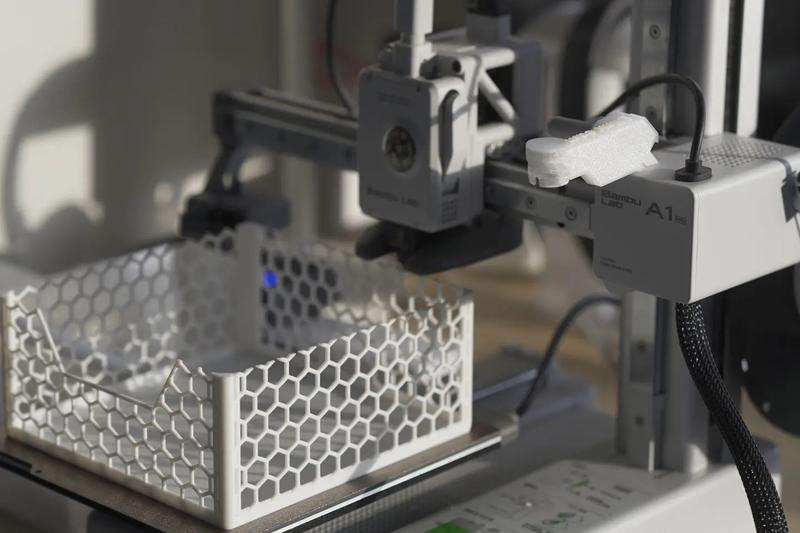
| Extrusion thermoplastic | Broad grade/color access, variable infill and large-form concepts | Layer bonding, warpage, bead texture and support access | Material identity, orientation and representative section test |
| Flexible TPU or flexible resin | Compliant geometry, grip, damping and fit variation | Compression set, tear, friction, aging and measurement difficulty | Hardness method, conditioning and use-cycle test |
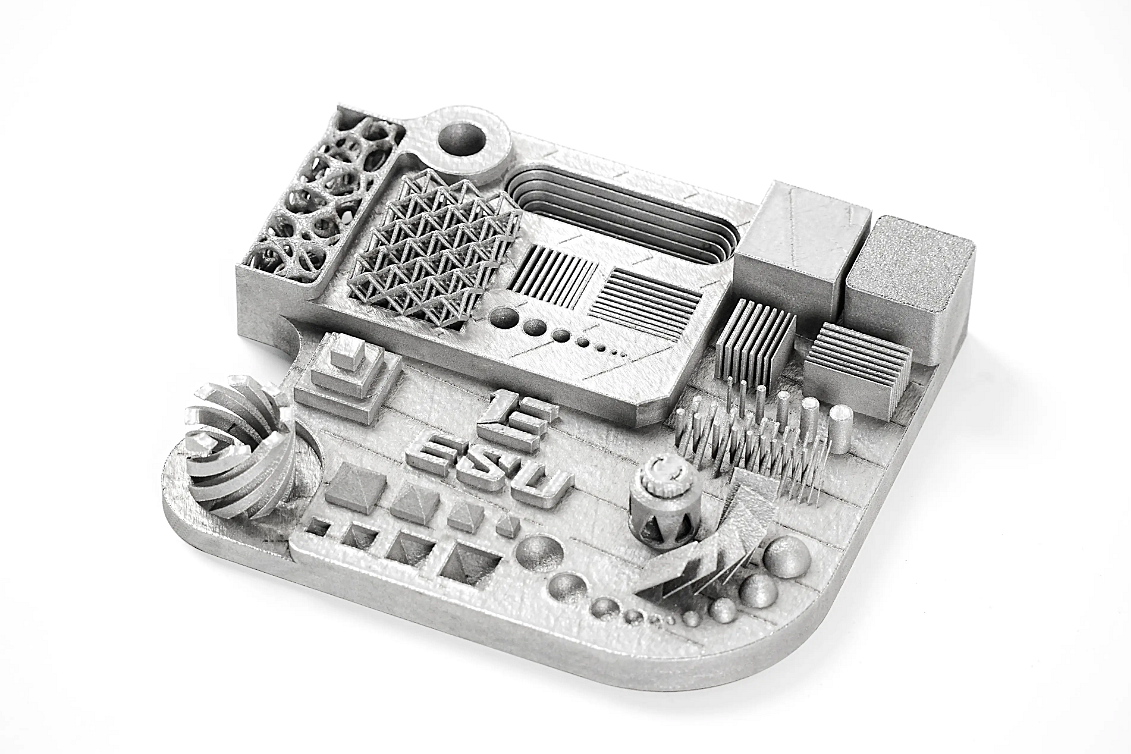
| Metal additive alloy | Custom metal geometry, internal routes and hybrid CNC features | Residual stress, supports, surface, internal quality and heat treatment | Alloy/route, final condition, traceability and application tests |
Filled Polymers and Composites
Glass, carbon or mineral fillers can change stiffness, thermal expansion, appearance, abrasion and print behavior. They do not simply improve an unfilled polymer. Fibers may be short and oriented by the deposition path, or continuous in process-specific layouts. Filled feedstocks can wear nozzles and produce rougher surfaces or more brittle features.
Choose a filled material when its measured property addresses the load or dimensional problem. Review direction, fiber content, specimen geometry and test method. If electrical or thermal behavior matters, test the printed part or representative section; a filler label is not a conductivity specification.
High-Performance Polymers
PEI, PEEK-family and other high-temperature polymers require compatible equipment, drying, chamber control and validated parameters. Their availability and customization range may be narrower than common polymers. Printing a nominal high-performance grade does not establish flame, sterilization, chemical or aerospace suitability for the part.
State actual temperature profile, load, chemical, duration and required records. Evaluate anisotropy, crystallinity where applicable, post-treatment and moisture. Use application tests on the final geometry instead of selecting by maximum datasheet temperature.
Metals and Hybrid Materials
Aluminum, stainless steel, titanium, nickel and other alloys may be available through specific metal AM routes. Not every alloy works on every machine, and printed material is not automatically equivalent to wrought or cast stock. Orientation, density, heat treatment, surface, residual stress and internal defects need route-specific control.
Hybrid construction can create more customization than one material. A printed body may receive machined inserts, bearings, seals, fasteners or a soft urethane element. Define retention, bond, tolerance stack and environmental compatibility. Multi-material interfaces can become the controlling failure location.
Finishes Extend Customization
Dye, paint, sealing, polishing, blasting, tumbling, coating and machining alter color, texture, friction and dimensions. Not every color or gloss is achievable on every substrate. Transparent appearance may require geometry and polishing beyond printing. Fine text may disappear during finishing.
Buy the final stack and approve production-intent samples under controlled viewing. The post-processing options should be tested for adhesion, wear, cleaning or exposure when those functions matter.
Material Selection Answer
For visual customization, start with route-compatible resins or easily finished polymers. For geometry and batch variation, powder-bed polymers can be attractive. For accessible concept work, extrusion materials offer broad options. For compliant parts, qualify a flexible grade. For metal function, use a controlled metal AM and post-machining route.
Color, Flexibility and Property Gradients
Color customization may come from colored feedstock, multi-jet deposition, dye, paint or a secondary part. Each method has limits in gamut, opacity, feature resolution, lot match and wear. Use physical swatches on the selected material and finish. Screen colors and monitor displays are not acceptance masters.
Flexibility depends on material grade, wall, lattice, orientation, temperature and loading rate. A nominal hardness does not predict the feel of a thin rib or thick pad. Create geometry-specific samples and define the compression, bend or force-deflection method. Long-term compression set and tear may control service even when the first touch feels correct.
Some processes can vary infill or deposit different materials within one part. Interface strength, toolpath, purge contamination and recyclability can constrain that freedom. Treat each gradient or interface as a designed feature with a test. Often separate rigid and soft components provide clearer replacement and material control.
Send the supplier the desired geometry, flexibility, color, texture, environment, load, quantity, finish and evidence. Ask which exact material is in stock, how it is processed, which variations share one qualified build, and what changes trigger a new test. The material that allows the "highest" customization is the one that covers the required design space without invalidating function or production control.