Choose from Metals, Plastics, and More: 3D Print Freedom
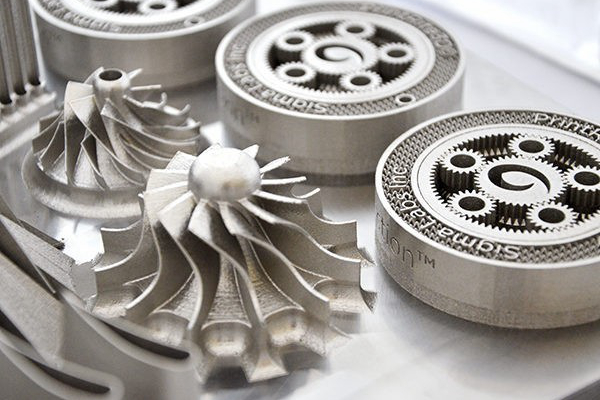
3D printing gives designers a useful range of metals, thermoplastics, photopolymers, reinforced polymers and elastomer-like materials, but it does not make those materials interchangeable. The right choice is the combination that survives the part's defined load, environment and service life after printing and post-processing. Alloy or polymer name alone is not enough. Process, build direction, feature thickness, machine parameters and final condition all influence the delivered part.
For procurement, the practical meaning of material freedom is therefore choice with evidence. A buyer can compare several routes before committing to tooling, make a polymer fit model and a metal functional part from the same design intent, or use a reinforced polymer where stiffness matters more than conductivity. Each route still needs its own drawing notes, acceptance tests and cost model. A supplier's material list is a starting point, not proof that a listed grade suits the application.
Define the Duty Before Browsing Materials
Begin with the likely failure mode. A hand-held enclosure may be governed by drop impact, snap retention and appearance. A fluid manifold may be governed by leakage, chemical compatibility and pressure cycling. A fixture may need stiffness and dimensional stability rather than high ultimate tensile strength. A heat-spreading component may need thermal conductivity and machinable sealing faces. These are different selection problems even if all four parts fit inside the same build envelope.
Translate the duty into measurable requirements: load direction and magnitude, allowable deflection, temperature-time profile, chemicals and concentrations, UV or moisture exposure, electrical behavior, expected cycles, dimensional datums, cosmetic zones and any cleanliness requirement. State whether the printed part is a concept model, a test article, a bridge-production component or a released end-use part. The engineering review available through 3D printing services should start from these inputs. A separate guide to materials for rapid 3D printing can then screen availability and schedule without replacing the duty review.
The Real Material Is a Manufacturing State
A datasheet for feedstock does not describe every printed geometry. Extruded thermoplastics can be weaker across deposited layers than along a well-fused bead path. Powder-bed polymer properties depend on thermal history, refresh practice and orientation. Vat photopolymers continue to change through washing, post-curing, temperature and aging. Laser powder-bed metals contain residual stress and surface-connected discontinuities that may be altered by stress relief, heat treatment, machining or hot isostatic pressing when specified.
Write the candidate as a complete condition: material designation, additive process, machine or qualified process family, orientation, layer strategy where relevant, thermal treatment, surface operation and inspection state. A stainless steel powder-bed part in the as-built condition is not the same deliverable as the same nominal alloy after stress relief and machining. Likewise, a nylon powder-bed housing conditioned in ambient humidity is not identical to a dry test coupon. The final state must match the evidence used for approval.
Material Families and Where They Earn a Place
Unfilled Thermoplastics
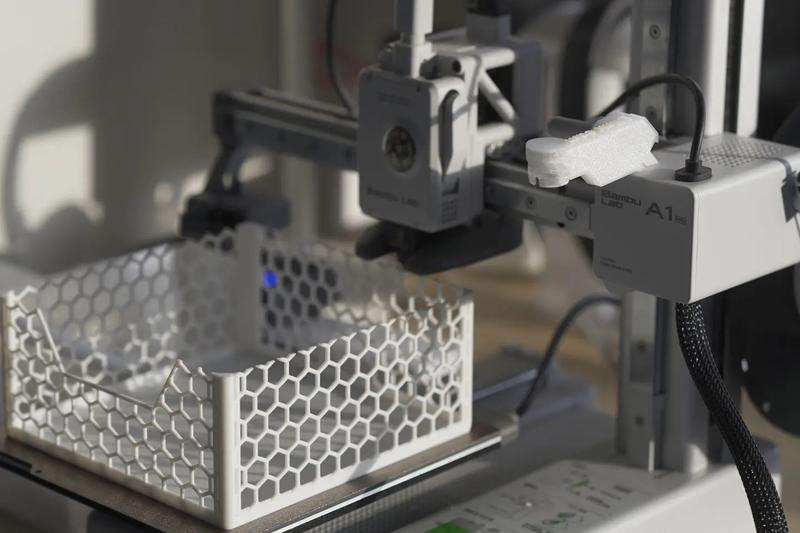
Extrusion and polymer powder-bed processes cover materials used for visual models, fixtures, housings, ducts and low-volume functional parts. The important distinctions are not simply commodity versus engineering plastic. Consider impact behavior, creep under sustained load, moisture uptake, heat-deflection behavior, layer bonding, achievable wall detail and whether the process leaves trapped powder or support contact in internal passages.
Unfilled polymers are often a sensible first route when electrical insulation, low mass, fast iteration or compliant features matter. They are less convincing when a threaded joint carries high clamp load for long periods, a flat sealing face must remain stable through temperature cycling, or a thin cantilever is loaded across weak build layers. Inserts, local section changes or machining may solve an interface problem without forcing the whole part into metal.
Vat Photopolymers
Vat-cured resins can reproduce fine features and smooth visual surfaces, which makes them valuable for appearance models, small fluid studies, casting patterns and geometrically detailed prototypes. Their labels such as tough, flexible, clear or high-temperature are comparative product categories, not universal engineering grades. Cure schedule, wall thickness, light exposure, absorbed media and aging can change behavior.
Use a photopolymer for end use only when the exact printed and cured condition has been tested against the actual duty. A clear resin that looks transparent after polishing may not have qualified optical transmission, weathering or stress-crack resistance. A nominally heat-resistant resin may hold shape during a short unloaded exposure yet creep under sustained stress. Acceptance should reproduce the service mechanism, not rely on the marketing name.
Reinforced Polymers
Short carbon- or glass-fiber-filled polymers can raise stiffness, reduce some forms of shrinkage and change thermal response. Continuous-fiber systems can place reinforcement along selected paths. Neither route creates an isotropic metal substitute. Short fibers tend to align with material flow or deposition, and continuous fibers only carry load effectively where their path, consolidation and termination are designed for it.
Reinforcement can also reduce ductility, alter hole quality, increase tool wear during machining and expose fibers at cosmetic surfaces. For a fixture or lightweight bracket, the added stiffness may be exactly the useful property. For a snap arm, impact guard or sealing lip, an unfilled grade may tolerate strain better. Test the failure mode at weld paths, corners, inserts and fastener interfaces rather than comparing only a tensile value.
Flexible Polymers
Elastomer-like printing materials support grips, bellows, protective covers, seals for limited validation and energy-absorbing features. Their hardness label does not fully predict compression set, tear propagation, fluid compatibility or recovery after temperature aging. Thin lattices and solid walls made from the same feedstock can feel very different because geometry controls the effective response.
For a production seal, define mating surfaces, squeeze, pressure direction, media, temperature, cycles and leakage criterion. A printed flexible sample may be excellent for checking installation and contact geometry while remaining unsuitable as the final sealing material. That distinction should be explicit on the purchase order and test plan.
Metal Additive Materials
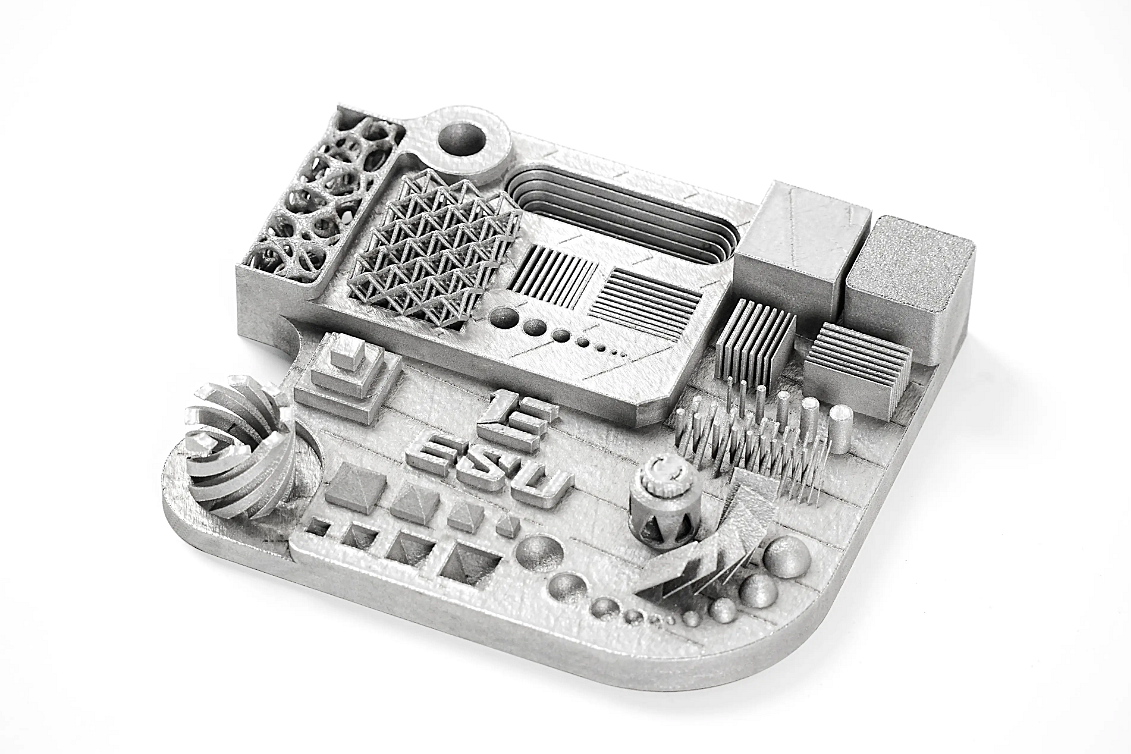
Metal powder-bed processes are considered when the part requires metallic temperature behavior, conductivity, stiffness, wear response, weldability or a compact geometry with internal passages. Common candidate families include aluminum, stainless steel, titanium and nickel alloys, but availability is machine- and supplier-specific. Printed properties should not be assumed equal to a wrought, forged or cast designation with a similar chemistry.
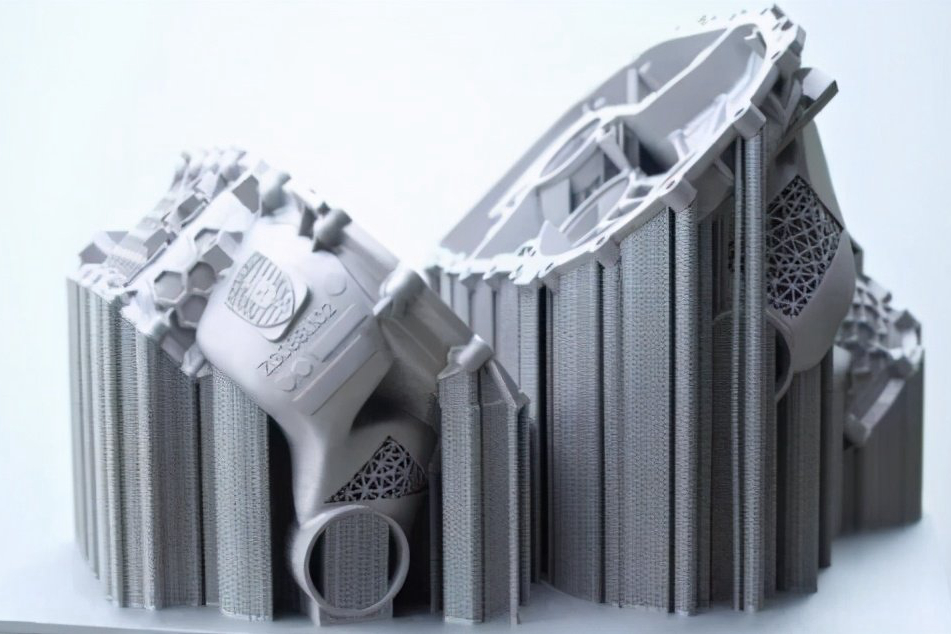
Metal printing brings additional controls: powder traceability, oxygen or contamination management, support strategy, stress relief, separation from the plate, distortion control and machining of interfaces. Surface roughness and near-surface discontinuities can dominate fatigue behavior. A highly loaded printed bracket therefore needs orientation-aware structural assessment and a test plan for the final surface condition. CNC machining is often reserved for datums, bearing seats, sealing lands and precision holes rather than applied indiscriminately to every surface.
Compare Candidates by Decision, Not by Hype
| Candidate route | Useful selection signal | Common hidden risk | Evidence before release |
|---|---|---|---|
| Extruded thermoplastic | Low-mass fixtures, fit checks, ducts and configurable housings | Layer-direction weakness, creep, support scars and moisture effects | Oriented coupons plus interface and sustained-load tests |
| Polymer powder bed | Complex self-supporting shapes and nested low-volume builds | Powder removal, porous surface, thermal-history variation | Cleaning proof, conditioned dimensions and representative part tests |
| Vat photopolymer | Fine detail, smooth appearance and visual prototypes | Cure variation, aging, brittleness and chemical sensitivity | Documented wash/cure state and time-dependent exposure tests |
| Fiber-reinforced polymer | Stiff, lightweight jigs, brackets and tooling aids | Anisotropy, reduced strain capacity and abrasive finishing | Load-path coupons, insert tests and boundary-part validation |
| Metal powder bed | Metallic duty, compact passages or consolidated high-value geometry | Residual stress, rough fatigue surfaces, supports and costly finishing | Build records, final-condition tests, NDT where justified and dimensional report |
The table is a screening tool, not a universal ranking. A plastic route can outperform metal in a corrosion-prone electrical enclosure because insulation and low mass matter. Metal can be the lower-risk route for a hot threaded manifold even when its build cost is higher. Select on the governing requirement and total accepted-part cost.
Strength Needs a Specific Definition
Requests for the strongest printable material are incomplete. Ultimate tensile strength does not answer whether a bracket will remain stiff, whether a clip will survive repeated deflection, whether a pressure body will leak, or whether a notched part will tolerate impact. Define the stress state, direction, rate, cycle count, temperature and allowable deformation. Then compare properties and tests that correspond to that failure mode.
Build direction deserves particular attention. A tensile coupon printed flat may not represent a vertical boss or a hole interrupted by support removal. Thin walls cool differently from thick coupon sections. Machining can remove a rough surface that initiated failure, but it can also expose subsurface discontinuities. Place witness coupons in relevant orientations and test representative features when consequence or uncertainty warrants it.
Heat and Chemicals Require Exposure-Specific Evidence
Temperature capability is not one number. Ask whether exposure is continuous or intermittent, loaded or unloaded, in air or fluid, and followed by a dimensional or mechanical requirement. Polymer softening, creep, oxidation and post-cure behavior are different mechanisms. Metals may retain shape while losing strength, oxidizing or suffering thermal-fatigue damage. A supplier datasheet can screen candidates; it cannot replace the project's thermal cycle.
Chemical compatibility also depends on reagent identity, concentration, temperature, contact duration, stress and cleaning method. A polymer resistant to a dilute room-temperature solution may crack in a concentrated heated exposure under clamp stress. A corrosion-resistant alloy may still pit in a chloride-bearing crevice. Use immersed coupons and, where geometry matters, printed specimens with actual surface condition. Record mass, dimensions, appearance and retained function against acceptance limits.
Geometry Can Change the Material Decision
Material selection and DfAM cannot be separated. A thin wall that works in a tough polymer may distort in metal after support removal. An internal metal channel may be printable but impossible to depowder or inspect. A continuous-fiber path may not turn through a compact joint. A resin lattice may cure unevenly or trap washing fluid. Review minimum walls, unsupported spans, escape holes, support access, machining access and inspection line of sight for each candidate route.
Do not preserve identical geometry merely to call a comparison fair. The purpose is to meet the same product requirements. A polymer version may need larger ribs and metal inserts; a metal version may use thinner walls and machining stock; a flexible version may tune response through lattice density. Keep the assembly datums and functional interfaces controlled while allowing process-specific geometry elsewhere.
Post-Processing Is Part of Material Selection
Delivered performance is often created after the build. Polymer powder-bed parts need depowdering; resin parts need washing and controlled post-cure; extrusion supports may be cut or dissolved. Metal routes can require stress relief, plate removal, support removal, heat treatment, blasting, machining and surface treatment. These steps affect dimensions, edge condition, color, porosity, residual stress and price.
Define the final surface by function. Cosmetic zones need a visual standard and approved sample. Sealing faces need roughness and flatness requirements tied to the gasket. Threads need a defined creation route and gauge. Internal passages need a cleaning and verification method. Broad references to post-processing options are not enough for an RFQ; the quote must identify which operations are included and which surfaces they affect. Use the route-specific list of typical 3D printing post-processing steps to expose missing operations before price comparison.
Prototype Material Versus Production Material
A prototype does not always need the final material. A low-cost polymer can answer envelope, access and assembly questions before a metal build. A clear resin can reveal fluid routing without proving pressure life. A printed metal sample can validate a compact passage while a later casting or machining route supplies volume. Good prototype planning labels which questions each sample can and cannot answer.
For functional validation, similarity must be deliberate. If the production part is molded polymer, a printed substitute may differ in fiber orientation, knit lines, residual stress and surface. If production is cast metal, an additively made sample can differ in microstructure, porosity and fatigue behavior. Use prototyping to retire geometry and interface risks early, then repeat material-dependent tests in the intended production condition.
Qualification from Coupon to Representative Part
A defensible qualification sequence has three levels. First, confirm feedstock identity and the supplier's controlled process window. Second, use oriented coupons to characterize the properties that govern the design. Third, test representative parts or critical features after all thermal, machining and finishing operations. Move beyond coupons when geometry creates stress concentration, trapped material, local thickness effects or difficult inspection.
The acceptance plan should match consequence. A display model may need dimensions and appearance only. A production fixture may need datum inspection, insert pull-out and repeated loading. A pressure-retaining or fatigue-loaded component can justify leak testing, proof testing, process qualification and a suitable nondestructive method. Inspection cannot prove every internal volume defect; it must be selected for the defect type, material, thickness and consequence being controlled.
Cost Is the Cost of an Accepted Part
Feedstock price is rarely the whole comparison. Build time, packing efficiency, supports, failed-build allowance, heat treatment, cleaning, machining, finishing, inspection and documentation all contribute. Metal powder and machine time may be expensive, yet a consolidated geometry can remove assembly operations. A cheaper polymer may need inserts, coating or frequent replacement. A filled polymer may save mass but add machining wear and inspection work.
Ask suppliers to separate build and secondary operations where possible. This reveals whether a tolerance or finish is driving cost. Use the same acceptance condition across quotes; an as-printed price should not be compared with a machined, inspected and documented price. For repeat low-volume demand, review nesting, batch traceability and revision control through a low-volume manufacturing plan rather than treating every order as a new prototype.
An RFQ That Produces Comparable Options
Send a controlled 3D model and a drawing or requirement sheet that identifies datums, critical dimensions, interface features, cosmetic zones and surfaces permitted to remain as printed. Include quantity per order and annual demand, target use, loads, temperature-time profile, all contacting chemicals, electrical or thermal needs, expected life, applicable test method and acceptance criteria. Mark any material restriction and explain whether it is mandatory or simply the current preference.
Request the proposed material designation, process, orientation, build strategy, final heat or cure condition, support-removal plan, machining stock, surface finish, inspection method and traceability documents. Ask what evidence comes from supplier data, what comes from representative coupons and what still needs project testing. For precision interfaces, identify them early so post-machining and fixturing can be quoted against stable datums.
Use a Shortlist and a Risk-Based Trial
Shortlist two or three plausible routes rather than demanding one instant answer. A form-and-fit polymer may be paired with a reinforced functional candidate and a metal boundary option. Compare them against the same duty matrix, then test the cheapest specimens that can discriminate between routes. A coupon can screen chemical attack; an insert block can compare thread retention; a small wall-and-boss artifact can expose distortion and surface issues before a full build.
Close the trial with a decision record. State which route passed, its exact final condition, rejected alternatives, unresolved limits and the evidence required if geometry or service changes. This prevents a successful material name from being reused outside the range actually tested. It also gives procurement a stable basis for later supplier or machine changes.
Engineering Conclusion
Material freedom in 3D printing is valuable because it lets a team choose the manufacturing response that fits each development question and production duty. It is not permission to select from a catalog by headline property. Define the failure mode, compare complete material-process-orientation-final-condition routes, design for each process and qualify the delivered state. That discipline preserves the speed and geometric choice of additive manufacturing while giving buyers evidence they can use to release a part.
FAQs