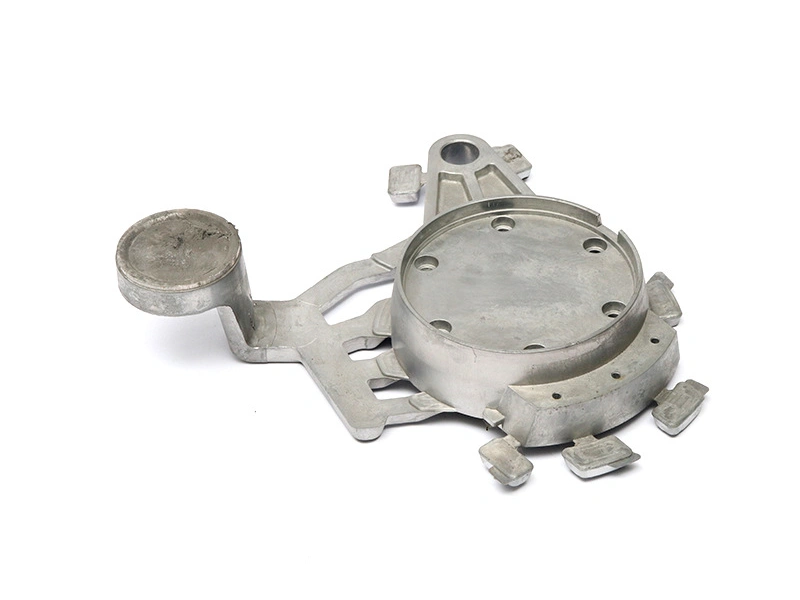
Can die cast automotive parts meet ISO/TS and PPAP standards?
Die-cast automotive parts can be produced within an IATF 16949-certified quality management system and submitted through PPAP when the customer requires it, but neither IATF nor PPAP is a part-performance standard. ISO/TS 16949 is predecessor terminology. Certification applies to an eligible audited manufacturing site and scope. PPAP is a customer submission and approval process based on authorized requirements, production-intent evidence, and customer-specific rules.
Separate the QMS from the part
IATF 16949 addresses the automotive quality-management system together with applicable ISO 9001 requirements and customer-specific requirements. It covers topics such as contract review, risk, product safety, contingency, supplier controls, production, measurement, nonconformance, corrective action, warranty where applicable, and change management. Buyers should verify the current certificate, site, scope, status, exclusions, and customer approval.
The certificate does not approve an alloy, casting route, porosity limit, dimension, coating, PPAP, capacity, or component. It may not cover a remote site, warehouse, tool shop, or outside processor in the way a buyer assumes. Verify the manufacturing location and support relationships against the certificate and customer requirements.
A supplier should not claim “IATF compliant” as a substitute when certification is contractually required. Any permitted alternative, development status, second-party audit, or waiver must come from the authorized customer.
Use APQP to build the production system
APQP organizes the work from requirements and feasibility through product/process development, validation, launch, and feedback. The customer manual and responsibility split determine deliverables. A casting supplier may own process design while the OEM or Tier 1 owns product design, or the supplier may carry broader design responsibility.
Typical planning evidence can include feasibility, timing, team responsibilities, special characteristics, design inputs, DFM, process flow, PFMEA, control plan, work instructions, tooling, gauges, measurement analysis, material and performance tests, packaging, sub-tier approvals, capacity, safe launch, and change controls. Do not generate documents after the process is fixed merely to fill a PPAP folder.
Understand what PPAP approval means
PPAP demonstrates that the supplier understands customer engineering requirements and that the defined production process has evidence capable of producing conforming product under the submitted conditions. Submission level, retained versus submitted evidence, sample quantities, production run, laboratories, capability, appearance, material and performance results, and customer forms depend on the customer.
Approval applies to the submitted part number, revision, site, material, process, tooling, cavity, sub-tiers, and conditions identified by the customer system. It does not permit unapproved substitutions or eliminate ongoing control. Interim or conditional status, deviations, open tests, and expiration conditions must be tracked.
Map common PPAP evidence to casting
Evidence area | Die-casting question | Common failure if treated as paperwork |
|---|---|---|
Design record and change documents | Are drawing, model, alloy, process and exceptions controlled? | Tool built to obsolete or conflicting data |
Flow, PFMEA and control plan | Do melt, casting, trim, machining, finish and inspection risks connect? | Special characteristic missing from the actual operation |
MSA and dimensional results | Can each cavity and final-state feature be measured reliably? | Clean layout with no evidence of repeatable production measurement |
Material and performance tests | Do samples represent alloy, route, section and final part duty? | Generic certificate or coupon used to approve unrelated function |
Initial process studies and capacity | Is production stable by cavity at required rate? | Capability calculated from selected or nonrepresentative samples |
Part submission warrant | Are configuration, site, declaration and deviations accurate? | Signature treated as customer approval before disposition |
Control casting-specific risks
PFMEA and control plans should address material identity, returns, melt condition, chemistry, temperature, transfer, die thermal state, shot profile, vacuum where used, spray, cooling, cycle interruptions, gates, vents, overflows, trim, porosity, oxide films, flash, cracks, ejection, tool wear, machining breakout, coating, leak and functional tests.
Special characteristics must flow to process controls and records. A critical seal land may require casting-zone review, machining stock, fixture and tool control, final measurement, coating mask, cleanliness, leak test, and reaction. Monitoring shot pressure alone cannot prove the seal land or pressure boundary.
Make MSA and capability cavity-specific
Choose measurement studies that match variable or attribute use, operator, fixture, datum, equipment, resolution, environment, and decision. Supplier and customer CMM programs can disagree because of alignment or filtering. Correlate methods before PPAP rather than disputing results at launch.
Study stable production-intent output and identify each cavity. Pooling cavities can hide one shifted or less capable cavity. Review distribution, tool warm-up, maintenance, autocorrelation, measurement uncertainty, subgrouping, and customer calculation rules. Select inspection equipment by the characteristic and decision. A capability index without context is not proof of future conformance.
Control material, traceability, and sub-tiers
Link ingot or charge, melt, process lot, cavity, tool revision, machine, heat treatment, machining, coating, inspection, rework, and shipment to the level required for containment. Incoming certificates do not by themselves prove poured chemistry. Define return-metal policy, sampling, records, and reaction.
Approve and flow requirements to heat treaters, coaters, machine shops, laboratories, sorting, packaging, and other sub-tiers. Verify their changes and records. If the PPAP names a source or process, transfer to another technically similar supplier may require notification and resubmission.
Plan capacity, launch, and contingency
Production approval requires more than conforming samples. Demonstrate machine and tool rate, cavities, staffing, material, trim, machining, coating, inspection, maintenance, changeover, scrap, planned downtime, packaging, logistics, and sub-tier capacity under the customer's method. State assumptions and bottlenecks when planning mass production.
Safe launch or enhanced containment should have entry, checks, escalation, duration, and exit approved by the customer. Contingency plans need actual alternatives for tool damage, machine outage, utilities, material, labor, cyber events, fire, logistics, and sub-tier disruption. Moving tools or processes can trigger PPAP and validation.
Control nonconformance and change
The supplier cannot self-approve a deviation unless customer authority permits it. Contain by lot and cavity, describe actual condition, determine extent, protect suspect product, and obtain disposition. Sorting or rework must use approved instructions and effective measurement.
Define notification and PPAP triggers for design, alloy source, chemistry, return policy, machine, die, cavity, gate, vent, vacuum, cooling, repair, process limits, site, heat treatment, machining fixture, coating, inspection, software, packaging, or sub-tier changes. Tool maintenance can be a change when product evidence is affected.
What buyers should verify
Before award, verify the casting supplier's site and QMS scope, customer-specific requirement access, feasibility, APQP team, tool and process concept, special-characteristic handling, laboratories, sub-tiers, MSA, capacity, traceability, contingency, change, nonconformance authority, and PPAP timing.
Provide exact PPAP manual, submission level, significant production run definition, sample and cavity rules, capability targets, approved laboratories, appearance requirements, material and performance tests, records, capacity method, safe launch, and approval authority. Die-cast parts meet automotive requirements when the approved design and production process remain conforming. IATF and PPAP organize and evidence that work; they do not replace the product requirements.