Why Do M3 Threads Strip in a Die-Cast Enclosure?
An M3 thread strips when the tap opens a pore in the as-cast boss and the flank above that pore loses its backing. The form can be sound while the wall behind it is hollow, and thread stripping is a casting fault before it is a tapping one.
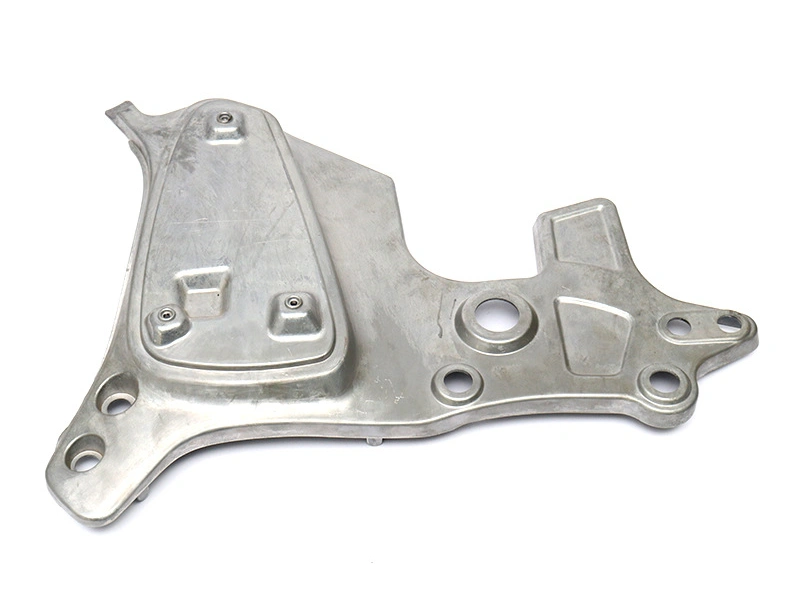
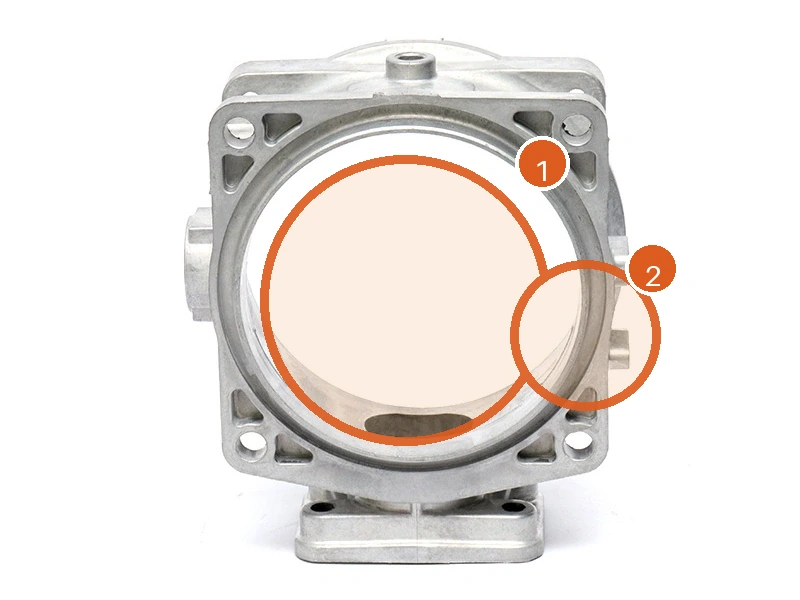
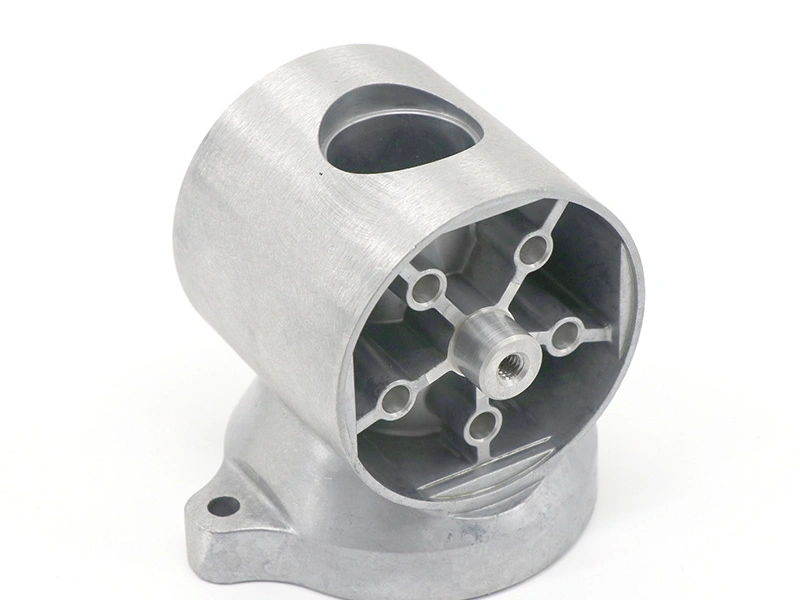
The part is an aluminium enclosure, assumed to be high-pressure die cast (HPDC) in ADC12 to ASTM B85 in the as-cast F temper, a grade pending foundry sign-off. Its M3 bosses are cast in the cavity and tapped during post machining.
Why do M3 threads strip in a die-cast boss?
A thread strips in a die-cast boss because the tap cuts into wall that already holds a pore, and the flank over that pore has nothing behind it.
Torque proves the joint, not the metal: the screw must not turn, and a thread whose wall holds a pore gives way first, while a boss with sound wall holds the screw.
Because the boss section and the gate are cut into the die, a porous boss costs a die change and a new first article, while a new tap costs a tool change and no die work.
Where does porosity sit inside an M3 boss?
The pore that matters is the one that cuts into the thread form. A sink mark on the outside is an appearance call; a pore inside the boss is a wall-section call, judged with different tools.
The gate sits on the thick floor and the overflow at four corners, a layout pending foundry sign-off, so the boss fills from its base, its top is the far end of the fill, and feeding reaches that top last. Because the HPDC layout sets that path, moving the pore costs a gate change on the die. One boss design can pass a sample and fail a lot.
A pore in the core changes nothing, because the screw never reaches it. A pore that breaks into the tapped wall takes the flank with it. Whether the pore cuts the thread form, not its size, decides the failure.
Why is tapping scheduled after the CNC pass?
Tapping follows the mill because the opening face is the datum for the boss, and the tapped hole has to sit under the screw hole in the lid.
The mill cuts the opening face and the top face, and the tap follows that reference. A tap run before the faces follows the cast position, so the tap fixes the thread axis before the mill moves the face it is measured from.
Thread depth sits in the same callout. The tap stops inside the boss so it does not break through the 2.5 mm floor, which keeps wall behind the flank. The depth is pending foundry sign-off.
How much torque proves an M3 thread?
The pore is why the torque check exists. An M3 thread has to pass both the go/no-go and the torque check. The go end must enter, the no-go end must not, and the screw then goes to 2.5 N·m, must not turn, and that value is pending foundry sign-off.
The go/no-go reads the form the tap cut, and the wrench reads the wall behind it. A pore that reaches the tapped wall leaves the form complete and unbacked.
With the hole masked during coating, the gauge reads the same thread after cure.
Both checks are bench work, and a torque check on a sample only leaves the pore risk in the lot that ships.
What separates a stripped thread from a shifted boss?
A stripped thread comes back to the pore: it usually passes the go/no-go and fails on the 2.5 N·m torque check, because the gauge catches only a damaged thread form. A shifted boss passes both checks and misses its Ø0.2 mm position target.
The CMM measures position from the opening face, and that belongs to the datum, not the tap.
| Feature | Target (mm) | Allowed range (mm) | Checked with |
|---|---|---|---|
| M3 boss position | — | Ø0.2 | CMM, from the opening face |
| Wall thickness under the boss | 2.5 | 2.5 ± 0.2 | thickness method pending foundry sign-off |
A stripped thread falls to the casting and a shifted boss to the machining setup, so the two failures land on different invoices and different people own the fix.
Before a quote, send the drawing with the thread callout and depth, the boss position and datum, the mask list for the M3 holes, and the batch size, so the quotation splits die work from tapping and gauging.