What Cleaning Evidence Is Needed After Sandblasting a Complex Housing?
Post-blast cleaning evidence should show that loose abrasive, fractured media and dust have been removed from fins, blind holes, threads, pockets and textured surfaces without adding oil or moisture. Buyers should use a qualified cleaning method plus feature-specific inspection, not rely on a quick air blow and exterior visual check.
The required evidence depends on downstream use. A bare decorative part, bonded part, powder-coated housing and fluid-carrying component have different residue risks. Cleaning must also remain inside the approved clean-to-next-process time.
Where Media and Dust Are Most Likely to Remain
Geometry | Residue Mechanism | Inspection Direction |
|---|---|---|
Blind threaded hole | Particles wedge at root or bottom | Borescope, controlled flush or extraction |
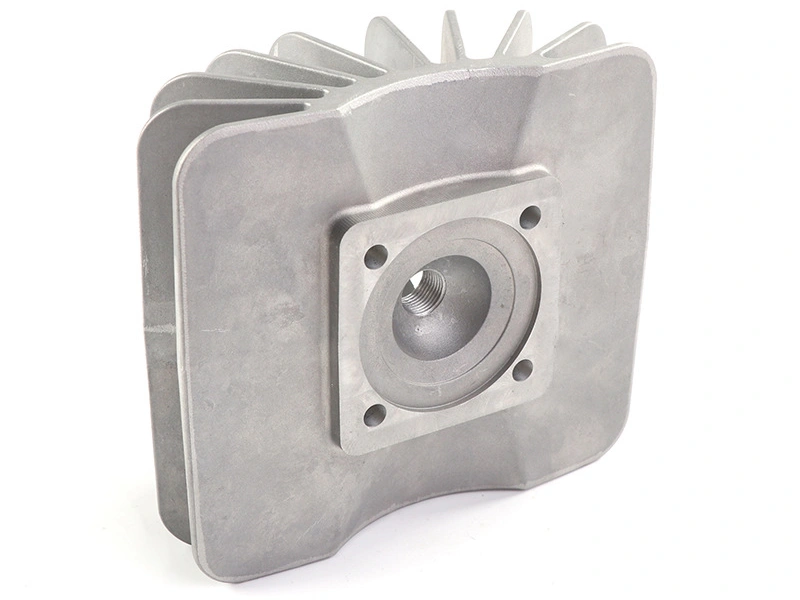
Close fin spacing | Dust bridges between rough walls | Lighting, air/vacuum validation and wipe where accessible |
Deep pocket | Gravity and line-of-sight limit removal | Orientation and cavity check |
Rough cast texture | Fine fractured media remains in valleys | Qualified wipe or rinse comparison |
Mask transition | Abrasive collects against plug or tape edge | Inspect after mask removal |
How Air, Vacuum and Washing Methods Should Be Qualified
Compressed air must be clean and dry enough for the downstream process. Nozzle sequence and part orientation should eject media rather than move it into another cavity. Vacuum can capture dry particles without redistributing them, but access and filter control matter. Washing may remove fine dust but adds rinse and drying requirements.
Qualify the chosen combination on worst-case geometry and maximum normal blast loading. The sand blasting process should specify sequence, equipment and abnormal response when cleaning cannot be completed.
Which Tests Can Prove Cleanliness?
Use visual and borescope inspection, controlled white-wipe methods, gravimetric extraction, rinse filtering or another approved technique according to risk. A wipe tests only accessible surfaces. An extraction can quantify removable residue but may not identify particles embedded in the substrate. Set limits from downstream performance and qualification, not an arbitrary universal number.
For coating, process representative parts through pretreatment and final finish, then examine adhesion and inclusions. For threads or fluid passages, function and cleanliness tests may be needed. Do not use a successful exterior coating as proof that hidden cavities are free of abrasive.
How to Set Residue Limits and Production Sampling
Residue limits should come from downstream risk and qualification. A cosmetic housing may use no visible loose particles under specified inspection. A fluid, electrical or bonded component may need a quantitative extraction or cleanliness method. State the sample area, extraction fluid or filter, instrument, particle classification and acceptance where applicable.
First article and process qualification should test the worst cavities and normal media-aging condition. Routine production sampling can target features that trend the process, with periodic expanded checks. Increase sampling after media change, cabinet maintenance, cleaning-equipment repair or a new deep geometry.
When residue exceeds the limit, contain material since the last accepted check, identify whether blasting or cleaning created the change and re-clean only under an approved route. Repeated cleaning can add moisture, chemical exposure or handling damage, so the final part still needs inspection.
Trend results rather than recording pass/fail alone. Gradually rising extraction weight can reveal nozzle, filter or media-breakdown issues before a formal rejection occurs.
Verify cleaning after the production part has cooled and masks are removed, because retained particles can fall out later. Rotate or lightly handle the part under the approved inspection method to challenge loose residue. The method must not damage the texture or drive particles into functional openings. Record any repeat cleaning and perform the same final verification again.
Packaging trials should confirm that vibration during transport does not release hidden particles into sealed cavities or onto cosmetic faces.
How to Control Handling After Cleaning
Clean parts should move on protected racks with gloves or contact points that do not add fingerprints, fibers or dust. Define maximum hold time and environmental protection. Packaging materials should not shed onto the rough surface.
For a hypothetical complex housing, qualification weighs filter residue after a controlled rinse, inspects blind holes and checks fin gaps. The route is repeated after normal media aging to ensure cleaning remains effective. This is a method example, not a claimed Neway result.
If powder coating follows blasting, the approved chemical preparation and clean-to-coat controls still apply.
Cleaning Record | Required Detail |
|---|---|
Part/lot identity | Connects residue evidence to blast population |
Media identity | Supports contamination and particle analysis |
Cleaning sequence | Air, vacuum, wash, orientation and time |
Worst-case feature | Blind hole, pocket or fin gap inspected |
Verification result | Raw wipe, extraction, filter or visual evidence |
Transfer condition | Handling, storage and next-process time |
When production geometry changes, the cleaning qualification must be reviewed even if the blasting recipe is unchanged. A newly added blind boss, narrower fin gap or deeper threaded hole can become the true worst-case retention feature and invalidate an inspection plan built around the earlier revision.
Post-blast cleaning is complete when residue risk has been qualified for the real geometry and downstream process. A clean-looking flat surface cannot release a housing that still carries abrasive in hidden functional features.