How do engineers choose between iron, aluminum, zinc, and copper alloys?
Engineers choose between iron, aluminum, zinc and copper alloys by eliminating families that cannot meet service temperature, load, mass, corrosion, wear, conductivity or regulatory requirements, then comparing castability, section response, heat treatment, machining, supply and accepted-part cost. The family is only a first screen. The final decision must name an exact casting grade, material condition, sand-casting route and test plan reviewed against the drawing.
Use Product Duty as the First Gate
Define loads, stiffness, fatigue or impact duty, temperature, pressure, environment, wear pair, electrical/thermal function, joining, part mass and allowable maintenance. A material that fills the mold easily but fails service is not a candidate. Conversely, the nominally strongest family may be impractical if the foundry cannot control it in the required sections.
Do not compare generic handbook values without condition, product form and test basis. Wrought, forged, die-cast and sand-cast properties can differ. Use data applicable to the proposed casting grade and heat treatment, then validate critical behavior as required by the product.
Family-Level Decision Matrix
| Family | Potential reason to choose | Reason to reject or investigate |
|---|---|---|
| Gray/ductile iron | Damping, castability, wear/compressive duty or structural iron grades | Mass, corrosion, section-sensitive matrix or treatment control |
| Aluminum foundry alloy | Low density, machinability and selected thermal/corrosion functions | Temperature duty, stiffness, oxide/gas control or heat-treatment distortion |
| Zinc casting alloy | Grade-specific bearing, hardness or low-quantity function | Sand-route availability, temperature/environment and process economics |
| Brass/bronze | Wear, bearing, conductivity or medium-specific corrosion behavior | Mass, raw material, restricted elements, galvanic contact or grade availability |
When Iron Families Fit
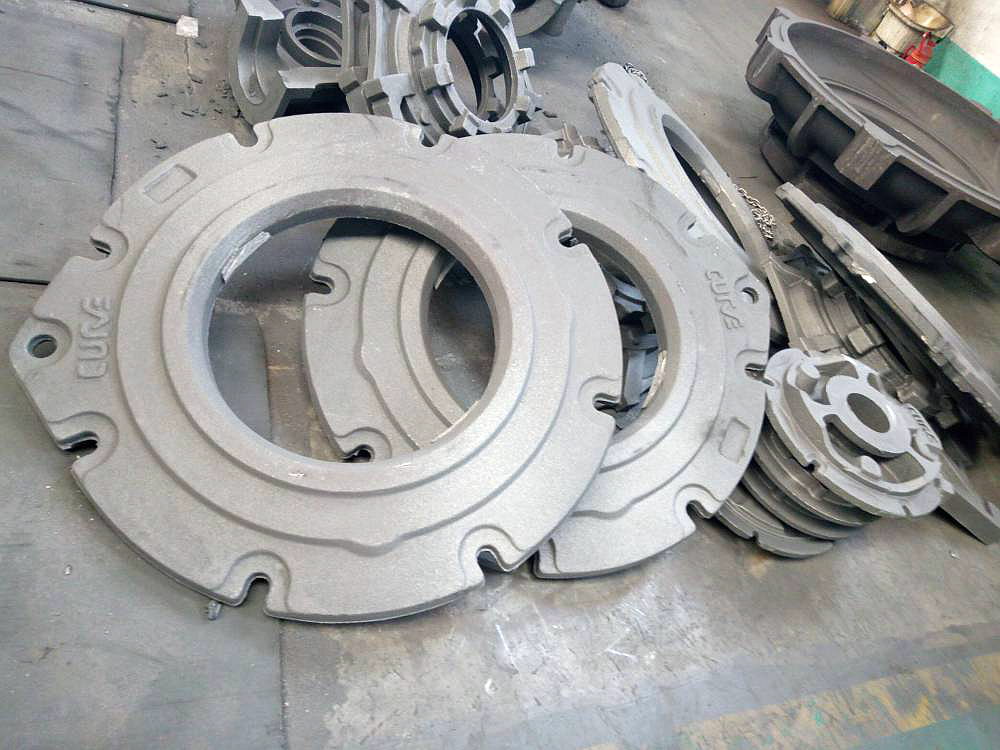
Gray iron can suit machine bases, housings and selected wear parts where damping, compressive behavior and machinability matter. Ductile iron can provide a different strength-ductility balance through controlled graphite nodularity and matrix. Both are broad labels; grade, section, inoculation/treatment, heat treatment and sampling define the actual product.
Iron's density may disqualify it for mass-sensitive assemblies. Environmental exposure may require coating, material change or corrosion allowance depending on service. Do not assume every iron grade is easily welded or impact tolerant. Match the exact grade to the governing failure mode.
When Aluminum Foundry Alloys Fit
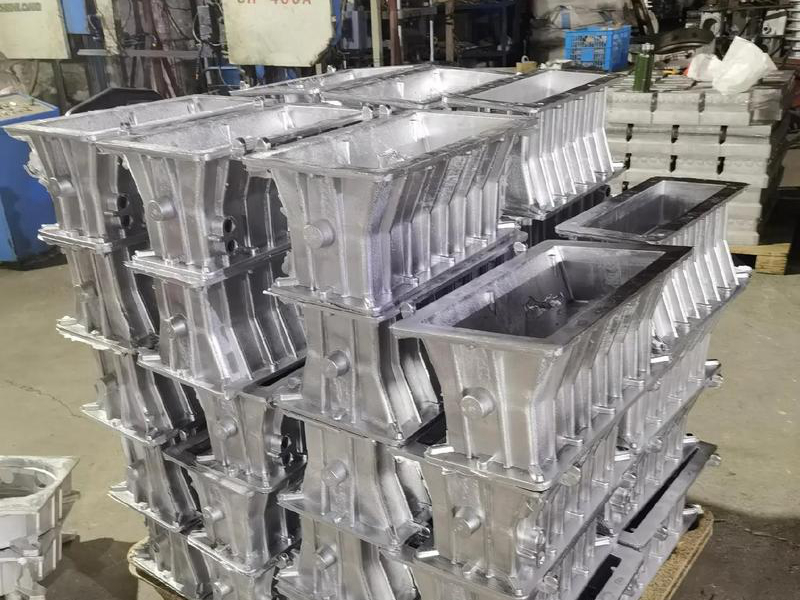
Aluminum casting grades are often shortlisted for lower mass, machining and thermal-management needs. A356-type foundry alloys may be candidates where their specified condition and supplier route fit. Section, oxide films, hydrogen, feeding and heat-treatment response influence properties and pressure performance.
A380 and other pressure die-casting grades should not be transferred automatically to a sand-casting drawing. If future production uses die casting, a sand-cast prototype may still answer geometry or assembly questions, but process-specific microstructure and discontinuities require separate qualification.
When Zinc Casting Alloys Fit
Zinc alloy discussions often assume high-pressure die casting, where thin detail and production rate can be attractive. Sand casting a zinc grade is a different commercial and technical route. It may be considered by a qualified foundry for selected bearing, wear or low-quantity parts, but availability, mold practice, section, temperature and final properties must be confirmed.
Do not choose Zamak or ZA designations solely from die-casting familiarity. Review the exact casting specification and service environment. For small detailed repeat parts, another process may provide a better surface, tolerance and unit cost; sand casting should win an actual route comparison.
When Brass or Bronze Fits
Copper-based casting grades may suit bearing, wear, conductivity and particular corrosion duties. Brass, tin bronze, leaded bronze and aluminum bronze have different chemistry, strength, machinability and environmental behavior. Grade-level evaluation is mandatory.
Consider galvanic couples, service medium, velocity, temperature and restricted elements. Higher density and metal cost can matter. Pressure tightness requires an agreed part test; marine or chemical suitability requires environment-specific evidence. Copper's high conductivity as an element does not mean every bronze has the same conductivity.
Compare Manufacturing and Total Delivered Cost
Geometry can reverse a material preference. Thin paths, heavy junctions, cored passages and machining stock interact with fluidity, contraction, mold reactions and hardness. Heat treatment and external testing add schedule and cost. Ask each foundry to quote a complete route at the same final condition.
Include metal yield, minimum melt, mold/core work, heat treatment, machining, finish, inspection, destructive specimens, accepted yield, packaging and freight. The common sand-casting material guide provides candidates; normalized quotes show whether a candidate is commercially viable.
Release the Exact Grade and Evidence
Send the engineering review team controlled CAD and drawing, duty, exact grade options, condition, section map, demand, machining, joining, finish, repair rules and tests. Require returned deviations, melt route, sampling and capability assumptions.
Before accepting an alternate grade, compare specification editions, chemistry, heat treatment, property/test locations, permissible repair and supply form. Confirm that the foundry can obtain controlled charge and repeat the approved route at the required lot cadence. Commercial availability can eliminate a candidate, but it cannot justify an undocumented substitution.
The choice among iron, aluminum, zinc and copper is a sequence of gates, not a universal ranking. Select the family that survives product duty, then release an exact casting grade only after geometry, supplier process, evidence and accepted-part economics agree.