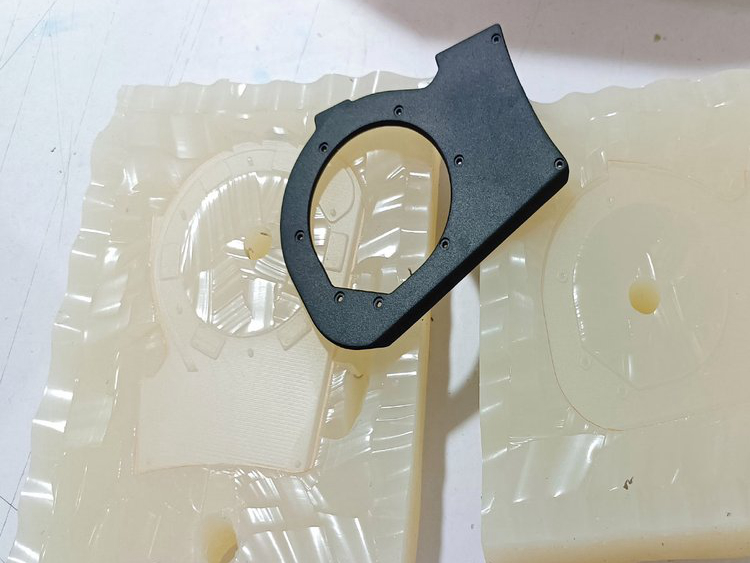
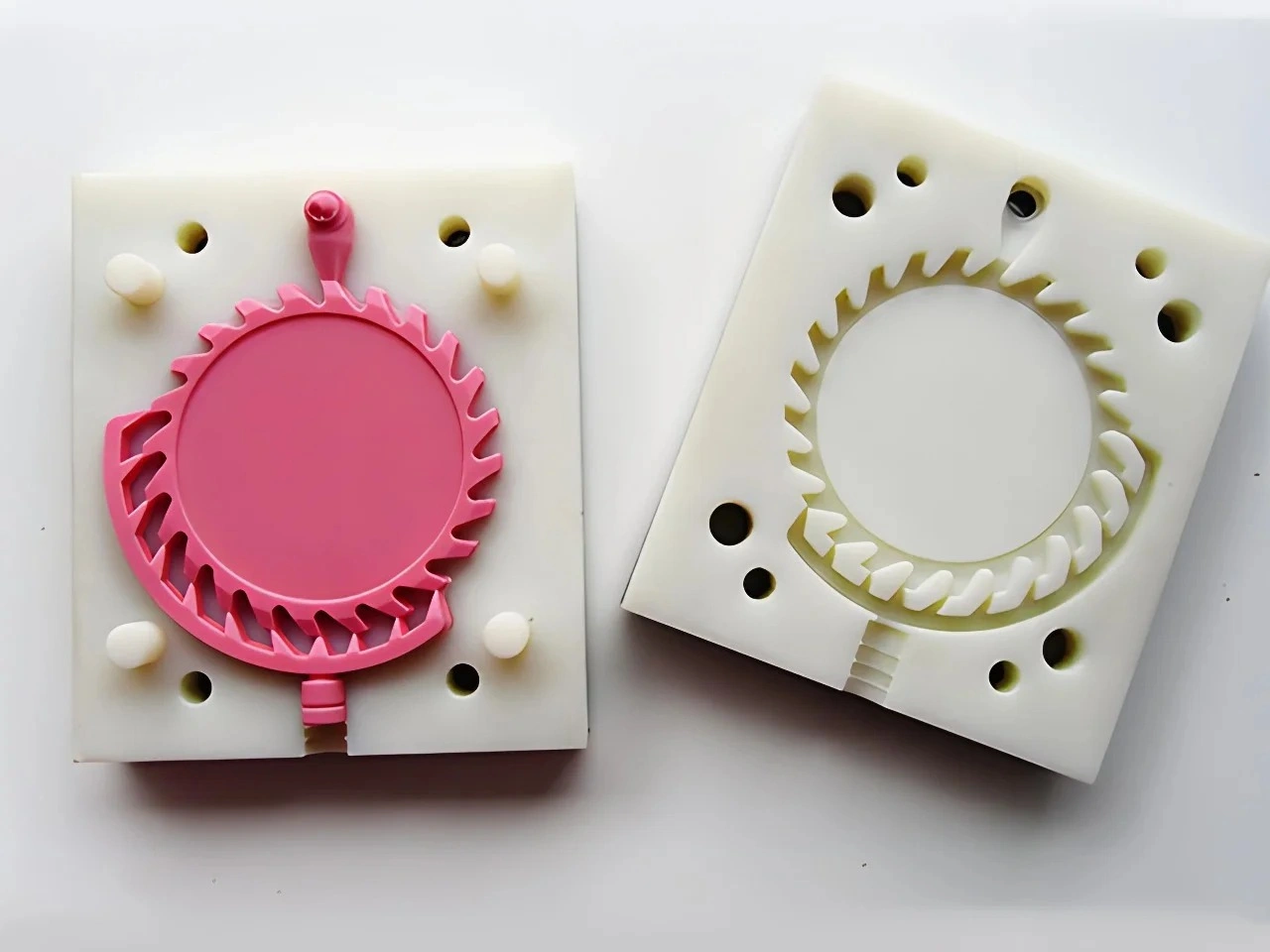
Can urethane parts be painted, textured, or surface-treated?
Yes. Cast urethane parts can be painted, can reproduce texture from the master and silicone mold, and can receive selected decorative treatments when the resin, cure state, release residue, preparation, coating chemistry and process temperature are compatible. The finish must be qualified on representative material. Processes designed for conductive metal or high-temperature cure are not automatically suitable for polyurethane.
Choose Where the Surface Is Created
A texture built into the approved master transfers through the silicone mold to each casting. This route can repeat grain efficiently, but it also repeats unwanted scratches, print lines and repairs. Post-applied texture or paint can correct or customize selected zones, though it adds labor and operator variation.
Decide whether color comes from pigmented resin, paint or both. Cast-in color can reduce visible damage from minor scratches and simplify hidden surfaces. Paint can support a tighter appearance target, multi-color layout or special gloss. The correct route depends on the prototype question, not a blanket preference.
Surface Route Comparison
| Surface route | Useful for | Main risk | Approval method |
|---|---|---|---|
| Molded texture | Repeated grain or matte surface | Master defects and demolding stretch | Approved master plus first casting |
| Pigmented resin | Integral color and reduced paint scope | Batch, thickness and cure appearance | Representative color plaque/part |
| Liquid paint | Color, gloss, graphics and local zones | Release residue, solvent attack and adhesion | Full coating-stack sample |
| Decorative metallic effect | Visual metal appearance | Substrate prep and flex cracking | Finished representative feature |
| Mechanical abrasion | Controlled local matte preparation | Edge loss, exposed pores and inconsistency | Process sample and visual limit |
Surface Preparation Controls Adhesion
Mold release, uncured constituents, dust, fingerprints and trim residue can interfere with paint or adhesive bonding. The preparation route may include controlled cleaning, suitable abrasion and primer. It must avoid swelling, softening or distorting the selected urethane.
Allow the part to reach the specified cure or conditioning state before qualification. A coating applied successfully to a freshly cast plaque may behave differently on an aged or post-cured part. Record resin, part age, cleaner, abrasion, primer, paint and cure conditions so a successful sample can be repeated.
Paint System Must Fit the Resin and Test
Liquid paint is often practical for urethane prototypes, but "paintable" is not an acceptance specification. Define color reference, gloss, texture, film appearance, masking edges, allowable dust/repair and handling exposure. If flexing or assembly rub occurs, test the complete stack in that condition.
Solvent strength and coating cure can affect the substrate. Use compatible materials and the lowest process burden that meets the test. The painting process describes general finishing capability, but the cast urethane resin and supplier's coating data must govern the qualification.
Powder Coating Is Not a Default Urethane Finish
Conventional powder coating commonly relies on electrostatic application to a conductive substrate and a thermal cure. Cast urethane is nonconductive and may distort, degrade or change properties under a cure cycle. A low-temperature or specialized decorative route should not be specified without evidence for the exact substrate, pretreatment and temperature history.
When a powder-coated production metal appearance must be simulated, liquid paint, a cosmetic effect coating or another qualified low-temperature process may answer the visual question with less risk. The prototype should be labeled as an appearance simulation, not proof of production coating durability.
Molded Texture Needs Edge and Demolding Review
Fine grain can be softened by master preparation or local silicone behavior. Deep texture on an undercut may increase demolding strain and damage either part or mold. Texture can also make seam cleanup conspicuous if the parting line crosses an appearance zone.
Place the mold split, gates and vents with the texture map. Approve a first casting under controlled lighting and viewing distance. The guide to urethane finish approval should define reference samples and acceptable witness marks.
Decorative Metal Effects Have a Boundary
Vacuum metallization or other decorative systems may create a metallic appearance when substrate preparation, base coat and topcoat are qualified. The thin decorative layer does not turn the prototype into metal or establish electrical, thermal, wear or corrosion behavior. Flexible zones may also challenge adhesion or crack resistance.
Anodizing is an electrochemical conversion process for suitable metals and is not applicable to polyurethane itself. Plating-like and metal-effect finishes on urethane require their own process stack. Name the visual target accurately so the supplier does not quote an incompatible metal treatment.
Protect Functional Features from Finish
Mask threads, connector seats, grounding contacts, bond zones, gasket faces and dimensions that the coating can alter. Decide whether inspection occurs before or after finish. A prototype can pass raw dimensions and fail assembly after primer and paint accumulate at an interface.
Coordinate trim, seam filling, sanding, texture and paint. Aggressive repair can round an edge or move a gap-controlling surface. Use appearance zones and functional datums together rather than allowing cosmetic work to overwrite assembly intent.
Surface-Finish RFQ Checklist
Send resin intent, prototype purpose, appearance-zone drawing, color and gloss reference, texture sample, viewing conditions, flex/handling exposure, masked features, graphics, assembly state and required adhesion or abrasion test. State whether the finish simulates a production surface or must perform a bounded function.
Cast urethane can support convincing painted and textured prototypes when the complete route is approved on representative parts. Compatibility, preparation and acceptance evidence matter more than a generic list of treatments.