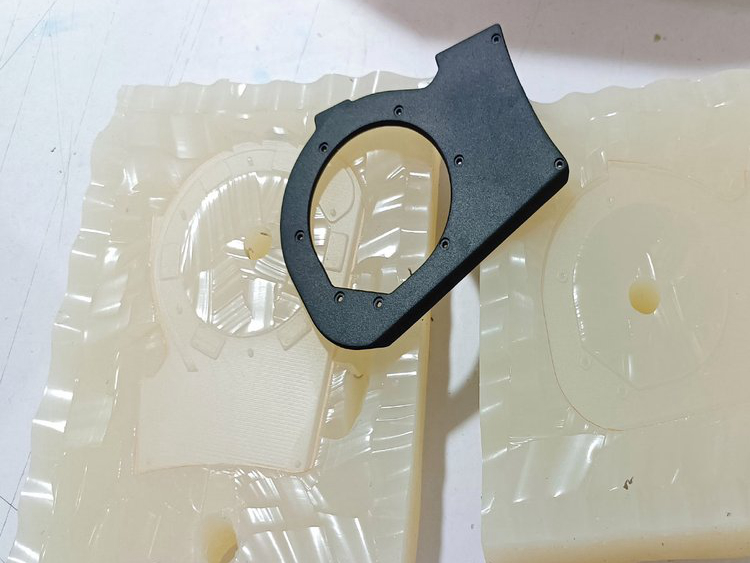
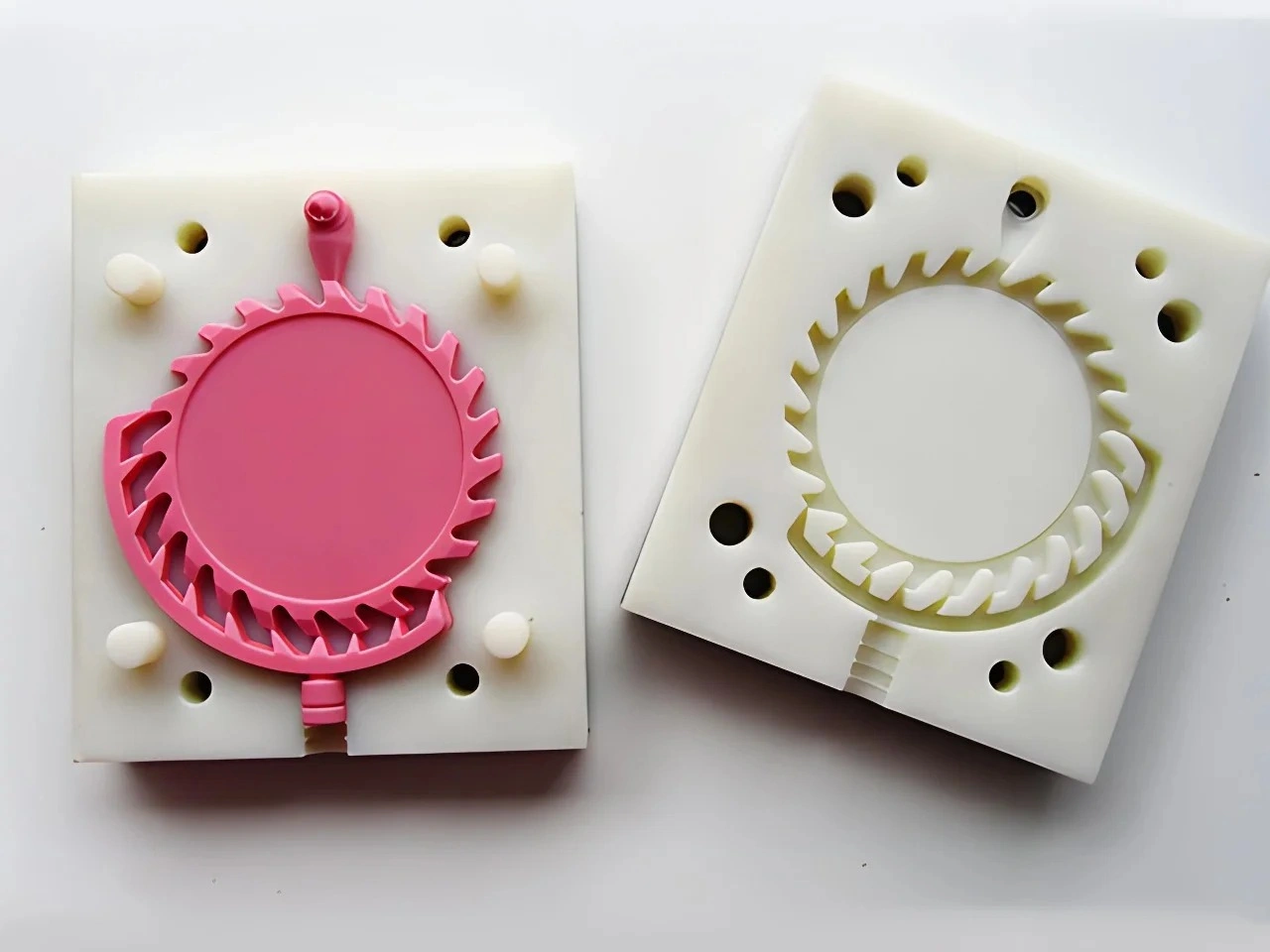
How does urethane casting support the transition to long-term production methods?
Urethane casting supports long-term production by exposing geometry, assembly, user-interface and appearance issues before permanent tooling is released, then recording approved changes and open risks in a transfer package. It does not qualify injection molding, die casting, CNC machining or production material. Each long-term route still needs its own DFM, tooling, samples and process-specific validation.
What Transfers and What Does Not
| Prototype output | Can inform production | Cannot establish by itself |
|---|---|---|
| Controlled CAD revision | Envelope, interfaces and approved geometry changes | Production draft, gates, ejection or machining access |
| Assembly findings | Clearances, access, sequence and fixture concepts | Production material deflection and process variation |
| Appearance master | Color, gloss, texture and cosmetic-zone intent | Production coating or molded-surface capability |
| Bounded functional test | Design direction under stated conditions | Long-term material or regulatory qualification |
| Urethane casting traveler | Prototype traceability and learning | Injection/die-cast gates, cooling or capability |
Freeze Design Learning, Not Prototype Assumptions
Record which urethane revision was tested, the master and mold route, resin, conditioning, finish, inserts, assembly state and results. Link each accepted design change to its evidence. This gives the production team a controlled starting point.
Also list substitutions. A resin chosen for hand feel, a bonded insert, a post-painted texture or a manually trimmed seam may not match production. If the limitation is not recorded, later teams may treat prototype convenience as a product requirement or validated process.
Use Urethane to Remove Product Questions
Urethane parts are useful for connector access, fastener location, enclosure gaps, handling, button travel, assembly order, packaging contact and appearance review. Correcting these issues before production tooling can reduce avoidable tool changes.
Choose tests that the polyurethane and casting route can represent. The production-plastic mimic boundary should be attached to each result. A passed prototype should answer a named question, not close every product requirement.
Repeat DFM for the Production Route
Silicone can flex around undercuts and does not use production ejection. Injection molding may need draft, slides, lifters, gates, runners, cooling and venting. Die casting adds alloy flow, thermal balance, porosity and trim questions. CNC requires stock, tool access, fixtures and setups.
The production supplier should review the controlled geometry independently. A change requested for manufacturability must return through product engineering because it can affect the interfaces already tested. Do not directly copy silicone parting or urethane gates into a metal tool design.
Production Material Selection Needs Production Evidence
Urethane screening can compare selected stiffness, flexibility, hardness, clarity or appearance. Production resin or alloy selection must consider full service load, temperature, chemicals, fatigue, creep, aging, flammability, compliance, joining and supply. These requirements extend beyond prototype feel.
Use the prototype result to refine property priorities and geometry, then validate the specified production material in its intended process. A polyurethane that approximates one property does not establish the final grade.
Appearance Standards Can Transfer with Care
An approved urethane part or plaque can communicate color, texture, gloss and zone priority. Record lighting, viewing distance, orientation and permissible witness conditions. Preserve digital references and physical samples under suitable storage.
Production tooling and coating may reproduce the target differently. Injection texture, die-cast surface, machining marks and paint substrate each affect appearance. Treat the prototype as an intent reference and establish a production limit sample during qualification.
Develop Assembly and Quality Plans in Parallel
Prototype parts can help design fixtures, work instructions, gauges, packaging and handling. These assets may shorten later preparation when based on stable interfaces. Clearly label prototype-only dimensions, shims or manual corrections so they do not become hidden production assumptions.
Inspection planning should identify critical characteristics, datums and functional gauges. Sampling and capability expectations must be set from production risk and process behavior, not from variation observed in a small urethane lot.
Bridge Supply Needs a Separate Commercial Plan
Urethane casting may supply evaluation, launch display, training or limited bridge parts while production tooling is developed. State whether those parts are saleable, test-only or visually representative. Their material and process limitations must be communicated to users.
Compare cumulative soft-tool cost, mold replacements, manual capacity and forecast against production tooling. Set a transition trigger by approved demand, design stability, required rate or production-material evidence. The transition-gate review supports the decision but does not authorize tooling by itself.
Build a Production Transfer Package
Transfer controlled CAD/drawing, revision history, approved changes, functional interfaces, appearance zones and standards, assembly findings, gauge concepts, test results with conditions, known failure modes, prototype substitutions and unresolved requirements. Identify owners and approval dates.
Then add the production supplier's DFM, tool/process design, production material specification, sample plan, finish qualification, dimensional report, process capability and change control. The urethane-to-tooling transfer guide helps structure this handoff.
Transition Release Checklist
Before permanent tooling, confirm funded demand, controlled geometry, production material/process, DFM disposition, critical characteristics, appearance target, assembly state, qualification tests, regulatory requirements, capacity and change authority. Decide which urethane evidence is informative and which tests repeat.
Urethane casting supports long-term production by improving the product definition before expensive process commitments. A successful transition is explicit about evidence boundaries and regenerates every production-specific proof.