
Affordable Excellence: Premium Urethane Prototypes on a Budget
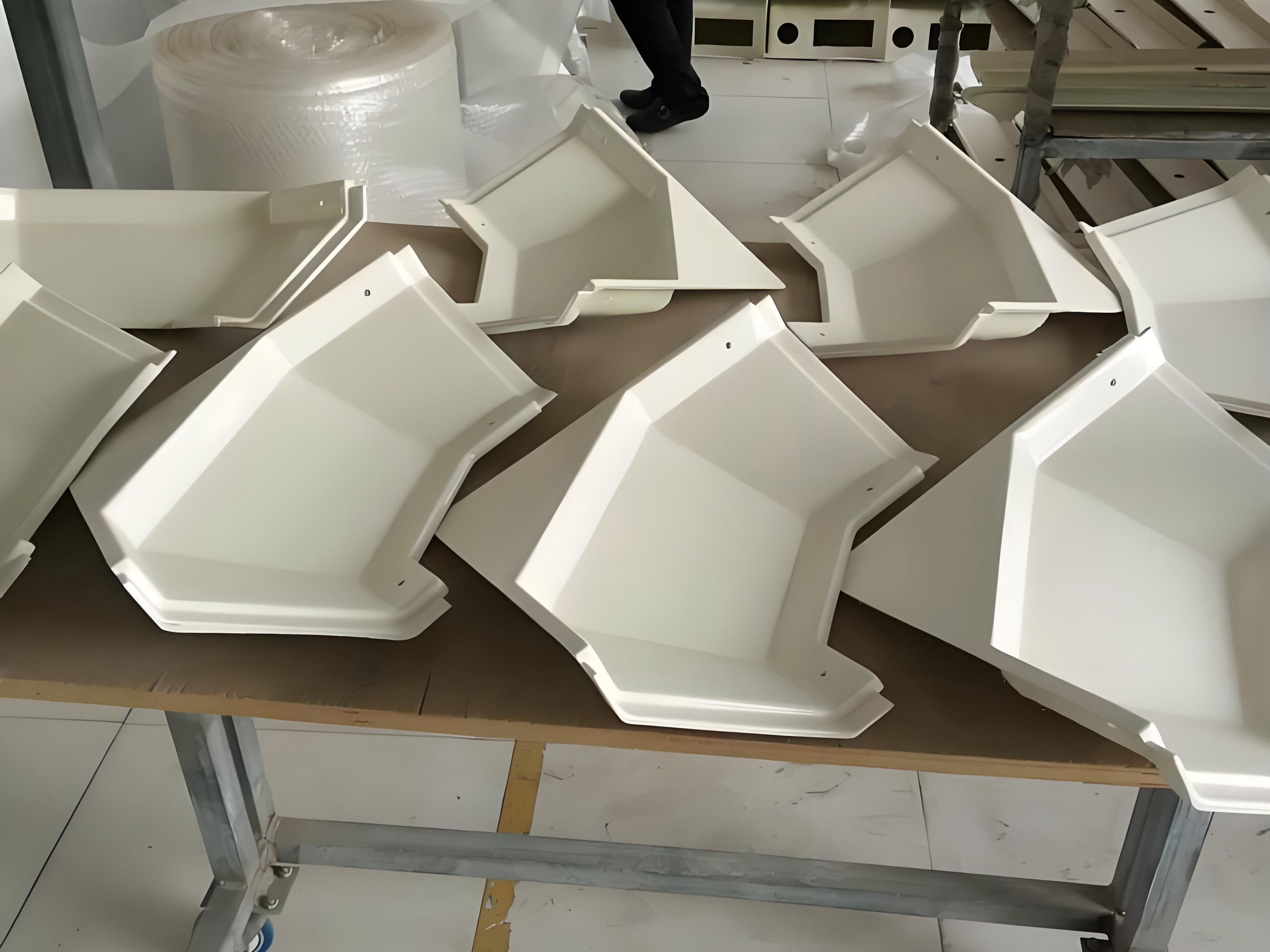
Premium urethane prototypes can fit a controlled budget when the team defines what each part must prove, invests in one suitable master and silicone mold route, and avoids paying production-level controls on features that do not affect the decision. The economical unit is not a raw casting. It is an accepted prototype with the specified appearance, dimensions, inserts, finish, inspection and delivery condition.
Cast polyurethane is especially useful when several consistent plastic-like parts are needed from one design, but permanent injection tooling is not yet justified. It does not automatically reproduce a named thermoplastic or beat every other prototype route. Geometry, master preparation, resin behavior, mold complexity, manual casting labor, finishing, reject risk and revisions determine whether the project is genuinely affordable.
Define Premium by the Decision
A display model, an ergonomic evaluation part and a short functional test article can look similar in a quotation while requiring different controls. A presentation sample may prioritize color, gloss and gap consistency. An assembly sample may prioritize datums, fastener locations and insert retention. A functional sample may need a selected hardness range, impact response or limited environmental exposure.
Write the test question before selecting resin or finish. If a surface will be hidden inside an enclosure, cosmetic handwork there may add no learning. If a latch governs use, its local section, flexibility and mating geometry deserve more attention than a broad statement that the whole part should feel like production plastic.
Model the Cost of an Accepted Prototype
| Cost element | What drives it | Budget control | Acceptance evidence |
|---|---|---|---|
| Master pattern | Build route, accuracy, surface preparation and repair | Finish only transferred surfaces to the required level | Approved master or dimensional report |
| Silicone tooling | Parting strategy, mold volume, inserts, vents and complexity | Design for reliable demolding and planned mold count | First castings and mold-condition review |
| Urethane material | Resin family, color, additives, moisture control and batch size | Match the test attribute instead of a material name alone | Supplier data plus project-specific test |
| Casting labor | Mixing, degassing, pouring, curing, demolding and trimming | Reduce fragile details and repeated manual corrections | Traveler and accepted yield |
| Finish and assembly | Seam work, paint, texture, inserts, bonding and masking | Separate cosmetic classes and approve a reference sample | Appearance standard and assembly check |
| Change and rejection | Revision timing, mold damage, color mismatch and dimensional failure | Freeze data at named gates and state remake responsibility | Change ledger and disposition record |
Quote these elements separately where useful. A low mold price can be offset by extensive master finishing, manual seam repair or repeated paint matching. Another proposal may include an approved color sample, inserts and dimensional results. Normalize the same delivered condition before selecting the lower offer.
The cast urethane RFQ inputs should identify the test purpose, quantity scenarios and acceptance state. Without that information, suppliers may price different interpretations of "premium."
Spend on Prevention Before Repair
Quality cost appears in three places: prevention before molding, appraisal during release and failure after work has accumulated. Reviewing the master, parting plan, resin route and finish sample costs time early. It can avoid duplicating a defect through every casting or discovering a color problem after assembly.
Set inspection gates where they protect the most downstream value. Check master dimensions and visible surfaces before silicone tooling. Check the first raw casting before painting the lot. Check one finished assembly before completing graphics and packing. A final inspection performed only after all value has been added may identify a problem when the cheapest correction window has passed.
Do not inspect every dimension merely because a digital model contains it. Select assembly interfaces, wall-sensitive areas, insert positions and appearance conditions tied to the prototype decision. This keeps appraisal effort proportionate while preserving evidence on features that can invalidate the test.
Master Quality Sets the Visible Ceiling
The silicone mold records the master, including deliberate texture and unwanted layer lines, scratches, waviness or repair edges. Casting does not improve a poor source surface. Decide whether the master should be printed, machined or assembled from several elements based on geometry, required surface, datum control and repair access.
Do not polish every area by default. Mark appearance zones and functional interfaces. Prepare visible surfaces to the approved class, protect sharp feature intent where needed, and leave noncritical hidden areas at a practical condition. Inspect the master before mold making because a defect duplicated across every casting is more expensive than a correction made once.
Master compensation must be based on the complete route. Pattern process, silicone behavior, urethane cure, wall distribution and measurement condition can all affect final dimensions. A universal scale factor is not a substitute for feature-level review and first-casting evidence.
Design the Silicone Mold for Repeatable Demolding
Flexible silicone can release undercuts that would require slides or split tooling in a rigid mold, but flexibility has limits. Deep re-entrant features, thin silicone ligaments, sharp hooks and trapped regions can tear the mold or distort the part during extraction. Complex geometry may also require several mold pieces, loose inserts or a planned cut line.
Choose parting and gate locations with the final visible surface in mind. A hidden seam may reduce cosmetic labor; a badly placed gate can damage a datum or appearance zone during trimming. Venting must allow displaced air to leave without creating unacceptable witness marks. The urethane design review should resolve these tradeoffs before the master is released.
Mold life is an outcome, not a fixed number. Resin chemistry, cure exotherm, part geometry, demolding strain, release practice, silicone selection and acceptable surface degradation all matter. Price the expected quantity with replacement or parallel molds visible rather than assuming every cavity will survive an advertised count.
Select Resin by Attribute, Not by Plastic Name
A cast urethane system can be chosen to approximate selected behavior of a future thermoplastic, such as rigidity, hardness, flexibility, color or initial impact response. It remains a different polymer made by a different process. Similar room-temperature feel does not establish equivalent creep, fatigue, heat aging, chemical resistance, UV stability, flammability or long-term dimensional behavior.
Rank the attributes the test actually needs. A housing used for assembly fit may need stiffness and stable geometry but not production heat resistance. A flexible grip may need hardness, rebound and bond behavior. A clear part may need visual transmission and bubble control rather than structural equivalence. The guide to urethane material simulation should be treated as a screening step, followed by supplier data and a test in the stated condition.
Record resin designation, color/additive route, mix and cure assumptions, post-cure if specified, and the age at which testing occurs. Polyurethane properties can evolve after demolding and can be sensitive to moisture and storage. Comparing parts of unknown age or conditioning can produce misleading conclusions.
Control Walls, Cavities and Inserts
Very thin flow paths can cool or trap air before filling; thick masses can increase exotherm, shrinkage and cure differences. Abrupt wall changes may influence sink, distortion or local properties. Review flow, vents and cure behavior for the actual resin and geometry rather than borrowing injection-molding rules without adjustment.
Metal inserts, threaded hardware and embedded elements can support realistic assembly tests, but they introduce location, sealing, pretreatment and bond questions. Define whether an insert is cast in, bonded after casting or installed mechanically. Protect threads and critical faces from resin or paint, and choose an inspection method that confirms the relationship important to assembly.
Cored or hollow forms may use soluble, removable or assembled features depending on access. The resulting seam or witness line can affect leak, optical and cosmetic tests. If a prototype must hold pressure or fluid, define medium, pressure sequence, duration, allowable leakage and safety boundary rather than relying on the phrase "functional prototype."
Specify Dimensions Feature by Feature
Silicone tooling is flexible, and manual demolding can move thin or unsupported features. Specify only dimensions needed for fit, function or the next decision. Use clear datums and identify whether a dimension is measured free-state, fixtured or after assembly. A cosmetic reference envelope does not need the same control as a connector interface.
Place critical dimensions where the measurement can be repeated and where the process can influence the result. If a dimension depends on several flexible walls, an assembly gauge may answer the product question better than isolated coordinate values. The critical-dimension marking guide helps connect datum, test state and inspection method.
Use a first accepted part to confirm master compensation, seam cleanup, insert location and measurement strategy before completing the lot. Do not infer process capability from one favorable piece. Repeat evidence should match the number of parts and risk of the decision being made.
Buy Surface Quality Deliberately
Color in the cast resin can reduce paint dependence, while paint can provide tighter visual matching or a production-like coating stack. Molded texture may repeat consistently from an approved master, whereas post-applied texture can be useful for localized correction but may vary with operator technique. Gloss also changes how waviness, seam work and color variation are perceived.
Create appearance zones with viewing distance, lighting, orientation and permissible witness conditions. Approve a physical sample or controlled reference, not adjectives alone. State whether color acceptance occurs on raw urethane, primer, final paint or assembled product. The process for approving color, texture and finish samples should include masking and touch points.
Surface preparation and coating chemistry must be compatible with the selected urethane and cure state. Mold release residue can harm adhesion. Solvents or elevated cure temperatures can attack or distort a prototype. Qualify the complete finish stack on representative material before committing the lot.
Compare Prototype Routes at the Same Test State
Urethane Versus Direct 3D Printing
Direct printing may be preferable for a single geometry, rapid digital iteration or internal forms that cannot be molded and demolded. Urethane casting becomes more attractive when several consistent copies, a selected resin behavior, molded surface or embedded inserts matter. Include print post-processing and master preparation in both routes where applicable.
Urethane Versus CNC Machining
CNC machining can supply tight accessible features in available engineering stock and may be the more relevant material test. It can waste material on organic housings and may require several setups. Urethane casting can reproduce near-net plastic-like forms, but it does not replace stock-material evidence. Compare what the test needs, not simply price per piece.
Urethane Versus Injection Molding
Injection molding uses production-intent tooling and thermoplastic processing, so it may be necessary when gate behavior, fiber orientation, weld lines, shrinkage, production resin or sustained rate must be validated. Its nonrecurring work may be hard to justify while geometry changes. Urethane soft tooling can reduce revision exposure, yet its manual recurring labor and replacement molds can become costly as cumulative demand grows.
Manage Quantity as Cumulative Demand
There is no universal ideal batch. Evaluate committed quantity, likely cumulative demand at the current revision, number of variants, release cadence and acceptance fallout. Several colors from one geometry may share a master but require separate material and finish controls. Multiple revisions may consume separate masters and molds even when total pieces remain modest.
Ask how many acceptable parts the quote assumes per mold and how deterioration is judged. The published discussion of parts per silicone mold describes the variables, but the supplier must price the actual geometry and quality limit. Include replacement tools, overlapping molds and first-piece approval when schedule or appearance consistency matters.
Recalculate the route at demand and design-stability triggers. Do not let the low original tool cost justify endless manual casting. Conversely, do not authorize hard tooling from an upside forecast that has not been approved. Compare remaining accepted-part cost, capacity, transition work and obsolete soft-tool assets from the decision date forward.
Control Revisions Before They Consume the Budget
A CAD change can affect the master, silicone mold, trim fixture, paint mask, assembly gauge and inspection program. Record which assets match each revision and whether existing castings can be used for limited testing. A new master may be inexpensive relative to hard-tool rework but is not free, and it resets parts of the schedule.
Use release gates after DFM, master inspection, first casting and finish approval. Define who may authorize work at risk while a design decision is open. This prevents a small geometry correction from turning an entire mold and partially finished lot into unplanned scrap.
Evaluate the Supplier at the Actual Risk Points
Urethane casting quality depends on connected operations rather than a machine specification alone. Review how the supplier prepares and approves masters, chooses mold splits and vents, controls resin and color, handles inserts, trims seams, qualifies paint and records revisions. Ask which stages are external and how those handoffs appear in the schedule.
A polished sample is useful, but it does not by itself show repeat control. Request the proposed first-piece gate, mold-condition checks and method for separating parts by resin, mold and revision where traceability matters. For cosmetic sets, ask how color and texture are compared across molds and finish batches.
Commercial terms should state ownership and retention of the master, silicone molds, trim aids, paint masks and physical standards. If a later release returns after storage, identify what must be inspected or remade. Asset ownership without condition records may not provide practical restart value.
Prepare the Transition Without Claiming Equivalence
Capture what the urethane prototype actually demonstrated: envelope, user handling, interface position, assembly sequence, visual target or a limited mechanical test. Also record what it did not demonstrate, such as production thermoplastic aging, injection-flow effects, molded residual stress, flame response or production process capability.
When the design and demand justify another process, transfer controlled CAD, appearance masters, critical dimensions, assembly findings, approved changes and unresolved risks. Then repeat DFM and qualification for the production material and tooling. The guide to transitioning from urethane casting provides decision gates, not an automatic handoff.
RFQ and Acceptance Checklist
Send controlled CAD and drawing, prototype purpose, committed and forecast quantities, revision outlook, target production process/material, functional attributes, appearance zones, color/texture reference, critical dimensions and datums, inserts, assembly state, test conditions, reports, packaging and destination.
Ask the supplier to return the master route and finish, mold split/gates/vents, proposed resin and property basis, estimated mold strategy, first-piece gate, trim and finish scope, inspection method, acceptable witness marks, outsourced work, change terms, remake assumptions and dated milestones. Require deviations to be explicit.
Define lot release as well as first-part approval. The first accepted sample can establish geometry, surface and assembly intent; later pieces still need checks suited to mold wear, color variation, insert placement and finish handling. State sampling by feature and risk, and identify any part that is consumed by testing rather than delivered.
Packaging belongs in acceptance when cosmetic surfaces, flexible walls or painted edges can be damaged in transit. Specify separators, protective film, support and orientation only where the part requires them. Inspect representative packed parts or a shipment trial when transportation can undo the value created during finishing.
A premium urethane prototype is affordable when it answers a named development question with controlled evidence and no unnecessary work. Budget discipline comes from selecting the right attributes, surfaces and quantity for that question. It does not come from calling soft tooling cheap while ignoring the rest of the accepted deliverable.
FAQs
