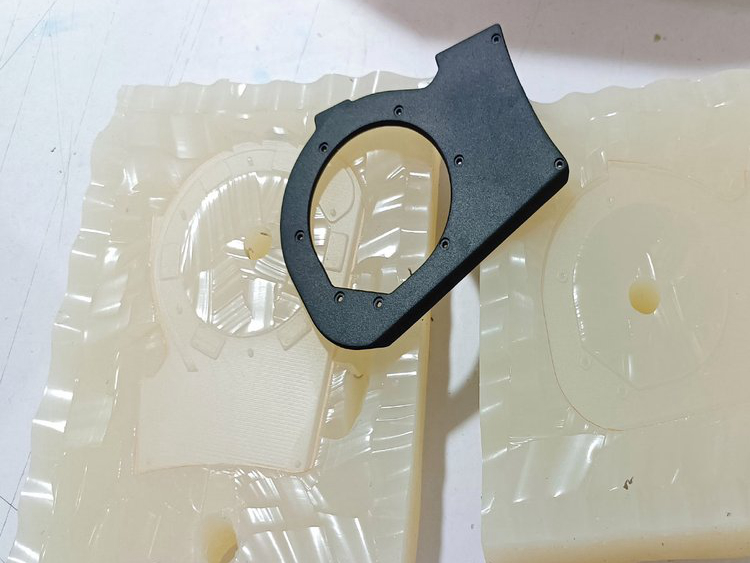
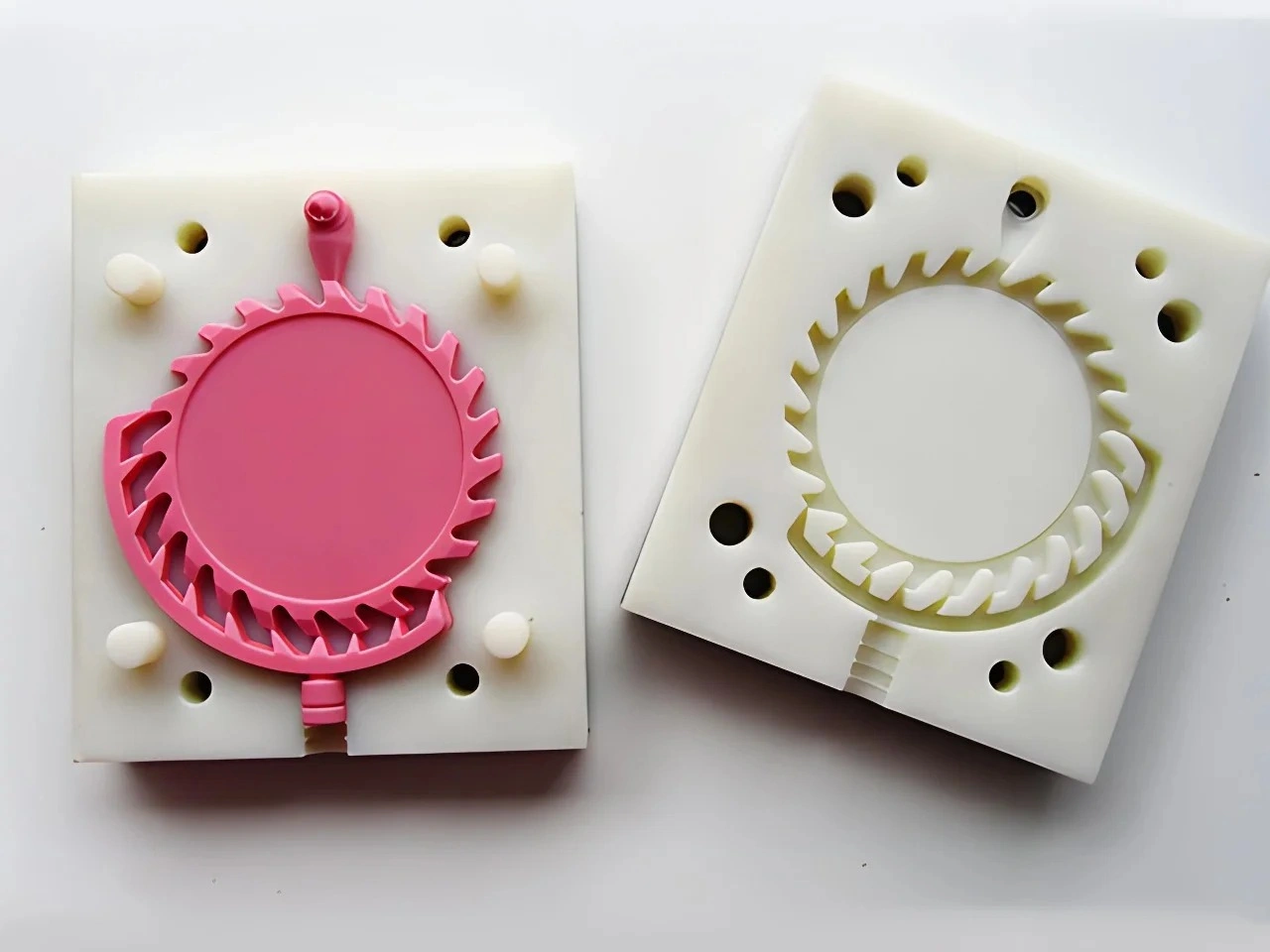
How many parts can be produced from a single silicone mold?
There is no reliable universal number of parts from one silicone mold. Usable output is the number of castings that continue to meet the agreed dimensional, cosmetic and functional criteria. It depends on undercuts, texture, mold cuts and thin sections, polyurethane chemistry and cure heat, release force, operator handling, cleaning, storage and how strict the acceptance state is. Quote mold strategy from the actual geometry and required quantity.
What Ends a Mold's Useful Life?
| Condition | Effect on cast parts | Monitoring method | Possible action |
|---|---|---|---|
| Cut or parting-edge wear | More flash or visible witness | First-off standard and periodic visual check | Repair, change trim plan or replace mold |
| Tear near undercut | Missing detail, surface scar or leakage | Mold inspection after demolding | Revise release path or remold |
| Key or support distortion | Mismatch, wall or datum shift | Gauge or selected dimensional trend | Improve support or replace mold |
| Surface degradation | Gloss, texture or clarity change | Protected appearance limit sample | Segregate cosmetic use or remold |
| Core or insert-locator damage | Passage or insert position drift | Feature gauge, flow or datum check | Repair locator/core or build new tool |
Geometry Controls Demolding Strain
A simple open shape can impose less strain than a part with deep undercuts, broad texture, thin hooks and several loose cores. During each release, silicone stretches around the geometry and may concentrate stress at a sharp cut or thin ligament. The cured part can also damage the mold if a rigid edge is pulled through the same location repeatedly.
Ask the supplier to identify the highest-strain release features and the demolding sequence. Radius a sharp return where product intent permits, move a cut away from a vulnerable edge, or use a core/split that reduces peel. A successful first demolding confirms initial feasibility; it does not establish a guaranteed number of acceptable repetitions.
Resin and Cure Affect the Tool
Polyurethane systems differ in chemistry, reaction heat, cure state and interaction with the mold surface. Repeated thermal and chemical exposure may change silicone response. Filled, rigid or high-release-load parts can impose different conditions from flexible parts. Exact compatibility and handling should follow the selected material and shop procedure.
Do not assume one silicone type or generic "high grade" label guarantees longer life. The supplier should select mold material and construction for the resin, geometry, surface and quantity. Where a project compares several resin systems, clarify whether they share a mold and whether cross-contamination or different release conditions affect the evidence.
Cuts, Cores and Inserts Create Local Wear
Knife cuts enable release but their edges can abrade, tear or misalign. Loose cores require repeated insertion and removal. Insert locators can be damaged by hard hardware or resin leakage. These local features may determine useful mold life before the main cavity surface degrades.
Inspect cut edges, keys, core seats and insert seals rather than looking only at the broad cavity. Track where flash and witness lines change. If a core dimension is functional, use a gauge or flow check at planned intervals. Mold maintenance should be documented enough to distinguish an approved repair from an uncontrolled change.
Acceptance State Changes the Output Estimate
A mold may continue to produce acceptable internal fixture parts after it no longer produces a Class A appearance sample. Likewise, minor flash may be removable for one project but unacceptable on a sealing land or fine texture. That is why nominal shots cannot be separated from delivery requirements.
Define critical dimensions, cosmetic zones, allowed witness, trim condition and defect limits. Preserve the first approved sample. If output is split between cosmetic, engineering and destructive-test parts, state the allocation; the supplier may need to schedule the most appearance-sensitive units earlier or plan separate tooling.
Plan Multiple Molds by Scenario
For quantity beyond the supplier's risk-adjusted estimate, compare sequential replacement molds, parallel molds or a different manufacturing route. Parallel molds may improve cadence but introduce cavity-to-cavity variation. Replacement molds require a controlled master or new master and another first-off approval. Include these activities in cost and schedule.
Ask the quotation to state assumed acceptable output per mold as a planning basis, not a warranty detached from conditions. Request the trigger for replacement, responsibility for first-off approval and treatment of incomplete quantity if a mold degrades early. The soft-tooling quantity planning FAQ helps compare lot and cadence scenarios.
Monitor the Build Instead of Counting Shots Alone
Identify characteristics likely to drift with mold condition: parting mismatch, flash, surface detail, a critical wall, insert location or an internal channel. Inspect the first-off and then at an interval appropriate to consequence and observed stability. Record mold/cavity and cast sequence for measured parts.
A part count is still useful for traceability, but acceptance should govern release. Stop and investigate when the mold, part or trend changes. Segregate affected parts until disposition. Replacing a mold before visible failure may be justified when a later defect would invalidate expensive testing or appearance work.
What Buyers Should Send for an Output Estimate
Provide controlled CAD and drawing, required quantity by delivery and test type, resin or property target, cosmetic faces, critical dimensions, inserts/cores, finish, inspection and acceptable witness/flash. State whether later replenishment is expected and whether parts from different molds may be mixed in one test population.
The supplier can then propose mold count, replacement assumptions, sampling and traceability. The urethane casting process context explains soft tooling generally, but the answer to "how many" remains project-specific: accepted parts, from this geometry and resin, under this mold and inspection plan.