What makes urethane casting more cost-effective than injection molding for prototypes?
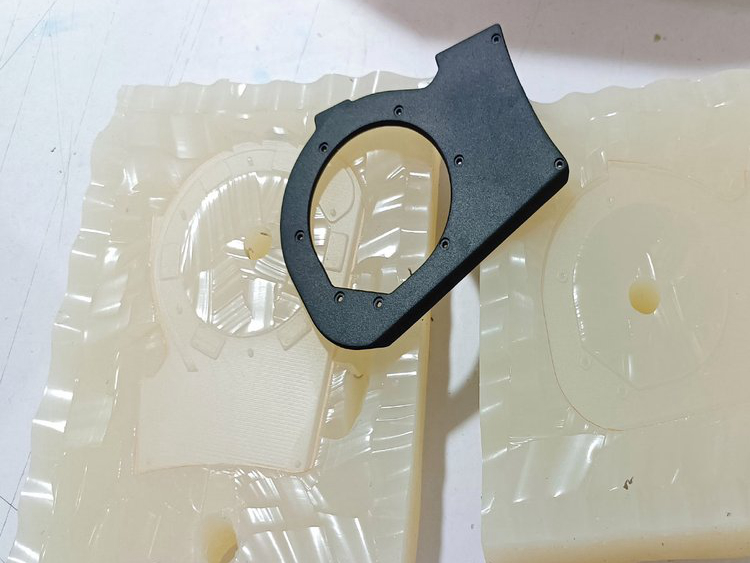
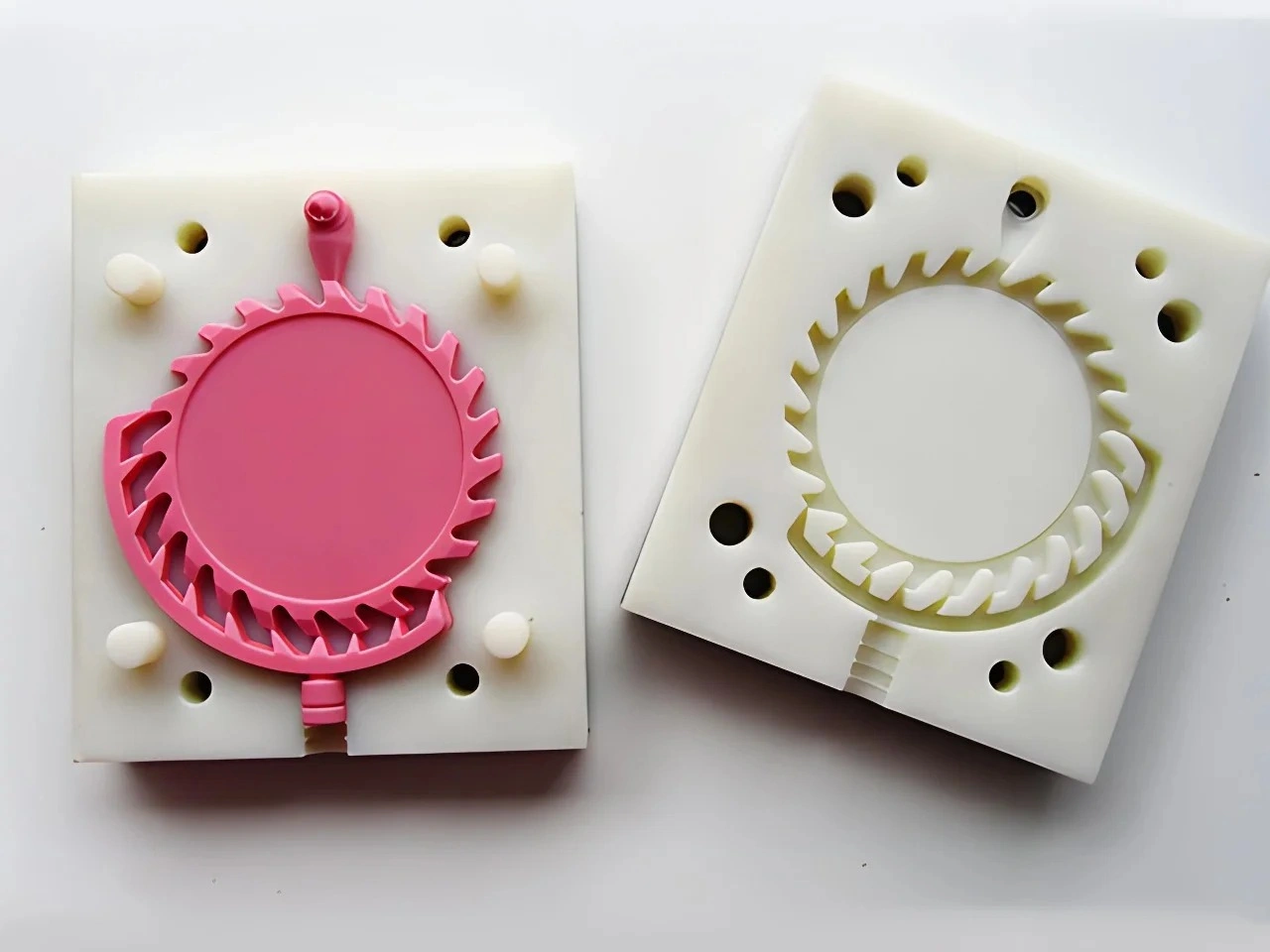
Urethane casting can be more cost-effective than injection molding for prototypes because a master pattern and silicone mold usually require less nonrecurring work than a production injection tool, especially while geometry is unsettled. That advantage applies only when the required quantity, manual casting labor, mold replacements, finishing and material limits remain acceptable. Compare accepted prototypes at the same appearance, dimensions, inserts, tests and delivery state.
Separate Nonrecurring and Recurring Cost
Urethane casting moves much of the initial work into master preparation and flexible mold making. Injection molding moves it into mold design, machining, fitting, sampling and process development. The silicone route may expose less capital to an early revision, while the injection route can spread a more durable asset across stable demand.
Recurring behavior points the other way. Urethane parts are mixed, poured, cured, demolded and trimmed with substantial manual involvement. Injection molding may reduce recurring labor and cycle dependence once the tool and process are approved. Neither fixed cost nor piece price alone identifies the economical route.
Cost Comparison Matrix
| Decision factor | Urethane casting | Injection molding | Buyer check |
|---|---|---|---|
| Initial asset | Master plus silicone mold and aids | Rigid mold, sampling and process setup | What is included and who owns it? |
| Design change | May require master and mold remake | May require tool modification or replacement | Which assets and work in process become obsolete? |
| Recurring work | Manual casting, curing, trimming and finish | Machine cycle, material, setup and secondary work | What is the accepted-part cost at each scenario? |
| Material evidence | Selected polyurethane behavior | Production thermoplastic and molded state | Which test needs the final material/process? |
| Capacity | Mold count, labor and cure space | Tool cavities, press and automation | Can the route meet release cadence? |
Revision Risk Often Creates the Early Saving
A prototype program may change latch geometry, wall position, connector access or appearance after user and assembly tests. Replacing a master and silicone mold can limit the value tied to the obsolete revision. That does not make changes free: trim fixtures, paint masks, gauges, inserts and already cast parts can also become unusable.
Use explicit gates after DFM, master approval and first casting. State whether the supplier may continue at risk while an engineering decision is open. Price a likely revision scenario alongside the no-change scenario instead of assuming either complete stability or unlimited iteration.
The Master and Finish Belong in the Tooling Number
A printed master may need support removal, filling, sanding, priming and texture work before it can produce the desired surface. A machined master may need multiple setups or assembled elements. These operations are part of the urethane route's nonrecurring cost even when the silicone mold itself is inexpensive.
The mold reproduces both wanted and unwanted detail. Approving the master before molding prevents the same defect from being copied across the lot. Mark cosmetic zones, critical interfaces and hidden areas so preparation effort follows product value rather than polishing every surface equally.
Mold Replacement Must Be Visible
Silicone mold life depends on resin chemistry, cure heat, geometry, demolding strain, release practice and the permitted decline in texture or edge quality. A simple open part and a deep undercut part should not carry the same assumed output. The quote should state the planned mold count and what condition triggers replacement.
When quantity or schedule requires parallel molds, include the extra masters or mold-making work, cavity-to-cavity approval and first-piece inspection. The guide to silicone molds versus metal tooling explains the physical tradeoff; the actual part determines its commercial effect.
Material Intent Can Justify Injection Prototypes
Cast urethane may approximate selected stiffness, hardness, flexibility or visual qualities. It does not reproduce thermoplastic flow, fiber orientation, weld lines, gate effects, crystalline structure, long-term creep or environmental aging by default. If those behaviors govern the decision, injection-molded samples in the specified resin may be worth the additional nonrecurring cost.
Use urethane when its evidence is sufficient for the current gate: envelope, assembly, handling, appearance or a bounded short-term test. Record the substitution boundary. This avoids purchasing hard tooling too early without pretending a different polymer proves production performance.
Quantity Is Not a Universal Crossover
Calculate committed, likely and upside cumulative demand at the current revision. Include variants, colors, replacement molds, acceptance fallout, finish labor and release cadence. A demanding cosmetic part may consume more soft tooling than a simple functional blank. A family of changing variants may preserve urethane's flexibility even when total pieces appear substantial.
Obtain supplier quotations for the same scenarios. The crossover changes with geometry, tool construction, resin, labor, press availability, inspection and expected change. The prototype-to-tooling transition gates should be reviewed when demand or design stability changes.
Normalize the Delivered Condition
Compare raw urethane castings neither with finished molded parts nor with injection quotes that omit color matching, texture, inserts or reports. Define the same final geometry, appearance zones, material intent, critical dimensions, assembly work, tests, accepted quantity, packaging and destination.
Ask both routes to identify nonrecurring assets, recurring unit or lot costs, technical deviations, first-article work, remake assumptions, capacity and dated milestones. A lower initial check is not a saving if later pieces fail the test or cannot arrive at the required cadence.
RFQ Decision Checklist
Send controlled CAD and drawing, prototype question, target production material/process, quantity scenarios, revision outlook, functional attributes, cosmetic standard, critical dimensions, inserts, finish, test state and required reports. State which production behaviors must be represented and which may be substituted.
Urethane casting is more cost-effective when lower exposed tooling and useful repeated copies outweigh manual recurring work, replacement molds and material limitations for the current development gate. Validate that conclusion with normalized quotations and an approved first part, not a universal quantity or tooling-price claim.