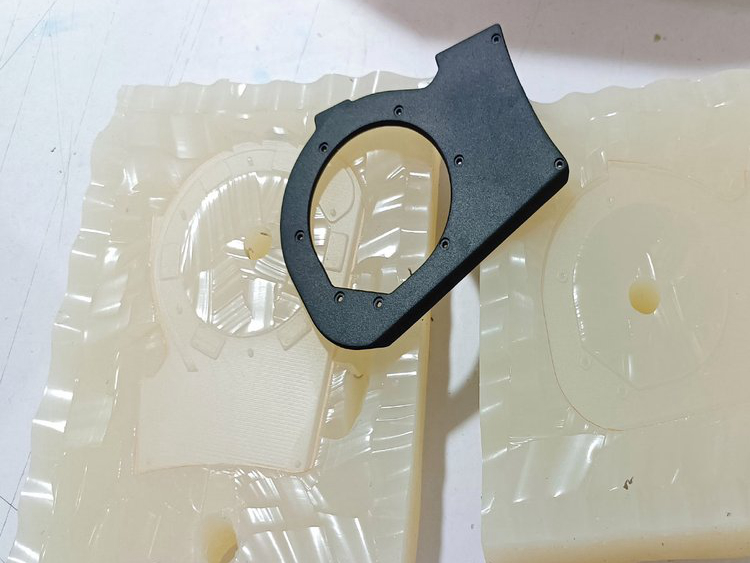
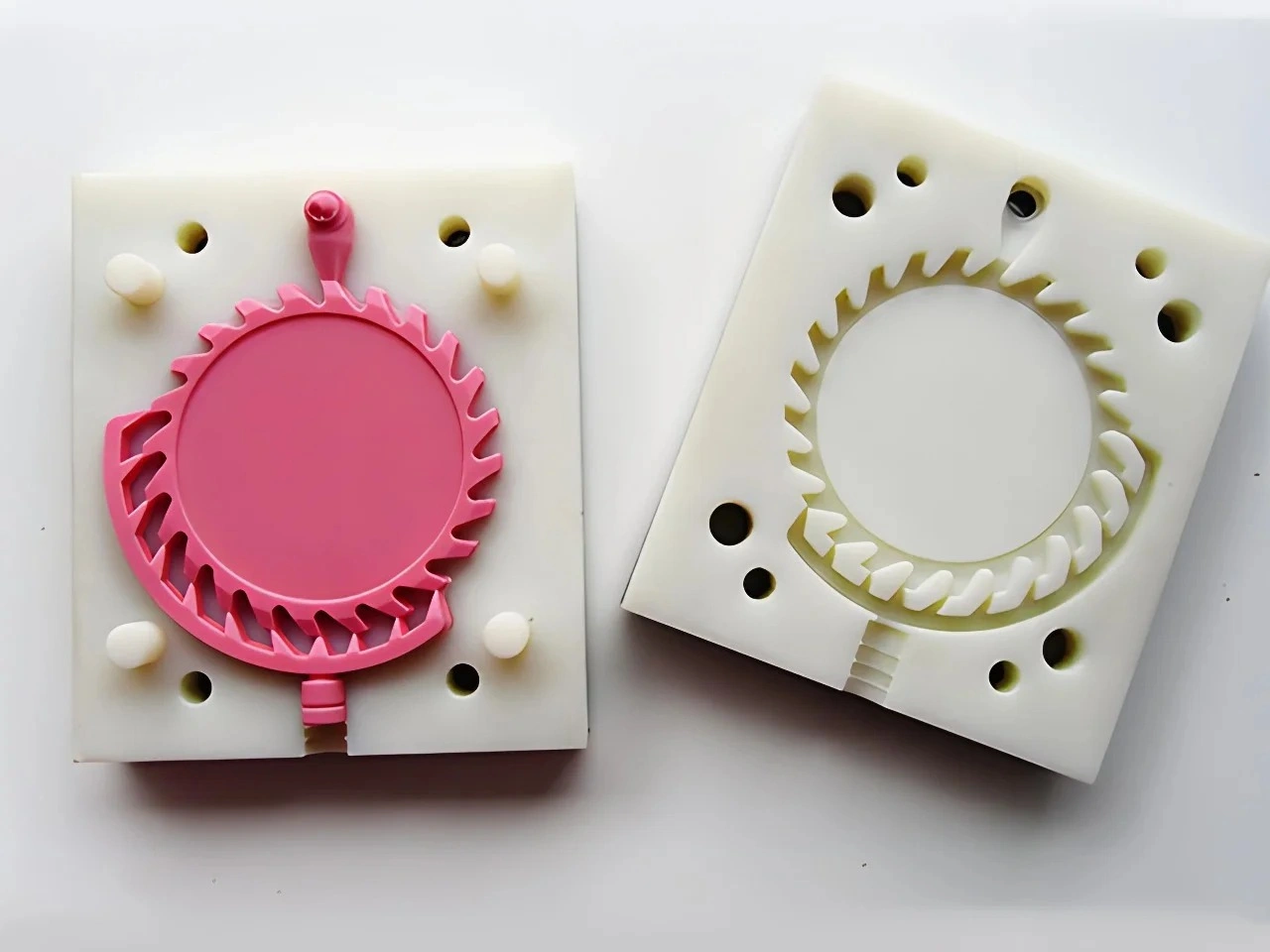
How closely can urethane prototypes mimic production plastic parts?
Urethane prototypes can closely mimic the color, texture, gloss, overall geometry and handling feel of production plastic parts when the master, silicone mold, resin and finish are selected for those attributes. They may also support assembly and bounded short-term functional tests. They do not automatically reproduce the production thermoplastic, injection-molded structure or long-term service behavior. Define closeness separately for each test.
Mimicry Is an Attribute, Not a Material Identity
Calling a polyurethane "ABS-like," "PC-like" or "PP-like" is useful only as an initial description. Two materials can have similar room-temperature stiffness while differing in impact behavior, creep, heat aging, chemical resistance and moisture response. The casting and injection processes also create different stress, orientation and defect patterns.
Start with the production requirement, then rank which attributes must be close enough for the current decision. Use supplier data to screen a urethane system and a representative part test to verify the attribute that matters. Do not infer untested properties from appearance or a family label.
Prototype Fidelity Matrix
| Validation target | What urethane can represent | Important limitation | Verification |
|---|---|---|---|
| Color and gloss | Pigmented resin or compatible paint system | Lighting, thickness and aging may differ | Approved physical sample under named lighting |
| Texture and touch | Master-transferred grain and selected hardness | Wear and skin/oil exposure may differ | Reference plaque and user evaluation |
| Envelope and fit | Overall shape, interfaces and insert positions | Flexible mold and demolding can move features | Datum-based inspection or assembly gauge |
| Short-term function | Selected stiffness, flexibility or impact response | Rate, temperature and conditioning affect result | Defined test on conditioned parts |
| Production durability | Limited screening only unless proven | Creep, fatigue, UV, chemicals and heat can diverge | Production-material and process validation |
Surface Fidelity Starts at the Master
Silicone captures the master surface, including intended grain, polished areas, print layers, scratches and filler transitions. A well-prepared master can produce a convincing molded appearance; a poor master reproduces its defects. Approve appearance zones and the master before making the production mold.
Texture should be scaled and oriented for the product, not merely selected by name. Grain can soften at edges or stretch on deep surfaces depending on master preparation, mold split and demolding. Color and gloss should be judged on the final urethane or coating stack because primer and clear coat change perception.
Dimensional Fidelity Needs a Datum and Test State
Cast urethane can reproduce many product features well enough for fit review, but flexible silicone, cure behavior and manual extraction can affect thin walls, long spans and unsupported tabs. Identify assembly datums, connector locations, gap-controlling edges and other decision features instead of applying one tolerance expectation to the whole part.
State whether flexible parts are measured free, in a fixture or assembled. A door panel that bows when free may fit correctly when attached; forcing it flat for coordinate measurement can create an artificial result. The guide to critical dimensions on cast urethane prototypes links the feature to its datum and acceptance method.
Assembly Realism Depends on Details
Cast-in inserts, bonded hardware, threads, bosses and local reinforcements can make a prototype useful for assembly sequence and service-access trials. Their location and retention route should reflect the question being tested. A metal insert bonded into urethane does not necessarily reproduce an insert molded into thermoplastic.
Snap fits and living features require particular caution. A resin may approximate initial flexibility yet differ in repeated-cycle fatigue, notch sensitivity and creep. Use a defined number of assembly actions at stated temperature and conditioning for prototype learning, then validate production geometry in the production resin and molding process.
Short-Term Function Can Be Relevant
A selected urethane can support handling, stiffness comparison, gasket compression, button feel or moderate impact screening when the resin data and test conditions align. Record part age, cure/post-cure, temperature, loading rate and fixture. These conditions can materially affect the comparison.
Do not turn a favorable bench test into a broad durability claim. Thick and thin sections may cure and respond differently. Air, mix ratio, moisture or local exotherm can produce variation. Inspect representative parts and use enough samples for the decision risk without inventing statistical capability from a small prototype lot.
Long-Term and Environmental Tests Need Production Material
Long-duration heat, UV, weathering, fuel, oil, cleaner, disinfectant, flame response, creep and fatigue are strongly material-specific. A cast polyurethane should only be used for such testing when its exact system, conditioning and evidence support the exposure. A general plastic-like description is insufficient.
When service performance governs release, use the specified production polymer and intended manufacturing process for qualification. Urethane can still help before that gate by finding geometry, assembly and user issues. The functional prototype test plan should state which evidence transfers and which must be repeated.
Production Process Signatures Do Not Transfer
Injection molding can create weld lines, gate vestige, sink, fiber orientation, molded stress and local shrinkage that silicone-tool casting will not reproduce in the same way. A urethane part may therefore show the intended envelope and surface target while missing a production molding risk.
If gate location, flow balance, fiber direction or final molded warpage affects function, plan injection trials in the production-intent tool or an appropriate bridge tool. Keep prototype findings as design inputs, not proof that the production process is qualified.
Approve Appearance with a Physical Standard
Define cosmetic zones, viewing distance, lighting, orientation, gloss, texture, color reference and acceptable seam, gate and repair evidence. Digital color values alone may not predict perception across different resin and coating systems. Use a representative approval part or plaque in the final finish stack.
The color and texture approval method should include lot comparison and touch points. A prototype may be visually convincing without being materially identical, provided that distinction is documented.
Write a Transfer Statement
At prototype approval, list what passed: for example, envelope, hand feel, button travel, connector fit, appearance reference or a bounded drop setup. Then list what remains open: production resin, injection-flow effects, repeated cycles, environmental aging, regulatory tests and production capability.
Urethane prototypes mimic production plastic parts closely when "close" refers to named attributes with an acceptance method. Their value is high-fidelity learning before production investment. Different materials and processes prevent a blanket claim of product identity or equivalent performance.