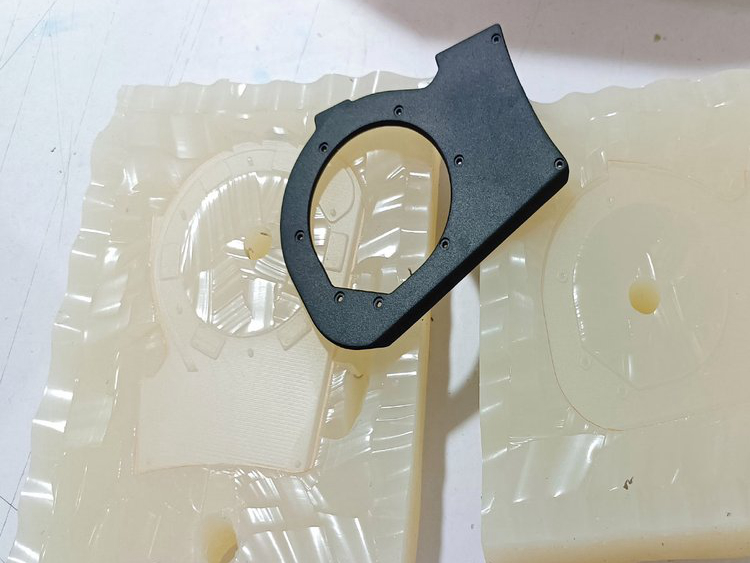
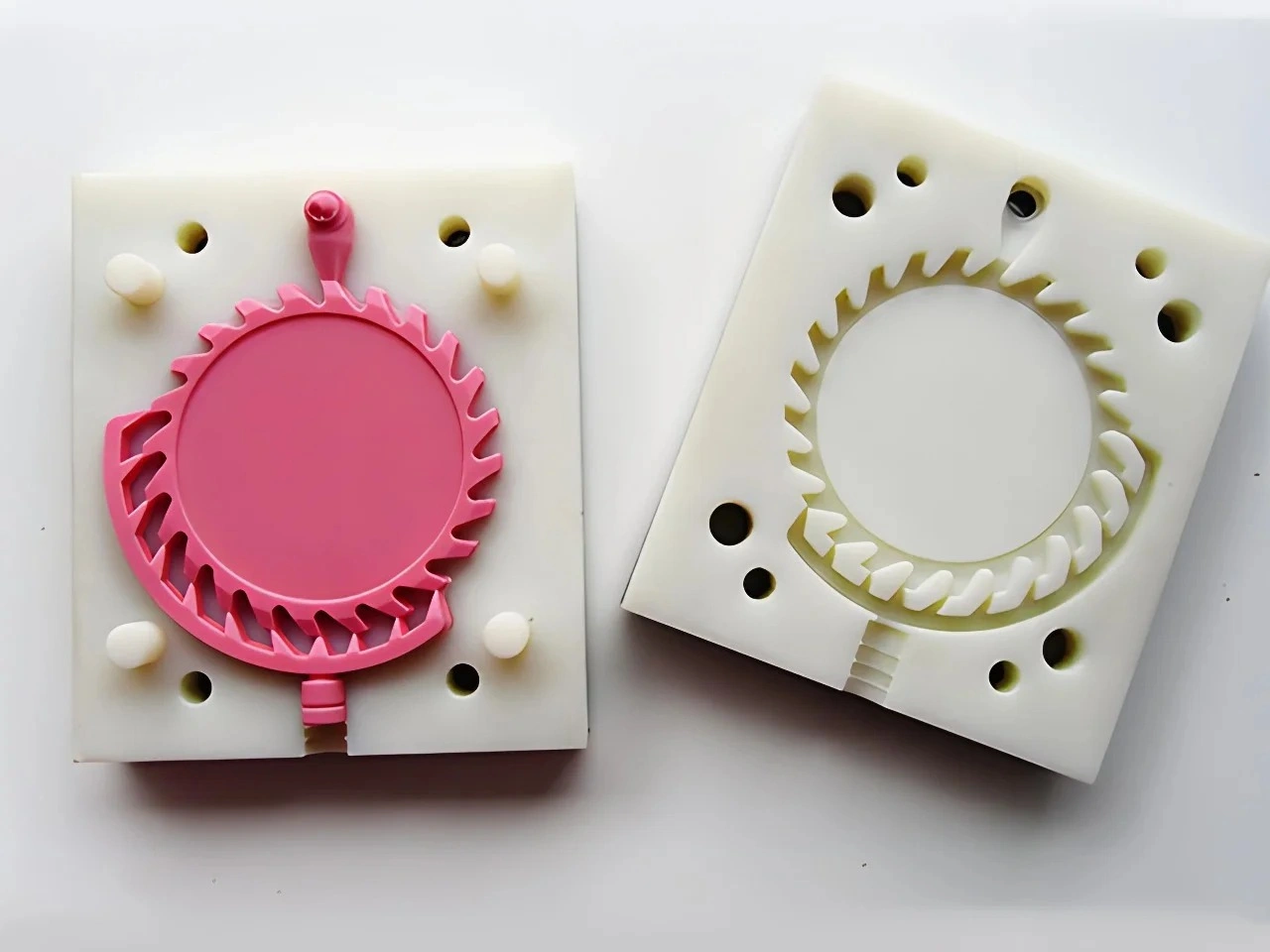
When should engineers choose urethane casting instead of CNC or injection molding?
Choose urethane casting when a project needs several repeated plastic-like prototypes, a molded surface, selected undercuts, embedded hardware or bounded material variants, and the cost of a master plus silicone tooling is justified by repeated learning. Choose CNC when exact stock material, accessible precision features or one changing part dominates. Choose injection molding when production resin, process-created evidence, recurring rate or cumulative demand justifies hard tooling and qualification.
Route Selection Matrix
| Decision factor | Urethane casting | CNC machining | Injection molding |
|---|---|---|---|
| Upfront asset | Approved master and silicone mold | Program, fixtures and stock | Engineered metal tool and process setup |
| Material evidence | Selected polyurethane attributes | Purchased stock grade/condition | Production resin in molded process |
| Geometry | Flexible release, cuts, cores and manual demolding | Tool access, setups and stock removal | Draft, gates, ejection, slides and cooling |
| Repeated output | Manual cast/cure/demold/trim and mold condition | Machine time, setups and tool access | Cycle, press/cavity and downstream capacity |
| Revision exposure | Master/mold and work in process | Program/fixture and completed parts | Tool steel/inserts and qualification |
Start with the Next Decision
If the team needs envelope or one internal-routing iteration, a direct print or CNC part may close the question before silicone tooling is useful. If it needs repeated assembly sets, user trials or finish variants from one stable revision, urethane casting may reduce repeated preparation and provide a molded form.
If the decision concerns production-resin flow, weld lines, fiber orientation, molded adhesion, ejection or production rate, injection samples are necessary. A polyurethane part cannot create that evidence regardless of visual similarity.
Compare the Same Delivered State
A raw CNC part, a painted urethane assembly and an injection-molded first article are not equivalent quote lines. Compare the same controlled revision, accepted quantity, inserts, finish, inspection, assembly, reports, packaging and test readiness. Include master preparation and mold replacement for urethane; include fixtures and setups for CNC; include tooling, sampling and modification for injection molding.
The urethane-versus-injection cost review should use cumulative program scenarios rather than a universal breakpoint. For each route, calculate what is spent before the next evidence gate and what becomes stranded if the design changes.
Choose Urethane Casting for Repeated Molded Learning
Urethane casting is a strong candidate after geometry is stable enough to justify a master and mold, but before production resin/process evidence is mandatory. It suits molded appearance, selected undercuts, soft-over-rigid concepts, inserts and several parts distributed across assembly, ergonomic or stakeholder reviews. The prototype-type screening guide helps connect those use cases to specific evidence.
Its tradeoffs are recurring manual operations, consumable mold condition and polyurethane-specific behavior. Approve a first-off, identify cast sequence or cavity where relevant, and monitor dimensions, finish and defects through the build. Do not purchase by an assumed silicone-mold life; geometry, resin, cure, release load and acceptance criteria determine useful output.
Choose CNC for Stock Material and Precision Access
CNC is often the better route for one or a few changing parts, exact purchased stock material, accessible bores, planar datums, thread quality or test fixtures. A design can sometimes be revised through a program change without remaking a master and mold. This is valuable while interfaces are moving quickly.
Machining is constrained by cutter access, setups, fixturing, tool reach, corner radii and stock removal. Thin plastic sections can move during machining. Ask for a setup and datum plan, identify machined-versus-representative features, and inspect from the same datum scheme the test assembly uses.
Choose Injection Molding for Production-Process Evidence
Injection molding becomes necessary when the test requires the specified production resin and the actual molded process. It creates evidence about gates, weld lines, fiber orientation, cooling distortion, ejection marks, molded texture and cycle behavior that neither CNC nor cast polyurethane can provide.
The tradeoff is higher upfront tooling and qualification exposure. Before release, close product geometry where possible, define tool ownership and modification responsibility, and plan sampling, measurement, appearance approval and process qualification. A low piece price at target rate does not erase the cost of an unstable design entering tooling.
Geometry Is Not a Process Ranking
Silicone can peel around some undercuts, but deep traps, thin hooks and enclosed cores may tear the mold or part. CNC may split a design into accessible components. Injection molding may use draft, slides, lifters or inserts. Ask each supplier for its release, access or tooling concept instead of declaring one route universally best for complexity.
Prototype feasibility also does not prove production DFM. Mark features accepted only because the silicone mold flexes. Review them separately for production draft, ejection and tooling actions.
Material Evidence Must Match the Test
Cast polyurethane can screen hardness, stiffness, clarity or tactile behavior under defined conditions. CNC can provide an actual stock grade and condition, although machining does not reproduce molded orientation or weld lines. Injection molding provides the specified resin in a process-representative form once the process is controlled. Review the urethane material-simulation boundary before treating a descriptive resin label as production evidence.
List the property and environment behind every test: load mode, temperature, chemicals, duration, impact location, fatigue cycles, optical condition or seal pressure. Avoid choosing a urethane merely because it is described as "ABS-like" or "rubber-like." Use available data to select candidates and test the parts; reserve production qualification for production material/process samples.
Revision and Cadence Can Change the Answer
For a likely revision, compare the cost and time to change CAD/program/fixture, master/mold or metal tooling and qualification. Also value stranded parts and test repetition. Urethane becomes less attractive if every mold is obsolete before repeated output is used. CNC becomes less attractive when stable demand consumes repeated machine/setup time. Injection tooling becomes more attractive as stable cumulative demand and rate requirements dominate.
Give suppliers quantity by release and delivery cadence, not only an annual total. A small immediate validation lot followed by uncertain demand is different from scheduled replenishment. Model base, revision and demand-growth scenarios before choosing.
RFQ Information for a Defensible Choice
Send controlled CAD/drawings, revision maturity, quantity/cadence, production material, required prototype evidence, critical dimensions/datums, mating parts, inserts, finish standards, loads/environment, reports, packaging and target production route. Ask each route to identify assumptions, exclusions, first-off approval and change handling.
Use the same acceptance matrix for all quotes. A route wins only if it answers the required decision at an acceptable cumulative cost, schedule and risk. This keeps urethane casting in its proper role: repeated molded prototype evidence, not a default midpoint between machining and production tooling.