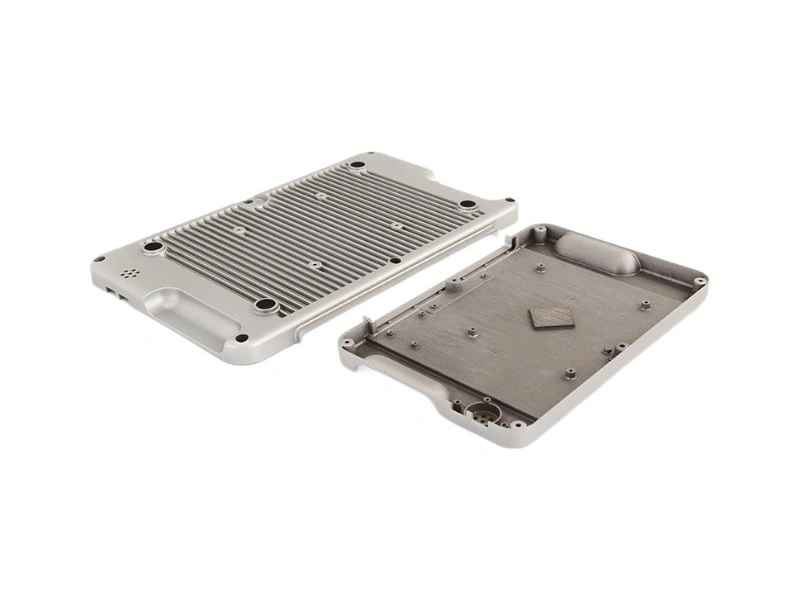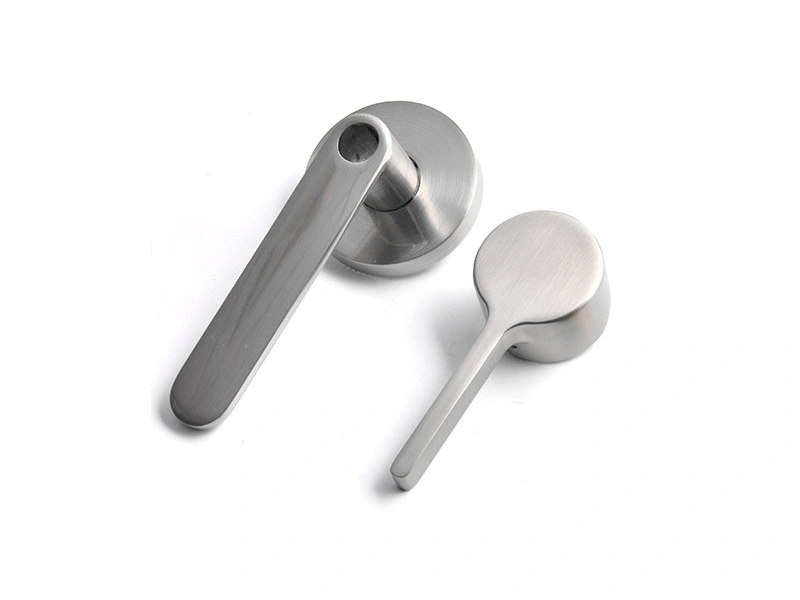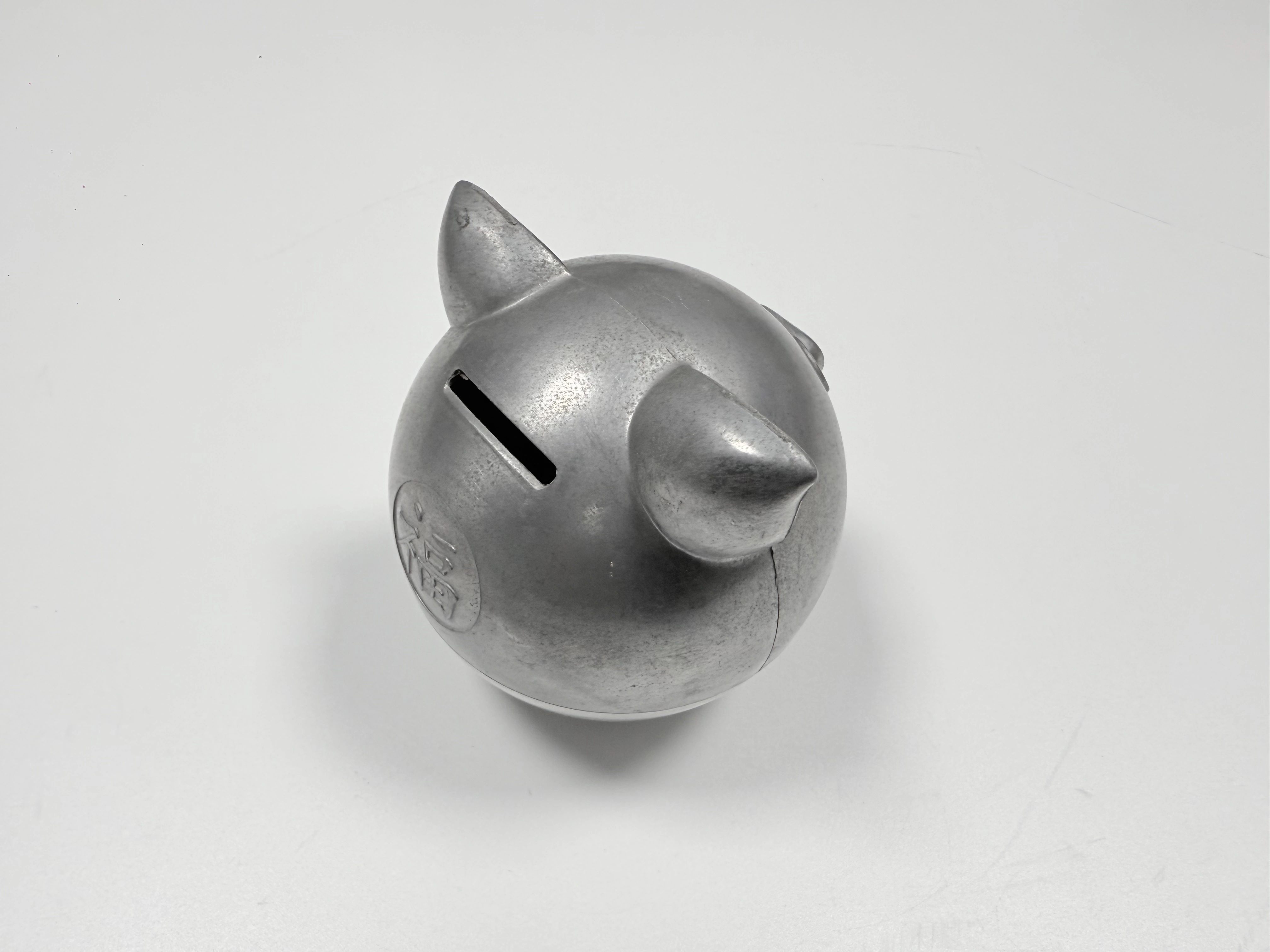
Can PVD Replace Chrome Plating on Zamak Parts?
PVD coating can replace chrome plating on a Zamak part for appearance, and it cannot carry that plating's job as a barrier. Colors and gloss come out close, and a masked face still shows metal. Corrosion protection and surface leveling stay with the Cu/Ni underlayer, which remains an electroplated stack. PVD vs chrome plating is a stack decision, not a finish substitution.
Two Processes, Not Two Finishes
Chrome plating grows metal from a bath. The deposit builds outward, so it levels a light scratch and bridges a shallow pit on the way. Thickness is the working variable: the plater keeps adding until the part covers.
PVD works the other way. Metal vapor condenses on the part, and the film, 0.5–3 µm thick, copies the geometry it lands on. A process that grows material and a process that records a surface cannot be swapped by name alone.
On decorative zinc the two are usually stacked rather than opposed: plating first, then the colored film.
Appearance: What Each Can Do
Chrome sets one reference, a bright neutral metal with a deep gloss. PVD covers gold, champagne, rose, black, and gunmetal, checked against a D65 light box. A bright finish stays available, because the film is thin and the gloss comes from the polished surface and the nickel beneath it.
Where the requirement is a color family and a gloss level, appearance is replaceable. Batch-to-batch color needs a D65 record and a retained sample; the polish and the underlayer decide the final brightness. Masking decides what appears at an edge, and nickel shows where the rack covered the part.
Wear and Corrosion: Thickness Is the Story
Wear favors the thin film. A hard PVD top layer at 0.5–3 µm resists scratching better than the softer plated layer it sits on, even though it is far thinner. A part that rubs in a pocket or on a shelf keeps its color for longer.
Corrosion runs on a different mechanism, so the same thickness figure says nothing about it. The film is too thin to act as a barrier, and a pass to ASTM B117 for 48 h comes from the plated stack beneath it. Reading 0.5–3 µm as a corrosion thickness is the usual error in this comparison.
The Underlayer Changes the Answer
Decorative PVD on zinc die castings is normally a stack: an electroplated Cu/Ni underlayer that levels the surface and carries the corrosion result, plus a top layer that supplies color and wear resistance. The stack is to be confirmed per project, because plating thickness and nickel chemistry follow the corrosion target.
With that stack, a masked face shows nickel rather than bare zinc, so an inspector looking at an unmasked edge sees plating, not film. Direct PVD on zinc without plating exists, though its corrosion result is a different claim and cannot be read across from a plated sample.
Item | Chrome plating | PVD over Cu/Ni (to be confirmed) |
|---|---|---|
Top layer thickness (µm) | Set by the plating spec | 0.5–3 |
Look | Bright or satin chrome | Gold, champagne, rose, black, gunmetal under D65 |
Wear resistance | From the plated layer | From the hard top film |
Corrosion | From the plated stack | From the Cu/Ni underlayer, not the top film |
Adhesion test | ASTM D3359 | ASTM D3359, 4B–5B |
Salt spray | ASTM B117 | ASTM B117, 48 h |
Regulatory Pressure on Hexavalent Chromium
Most pressure to drop chrome comes from hexavalent chromium in the plating bath, not from the look. A PVD top layer removes the decorative chrome step, and the part can still carry a plated Cu/Ni underlayer. Replacing the top layer does not take the plating line out of the process.
Ask a supplier which layer a chrome-free claim covers. A claim about the top film says nothing about the stack, and the corrosion data behind it should name the underlayer and the test.
When Switching Is a Bad Idea
Three cases call for plating, or for keeping the plated stack under the film.
Corrosion duty beyond the 48 h salt spray line. The top layer adds nothing to the barrier, so a harsher service needs a different plated stack, not a color film.
Deep recesses and undercuts the vapor cannot see. A flat coupon can pass B117 while the cavity still shows a shadow line.
Castings with open porosity at the gate. Plating levels a shallow pit; PVD copies it, and the pit reads as a dark point once coated.
For a part that clears those three, write the stack, the masked faces, and the two test lines on the drawing before either route is quoted: ASTM D3359 at 4B–5B, and ASTM B117 for 48 h.