Can Zamak die-cast housings be customized for medical ergonomic needs?
Yes. A Zamak die-cast housing can be customized with palm contours, finger clearance, control guards, textured zones, cable exits, balanced internal mounts and integrated attachment features for a medical device. The geometry is only ergonomic when it works for the intended users and task. Device mass, center of gravity, gloves, cleaning, control force, accidental activation, patient contact and foreseeable misuse must be assessed on the complete production-intent assembly.
Define the users, tasks, and use context
Identify clinicians, patients, caregivers, service personnel and transport staff who handle the device. Describe the task sequence, duration, posture, hand availability, visual attention, urgency and environment. A bedside monitor control, home-use injector base and surgical console handle do not share the same grip or feedback needs.
Include relevant hand sizes, strength, dexterity limitations and personal protective equipment. Check wet or contaminated gloves, one-handed use, left/right access and low-light operation where applicable. The OEM's usability and risk process should decide which user groups and use scenarios require formative and final evaluation.
Use Zamak mass deliberately
Zamak is relatively dense. That can stabilize a tabletop unit, counterbalance a display, reduce movement while a button is pressed or provide deliberate tactile feedback. The same mass can increase fatigue in a handheld device and raise impact energy in a drop. Do not label it lightweight without comparing actual CAD masses and the assembled center of gravity.
Locate batteries, motors, pumps, cartridges, boards, cables and accessories before judging balance. A comfortable empty shell can become nose-heavy after assembly. If weight is valuable only at the base, compare a hybrid architecture rather than making the entire enclosure thick or dense.
Cast useful grip and control geometry
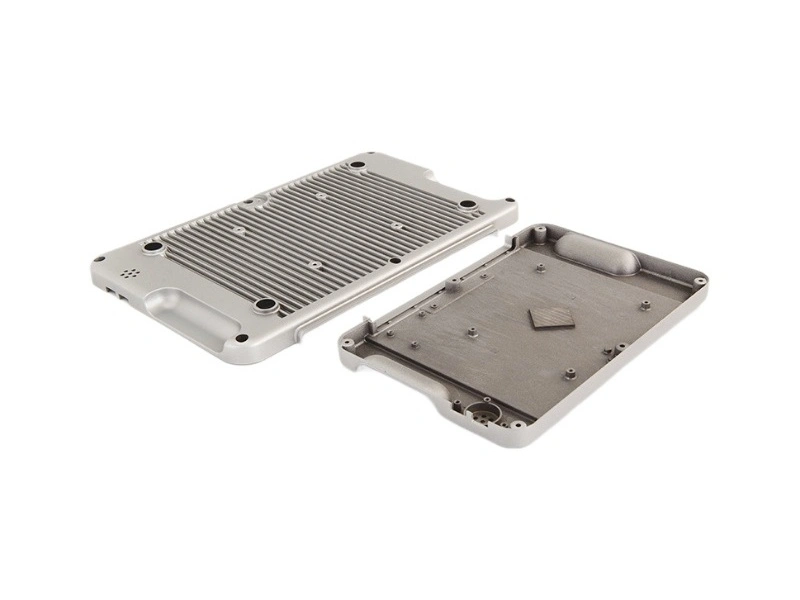
Die casting can integrate curved walls, ribs, bosses, trigger surrounds, finger stops, anti-rotation details and recessed control fields. Use radii and transitions that can be cast, ejected, finished and cleaned. Keep parting lines, gates, ejector witness and flash away from sustained hand contact and labels.
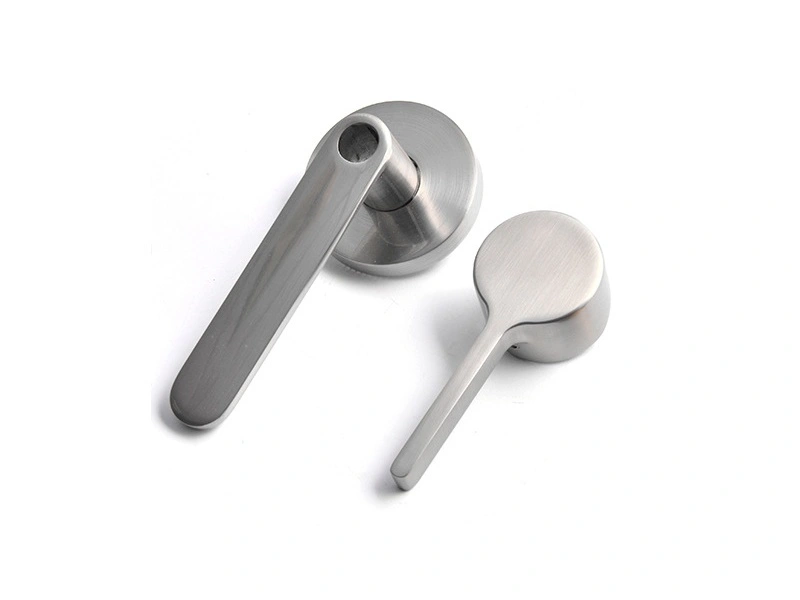
Protect controls against unintended operation without blocking intentional access. Verify button reach, connector access, display viewing and cable routing with the user's posture. A deep finger recess may fit one hand well but exclude gloves or create a pinch point during assembly and service.
Balance grip texture with cleanability
Design choice | Ergonomic value | Medical-use question |
|---|---|---|
Shallow cast texture | Grip and orientation cue | Can soil and disinfectant be removed from the final finish? |
Soft-touch layer | Friction and perceived comfort | Does it survive the specified chemicals and wear without tack or particles? |
Recessed control | Reduces accidental activation | Can gloved users reach it and can the recess be wiped? |
Weighted base | Stability during operation | Does higher drop energy or transport load create another hazard? |
Specify the actual surface system before approving texture. Paint or powder can soften small details and alter friction. Repeated wipes can polish high spots, expose edges or change gloss. Evaluate both initial touch and the conditioned surface.
Prototype shape and weight with the right models
Rapid prototypes can compare reach, clearances, hand fit, display angle and control layout before die release. Add ballast and production-intent internals when testing balance. A polymer print does not reproduce Zamak thermal feel, inertia, surface finish or sharp edge behavior.
Use early models for design choices, then repeat critical evaluations with cast, machined, coated and assembled samples. Include dimensional extremes, final cables, batteries, labels and accessories. Record what changed after each stage so the final evidence applies to the released configuration.
Verify ergonomics alongside safety and device function
Check grip security, fatigue, accidental activation, pinch and sharp-edge hazards, drop behavior, control identification, cleaning access and service operations. Mechanical requirements may conflict: a deeper rib can improve stiffness but press into the hand; a guarded control can reduce false activation but slow urgent access.
Medical Zamak housing suitability also depends on contact, sterilization, EMI, sealing and finish. Ergonomic approval cannot override an unacceptable chemical, electrical or mechanical risk.
Recheck ergonomics after production changes
Changes that appear cosmetic can alter use. A new texture, thicker coating, moved parting line, heavier battery, revised cable or different fastener can change grip, balance, reach or sharp-edge exposure. Link engineering changes to a usability and risk review rather than assuming the original hand-fit study still applies.
Maintain controlled reference assemblies for mass, center of gravity, control force and visible boundaries. When tooling is polished or repaired, check touch zones and control recesses as well as dimensions. Production inspection cannot replace user evaluation, but it can prevent a validated ergonomic feature from drifting unnoticed.
Write ergonomic needs into the RFQ
Provide user groups, task sequence, handling duration, gloves, hand-size range, target assembled mass and balance, grip and control zones, cleanability, contact classification, drop conditions, surface system, labels, internal BOM, prototype questions and acceptance activities. Mark surfaces where parting or trim witness is prohibited.
Ask the supplier to return DFM for castability, ejection, texture, wall transitions, inserts and finish allowance. Zamak supports highly customized medical housings, but the OEM should release the design only after representative users can operate, clean and handle the complete device without introducing unacceptable risk.