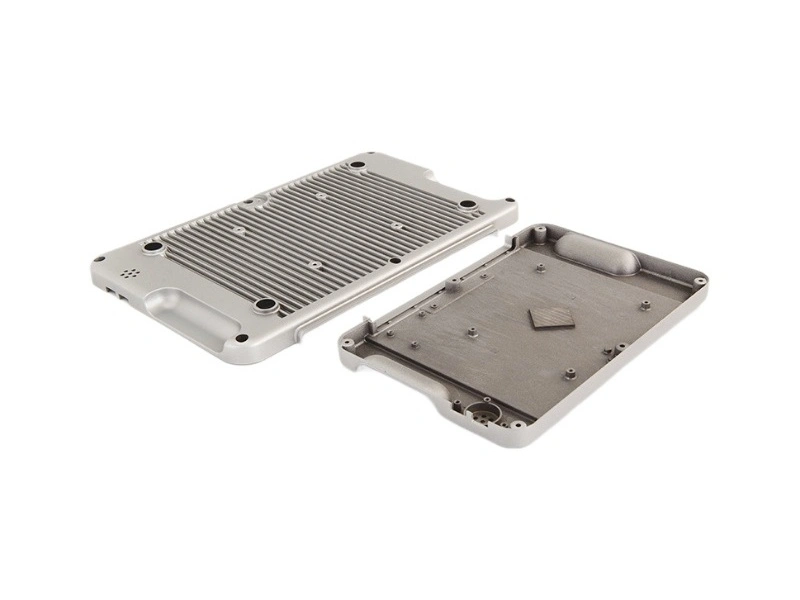
What finishing options are suitable for consumer-facing device shells?
Suitable finishes for consumer-facing Zamak device shells include qualified multilayer decorative or functional plating, liquid paint systems, powder coatings for compatible geometry, mechanical polishing or brushing used as preparation or a protected texture, and printed or laser-marked graphics over a validated base. There is no universal best option. Choose from the intended metallic or opaque look, color and gloss, touch, abrasion, skin contact, sweat and chemicals, UV exposure, corrosion, grounding and antenna zones, dimensions, graphics, repair and production volume.
Start with the final look and touch, not a process name
Define whether the device should look bright metallic, satin metal, fine matte, textured, color-painted, soft touch or deliberately raw-industrial. State color target, gloss range, texture direction, tactile friction, fingerprint expectation, edge language and branded graphics. Use physical master and limit samples under controlled lighting because words such as “premium” and “silky” are not inspectable.
Mark A, B and hidden surfaces plus touch, adhesive, gasket, ground, shield, thermal and RF zones. A single shell may need an opaque exterior, masked conductive lands, a clean adhesive groove and protected threads. Every transition and mask line affects cost and appearance.
Use plating for a metallic Zamak appearance
Qualified copper-containing preparation or leveling layers, nickel-family layers, chromium-family decorative tops and other functional finishes can produce bright, satin or dark metallic effects on Zamak. The complete pretreatment and layer stack matters. Directly naming a top metal without activation, underlayers, thickness locations, rack and corrosion requirements is incomplete.
Plating can reveal pores and polishing variation. Review current distribution at recesses, edges, logos, buttons and port frames; define rack contacts and masks. If the plated surface also forms an EMI or ground contact, validate initial and post-wear/environment joint resistance. Cosmetic appearance alone does not establish electrical continuity.
Use liquid paint when color and fine control dominate
Liquid systems can support broad color, gloss, metallic, clear and tactile effects with primers and topcoats selected for the prepared zinc substrate. They can suit detailed housings where layer control and complex masking matter. Adhesion, cure, solvent or chemical exposure, UV, abrasion, skin contact and recoat or repair policy must be qualified for the exact formulation and geometry.
Soft-touch effects need careful aging work. A pleasant initial friction can change through oils, cleaners, heat, humidity or repeated handling. Define tack, staining, polish-through, edge wear and color change acceptance. Do not assume a marketing name proves lifetime performance.
Use powder where build and edge geometry allow it
Powder can provide durable opaque color and texture on suitable shells, stands, bases and larger components. Its build and electrostatic coverage influence sharp edges, recesses, fine text, grounding lands, threaded features, display gaps and port openings. Masking and plugs must survive pretreatment and cure without contaminating the surface.
Check whether cure temperature and time affect the casting, inserts, adhesives or later assembly. Verify orange peel, edge coverage, impact chipping, abrasion, chemicals, UV and color according to the product environment. A thick protective layer may be wrong for a fine cosmetic bezel even if it performs well on a desktop base.
Treat mechanical texture as a controlled operation
Polishing can prepare bright plating or a protected metal look. Brushing creates directional grain. Blasting or controlled media processes create matte texture and coating key. Each method can remove material, reveal pores, change corners, alter text and introduce cavity-to-cavity or operator variation.
Zinc surface options should define media or tool, direction, removal limit, fixtures, cleaning and allowable witness. Bare polished zinc generally needs an environmental strategy; mechanical appearance and corrosion protection should be planned together.
Compare finish families by device risk
Finish family | Potential value | Main consumer-shell risk | Release evidence |
|---|---|---|---|
Multilayer plating | Metallic brightness, satin or dark metal effect; possible conductive regions | Pores, recess coverage, rack witness, wear, galvanic and fingerprint behavior | Full-geometry appearance, layer, adhesion, wear and corrosion checks |
Liquid paint | Color, gloss, metallic, clear or tactile flexibility | Adhesion, edge wear, chemicals, UV, tack and color variation | Approved stack after handling and relevant exposure |
Powder | Opaque durable texture and efficient coverage on suitable parts | Build at gaps/threads, orange peel, recess and mask control | Dimensional assembly plus cosmetic and durability validation |
Polish, brush or blast plus protection | Metal texture and controlled preparation | Material removal, exposed pores, directional variation and corrosion | Removal limits, protected finished sample and cavity comparison |
Graphics over a base layer | Brand, symbols, serials and functional legends | Registration, contrast, adhesion, wear and rework visibility | Layer-compatible print/laser trials and abrasion checks |
Protect ground, antenna, adhesive, and assembly interfaces
Paint and powder usually interrupt electrical contact. Show masks for EMI springs, seams, screw lands and cable-shield contacts, then protect those regions from corrosion and handling. A conductive coating is not automatically transparent to an antenna; RF windows and keep-outs belong to the radio design.
Adhesive and gasket surfaces need compatible cleanliness, texture and chemistry. Coating buildup changes display gaps, button travel, connector ports, threads and snap fits. Define final-state dimensions and assembly torque. Post-processing scope must be quoted with these masks and interfaces, not as a generic finish line item.
Release and control the complete finish stack
The RFQ should state Zamak grade, surface zones, target look and touch, layer stack or performance need, color/gloss/texture, defect rules, preparation, mask and rack locations, dimensions, graphics, substances, skin and chemical exposure, UV, abrasion, drop/chip, corrosion, electrical interfaces, inspection, samples, repair, packaging and changes.
Validate production-intent castings from every cavity through actual preparation and finish. Inspect under specified viewing conditions; measure appropriate color, gloss, texture, layer and dimensions; assemble the device; and run relevant wear and environment sequences. Control changes to alloy, die, polishing, cleaners, baths, paint, powder, cure, racks, masks, graphics and packaging. The suitable finish is the simplest controlled stack that preserves appearance, touch, fit, electronics interfaces and durability after real use.