What is the minimum order quantity for custom decorative hardware production?
Custom decorative hardware has no universal minimum order quantity. A credible MOQ is the smallest release that can cover the agreed casting setup, finishing batch, inspection, assembly and packaging without changing the approved process or creating disproportionate cost and quality risk. It depends on whether the buyer needs appearance prototypes, tool-trial samples, a validation lot or repeat production, and it can be governed by the coating supplier rather than the die-casting machine.
First define what the order must prove
An appearance prototype may answer shape, scale, grip and color questions without using production tooling or production Zamak. Tool-trial castings answer fill, ejection, dimensions and early finish response, but they are not automatically saleable inventory. A validation lot tests the frozen production route, including normal cavities, polishing, coating, inserts, assembly, inspection and packaging. A commercial release must also satisfy purchasing and logistics economics.
Using one MOQ number for all four stages creates confusion. Ask for the quantity and price at each decision gate, the evidence produced, and whether samples use the final tool and process. This prevents a low prototype quantity from being misrepresented as the minimum for stable, finished production hardware.
Find the operation that sets the batch floor
Process or business input | Why it can set the minimum | Question for the quotation |
|---|---|---|
Die-casting setup and tool configuration | Machine preparation, metal stabilization, cavity balance and process approval create fixed effort | What setup and validation are repeated for each release? |
Polishing or surface preparation | Manual labor, dedicated fixtures and appearance sorting may be scheduled by lot | How are cavity and operator variation controlled at small volume? |
Plating, painting or powder coating | Bath, line, rack, color-change, cure and minimum charge can exceed the casting batch constraint | What is the sub-tier's minimum batch or charge for each finish and color? |
Purchased inserts, screws and packaging | Standard pack sizes or custom components create inventory commitments | Which items have supplier minimums, and who owns unused stock? |
Inspection and testing | Destructive samples, matched-set approval and reports consume units and fixed engineering time | How many samples are required at each release and after changes? |
For decorative hardware, finishing often controls the practical release. A coating line may accept a small lot but charge as if a minimum rack or color batch had been run. Bright plating can require preparation and sorting that are uneconomic in very small releases. Conversely, combining too many parts simply to fill a finish batch can create storage risk and hide color drift between later releases.
Separate tool investment from unit quantity
A production die is largely a nonrecurring investment. Ordering more parts spreads that cost over more units, but amortization is a commercial choice, not a physical MOQ. The supplier can quote tooling separately, amortize it into an agreed forecast, or use another ownership arrangement. Buyers should compare cash flow, unit cost, tool ownership, maintenance responsibility and demand uncertainty rather than accepting a large order solely to make the displayed unit price smaller.
The tool concept also affects release economics. A multi-cavity die may suit stable high demand but can increase upfront cost and cavity-matching work. A family tool can combine related hardware, yet unequal demand between SKUs may produce unwanted inventory. Review these choices through the tooling cost and volume decision, using the actual SKU forecast.
Account for finish colors and SKU fragmentation
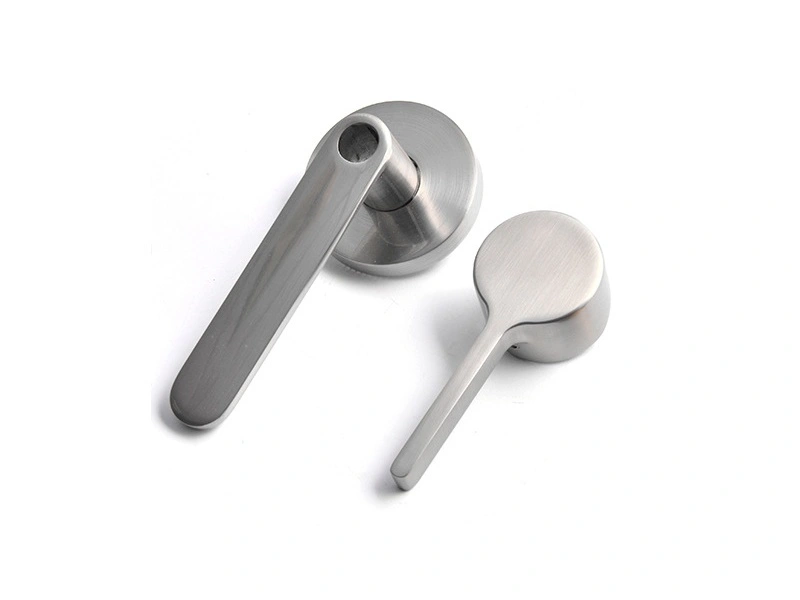
One handle geometry offered in satin nickel, antique brass and matte black is not necessarily one production lot. Each finish may need separate preparation, racks, process settings, golden samples and inspection. Left- and right-hand hinge variants, several pull lengths, or different insert packages further divide the demand. MOQ should be stated per casting, per finish, per assembled SKU and per release so the buyer knows which level carries the commitment.
Ask whether colors can share a casting campaign and then split at finishing, and how raw work-in-process will be stored and traced. Postponing finish until demand is known can reduce finished-goods inventory, but raw castings still consume cash and may require surface protection or reinspection before coating.
Include validation and destructive samples
First articles, coating approval, dimensional inspection, pull or torque tests, hinge cycling, adhesion, abrasion or environmental tests may consume samples. Some tests are destructive. The lot must also represent all relevant cavities and normal production handling. A tiny batch that cannot provide both validation evidence and retained references may be false economy.
Define the approval gate and what happens after a tool, alloy, polishing, coating or sub-tier change. Revalidation quantity should be based on the affected risks rather than automatically repeating every test or skipping evidence. Keep signed appearance masters and trace them to the process revision.
Compare low-volume routes honestly
For early design learning, rapid prototyping may provide form and assembly samples without claiming to duplicate die-cast material, surface or durability. Bridge or simplified tooling may be considered when geometry and business conditions support it. The quotation should state which production characteristics the sample does and does not represent.
When expected lifetime demand is genuinely low, compare die casting with machining, additive manufacture or another casting route at the finished-part level. Include tooling, unit conversion, finishing, inspection and design changes. A low-volume alternative can avoid production tooling but may not reproduce the same texture, detail, properties or unit economics.
Request a volume and release matrix
Send annual forecast, expected product life, release frequency, SKU and finish mix, ramp plan, forecast confidence, inventory limits, validation requirements, packaging and target delivery pattern. Ask the supplier to return nonrecurring cost, unit price at realistic annual and release quantities, finish minimum charges, purchased-component commitments, excess-stock ownership, tool maintenance assumptions and change costs.
A useful quote also identifies whether a smaller release changes the approved process, cavity mix, finish source, inspection or lead time. The low-volume manufacturing discussion should remain tied to these project facts rather than a promotional piece-count range.
The practical MOQ answer
The minimum order is not a standard number for Zamak handles, knobs or decorative trim. It is a negotiated release quantity supported by tool setup, finish batching, test samples, assembly and supply-chain commitments. For a credible answer, request separate quantities for prototype, tool trial, validation and recurring production, and require the supplier to name the operation that sets each minimum.
This structure lets a buyer reduce inventory without pretending fixed processing costs do not exist. It also exposes when a low advertised MOQ excludes plating, color matching, inserts, reports or packaging. Decide from the complete finished hardware program, not the casting quantity alone.