What Zamak alloy is best for furniture handles and hinges?
There is no single best Zamak alloy for every furniture handle and hinge. Zamak 3 is a sensible baseline for many pulls, knobs, escutcheons and decorative parts because of its established casting and finishing behavior. Zamak 5 is a candidate when a design benefits from a different strength and hardness balance. For a hinge, however, alloy selection cannot replace analysis of the pivot, wear pair, sustained load, temperature and cycle duty; a separate pin or bushing may need to carry the moving interface.
Separate handle loads from hinge motion
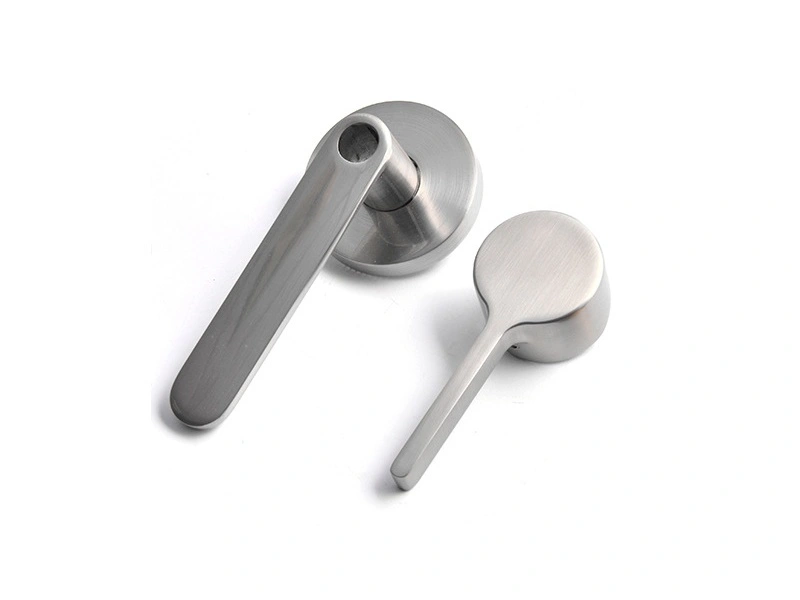
A handle usually transfers a hand load through a grip, two mounting feet, screws and the furniture panel. Important failure modes include bending, cracking at a boss transition, thread or insert pullout, permanent movement at the feet and finish damage from installation torque. A knob may place more torsion and prying load around one attachment. These assemblies should be tested with the intended screw and panel, because the substrate or fastener can govern failure before the casting.
A hinge adds repeated rotation, bearing pressure, alignment, clearance and possible door-slam or misuse loads. The zinc casting may form a leaf, housing or arm, while a steel pin or engineered bushing carries the wear interface. If a cast bore runs directly against a pin, lubrication, contamination, edge loading and clearance become material-selection inputs. "Furniture hardware" therefore does not describe one mechanical duty.
Use Zamak 3 as a baseline, not an automatic answer
Zamak 3 is widely used as a reference grade for zinc die casting. It can be attractive where castability, surface quality, dimensional behavior and compatibility with decorative finishing are central. Typical candidates include knobs, escutcheons, trim and handles whose geometry and attachment distribute load appropriately.
That baseline still needs a drawing and use review. A long handle with small mounting feet can create leverage that overwhelms a locally thin section. A heavy door or warm service condition can introduce sustained stress. Deep plating recesses may influence grade and geometry decisions indirectly through casting quality and preparation. Validate the actual part rather than relying on a property table detached from section thickness and process condition.
Consider Zamak 5 when the failure mode justifies it
Zamak 5 can be considered for a handle, lever, bracket or selected hinge component when the design review shows value in its mechanical balance. It should not be chosen from a "higher number means better" rule. Changes in grade can affect ductility, dimensional behavior, machining and finishing decisions, and they may not solve a poor load path or sharp stress concentration.
If bending at the grip controls performance, improve section placement and mounting-foot geometry as well as reviewing alloy. If boss cracking occurs during installation, check radius, wall transition, screw seating and torque. If a hinge wears at the pivot, compare a bushing, pin material or geometry change. The most useful alloy is the one that supports a validated assembly architecture at acceptable total cost.
Hardware duty | Reasonable starting point | Decision evidence |
|---|---|---|
Decorative escutcheon or trim with light structural duty | Zamak 3 screening | Surface preparation, clip/attachment retention, distortion and finish approval |
Cabinet pull or knob | Compare Zamak 3 and Zamak 5 if load or section warrants it | Installed pull, torque, boss/insert retention and cosmetic inspection after test |
Hinge leaf, arm or housing | Grade plus separate pivot architecture review | Assembly alignment, proof/misuse load, cycle test and wear inspection |
Direct sliding or bearing interface | Do not decide from Zamak grade alone | Pin/bushing/material pair, clearance, lubrication, contamination and wear evidence |
Include time, temperature and environment
Short-term load testing does not answer every furniture application. Sustained load and temperature can matter where hardware continuously supports a panel or experiences warm surroundings. Humidity, condensation, household cleaners and outdoor exposure influence the finish and any galvanic contacts. Include the expected load duration, maximum service temperature, misuse case and environment in the alloy review.
For plated or painted parts, test the complete layer system on the chosen alloy and geometry. A finish can alter fit, expose substrate at wear points or crack when the underlying component flexes. Alloy chemistry and production metal control also affect consistency, so require material identification and agreed verification rather than accepting only the commercial grade name.
Validate the complete hardware assembly
A sound plan uses calculation or simulation to locate risk, then tests production-equivalent assemblies. For handles and knobs, define mounting substrate, fastener, installation torque, load direction, proof or misuse load and acceptance for movement, cracking and finish damage. For hinges, add door mass and offset, opening range, cycle profile, pin and bushing, lubrication and acceptable play or permanent set.
Inspect parts after conditioning and testing, not only before. Subsurface defects, boss damage or coating cracks can appear after load. If machining or inserts are involved, include them in the samples. The broader Zamak alloy selection framework helps structure comparison, but the furniture assembly's failure modes decide the result.
What to send for alloy review
Provide CAD and drawings, component function, visible zones, mounting substrate, screws or inserts, load directions and duration, hinge motion where applicable, temperature, humidity and cleaning exposure, finish, expected volume and validation criteria. Ask the supplier to identify grade assumptions, geometry risks, metal-control method, pivot or insert alternatives, finish compatibility, sample plan and any features requiring machining.
Zamak 3 is often the practical first screen for decorative furniture hardware, while Zamak 5 may suit specific mechanically demanding designs. Neither is universally best, and a moving hinge interface may need a deliberately different material pair. Choose the grade only after the complete load path, wear interface, finish and acceptance tests are defined.