What’s the difference between Zamak 3 and Zamak 5 for die casting?
The main difference is that Zamak 5 contains more copper than Zamak 3. That change generally raises strength, hardness, and wear or mechanical-fastening capability, while Zamak 3 remains the balanced general-purpose choice for castability, ductility, dimensional behavior, and finishing. Zamak 5 is not automatically better: use it only when a named load, wear, thread, or joint requirement justifies the tradeoff and production tests confirm the result.
Control the grade and composition
Both alloys are zinc-aluminum-magnesium families, but the copper difference is large enough to affect product decisions. The purchase specification should identify the applicable designation system and grade, chemistry and material-record requirements, and any approved alternative. Do not rely on "Zamak" alone; recycled returns, cross-alloy contamination, and an unapproved substitution can change casting, aging, finish, and mechanical behavior.
Regional standards and commercial names are not always automatic equivalents. If the drawing or customer requirement cites a standard, confirm grade, edition, test condition, and required evidence. A material certificate supports the sampled chemistry or stated record; it does not prove every finished feature meets load, appearance, or dimensional requirements.
Use Zamak 3 when balance controls
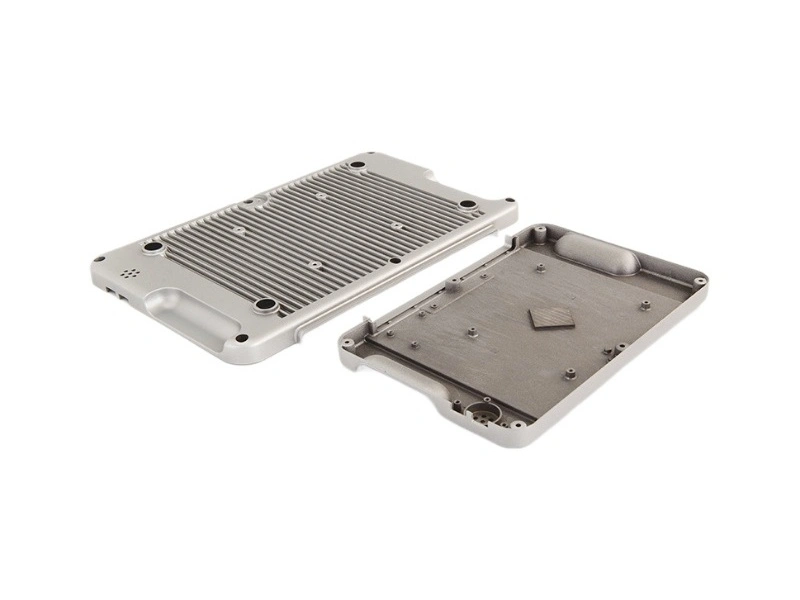
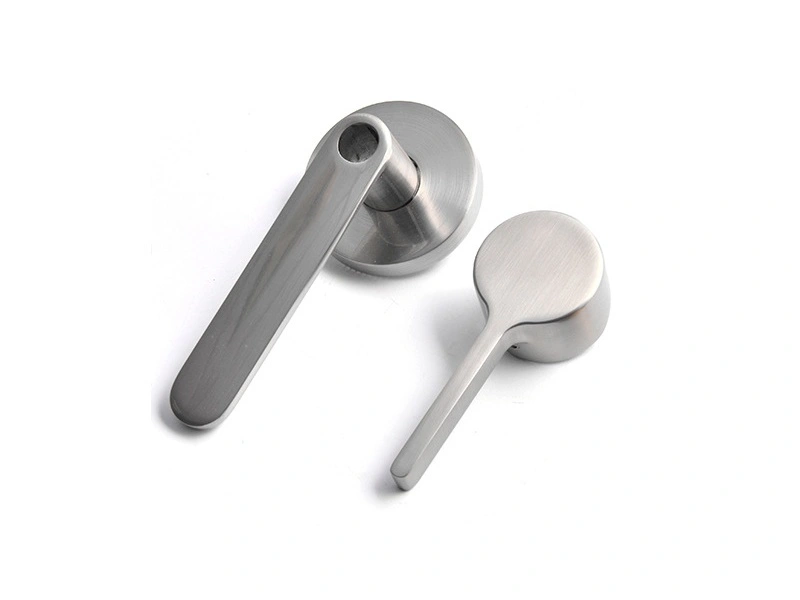
Zamak 3 is often the first alloy reviewed for housings, knobs, trim, handles, enclosures, and general hardware. It can support fine details and complex geometry while retaining a useful balance of mechanical response and ductility. It is also a common substrate candidate for decorative finishing, subject to the actual casting and preparation route.
Choose Zamak 3 when the design does not need the additional hardness or load response associated with Zamak 5, especially where deformation before fracture, staking, forming, or impact behavior matters. "Easier to cast" should not be used as a blanket approval. Gate layout, wall map, vents, die thermal state, ejection, trim, and appearance still govern the production result.
Use Zamak 5 for a defined mechanical gain
Zamak 5 is commonly evaluated for levers, lock parts, linkage components, loaded hardware, gears, or fastener features where added strength, hardness, wear response, or thread and joint performance can create value. Verify the feature that benefits. A harder alloy does not correct a poor load path, sharp corner, insufficient boss, weak thread engagement, or unsuitable mating material.
The higher-copper grade can have lower ductility and different dimensional behavior than Zamak 3. Those differences may matter under impact, crimping, riveting, press fitting, long-term load, temperature, and aging. Use representative sections and assembled joints in testing. A room-temperature tensile row cannot decide whether a latch survives impact or a boss retains clamp force.
Compare finish and corrosion on real castings
Both grades can receive suitable paint, powder, plating, or other systems after controlled preparation. Finish performance depends on casting skin, flow and porosity, trim, polishing, cleaning, activation, underlayers, coating thickness, rack contacts, cure, and service exposure. Alloy choice is one input, not a guarantee of decorative quality or corrosion life.
Approve the proposed finish on production-tool samples of each candidate alloy. Inspect color, gloss, texture, adhesion, pits, blisters, edge coverage, recessed areas, rack marks, and dimensional buildup. If Zamak 5 is chosen for a mechanical reason, make sure the finish route and visible result remain acceptable rather than assuming a Zamak 3 approval transfers unchanged.
Compare the two alloys by decision
Requirement | Likely starting point | Evidence to request |
|---|---|---|
Balanced general-purpose casting and finish | Zamak 3 | Trial fill, dimensions, finish and assembly checks |
Higher local load or thread performance | Evaluate Zamak 5 | Feature-level proof and retention test |
Wear contact or gear feature | Evaluate Zamak 5 and joint design | Lubricated or dry wear test in actual mating pair |
Impact, staking, forming, or ductility-sensitive operation | Compare both; Zamak 3 may fit | Production-section operation and failure test |
Long-term dimension under load and temperature | No automatic winner | Loaded aging test and dimensional trend |
Decorative plated face | Qualify actual alloy and substrate | Finished boundary samples and exposure test |
Test the feature that drives selection
For a threaded boss, define fastener, engagement, installation torque, clamp load, temperature, retightening, and failure mode. For a gear, define mate, lubrication, torque, speed, cycle, alignment, and allowable wear. For a handle or lever, define load direction, fixture, shock, cycles, and acceptable permanent movement. Use the same product test to compare alloys.
Dimensional approval should identify cavity, datum, free or restrained state, time after casting, finish condition, and measurement method. Track characteristics likely to affect assembly or motion, not every dimension with equal effort. If aging matters, do not approve only an immediate trial measurement.
What buyers should put in the RFQ
Send the controlled model and drawing, proposed grade, product loads, impact and wear duty, temperature profile, service life, mating materials, fastening or forming operations, cosmetic zones, finish system, dimensions affected by coating, demand, and validation requirements. Ask the supplier to disclose alloy assumptions and whether both grades can run in the proposed tool and process without changes.
A zinc die-casting review should return a grade recommendation tied to the part's load, ductility, dimensional, wear, and finish evidence. Zamak 3 is the sensible balanced reference; Zamak 5 is justified when its copper-related mechanical gains solve a measured product need without creating an unacceptable tradeoff.