Which Zamak alloy is best for structural locking components?
There is no universal best Zamak alloy for every structural locking component. Zamak 5 is often the first higher-load comparison for followers, cams, lugs, threaded carriers or actuator parts, while Zamak 3 remains a balanced baseline for housings and moderate-load mechanisms. Zamak 2 may fit selected wear or high-load features, but its chemistry, aging, dimensional, ductility, corrosion and finishing tradeoffs must be validated. Bolts, shackles, strikes, anti-drill parts and highly concentrated attack-load elements may require steel or another purpose-selected material.
Define “structural” for the specific lock part
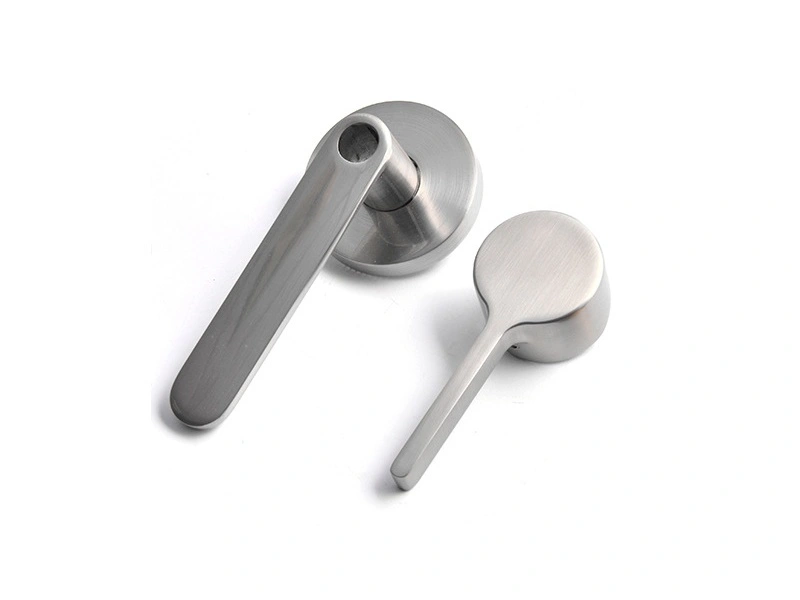
Identify whether the component is a housing, escutcheon, follower, spindle carrier, thumbturn, cam, latch guide, bolt, pawl or strike. State whether it carries installation clamp, user torque, spring load, latch impact, door misalignment, blocked-operation overload or forced-entry load. A housing that locates parts has a different failure mode from a cam that transfers torque.
Trace the complete load path through fasteners, door or enclosure skin, reinforcement, frame and keeper. Alloy selection for one casting cannot establish complete-lock security. Define acceptable deformation, fracture, jam, release and safe-egress behavior at assembly level.
Use Zamak 3 as the balanced housing baseline
Zamak 3 can fit housings, covers, trim and mechanisms with moderate loads, controlled stops and qualified surface protection. Its established castability and finishing response make it a useful reference in the trade study. Check actual standard, chemistry, section and process rather than importing one property value from a data sheet.
Geometry often matters more than changing from Zamak 3 to a nominally stronger grade. Increase root radii, bearing length, thread engagement and contact area; move parting, ejector or flow joins away from loaded roots; and prevent a thin tab from becoming the hard stop. Test the finished feature under the real stack.
Screen Zamak 5 for torque, wear, and loaded features
Zamak 5 may offer useful strength, hardness or wear behavior for followers, selected cams, threaded carriers, handle hubs and loaded lugs. It should be compared when those characteristics close a defined margin. Review ductility, impact, aging, corrosion and plating compatibility alongside static load.
A blocked bolt or slamming latch can create impact and stress concentration beyond normal operating torque. Use worst-clearance and misalignment assemblies; include reverse torque and overtravel. A grade that passes a smooth bench rotation may fail at a sharp stop or worn pin contact.
Screen Zamak 2 only with explicit tradeoffs
Zamak 2 has a higher copper level than common Zamak 3 and 5 grades and can enter specialized high-load or wear studies. That does not make it the automatic answer for structural locks. Confirm exact chemistry and standard, as-cast and aged dimensions, ductility, notched behavior, corrosion, surface route, supplier process and mating material.
Compare it with a hybrid solution. A Zamak housing with a steel insert, stop, pawl, bolt or reinforcement may provide better attack and wear behavior than making the entire mechanism from one alloy. Account for insert retention, galvanic exposure, tolerance stack and assembly.
Compare the material at the feature and lock level
Lock function | Likely material screen | Evidence that decides |
|---|---|---|
Housing, trim or moderate-load carrier | Zamak 3 baseline; compare 5 if load requires | Mounting, alignment, finish, environment and installed misuse |
Follower, cam, hub or loaded lug | Compare Zamak 3/5 and selected Zamak 2 or hybrid | Torque, stop impact, wear, aging and worst-stack endurance |
Bolt, shackle, strike or anti-drill element | Compare steel or other specialized materials | Forced-entry, toughness, hardness, corrosion and installation path |
Keying or precision cylinder element | Use material selected for keying, bearing and wear function | Key/cylinder operation, tolerances, debris and attack resistance |
A broader guide to choosing a Zamak alloy can structure the comparison, but the lock's feature-level evidence decides.
Include wear, corrosion, and finish in the choice
List each contact pair, pressure, motion, lubricant and debris route. Zamak against steel, brass, polymer, plated Zamak or another zinc alloy creates different wear behavior. A harder grade may transfer damage to the mating pin or increase debris. Inspect torque, backlash, travel, stop deformation and retained engagement during endurance.
Outdoor moisture, salt, sweat, cleaners and galvanic hardware can attack machined or worn zones. Select the complete preparation and finish system for the alloy and geometry. Test after wear and corrosion in a relevant sequence; independent pristine tests can miss a worn exposure path.
Release the alloy with installed-lock evidence
The RFQ should state component role, load path, normal torque, blocked and reverse operation, impact and attack cases, duty, temperature, environment, wear pairs, lubricant, machining, finish, dimensions, quantity, applicable standards, inspection and change rules. Ask the supplier to return exact alloy specification, chemistry controls, DFM, alternatives, property basis, finish compatibility, validation and exceptions.
Use production-intent zinc die casting cavity, machining, finish, pins, springs, lubricant, fasteners, cylinder, latch or bolt, strike and installation. Validate normal operation, endurance, misalignment, misuse, environment and applicable forced-entry behavior. The best alloy is the one that keeps its specific function within the complete lock acceptance window, not the grade with the highest isolated property.