Applicable Substrates for Anodizing: Metals Best Suited for Surface Treatment
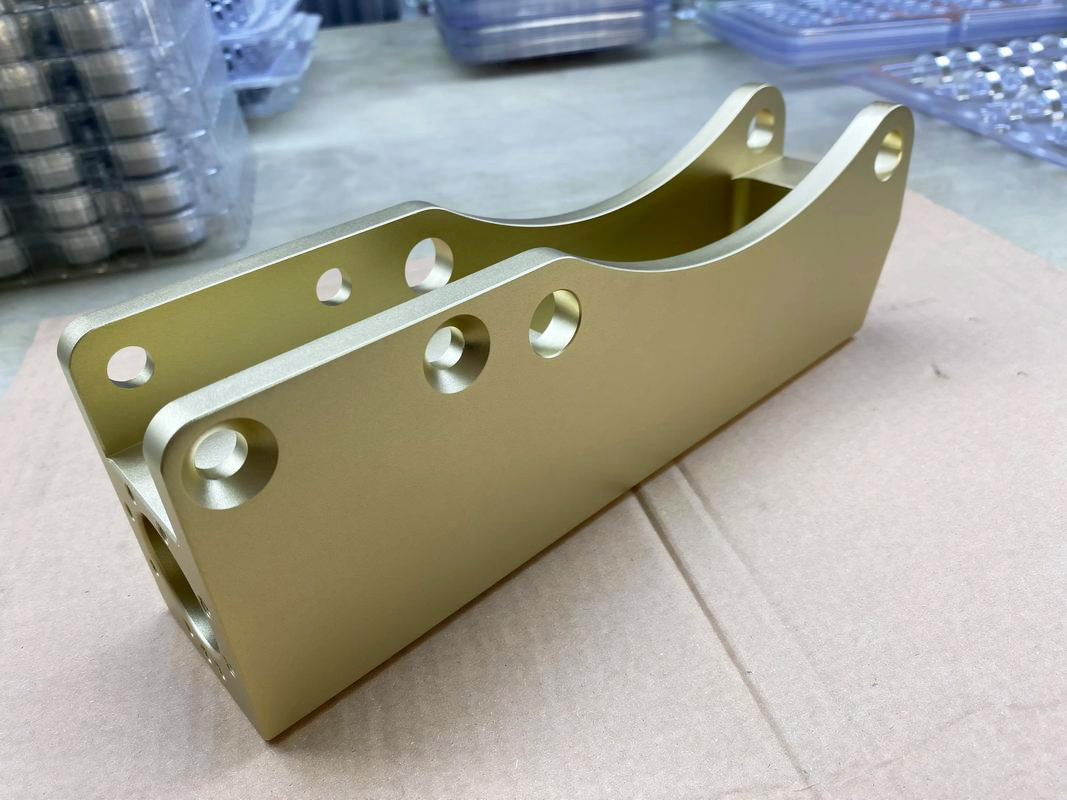
Aluminum is the best-established substrate for conventional industrial anodizing, but the alloy and product form determine whether the result will be decorative, merely functional, or unacceptable. Wrought 5xxx and 6xxx aluminum commonly give the most predictable clear or dyed appearance. Cast aluminum can also be anodized, although silicon particles, intermetallic phases, porosity and flow patterns often produce a gray, mottled or uneven surface. Magnesium and titanium require processes developed for their own oxide systems; zinc, copper and ordinary carbon or stainless steels should not be routed through an aluminum anodizing specification.
That distinction matters at the RFQ stage. A metal being electrochemically oxidizable does not automatically make it a good production substrate. The buyer must define the intended appearance, wear duty, corrosion exposure, dimensional interfaces and acceptance method, then test the actual alloy, casting route and pretreatment. A finish approved on machined 6061 cannot be assumed to match a high-silicon pressure die casting, even when both parts are called aluminum.
Start with the oxide system, then judge the application
Anodizing makes the workpiece the anode in an electrolytic cell so that a controlled oxide grows from and above its surface. The process is most mature for aluminum because aluminum oxide can be produced as a coherent film whose structure can support sealing, coloring or wear-oriented treatments. The coating is a conversion of the substrate rather than a separate sheet laid over it. Alloy constituents that do not convert in the same way remain visible and can interrupt film growth.
Other valve metals, including magnesium, titanium, niobium and tantalum, can form anodic oxides, but their process chemistry and purposes differ. Titanium color anodizing uses thin-film interference rather than dye held in an aluminum-style porous film. Magnesium conversion or plasma-electrolytic treatments are usually selected as part of a corrosion-protection system, often under an organic topcoat. Calling all of these processes simply "anodizing" hides the substrate-specific controls that a drawing and purchase order need.
| Substrate family | Practical anodizing position | Likely purchasing concern | Evidence to request |
|---|---|---|---|
| Wrought aluminum | First choice for many clear, dyed and hard-anodized parts | Alloy/temper color, grain pattern, machining marks and lot matching | Coupons or first articles from the specified alloy, approved visual standard and required film tests |
| Cast aluminum | Often viable for functional protection; decorative uniformity is alloy- and process-dependent | Silicon darkening, intermetallic contrast, porosity, flow lines and mixed surface conditions | Production-intent casting trial, defined pretreatment, cosmetic-zone sample and functional tests |
| Magnesium alloy | Uses magnesium-specific anodic or electrolytic conversion systems | Barrier damage, galvanic interfaces, sealing/topcoat compatibility and service moisture | Qualified process route, complete coating stack and exposure test on the actual alloy |
| Titanium alloy | Well suited to interference coloring and selected functional oxide treatments | Color sensitivity to oxide thickness, surface texture, viewing angle and abrasion | Voltage/process window, master sample, cleaning method and wear/exposure validation |
| Niobium or tantalum | Technically anodizable, mainly for specialized interference-color or electronic uses | Material cost, color control and limited supply-chain options | Specialist processor qualification and application-specific samples |
| Zinc, copper or conventional steel | Not a normal candidate for aluminum-style anodizing | Unstable or unsuitable oxide behavior under the requested process | Evaluation of plating, conversion coating, paint, powder or PVD alternatives |
Wrought aluminum usually gives the cleanest decorative result
When a designer wants a bright clear finish or tight color control, wrought aluminum is normally the sensible starting point. The metal has been worked rather than solidified directly to final shape, so it generally presents a more continuous aluminum matrix at the surface than a pressure casting. This does not mean every wrought grade looks alike. Alloying elements, temper, extrusion structure, welding, local heating and machining all change the surface that enters the anodizing bath.
5xxx and 6xxx alloys are common decorative candidates
Many 5xxx sheet alloys and 6xxx extrusions or machined products can produce relatively clear, consistent films when chemistry and material condition are controlled. A 6xxx extrusion may still show streaking associated with die lines, grain flow or constituent distribution. Parts cut from different mill lots can shift after etching and anodizing even when their incoming bare-metal color looks similar. For a cosmetic assembly, the drawing should therefore lock the alloy and temper, while purchasing should avoid mixing mills or lots without a comparison trial.
A machined surface and an as-extruded surface on the same component may not match. Tool paths change roughness and reflected light; caustic etching can reveal underlying grain structure; polishing can smear or embed contamination. If two faces must appear identical, place them on the visual map, define the directional texture, and approve the complete sequence rather than approving anodizing in isolation. The sequence may include CNC machining, brushing, blasting, cleaning, etching, desmutting, anodizing, coloring and sealing.
2xxx and 7xxx alloys need closer process qualification
High-strength aluminum alloys are anodizable, but copper-, zinc- and other alloy-rich microstructures can complicate film appearance and corrosion behavior. A purchaser should not substitute a grade merely because its strength is similar. The substrate must still satisfy the finish specification, and the finish must not conceal a material or heat-treatment change. For fatigue-sensitive or highly loaded parts, the engineering authority should also review whether the selected anodizing type, pretreatment and film requirement are compatible with the design basis. That decision belongs in the controlled drawing and qualification plan, not in a generic supplier promise.
Cast aluminum is anodizable, but appearance is the difficult part
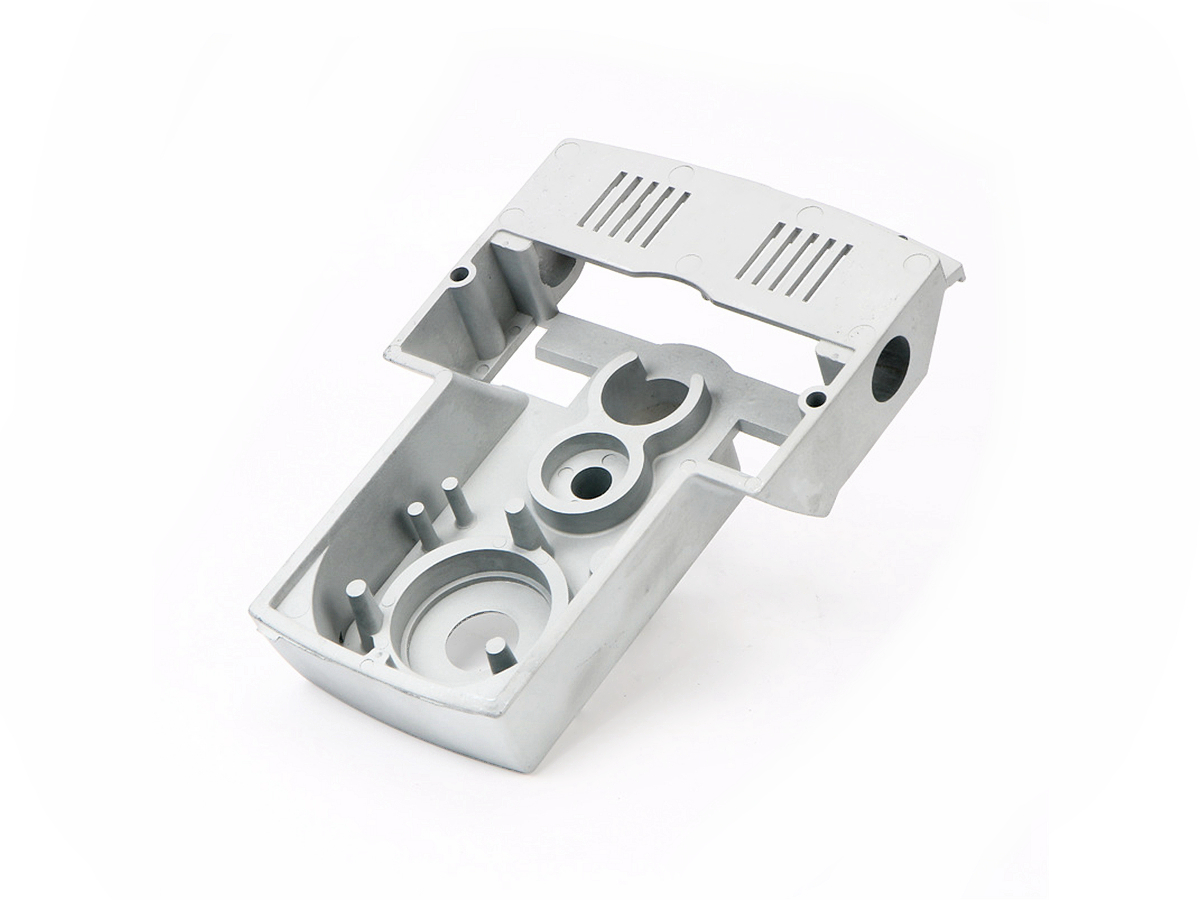
Most discussions about "anodizing aluminum" quietly assume wrought stock. Aluminum die casting is different. Casting alloys are formulated for filling, solidification and release from a die, and their silicon-rich, multiphase microstructure does not turn into a uniform transparent oxide. The aluminum matrix grows an anodic film while silicon and intermetallic constituents respond differently. The visual result can be darker and less reflective, and the contrast may expose metal-flow or cooling patterns that were subtle before treatment.
Silicon and intermetallic phases set a visible limit
Alloys such as A383/ADC12 are selected for casting performance, not for a wrought-aluminum cosmetic response. After anodizing, silicon-rich areas can read as gray or black speckling. Iron-, copper- and other constituent phases can alter local dissolution, smut removal, film growth and dye response. Adjusting pretreatment and anodizing parameters may improve consistency, but it cannot convert the cast microstructure into 6061. A supplier should say this before quoting a bright color match.
A lower-pressure or gravity-cast alloy such as A356 may offer a different surface response from a high-pressure die-casting alloy, yet it is still a casting. Heat treatment, local segregation, oxide inclusions, repair history and surface preparation remain relevant. Alloy name alone is not enough to approve appearance.
Porosity and casting flow affect more than color
Open surface pores can retain cleaner, etchant or electrolyte and later cause staining or bleed-out. Blisters, cold laps, flow marks and dense skin versus exposed interior material can become more obvious after etching. Machining may remove the casting skin and open pores on one face while adjacent areas stay as-cast. Abrasive preparation such as sand blasting can make reflectivity more uniform, but it does not erase chemistry, seal pores or establish color equality. It can also round edges and change roughness, so the media, pressure, coverage and protected features require control.
For a functional cast part, a dark or mottled finish may be acceptable if the specified film, sealing, dimensions and corrosion tests pass. For a decorative enclosure, the same result may fail immediately. Separate those two intents. Do not use a corrosion test to approve color, and do not use a visual sample to waive coating-performance requirements.
Magnesium needs a magnesium-specific protection strategy
Magnesium alloys can receive anodic or plasma-electrolytic conversion coatings, but the chemistry, film structure and process controls are not interchangeable with sulfuric-acid anodizing for aluminum. Magnesium is electrochemically active. Coating breaks, trapped solution, dissimilar-metal contact and unsealed threaded interfaces can dominate service behavior even when broad external faces look well covered.
The useful question is not "Can magnesium be anodized?" but "Will the complete coating system protect this alloy and geometry in the specified environment?" A porous ceramic-like conversion layer may act as a good paint base yet be a poor standalone barrier for repeated wetting or chloride exposure. Sealer, primer and topcoat can be part of the qualified system. Masking and electrical contact points also need deliberate placement because every rack mark or exposed cut edge is a local boundary in the protection scheme.
Validation should use the specified magnesium alloy and include actual pretreatment, conversion layer, sealer or paint, fasteners and assembly interfaces. The exposure test must represent the product requirement; an undefined claim of "everyday use" is not an acceptance criterion. Indoor handled equipment, a sheltered automotive interior and a salt-contaminated outdoor housing impose very different risks.
Titanium anodizing is strong for identification color, not immune to wear
Titanium forms a thin transparent oxide whose thickness changes the wavelength interference seen by the observer. The color is produced without a conventional dye, so ordinary ultraviolet exposure does not bleach a pigment in the way it can with some organic colorants. That does not make the appearance permanent under every condition. Abrasion can thin or remove the oxide, fingerprints and films can alter apparent color, and chemical attack can change the surface. Surface roughness also changes saturation and brightness.
Color matching is therefore a controlled comparison problem. Grade, surface preparation, electrical contact, process setting, part orientation and viewing conditions should be fixed. A verbal request for "blue titanium" is too broad because several interference states may be perceived as blue, and color shifts with angle and illumination. Buyers should provide a physical master or an agreed instrumental color method where the geometry permits it, then define acceptable contact marks and cosmetic zones.
Medical or aerospace use introduces requirements beyond color. Biocompatibility, cleanliness, traceability, contamination control and governing specifications must be confirmed by the responsible engineering and quality functions. The visual appeal of anodized titanium is not evidence that a processor or part is qualified for a regulated application.
Why zinc, copper and steel should take another finish route
Zinc alloys such as Zamak 3 are not processed under conventional aluminum anodizing instructions. Zinc die castings are commonly routed to plating, conversion coating, paint or powder systems selected around corrosion duty, appearance and dimensional buildup. The pretreatment must account for the reactive zinc surface and any casting porosity. An aluminum anodizing callout copied onto a zinc drawing is a specification error, not a challenge for the finishing shop to improvise around.
Copper and copper alloys develop oxides and patinas, but these are not equivalent to the controlled porous aluminum oxide used for conventional anodizing and dyeing. Chemical coloring, plating, clear organic protection or a deliberate patina may fit the product. Brass chemistry, dezincification risk, handling environment and desired color stability all influence the choice.
Carbon steel and stainless steel also need their own finishing vocabulary. Stainless steel can be passivated, electropolished, electrochemically colored, heat colored, coated or treated by PVD. Those routes act through different mechanisms and have different effects on corrosion resistance, wear and cleanability. For opaque color on suitable geometries, powder coating or painting may be evaluated. Calling stainless electrochemical coloring "anodizing" without the governing process specification invites a quote that cannot be compared across suppliers.
Geometry and pretreatment can overturn a good alloy choice
Even a favorable aluminum grade can produce a poor part if the geometry cannot be cleaned, racked, rinsed or drained. Deep blind holes retain solution. Tight crevices shelter contamination. Sharp edges may show different film behavior. Large thin panels can reveal handling marks and texture variation. Electrical contact must be made somewhere, leaving a rack mark that belongs outside the defined cosmetic area whenever possible.
Threads, bearing seats, ground paths, sealing lands and press fits need a coating decision. Anodic film affects final dimensions, and masking boundaries create transitions that should not land on a sealing edge without review. Drawings should identify which dimensions apply before and after finish. If a hole is machined after anodizing, the exposed aluminum and burr-control requirement must be accepted deliberately; post-finish cutting is not a neutral operation.
Pretreatment is part of the appearance specification. Polishing creates a different optical base from fine blasting. Etching can reduce gloss and expose microstructure. Desmutting has to suit the alloy constituents. Cleaning must remove machining coolant, polishing compound and die release without attacking the part. A finish code alone rarely captures these choices, which is why approval samples must follow the production-intent route.
Use a staged trial to make substrate selection measurable
The lowest-risk selection process starts with paper screening, then moves to physical evidence. First eliminate metals that do not fit the requested anodizing family. Next compare candidate alloys against mechanical, casting, machining, appearance and service requirements. Then run coupons to screen chemistry and color response. Coupons are useful, but they do not reproduce casting flow, local cooling, pores, rack position or drainage on a complex component.
The next gate should therefore use production-intent parts. Prototype and trial parts should carry the proposed alloy, surface preparation and full coating sequence. For a die casting, the most informative sample comes from the intended cavity and process window, not from polished wrought sheet. Evaluate the most difficult cosmetic face, machined transitions, blind features and rack area. Record the material heat or melt, casting lot, pretreatment route, anodizing batch and inspection result so approval remains traceable.
Finally, separate visual and functional acceptance. A signed master sample can govern hue, brightness, texture and permitted flow pattern under defined lighting. Drawing requirements can govern film characteristics, sealing, dimensions, corrosion exposure or wear tests. Inspection frequency and sampling must be agreed. If the application requires a standard method, cite the controlled revision and relevant requirement rather than assuming that a standard name defines every detail.
RFQ inputs that prevent an unquotable finish request
A supplier can make a defensible recommendation only when the RFQ describes the substrate and the job. Include:
Material designation, temper or condition, product form, casting method, and whether mixed material lots are allowed.
Part drawing and 3D data, including as-cast and machined faces, threads, holes, fits, sealing lands, ground contacts and surfaces that must remain uncoated.
Requested anodizing family and governing customer or industry specification, including revision, class/color, sealing and any approved-process requirements.
Cosmetic map, texture direction, gloss or color target, master sample, viewing conditions and limits for rack marks, flow lines, shade variation and exposed pores.
Service environment: indoor or outdoor use, wetting, chloride or chemical exposure, temperature, UV, abrasion, cleaning agents and contact with dissimilar metals.
Functional acceptance: final dimensions, film measurement locations, corrosion or wear method, electrical insulation or grounding needs, and post-finish assembly tests.
Annual and lot quantities, trial quantity, packaging protection, traceability, certificate content and change-notification expectations.
The project boundary should also be explicit. The component manufacturer may coordinate casting, machining and finishing, but alloy certification, the approved external processor, laboratory scope and final product qualification must be identified at quotation. A trial demonstrates the tested combination only; it does not prove that every alloy with a similar name, every geometry or every service environment will behave the same way.
A practical selection rule
Choose wrought aluminum when decorative clarity and repeatable dye response lead the requirement. Choose a cast aluminum alloy when casting economics and geometry lead, then treat uniform appearance as a trial-dependent requirement rather than an entitlement. Use magnesium-specific conversion systems when weight justifies a carefully qualified coating stack. Use titanium anodizing for controlled interference color or a defined functional oxide treatment. Route stainless steel, carbon steel, copper and zinc to finishes designed for those substrates.
The final decision rests on three aligned records: a locked material and manufacturing route, a finish specification that says what matters, and approval evidence from production-intent parts. Without all three, "anodizable" is only a metallurgical possibility. With them, it becomes a purchasable and inspectable process.
Related substrate and anodizing questions
Why do my die-cast aluminum parts appear uneven or dark after anodizing?
Is the corrosion resistance of anodized magnesium alloys sufficient for everyday use?
Are the colors of anodized titanium alloys stable, or will they fade over time?
Can Newway assist us in testing and selecting the most suitable aluminum alloy grade for anodizing?