Brass Corrosion Resistance for Fittings: Alloy, Water Chemistry and Finish
Brass corrosion resistance for a fitting depends on the alloy, fluid chemistry, temperature, flow, deposits, stress, galvanic contacts, surface condition, and the design of the pressure boundary. No brass grade is automatically corrosion-proof in every service. A buyer choosing a cast brass fitting should define the medium, pressure, temperature, exposure duration, mating metals, thread or seal design, and applicable material restriction before comparing suppliers or finishes.
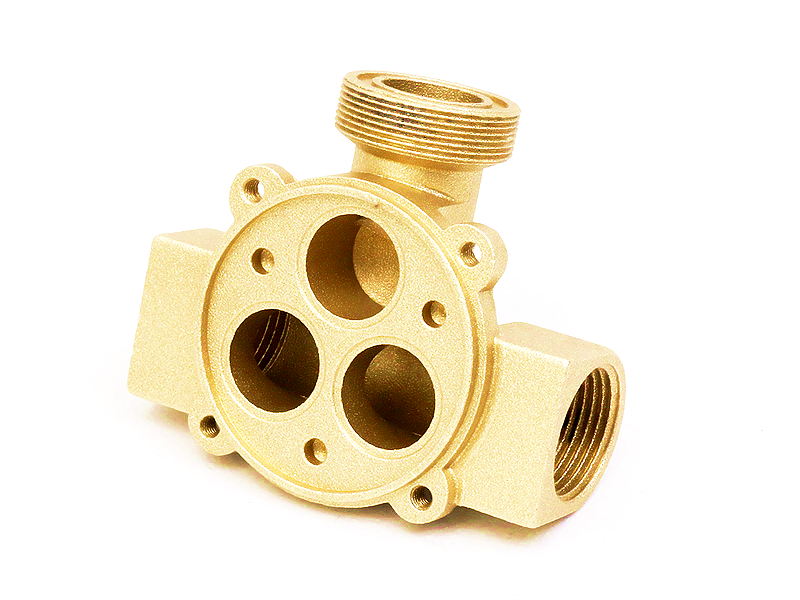
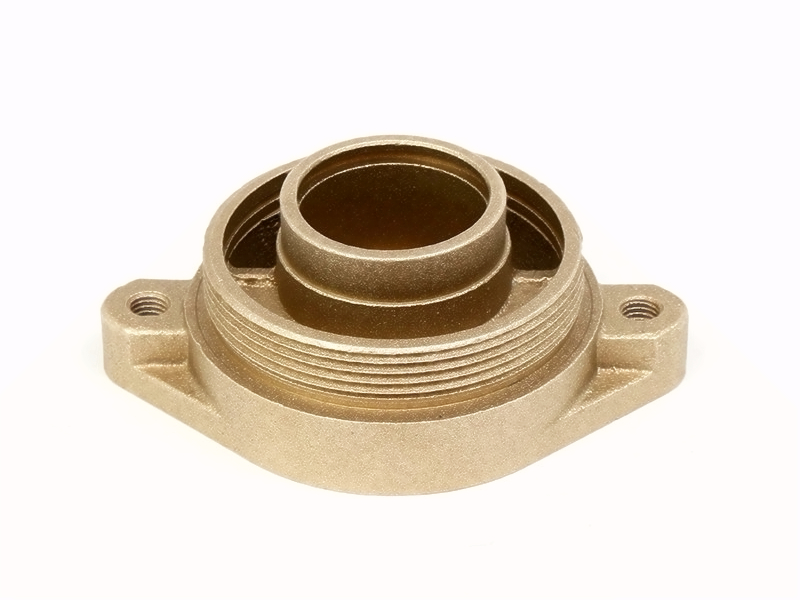
The alloy decision should be made with the casting and machining route. Copper-alloy casting can produce fittings and valve-related components, but the material and process must support threads, seats, ports, walls, and sealing faces. A bright surface or a material certificate does not prove that the fitting will resist the customer's water or chemical environment. The test and acceptance plan must represent the finished part.
What Corrosion Means in a Fitting
“Corrosion” can mean different failure modes. General surface tarnish may be cosmetic. A localized pit can become a leak path. Dezincification-related damage can change the surface and weaken a zinc-containing brass in a particular water environment. Stress corrosion or erosion can develop near a thread, sharp transition, or high-velocity flow path. Galvanic corrosion can occur where brass contacts a dissimilar metal in an electrolyte.
Tell the supplier which failure is unacceptable. A decorative connector may be judged by visual appearance. A pressure fitting may be judged by leak rate or pressure retention. A valve seat may be judged by shutoff function. A plumbing component may be constrained by water-contact rules and material declarations. These are not interchangeable acceptance criteria.
Inspect the finished feature where the mechanism occurs. A visual check of the exterior cannot prove the integrity of a machined port or internal passage. A chemistry report cannot prove that a sealing face is free from a connected pore. A corrosion exposure test on a flat coupon may be useful for screening, but the production part may contain threads, crevices, and machined surfaces that change the risk.
Failure mode | Typical location | Evidence to plan |
|---|---|---|
General tarnish | Visible exterior or decorative face | Finish master, visual limit, and defined exposure if needed |
Localized pitting | Wet recess, thread root, deposit, or rough surface | Finished-part exposure and visual or section review |
Pressure leakage | Wall, seat, port, or machined sealing land | Leak test on the completed boundary |
Galvanic attack | Brass-to-dissimilar-metal joint in a wet path | Assembly materials review and environment-specific test |
Water Chemistry Controls the Material Choice
Water is not one environment. pH, dissolved oxygen, chlorides, sulfates, hardness, temperature, flow, disinfectants, and deposits affect brass differently. Hot water, stagnant water, high-velocity water, and water containing suspended particles create different exposure conditions. A fitting designed for a clean indoor system should not be approved for a coastal, chemical, or industrial service without reviewing the actual medium.
For plumbing or potable-water use, material restrictions and customer requirements may limit which brass alloys or lead-containing grades can be used. Do not make a compliance statement from a general alloy name. The product owner should identify the applicable regulation or customer specification, and the supplier should provide the required material and process records.
If the fluid is unknown, the correct action is to stop the material release and define the service condition. A generic “corrosion-resistant brass” request creates a poor basis for comparison. Ask the supplier to explain which alloy is proposed, why it fits the exposure, and how the finished fitting will be verified.
Alloy Selection and Casting Quality
Brass alloy selection affects fluidity, shrinkage, machining, strength, color, corrosion behavior, and finish response. A grade selected for machinability may not be the best option for every water service. A grade selected for appearance may not carry the required pressure or thread condition. The supplier should compare the alloy against the fitting's function and the governing standard.
Casting quality matters because pores, inclusions, cold shuts, and shrinkage can create or accelerate a leak path. A fitting may pass a surface inspection and still leak after machining opens a discontinuity. Heavy bosses around ports and threads can solidify differently from the wall. Use gradual transitions, controlled feeding, and a defined machining allowance.
Parting lines, gates, overflows, and flash should be kept away from seats and sealing faces where possible. If a gate or parting boundary must cross a functional surface, include a finishing step and inspect the completed surface. Corrosion resistance cannot compensate for a poor pressure boundary.
Threads, Seats, and Machined Interfaces
Fitting corrosion often begins at a feature that the assembly needs. Threads can trap moisture, sealant, and deposits. A rough seat can disturb a seal. A deep bore can expose a casting discontinuity. A thin port wall can crack under over-tightening or thermal cycling. The drawing should distinguish cast surfaces from machined ports, threads, seats, and gasket lands.
Post-machining should include the datum, allowance, final size, surface texture, thread method, and inspection. A thread gauge checks form and size, but a pressure or assembly test may be needed to confirm function. A seat may need a leak test after machining. A bore may need position and surface review relative to the mating tube or valve.
Fixtures should support the casting without distorting thin ports. Use functional datums and inspect the finished fitting in the same coordinate system. If thread sealant, gasket, insert, or coating is used, include it in the assembly trial. A bare fitting test cannot prove the performance of the complete joint.
Fitting feature | Corrosion or function risk | Buyer control |
|---|---|---|
Internal thread | Crevice exposure, burrs, sealant retention, or damaged crest | Thread inspection, cleaning, and assembled leak test |
Valve seat | Pit, roughness, misalignment, or erosion | Surface/position check and shutoff or leak test |
Thin port wall | Pressure stress, machining exposure, or casting discontinuity | Wall map, finished inspection, and pressure test |
Gasket land | Flatness, texture, pore, or coating interference | Finished-face report and assembled seal test |
Galvanic Contact and Assembly Materials
Brass fittings are often assembled with steel, stainless steel, aluminum, copper, polymers, sealants, and coatings. In a wet electrolyte, dissimilar metals can form a galvanic couple. The risk depends on area ratio, electrical contact, fluid, temperature, coating condition, and design. A fitting cannot be judged independently of the pipe, fastener, valve, or manifold it touches.
Tell the supplier the mating materials and whether the joint can trap water. Consider washers, sleeves, sealants, isolation layers, drainage, and finish zones where the product design permits. A coating may change galvanic contact, but damage at a thread or edge can expose the substrate. The final assembly should be inspected and, where needed, tested with representative materials.
Do not promise corrosion life from a general material pairing. Define the environment and test. The product owner should make the final compatibility decision based on the application and applicable requirements.
Finish and Surface Preparation
Polishing, plating, painting, conversion, or a controlled as-cast finish can change the appearance and exposure of a brass fitting. Surface preparation removes contamination and creates a suitable condition, but it does not repair deep porosity, a poor seal, or an unstable casting. A bright finish can highlight pits and flow marks. A coating can interfere with threads or seats.
Post-process finishing should identify visible zones, no-coating areas, film build, color or gloss, adhesion, and inspection. Test the finish on the same alloy and representative geometry. Keep threads, bores, seals, and grounding areas within the functional control plan.
Corrosion Test and Inspection Plan
Choose a test that represents the service. A salt or humidity exposure can screen a finish, but a water-contact fitting may need a different condition. A pressure test addresses leakage, not every corrosion mode. A visual check finds tarnish or pitting, but not hidden internal attack. Define specimen, exposure, conditioning, inspection, and pass/fail criteria before the test begins.
Routine production inspection should include material lot, casting condition, dimensions, threads or seats, surface, cleaning, and leak or pressure checks where required. Qualification may use sectioning or extended exposure. Keep the approved alloy, finish, assembly materials, and test method under revision control.
RFQ Inputs for Brass Fittings
Provide the drawing, model, brass grade and standard, fluid, pressure, temperature, flow, service duration, mating metals, sealant or gasket, threads, seats, casting route, quantity, machining, finish, compliance restrictions, inspection, and packaging. Mark the pressure boundary, fluid-contact surfaces, cosmetic faces, and no-coating zones.
Ask the supplier to identify the proposed alloy, casting design, section risks, machining allowance, finish, leak test, corrosion evidence, and material records. If an alternative brass is proposed, require a comparison against water chemistry, compliance, machining, pressure, and finish requirements.
Neway's copper-alloy casting route should be quoted with the completed fitting scope. State whether the deliverable is a casting, machined fitting, finished assembly, or packaged component.
Identify the Corrosion Mechanism Before Choosing the Brass
Brass corrosion resistance is not one property that can be read from color or from the word “brass.” A fitting may experience general surface attack, localized dezincification, erosion-corrosion, deposit-related attack, galvanic corrosion, or stress-assisted damage depending on the fluid and assembly. The appropriate alloy and finish depend on which mechanism is plausible. A water fitting in a stable indoor system is not exposed to the same conditions as a component carrying warm chloride-bearing fluid, intermittent flow, or contaminated process water.
The first design review should record fluid composition as far as it is known, temperature, pressure, flow velocity, stagnation, deposits, cleaning chemicals, and exposure duration. Add the mating metals, electrical isolation, threads, seals, crevices, and areas where water can remain trapped. This information turns a broad corrosion question into a testable service definition. If the customer cannot yet provide exact chemistry, the uncertainty should be recorded and the material decision treated as provisional.
Alloy Selection and Casting Quality Work Together
An alloy chosen for the environment still needs a casting process that produces sound pressure and sealing features. Thin walls, sharp transitions, cored passages, and machined threads can create local risks. A surface imperfection may become a crevice after assembly; connected porosity may create a leak path; and machining can expose a subsurface condition that was not visible on the rough casting. The drawing should mark the pressure boundary and the surfaces that must remain continuous after machining.
Cast brass fittings should be reviewed for gate placement, parting line, core stability, machining allowance, and cleaning. If the part will be plated or coated, the pretreatment and coverage must be compatible with the alloy, threads, bores, and seals. A bright finish may improve appearance but does not demonstrate resistance to the service fluid. The final acceptance state should be the state that enters the customer's assembly or system.
Check Galvanic Couples, Threads, and Crevices
When brass contacts another metal in a conductive fluid, the couple can change corrosion behavior. The result depends on the metals, exposed area ratio, electrical contact, fluid conductivity, temperature, and whether the joint traps deposits. Threads and seal interfaces are especially important because they create crevices that are difficult to rinse and inspect. The design should avoid relying on a finish that cannot cover the entire functional interface or that may be removed during assembly.
Machining and assembly controls should therefore be part of corrosion planning. Define thread form, sealing method, edge breaks, cleaning, residual chips, and any required isolation. If a coating is used, state which surfaces are masked and how coating damage is handled during installation. A corrosion test on a flat coupon may support a screening decision, but it may not represent the threaded, machined, assembled fitting. Use the most representative geometry practical.
Build a Verification Plan Around the Failure Mode
Material certificates support alloy identity and chemistry within their scope. Dimensional inspection checks wall, thread, seat, and port geometry. Leak or pressure tests address a defined integrity requirement. Exposure tests can compare candidate alloys or finishes when the fluid, temperature, duration, and evaluation criteria are representative. Metallographic or internal examinations may help investigate a localized failure. The method should be selected after the failure mode is described, not added as a decorative certificate at the end of the purchase.
For production, keep the alloy lot, casting condition, machining records, finish, and test results traceable. If the water chemistry changes, the original qualification may no longer apply. If a new plating or seal is introduced, review galvanic and crevice conditions again. Neway's post-machining route can be evaluated with the fitting design so threads, bores, seats, and datums remain part of the same acceptance discussion.
Water Chemistry Should Be a Defined Input
For a brass fitting, “water service” is not a complete environment description. Record temperature, pH where known, chloride or other dissolved species, flow, stagnation, deposits, cleaning, and exposure duration. Intermittent operation can leave a different condition from continuous flow. Warm fluid can change reaction rates. Deposits can create a local crevice. The material decision should state the known chemistry and the uncertainty that remains.
If the customer cannot provide a full analysis, identify a conservative service envelope for engineering review rather than assuming ordinary water. The supplier can then recommend a candidate alloy and finish, but the responsible product team should approve the environment. Neway's copper-alloy casting route can be considered after those inputs are defined.
Geometry Can Make a Good Alloy Fail Locally
Threads, gasket lands, ports, grooves, and trapped cavities can hold fluid or deposits. A dissimilar fastener or pipe can create a galvanic couple. A narrow passage can increase velocity and erosion. A rough casting surface can retain contaminants. These conditions should be reviewed on the actual fitting and assembly. Changing the seal, fastener, coating, or cleaning method can change the corrosion risk without changing the brass grade.
Design a Test That Answers the Customer's Failure Question
Test planning should distinguish screening from approval. A screening exposure may compare candidate alloys or finishes. A production qualification should use representative geometry, machined surfaces, seals, mating metals, fluid, temperature, and duration. Define what counts as failure: leakage, wall loss, discoloration, pitting, thread damage, loss of seal, or another product-specific result.
Keep test samples traceable to the cast lot and finish. If the test uses a coupon, document why it represents the component and where it does not. A coating may protect a flat coupon while a threaded joint remains vulnerable. A material certificate can accompany the test but cannot replace it.
Recheck the System When Assembly Changes
Changing a sealant, pipe, fastener, plating, cleaner, or fluid can alter corrosion. A revised casting or machining operation can also expose a new surface. Track those changes and decide whether the original evidence still applies. This prevents an earlier fitting approval from being extended to a materially different assembly.
Buyer Summary
Brass corrosion resistance is a system decision involving alloy, water chemistry, geometry, casting quality, machining, mating metals, finish, and test. There is no universal corrosion-proof brass claim that replaces an application-specific review.
Buyers should define the fluid and failure mode, check material restrictions, inspect the finished pressure features, and test the representative assembly. That is the practical route to choosing a brass fitting supplier without confusing color or alloy family with verified corrosion performance.
FAQ