
PVD Coating on Zinc Die Castings: Colors and Wear
PVD coating on zinc die castings is a vacuum deposition step, not a plating bath, and it adds color and wear resistance to a finished surface. The film measures 0.5–3 µm, deposited at 120–150 °C, well below the range that would move a Zamak 5 casting (ASTM B86 AC41A). Three conditions decide the result: a surface within the film's scale, a named stack underneath, and masking on faces that must stay clean. The PVD coating step runs last, and the earlier steps decide whether it holds.
What PVD Is on Zinc
PVD (physical vapor deposition) is a vacuum process that vaporizes a solid target and condenses the vapor on a part as a thin film. On zinc, the substrate stays at 120–150 °C and the film lands at 0.5–3 µm, so the zinc die casting keeps its dimensions through the coating step. The deposit follows the polished surface rather than reforming it.
Hardness comes from the compound, and the working range for decorative nitride films is 1500–3000 HV (typical). That hardness sits on a soft zinc substrate, so the film protects the surface only while the metal under it stays supported. A dent in the casting becomes a crack in the film, which is the first limit on where PVD belongs.
What It Is Not
PVD is not electroplating, and it is not a repair step. Electroplating builds thickness from a solution and levels the surface as it grows; PVD adds a film that copies the geometry it lands on. No flow, leveling, or filling happens in the vacuum chamber.
That difference sets the rule for pores and scratches. An open pore that spans tens of micrometres is far larger than the 0.5–3 µm film, so the vapor coats the pore wall and the pore stays open. A scratch, a cold shut, or a rounded edge behaves the same way: visible before coating, more visible after, because the film adds color contrast to the defect.
The same equipment coats tooling, and that job is a different duty. On a die, the film protects tool steel from wear and extends die life; on a part, it has to look right and survive handling. PVD on die casting tools and dies covers the tooling side, where acceptance turns on abrasive wear and heat checking, not on color.
Layer Stack: Plating Plus Top Layer
The layer stack is the full sequence between the zinc and the visible color. On decorative zinc parts it usually means an electroplated copper/nickel base with a PVD top layer, and the plating thicknesses in that stack are still to be confirmed. The plating levels the casting and carries the corrosion duty; the top layer supplies color and wear resistance.
Masked faces show this stack, not bare zinc. When the film stops at a mask line, the exposed surface is nickel, which is the intended result: the seam closes on plated metal, and corrosion protection does not rest on the top layer alone. A stack without plating exposes zinc at the same face and changes both the corrosion result and the color match.
Film Types and Thickness
Film type is the compound that forms the top layer, and thickness is how much of it lands on the visible face. Titanium nitride (TiN) carries the gold family, titanium carbonitride (TiCN) moves toward rose and black, chromium nitride (CrN) covers gunmetal and black, and zirconium nitride (ZrN) sits between gold and champagne. Each of these films is deposited inside a 0.5–3 µm window.
Film | Thickness (µm) | Color family | Test |
|---|---|---|---|
TiN (titanium nitride) | 0.5–3 | Gold, champagne | ASTM D3359 cross-cut, 4B–5B |
ZrN (zirconium nitride) | 0.5–3 | Champagne, light gold | ASTM D3359 tape pull, 4B–5B |
TiCN (titanium carbonitride) | 0.5–3 | Rose, black | ASTM B117 salt spray, 48 h |
CrN (chromium nitride) | 0.5–3 | Gunmetal, black | ASTM B117 neutral spray, 48 h |
Cu/Ni plating plus top layer | 0.5–3 (top film) | All five families | Both tests on the coated part |
Thickness inside the window is a trade, not a target to maximize. A thicker film covers a taller peak and holds color longer under wear, and it also builds stress, softens edge definition, and drifts the color. The 0.5–3 µm range is the working window for decorative zinc, not a corrosion specification; salt spray performance comes from the stack, not from the top layer alone.
Color Range and Limits
Color comes from the top-layer compound and its thickness, not from a dye or a paint. The range covers five families: gold, champagne, rose, black, and gunmetal. Each family is a window, not a single point, and the window narrows as the part gets flatter and larger.
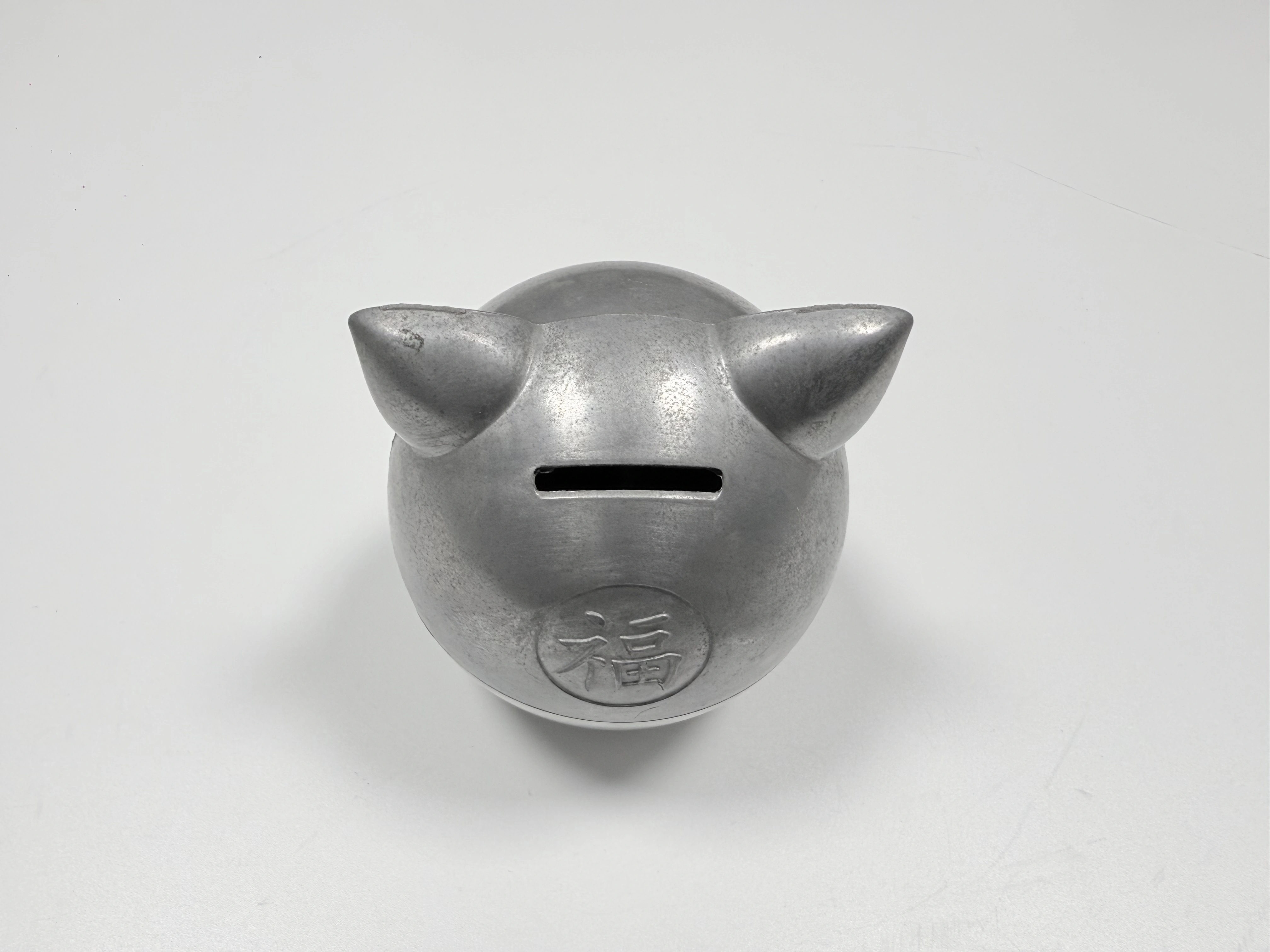
Two limits matter when the color is specified. Color shifts with thickness, so a part coated at the bottom of the window will not match one coated at the top under D65 light. Color also shifts with angle on a rounded shell, where vapor arrives at a different incidence across the face; a flat front reads even while a compound curve reads as a gradient.
Adhesion and Corrosion Tests
Adhesion is the bond between the film and the layer beneath it, and corrosion resistance is the stack's response to a salt environment. Adhesion is checked with a cross-cut and tape pull to ASTM D3359, where 4B–5B is the pass band. Corrosion is checked in neutral salt spray to ASTM B117, run for 48 h as a screening test.
Neither test proves service life. A 48 h spray screen ranks one stack against another; it does not describe a year outdoors. The tape test measures the bond to the plating, and a part can pass at 4B–5B while a pore elsewhere on the same face shows white corrosion after humid storage.
Deep Cavity and Shadowing
Shadowing is the thinning of the film inside a recess that the vapor reaches at a glancing angle. The deposit is line-of-sight, so a cavity deeper than it is wide receives less material at the bottom and on the far wall. The thin zone reads as a dark line once color is on, and it appears on the wall facing away from the target.

Rack angle and rotation reduce shadowing without removing it. Tilting the part toward the target, turning it on two axes, and opening the mask at the cavity mouth all raise film thickness inside the recess. A cavity several times deeper than it is wide will still show a line on one wall, and that part needs a design change rather than a longer coating run.
Masking and Seam
Masking is a physical shield that keeps the film off a face that has to stay within tolerance. Mating faces, threads, and the coin slot are masked on a coin bank; the rule for any part is that a locating or sealing face receives no film. The film is micrometre-scale, and it is still enough to change a fit that closes on machined metal.
Mask quality shows at the edge. A mask that creeps leaves a soft, ragged film boundary, and one that is too generous covers a visible face and leaves a bare band. The coin bank process route runs in the same order on a real shell: polish, finish-machine the mating face, then coat with that face masked.
When PVD Is the Wrong Choice
PVD is the wrong choice when the service load exceeds what a micrometre-scale film can carry, or when the geometry cannot be coated evenly. A part in sustained outdoor salt exposure needs a thicker plated system, because 48 h of spray screening does not model a marine duty cycle. A part that takes point impact on soft zinc fails by denting the metal and cracking the film above it.
Three more cases end the discussion: open porosity on a visible face, a blind cavity whose depth outruns its width, and a large flat face that must match color across a batch. In each of them the coating step either multiplies a defect that already exists or cannot reach the surface at all. A Zamak part with a mirror PVD finish is the reverse case, where a polished substrate and an open geometry let the film land evenly.
FAQ