ADC6
Material Introduction
ADC6 is a medium-strength, high-fluidity aluminum alloy engineered for precision aluminum die casting applications. As a hypo-eutectic Al–Si–Mg alloy, ADC6 offers a cleaner, more ductile structure than copper-rich alloys such as ADC10 or ADC12, making it ideal for components requiring balanced strength, moderate elongation, and good mechanical stability. Its lower copper content results in improved corrosion resistance and better weldability while still maintaining reliable tensile strength for functional housings, mechanical parts, and lightweight brackets. Produced under Neway’s advanced tool and die making and controlled casting parameters, ADC6 ensures consistent fill behavior, reduced shrinkage defects, and excellent dimensional repeatability for high-precision, high-volume production.
Alternative Material Options
Depending on the specific performance or environmental requirements, several alternative alloys can be considered. For higher strength and more rigid applications, A380 and A383/ADC12 provide stronger mechanical performance and excellent thin-wall castability. If greater ductility and heat-treatability are required, especially for structural components, A356 or EN AC-43500 (AlSi10Mg) are heat-treatable alternatives. For improved corrosion resistance or decorative finishing, silicon-rich alloys like AC4C may be preferable. When premium appearance and hardness are needed, copper-based alloys such as Brass 380 or other copper-brass alloys can offer superior finishing quality. For parts needing extremely high thermal conductivity and weight reduction, magnesium alloys or specialized aluminum-magnesium-silicon grades may also be recommended.
International Equivalent / Comparable Grade
Country/Region | Equivalent / Comparable Grade | Specific Commercial Brands | Notes |
Japan (JIS) | ADC6 | Common ADC6 ingots from JIS-certified suppliers | Standard Japanese Al–Si–Mg alloy similar to A356 in some applications. |
USA (AA / ASTM) | A356.0 (non-heat-treated) | Kaiser / Alcoa A356 ingots | Comparable Al–Si–Mg chemistry; ADC6 is essentially a die-castable variant. |
Europe (EN) | EN AC-42100 (AlSi7Mg) | Hydro / Rheinfelden AlSi7Mg | Very similar alloy with good ductility and corrosion resistance. |
Germany (DIN) | GD-AlSi7Mg | DIN EN 1706-compliant castings | Mechanical behavior and composition aligned with EN AC-42100. |
China (GB) | YL102 / AlSi7Mg | Domestic AlSi7Mg ingots | Chinese Al–Si–Mg die-casting alloy family similar to ADC6. |
Design Purpose
ADC6 was designed to achieve a balance between castability, ductility, lightweight characteristics, and moderate strength. Its Al–Si–Mg formulation provides improved elongation compared with copper-rich alloys, making ADC6 suitable for components subjected to vibration, impact, or structural loading. The intentional reduction of copper enhances corrosion resistance, making the alloy ideal for exterior components, consumer products, and applications that require stable performance in humid environments. Its silicon content assists with die filling, while controlled magnesium levels enhance mechanical stability and enable predictable post-processing. Overall, ADC6 serves as an ideal material for designers seeking to minimize component mass while maintaining durability and consistent performance.
Chemical Composition
Element | Aluminum (Al) | Silicon (Si) | Magnesium (Mg) | Copper (Cu) | Zinc (Zn) | Iron (Fe) | Others (Mn, Ni, Ti, etc.) |
Composition (%) | Balance | 6.5–7.5 | 0.20–0.35 | ≤0.10 | ≤0.20 | ≤0.60 | Each ≤0.25 (total ≤0.5) |
Physical Properties
Property | Density | Solidification Range | Thermal Conductivity | Electrical Conductivity | Thermal Expansion |
Value | ~2.66–2.69 g/cm³ | ~555–620°C | ~115–140 W/m·K | ~26–32% IACS | ~21–23 µm/m·°C |
Mechanical Properties
Property | Tensile Strength | Yield Strength | Elongation | Hardness | Fatigue / Impact Behavior |
Value | ~170–220 MPa | ~90–130 MPa | ~3–8% | ~60–80 HB | Very good ductility for dynamic loading applications |
Key Material Characteristics
Excellent castability for medium-complexity aluminum die casting geometries.
Higher ductility compared with copper-rich aluminum alloys, ideal for impact-prone parts.
Superior corrosion resistance, especially in humid, outdoor, or lightly corrosive environments.
Lower copper content reduces galvanic reaction tendencies and improves weldability.
Good machining behavior for post machining of precision surfaces and mating interfaces.
Stable thermal performance and favorable heat dissipation for electronics housings.
Can be surface-finished with powder coating, painting, or anodizing for enhanced durability.
Low susceptibility to hot cracking when processed with optimized gating systems.
Suitable for structural parts requiring moderate strength and high reliability.
Supports lightweight product development for consumer, automotive, and industrial sectors.
Manufacturability And Post Process
High-pressure aluminum die casting: Best suited for thin-to-medium wall structural components.
Sand casting: Suitable for larger prototypes or lower-volume tools where mechanical properties are still adequate.
Insert casting: Allows the embedding of steel inserts, threaded brass features, or copper heat spreaders during the casting process.
Post machining: Bore finishing, tapping, and milling to achieve tight tolerances (±0.02–0.05 mm).
Tumbling and vibratory finishing: Removes micro-burrs and improves cosmetic appearance.
Surface sealing and impregnation: Optional for pressure-tight housings.
Assembly integration: Neway can deliver ADC6 components fully assembled with plastic, stamped, or machined parts.
Suitable Surface Treatment
Anodizing: ADC6 responds well to anodizing with consistent surface appearance due to low copper content.
Arc anodizing: Provides thicker, wear-resistant coatings suitable for industrial environments.
Powder coating: Durable finish for structural and cosmetic components.
Liquid painting: High cosmetic value for consumer products.
E-coating: Thin, uniform protective coating for complex or semi-sealed parts.
Sand-blasting: Enhances texture uniformity and pre-coating adhesion.
Common Industries and Applications
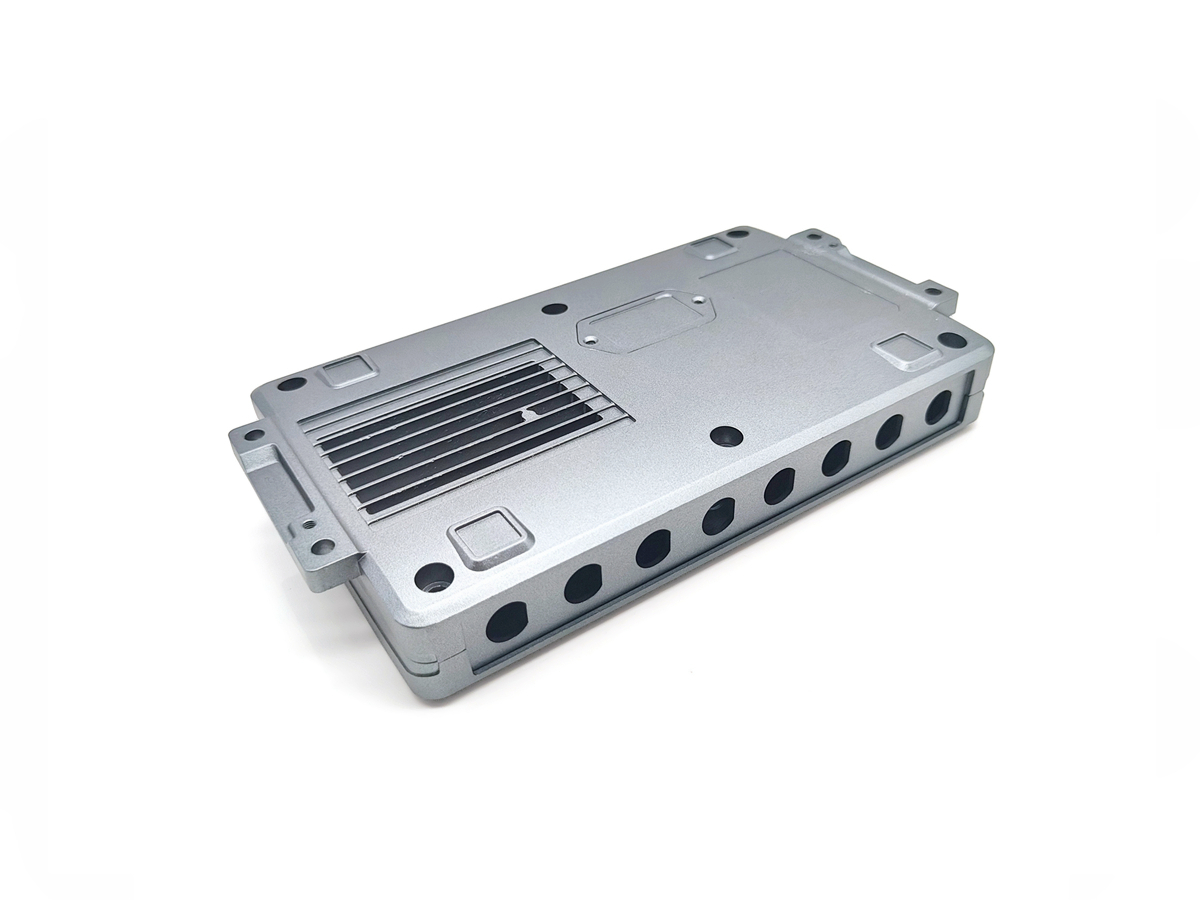
Consumer electronics housings, lightweight brackets, and thermal covers similar to Huawei aluminum covers and Apple hinge assemblies.
Automotive lightweight structures, enclosures, and brackets in programs aligned with BYD die-cast components.
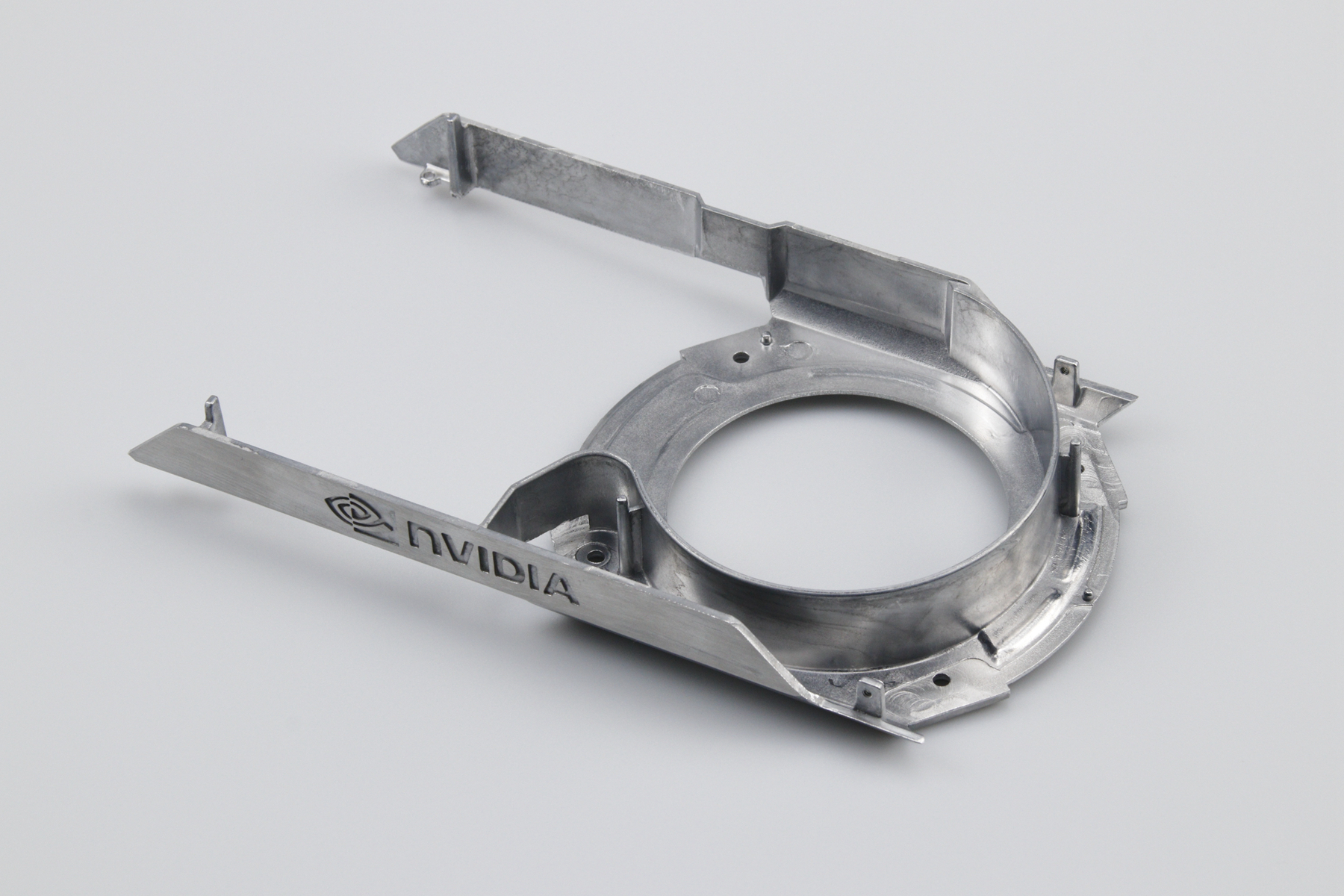
Computer and GPU hardware frames and bases similar to Nvidia GPU frames and Gigabyte GPU frames.
Industrial enclosures, connectors, and protective housings for mechanical and electrical systems.
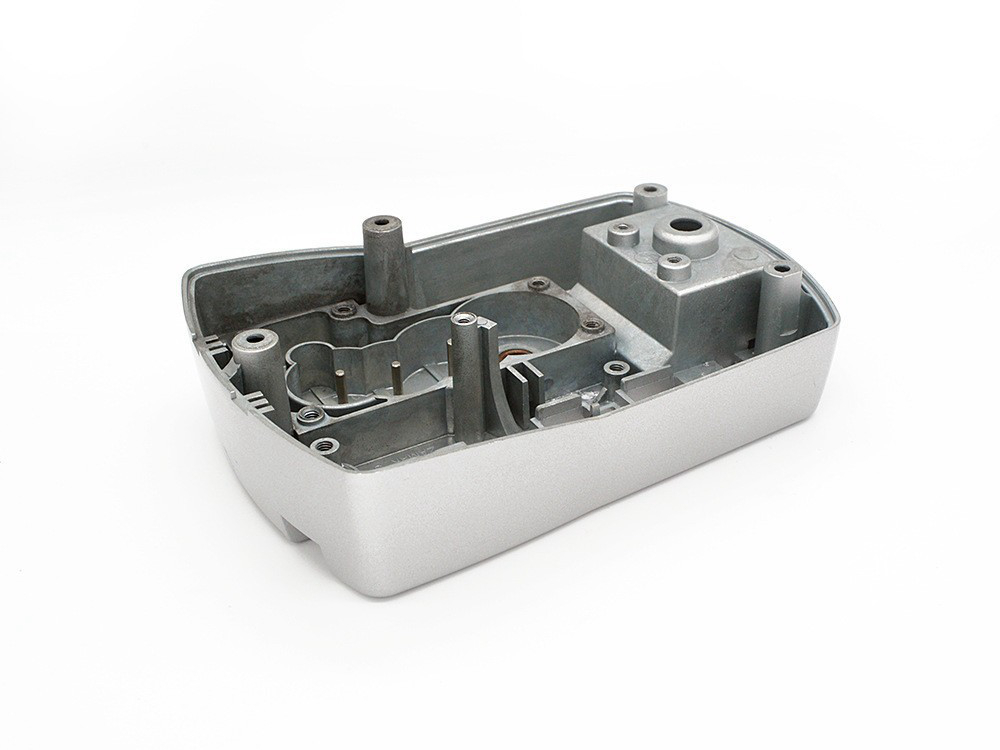
Power tool frames, handles, and structural shells similar to Bosch tool hardware.
Home appliance frames, structural supports, and covers requiring corrosion resistance and stability.
When to Choose This Material
When ductility matters: ADC6’s Mg-modified structure provides better elongation for dynamic loads than A380/ADC12.
When corrosion resistance is essential: Ideal for outdoor, appliance, and marine-adjacent components.
When weldability or repairability is required: ADC6 performs better than copper-containing alloys.
For lighter, more durable designs: Good strength-to-weight ratio enables weight-optimized structures.
For refined surface finishing: Responds excellently to anodizing and decorative coatings.
For high-precision, consistent quality: Stable casting performance supports tight tolerances in mass production.
For engineering-intensive projects: Pairing ADC6 with Neway’s design, engineering, and prototyping support ensures optimal manufacturability.
For one-stop development: Ideal for customers using Neway’s full one-stop service from material to assembly.
Explore Related Blogs