How can die casting improve fuel efficiency through weight savings?
Die casting can improve fuel efficiency by enabling a lighter validated vehicle assembly, but it does not create a fixed fuel-saving percentage. Aluminum has lower density than steel, iron, zinc, and copper alloys, and die casting can place material efficiently in ribs, walls, bosses, and integrated housings. The actual mass change depends on feasible sections, inserts, fasteners, reinforcement, machining stock, coatings, and parts eliminated. Vehicle simulation and testing must then show how that mass change affects fuel use for the specific powertrain and drive cycle.
Calculate mass from a feasible design
A density comparison is only the first screen. A steel or iron component cannot be converted to aluminum at identical geometry without checking stiffness, fatigue, bearing support, joint preload, wear, temperature, corrosion, impact, and casting integrity. The aluminum design may need thicker walls, ribs, steel sleeves, threaded inserts, or local reinforcement. Calculate mass from the production-intent assembly.
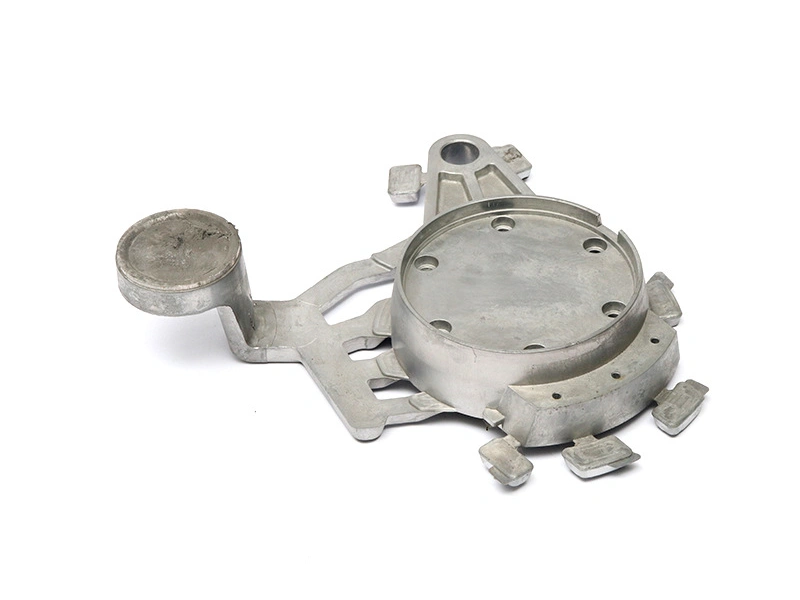
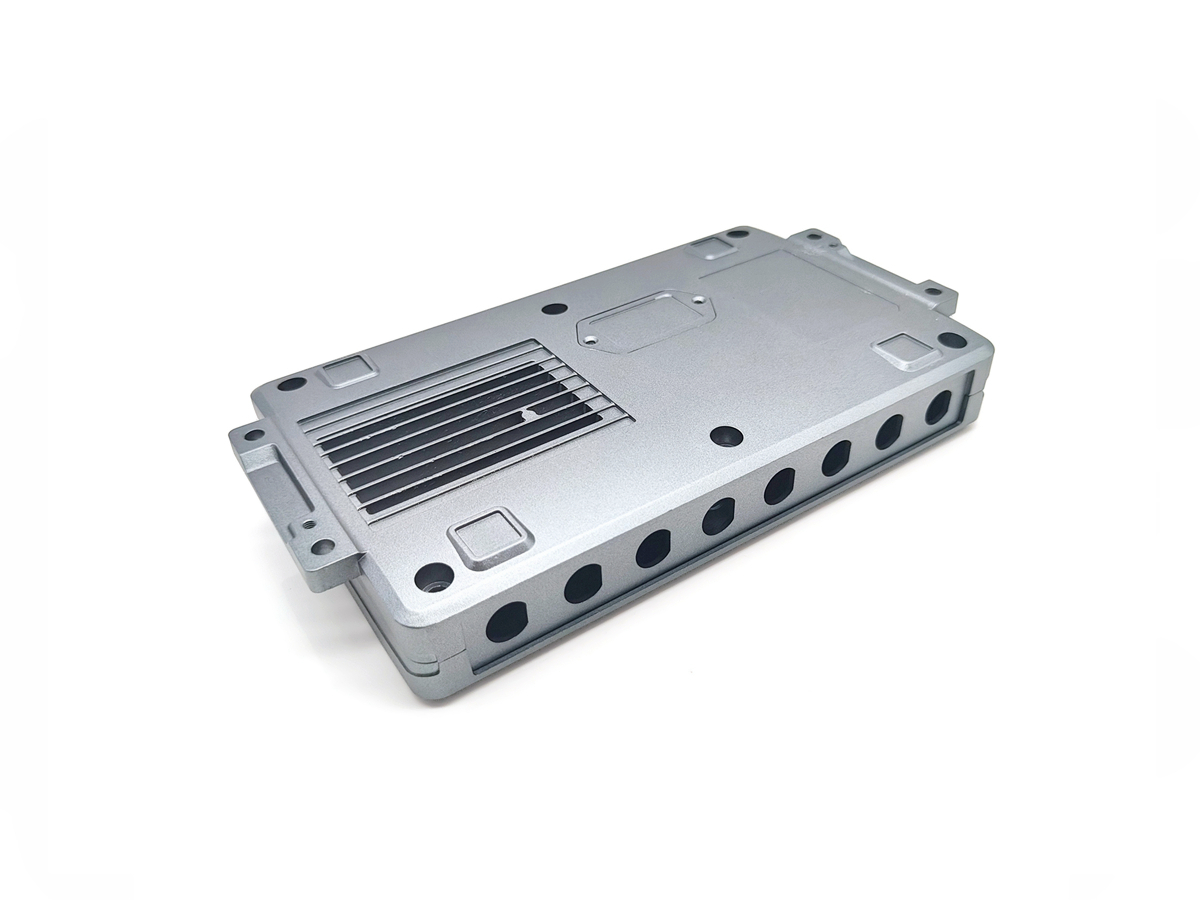
Aluminum die casting is especially useful where integrated shape carries load efficiently: covers, oil pans, cases, housings, bearing supports, brackets, and fluid-management structures. Thin wall is not a universal target. Fill length, alloy, route, gate and vent design, vacuum where used, tool temperature, local nodes, machine, and acceptance determine stable sections.
Use part consolidation carefully
One casting can combine ribs, mounting feet, brackets, bosses, cable features, oil routes, cooling fins, covers, and datums. Eliminating stamped brackets, welds, fasteners, plugs, or separate machined blocks may reduce mass and tolerance accumulation. It may also reduce assembly stations and leak paths.
Consolidation can add reinforcement, complex slides, machining, inspection, and a larger replacement unit. One casting defect can reject many integrated functions; one design change can affect expensive tooling. Compare the complete old and new assemblies, including fasteners, seals, inserts, covers, joining material, and service parts.
Connect mass to vehicle energy
Lower vehicle mass can reduce energy needed for acceleration, climbing, rolling-related load, payload transport, and some braking events. The benefit depends on drive cycle, vehicle class, powertrain efficiency map, gearing, regenerative braking, payload, aerodynamics, rolling resistance, accessory loads, and control strategy. Urban start-stop operation and steady highway use respond differently.
Location also matters. Reducing rotating or reciprocating mass can affect inertia and response differently from removing static housing mass, but it may involve more severe fatigue and balance requirements. Engine or front-axle mass can influence mount loads, handling, and structure. A lighter heat-spreading housing can change warm-up and cooling losses; that thermal effect requires its own model and test.
Preserve engine function while removing mass
Mass action | Risk introduced | Evidence required |
|---|---|---|
Reduce wall or flange section | Distortion, local fill, leakage, noise or fatigue | Castability, loaded thermal stiffness, seal and endurance tests |
Add ribs instead of bulk | Hot nodes, stress transfer, oil or dirt traps | Flow/thermal review, strain correlation, drainage and cleaning |
Integrate brackets and bosses | Joint load, shrinkage, repair and change concentration | Assembly loads, local integrity, service and tool-change analysis |
Replace steel/iron with aluminum | Stiffness, wear, temperature, corrosion and threads | Full duty, inserts/interfaces, environmental and field validation |
Avoid overbuilding from unsupported precision
Reliable dimensions can help engineers place material with confidence, but a tolerance alone does not justify a thinner safety margin. Material scatter, local casting discontinuities, load uncertainty, corrosion, abuse, and production changes remain. Use analysis with a documented local material basis and correlate it to production-intent components.
Design review should connect topology or structural optimization with casting flow, thermal balance, ejection, trim, machining, inspection, joining, and repair. A mathematically light shape that cannot be cast consistently or inspected is not a vehicle mass solution.
Verify the fuel-efficiency claim
Record baseline and proposed assembly masses on calibrated equipment with identical included content. Feed the delta into the authorized vehicle model with the specified drive cycles and assumptions. Confirm effects through vehicle or powertrain testing where required, including payload, environmental, thermal-management, and control-state conditions.
Separate mass contribution from aerodynamics, tires, calibration, gearing, electrification, and other simultaneous changes. Report uncertainty and applicability by vehicle variant. A component supplier can provide mass, material, geometry, and production evidence; the vehicle owner controls the fuel-economy and emissions claim.
Send an RFQ that supports the business case
Control the mass result in production. Alloy chemistry, casting variation, incomplete features, machining stock, inserts, coating, fasteners, sealant, and accepted repairs change component mass. Define which state is weighed, sampling, scale resolution, included hardware, and reaction. A weight trend can also reveal missing inserts or excess machining, but it cannot replace structural or integrity inspection.
Check rebound effects across the lifecycle. A lighter casting that needs more scrap, energy-intensive rework, replacement in service, added guards, extra inventory, or premature tool replacement may weaken the business or environmental case. Report mass, fuel contribution, manufacturing impacts, durability, repair, recycling, and cost as separate evidence rather than compressing them into one marketing claim.
Provide the baseline assembly, mass target, component function, loads, temperature, fluids, life, package, center of gravity, safety consequence, material/process limits, demand, variants, machining, finish, inspection, validation, and cost boundary. Ask the supplier to return feasible geometry, final mass, added inserts and fasteners, eliminated parts, DFM risks, yield assumptions, tooling, capacity, change, and lifecycle cost.
Die casting supports fuel efficiency when it delivers a lighter conforming assembly without shifting failure, cost, or service risk elsewhere, and when vehicle-level evidence converts that mass reduction into a measured or modeled fuel benefit.