Is Casting or Machining Cheaper for Custom Metal Parts?
Is Casting or Machining Cheaper for Custom Metal Parts?
Casting is usually cheaper at higher quantities or for complex near-net shapes after tooling cost is spread across production. Machining is usually cheaper for very low quantities, early prototypes or simple precision parts because it avoids tooling. The cheaper route depends on quantity, geometry, material waste, tooling cost, machining time, finishing and inspection.
Buyers should compare total project cost, not only sample price. CNC machining may be cheaper for two samples. Casting may become cheaper for 100, 500 or 5,000 parts if the shape is complex and material waste is high. The crossover point is different for every part.
For cost comparison, buyers can review whether casting and machining is more cost-effective than full CNC machining and metal casting project cost calculation guidance.
Cost Driver Table
Cost Driver | Casting Effect | Machining Effect |
|---|---|---|
Tooling | Higher upfront cost | Lower upfront cost |
Unit cost | Can drop with volume | Often tied to cycle time |
Material waste | Lower for near-net shapes | Can be high for hollow parts |
Design changes | Tool changes add cost | Program changes are more flexible |
Inspection | May need casting defect checks | May need dimensional checks |
Why Low Sample Cost Can Mislead
A low CNC sample price can be misleading when the future order needs hundreds of complex parts. It may validate shape but not prove production cost. A low casting unit price can also mislead if tooling, machining, finishing and inspection are excluded. The buyer should ask for the full route cost.
Quote comparison should show tooling, casting, machining, finishing, inspection and packaging. Without that breakdown, casting and machining prices may not represent the same deliverable.
Commercial Recommendation
For early prototypes, compare CNC first. For stable designs with complex geometry and repeat demand, compare casting plus local machining. For low-volume launch projects, ask suppliers to show the crossover between CNC, prototype casting and production casting routes.
Quantity Crossover
The quantity crossover is the point where tooling investment becomes worthwhile. A small machined batch may be cheaper because there is no die or pattern. As quantity rises, casting may reduce material waste and cycle time enough to offset tooling. The crossover changes with part size, complexity, material cost and machining time.
Buyers should ask for price at several quantities, such as 10, 50, 200 and annual volume. This shows whether the route makes sense only for samples or also for production. It also helps buyers avoid choosing a cheap prototype route that becomes expensive during launch.
Hidden Costs to Include
Hidden costs include tooling corrections, fixture cost, machining after casting, surface finishing, inspection, scrap, packaging and design changes. A casting quote without CNC machining may look low. A machining quote without finish or inspection may also look low. Buyers should compare finished parts, not incomplete process steps.
If the part will eventually be cast, CNC prototypes may still be useful, but the buyer should budget for a later casting validation step.
Cost Risk Record
The final cost decision should record the quantity assumption. A route chosen for 20 parts may not be the best route for 2,000 parts. If demand changes, the buyer should reopen the route comparison.
Example Cost Logic
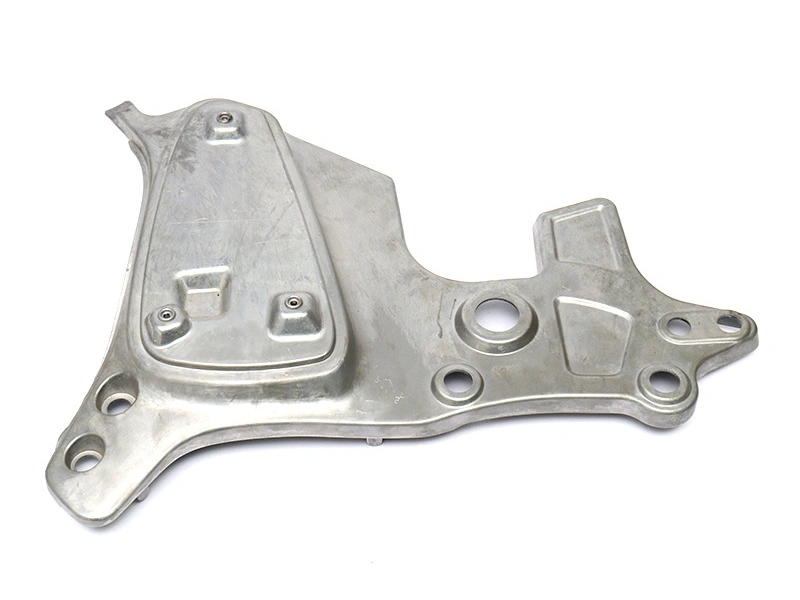
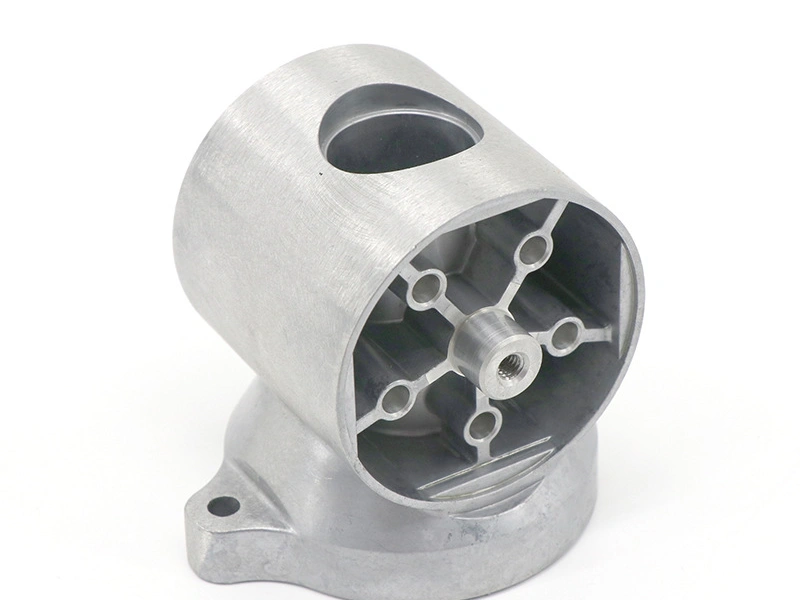
Consider a large aluminum cover with a hollow shape and several machined holes. For five prototypes, CNC machining may be cheaper because tooling is avoided and design changes are easy. For 500 parts, casting plus local CNC machining may become cheaper because billet waste and machining time are reduced. For 5,000 parts, production tooling may strongly favor casting if the design is stable.
Now consider a simple flat block with tight holes on every side. Machining may stay cheaper even at higher quantities because casting would still need extensive machining. Shape complexity and machining scope change the cost crossover.
Cost Evidence to Request
Buyers should request price breaks at several quantities, tooling cost, machining cost, finishing cost, inspection cost and lead time. They should also ask whether the casting quote includes post machining and whether the machining quote includes material waste. This makes cost comparison more realistic.
Neway can help compare casting and machining routes by finished-part scope, not only process price.
When to Reopen the Cost Decision
The cost decision should be reopened when quantity changes, design freezes, material changes or finish requirements become stricter. A route that was cheapest during prototype may not remain cheapest during repeat production.
Finished-Part Cost
Finished-part cost includes more than raw processing. Casting may require tooling, trimming, deburring, CNC machining, coating and inspection. Machining may require billet stock, multiple setups, fixtures, finishing and inspection. Buyers should include all required steps before deciding which route is cheaper.
For parts with cosmetic surfaces, packaging should also be included. A cheaper route that damages the finish during shipment is not cheaper for the final product.
Cost comparison should follow the same delivery condition.
Otherwise the buyer may choose the lower quote and later pay for missing operations.
Scope matters.
Always.