How does sand casting compare to CNC machining and 3D printing for short runs?
For short runs, sand casting is often strongest for bulky near-net metal shapes, foundry alloys and cored passages; CNC machining is often strongest for open geometry, available stock and precision on many surfaces; 3D printing is often strongest for no-tooling iteration or compact geometry that conventional cores and cutters cannot reach. No route wins at a fixed quantity. Compare actual geometry, material state, final processing, accepted quality and cumulative demand.
Compare the Same Deliverable
A rough sand casting, machined billet and stress-relieved printed part are not equivalent quotes. Define alloy or material intent, final dimensions, heat treatment, surface, internal quality, tests, reports, quantity and destination. If one route cannot supply the required state, eliminate it before cost comparison.
Keep process-specific material differences visible. A wrought billet, sand casting and metal powder build in nominally related alloys may have different microstructure, directionality, residual stress and discontinuities. Product tests must match the route.
Route Comparison Matrix
| Decision factor | Sand casting | CNC machining | 3D printing |
|---|---|---|---|
| Nonrecurring work | Pattern/core and process development | Programming, fixture and setup | Build preparation, supports and parameter route |
| Geometry strength | Large near-net forms and removable sand cores | Accessible surfaces and stock-based features | Compact internal detail within build/removal limits |
| Material question | Foundry grade and casting evidence | Available wrought/stock form | Available powder/filament/resin and final condition |
| Recurring driver | Mold/core labor, melt, yield and finishing | Stock, cycle, tools and setups | Machine time, feedstock, supports and post-process |
When Sand Casting Leads
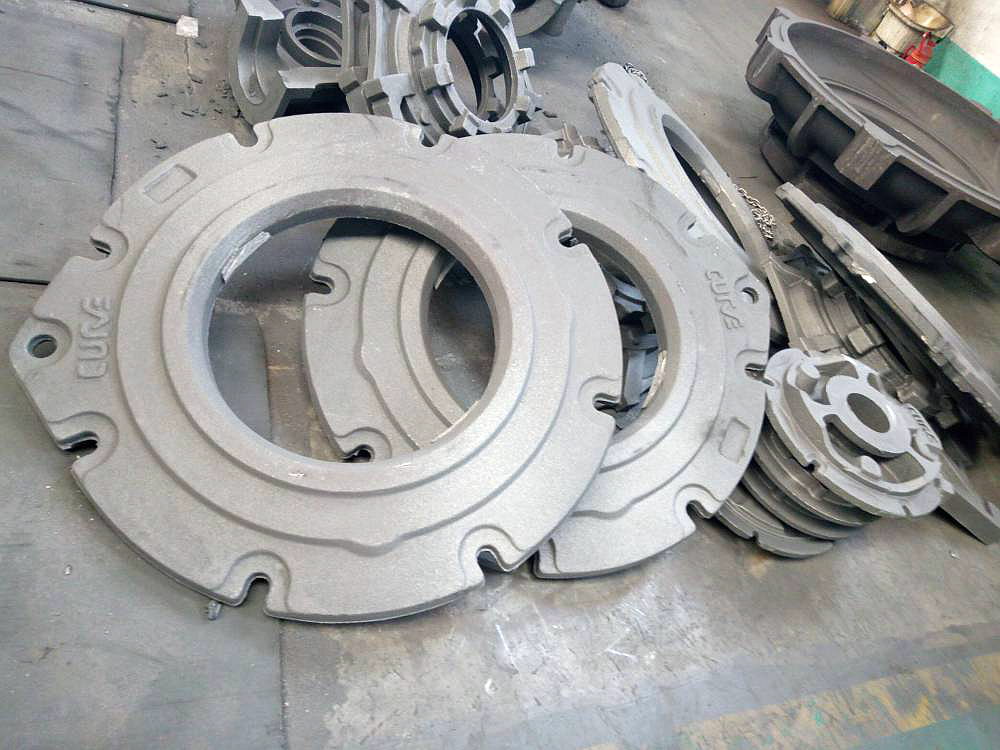
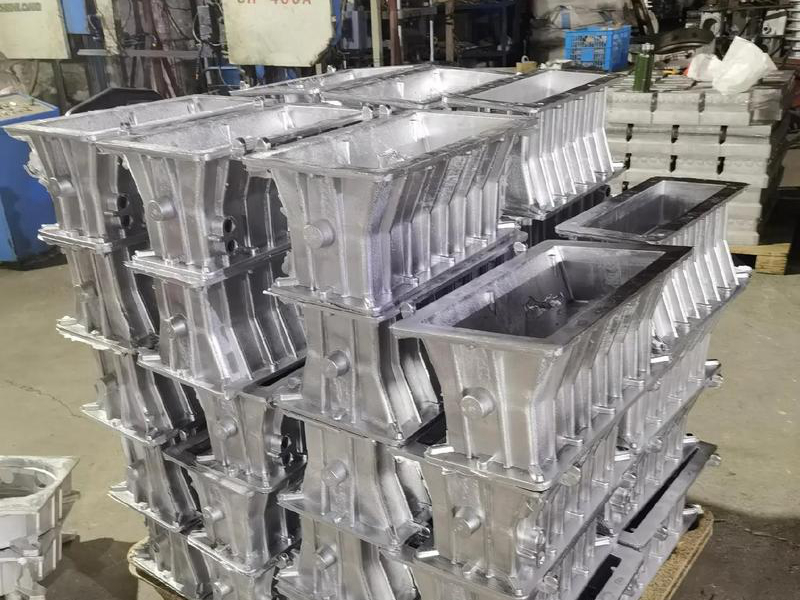
Sand casting can lower material removal on a large housing or bracket and can create castable internal passages. Reusable pattern equipment spreads across repeat molds, while printed sand supports uncertain revisions. Exact foundry alloy and near-net behavior may be central to the test.
Risks include first-pour correction, mold/core labor, lower metal yield, as-cast variation, cleanup, heat treatment and machining. Include these in accepted-part cost. Sand casting is not cheaper merely because its mold is consumable.
When CNC Machining Leads
CNC can move quickly when stock exists, geometry is open, removal volume is reasonable and many surfaces need precision. It avoids foundry development and establishes machined interfaces directly. A simple part at low cumulative demand may therefore favor machining.
Large billets, deep removal, enclosed passages, difficult workholding and long machine occupancy can make CNC expensive. Material properties represent the selected stock form, not a future casting. If production will be cast, a machined sample may not answer casting-specific yield or microstructure questions.
When Additive Manufacturing Leads
Polymer additive manufacturing can answer fit and handling questions rapidly without claiming metal function. Metal additive can form geometry without a pattern, including internal networks within depowdering and support constraints. It may suit compact, high-complexity parts or frequent iteration.
Build volume, machine queue, material availability, orientation, supports, heat treatment, surface and machining control cost. A print is not automatically final when the machine stops. Compare the accepted, post-processed part and applicable material evidence.
Hybrid Routes Can Be Better
Additive manufacturing can create a disposable pattern or print sand molds/cores, while the delivered part remains a sand casting. CNC can finish critical casting interfaces. These hybrids move tooling and machining effort to where they add value.
Do not count the same saving twice. Printed patterns still need mold work; printed sand still needs foundry processing; near-net castings still need selected machining. Quote each stage and assign responsibility for dimensional and material acceptance.
Prototype Purpose Can Change the Winner
A polymer print may be sufficient for envelope, handling or assembly-sequence review even when the production part will be metal. A machined stock part can verify interfaces and fixture concepts, but it may not reproduce casting microstructure, foundry alloy condition or casting-specific discontinuities. A sand casting is more relevant when the test must reveal core location, cleanup stock, heat-treatment response or the planned casting route.
Write the question each short run must answer before selecting a process. Do not pay for production-intent material evidence when only fit is being checked, and do not approve a production casting route from a substitute that cannot represent the governing failure mode. Several staged routes may cost less than forcing one expensive prototype to answer unrelated questions.
Model Demand and Change Scenarios
Calculate total cost at committed, likely and upside cumulative demand. Include revisions. A reusable pattern loses value if geometry changes; additive avoids that asset but repeats machine cost; CNC fixtures and programs can also become obsolete. Review delivery cadence and capacity, not just cumulative units.
Use the casting-versus-machining quote inputs and add the additive route's build and post-process assumptions. Real supplier quotes determine crossover.
Route Selection Checklist
Send controlled CAD/drawing, material intent, quantity scenarios, revision outlook, tolerances, heat treatment, finish, tests and delivery state. Ask each supplier for nonrecurring work, recurring unit/lot cost, capacity, technical deviations, yield/rework assumptions and milestones.
The 3D printing route, CNC route and sand route should answer the same product question. Select the process with the lowest risk-adjusted accepted-part cost for the actual short run, not the process with the simplest slogan.