Prototype Sand Casting vs CNC Machining: Which Route Should Buyers Choose?
Prototype Sand Casting vs CNC Machining: Which Route Should Buyers Choose?
Buyers should choose prototype sand casting when the prototype must prove castability, material behavior, machining allowance, internal core geometry and production transfer risk. Buyers should choose CNC machining when the prototype mainly needs tight dimensions, fast design iteration, billet material properties or a small number of precision parts without casting validation.
The two routes answer different questions. CNC machining can quickly create an accurate part from solid stock, but it does not show how molten metal will fill a mold, how shrinkage will appear, whether a sand core can hold an internal passage, or how much stock a foundry should leave for machining. Prototype sand casting is slower to set up than simple CNC machining, but it gives evidence about the casting route itself.
If the final production part will be cast, a CNC-only prototype can create false confidence. The part may assemble correctly in billet form, but later casting production may expose porosity near thick bosses, core shift in internal channels, distortion after heat treatment, or insufficient stock on a sealing face. A prototype sand casting reduces that gap because the buyer can inspect a metal part made through a casting process before investing in the next stage.
For a broader process comparison, buyers can also review sand casting compared with CNC machining and 3D printing for short runs and CNC machining vs casting manufacturing choices.
Route Comparison for Buyers
Decision Point | Prototype Sand Casting | CNC Machining |
|---|---|---|
Best use | Validate casting feasibility before production | Validate precise shape, fit and function quickly |
Material evidence | Shows cast alloy behavior, shrinkage and heat treatment response | Shows billet material behavior, not casting behavior |
Internal passages | Can test core design and core shift risk | May require deep machining, splitting or redesign |
Machining allowance | Confirms which cast surfaces need CNC stock | Does not prove casting allowance because the part starts from solid stock |
Tolerance | As-cast tolerance is wider; critical areas can be machined | Tighter dimensions can be held directly |
Cost risk | Pattern and core work add upfront cost | Large parts may waste material and machining time |
Production transfer | Better for parts that will later be cast | Better for one-off or frequently changing prototypes |
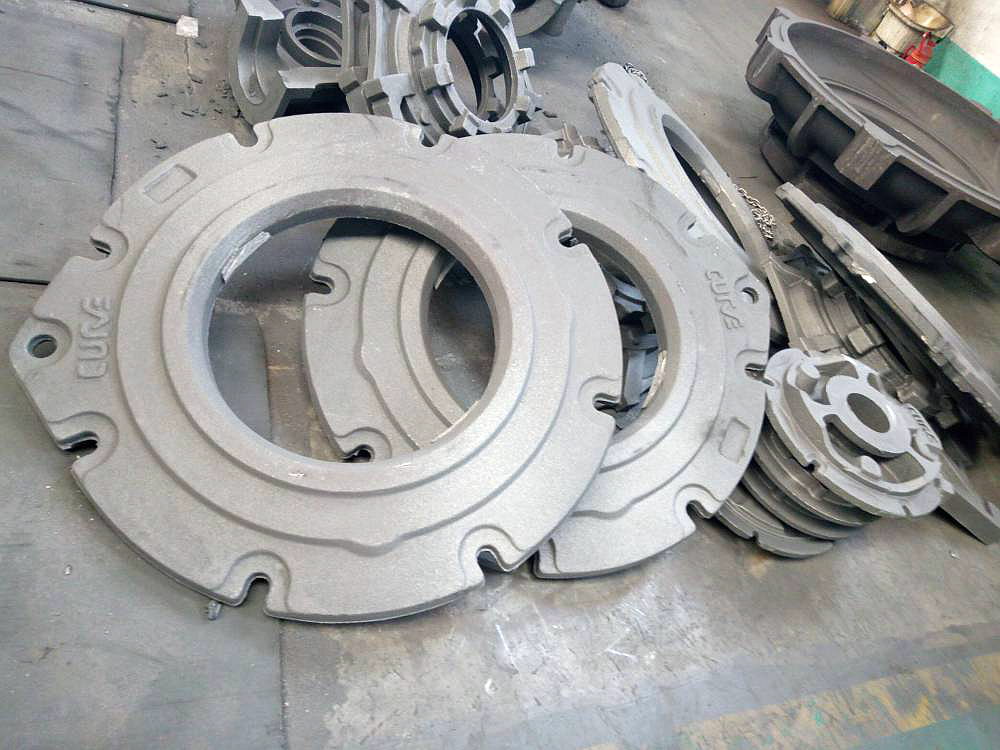
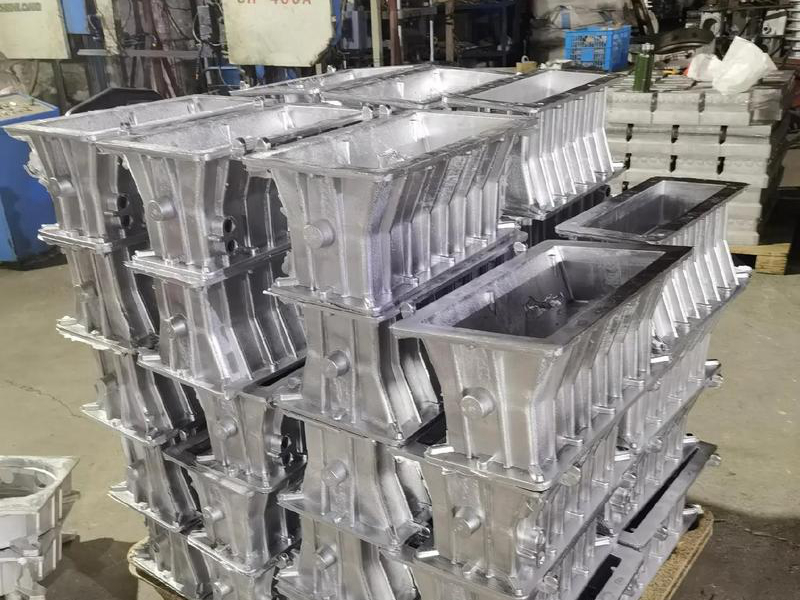
For large housings, covers, pump bodies and brackets, prototype sand casting often gives better production evidence than machining the entire part from billet. The buyer can review wall thickness, riser removal, parting line location, core-supported holes and rough casting surfaces before asking for final machining. This matters when the next step is low-volume production, production tooling, or a larger repeat order.
CNC machining is often better when the design is still unstable. If the engineering team expects three or four drawing changes in a short time, cutting billet may be faster than changing a pattern. CNC is also better when the part is small, the quantity is very low, or the buyer needs tight tolerances on nearly every surface. In those cases, prototype sand casting may add process work before the design is ready.
How to Avoid Choosing the Wrong Route
The safest way to choose is to define what the prototype must prove. If the buyer needs to prove final assembly, hole position and exact datum relationships, CNC machining may be the first step. If the buyer needs to prove whether a cast part can be made reliably, prototype sand casting should be considered earlier. If both questions matter, the route can combine casting and CNC post-machining: cast the near-net shape, then machine sealing faces, threaded holes, bearing bores and datum pads.
Buyers should also compare the future production route. If production will remain CNC-machined from billet, a sand cast prototype may not be necessary. If production is expected to move into casting, the prototype should reveal casting-specific risks before the buyer spends money on production patterns, fixtures or inspection plans.
Risk Signals That CNC Alone May Not Be Enough
CNC alone may not be enough when the part has thick bosses next to thin walls, internal fluid passages, large hollow regions, cast-in ribs, heavy mounting lugs or a future cost target that depends on near-net casting. These features may look correct in a machined prototype, but they can behave very differently when poured as a casting. A billet prototype cannot show whether a core will move, whether a riser location will leave a cleanup mark, or whether the final cast surface will need extra finishing before coating.
Another warning sign is when the buyer plans to approve production tooling based only on a CNC prototype. That can work for geometry review, but it is weak evidence for a cast production route. If the production part will use A356-T6, ductile iron or another cast alloy, the buyer should see at least one casting-based validation step before locking the drawing and machining fixture. This is especially important for sealing components, pump bodies, hydraulic housings and parts with pressure or leakage requirements.
A practical RFQ can ask the supplier to compare both routes for the same part. The buyer should send the STEP file, 2D drawing, quantity, material, critical surfaces and target production stage. Neway can review whether the part should begin as a CNC prototype, a prototype sand casting, or a cast-and-machined prototype that uses post machining only where the drawing requires tighter control.