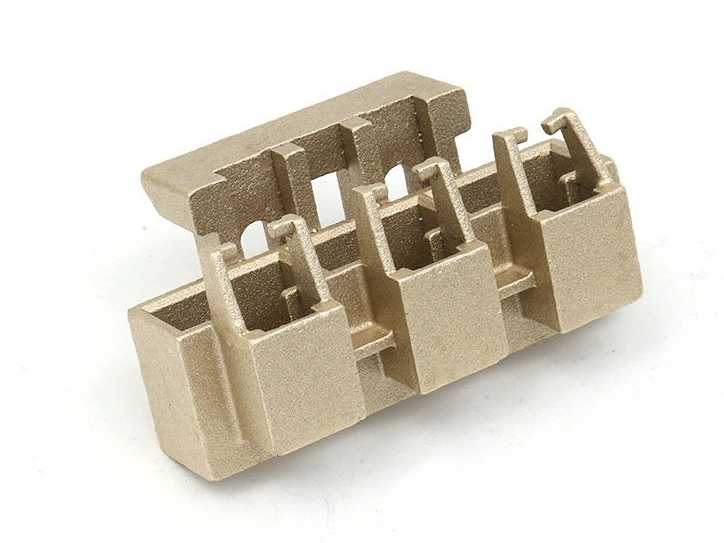
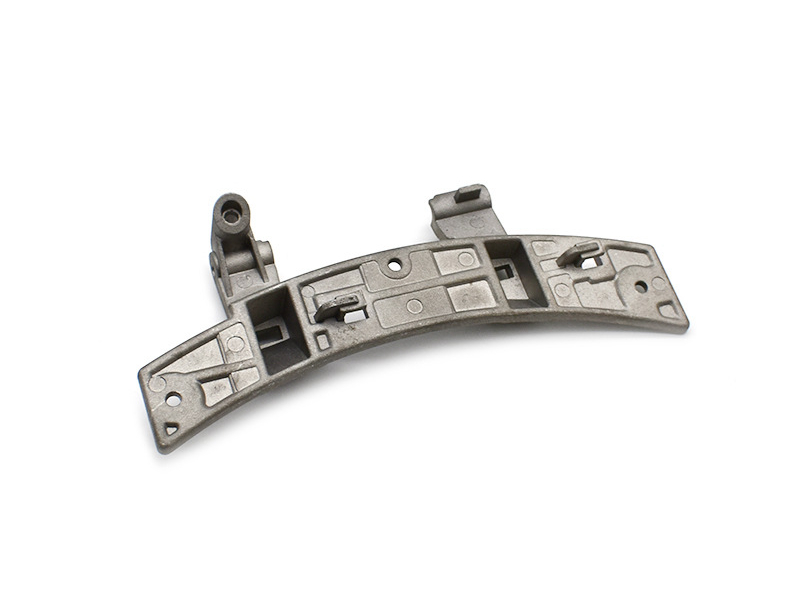
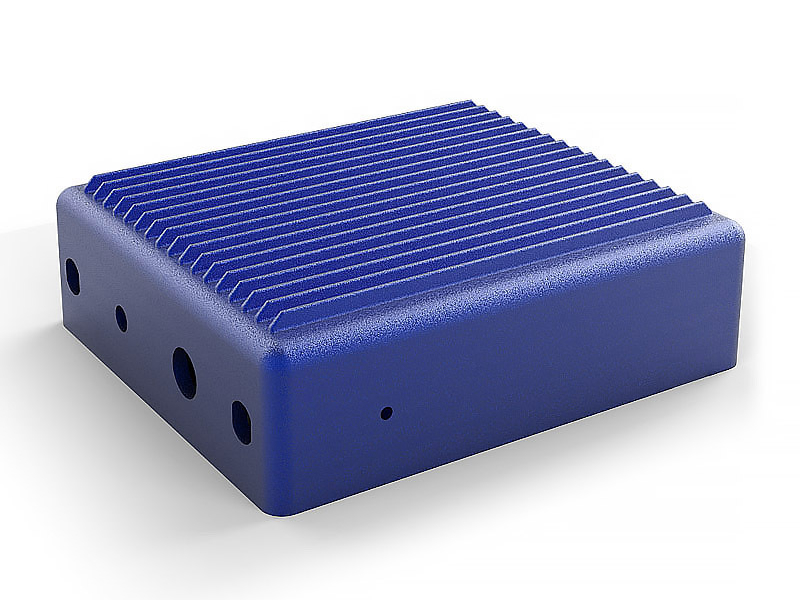
What Is Aluminum Die Casting? How To Calculate The Cost?
Aluminum die casting is a permanent-mold process in which a shot system fills a steel die with molten aluminum alloy under pressure, holds the metal while it solidifies, then ejects a casting for trimming and any required machining, finishing and inspection. Calculate cost from the complete route: one-time engineering and tooling, metal consumed per shot, die-casting cell time, accepted pieces per shot, stage yield, secondary operations, quality evidence, packaging and logistics. Net part weight multiplied by alloy price is only one input.
The most useful result is a range for cost per accepted delivered part under a stated demand and release scenario. It should show assumptions for tool life, cavity count, cycle, casting yield, machining time and finish yield. A precise-looking number based on unverified assumptions is less useful than a transparent range tied to trials and written quotations.
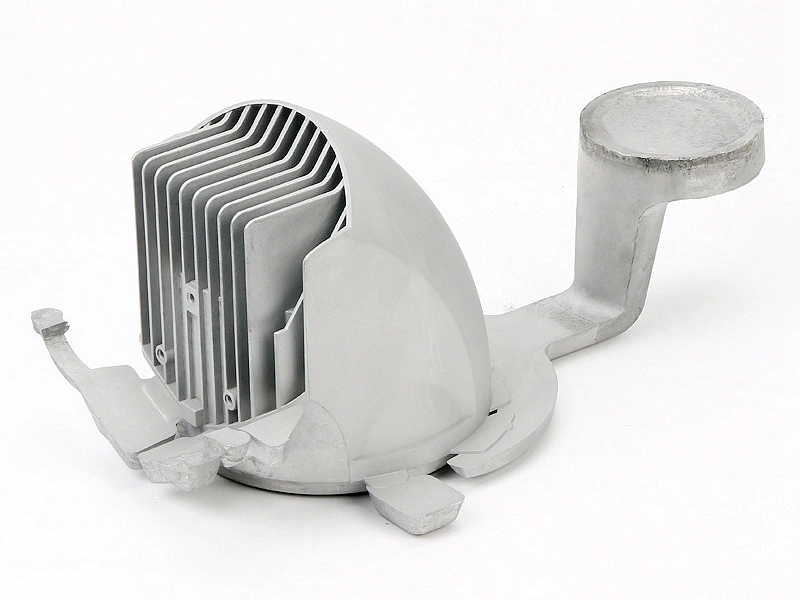
How aluminum die casting works
Prepare and close the die
The die is brought to its controlled operating condition, release medium is applied as required, inserts are loaded if specified, slides or cores move into position, and the machine closes with sufficient force for the proposed shot. Die temperature, cooling, venting and lubrication affect both cycle and defect risk. Their settings are project variables, not universal values.
Meter and inject the metal
A controlled amount of molten alloy enters the shot sleeve and the plunger drives it through runner and gate into the cavity. The slow and fast shot phases, transition, fill and intensification are developed for the casting. Poor control can contribute to air entrapment, cold laps, incomplete fill, flash or internal discontinuities. The aluminum die-casting process must be evaluated with the actual alloy, geometry and machine.
Solidify, eject and trim
Heat leaves the metal through the die until the casting can be ejected without unacceptable distortion. Ejector pins push out the casting and its runner, overflows and biscuit. Trimming separates this process metal. The cast part may then require deburring, shot blasting, machining, washing, coating, testing or assembly. Those operations belong in the original cost calculation, not in a later allowance.
When aluminum die casting fits the project
The process is a strong candidate for repeat production of aluminum parts that benefit from molded ribs, bosses, mounting features, thin-to-moderate sections and controlled as-cast surfaces. It can consolidate components and reduce broad stock removal. It is weaker when demand is uncertain, revisions are frequent, wrought properties are mandatory, geometry cannot release from a steel die, or the required internal soundness conflicts with the proposed process and section layout.
Compare it with machining, sand or gravity casting, fabrication, forging or additive production at the same delivered condition. The earlier guide on when casting is cost-effective provides the route-level decision; this article focuses on building the aluminum die-casting quote.
Aluminum die-casting cost equation
For planning, use this structure:
Program cost = engineering and tooling + qualification + production casting + secondary operations + inspection and reports + packaging and logistics + expected nonconformance and maintenance cost.
Cost per accepted delivered part = program cost allocated to the accepted quantity in the chosen demand scenario. For a recurring quote, keep one-time charges separate and calculate recurring accepted-part cost from metal, cell conversion, trimming, machining, finish, inspection and logistics after each applicable yield.
Do not divide tooling by a forecast that has not been approved. Use expected cumulative accepted quantity, not gross shots. If the product changes or the tool needs major replacement before forecast quantity is reached, amortization changes. Show downside, expected and upside demand cases.
Cost-driver calculation table
Cost input | Calculation basis | Evidence to request |
|---|---|---|
Tooling and fixtures | Die set, inserts, slides, trim tool, machining fixtures and gauges | Tool concept, ownership, included changes and maintenance |
Metal per shot | Net cavities plus runner, overflows, biscuit and unrecovered loss | Shot-weight breakdown and recovery assumptions |
Cell conversion | Approved cell rate multiplied by actual cycle per shot | Machine size, cycle elements, cavity count and staffing |
Good castings per shot | Cavity output adjusted for casting-stage acceptance | Trial results, sampling and defect reaction |
Secondary processing | Trim, deburr, machine, wash, finish, test and assemble | Process flow and quote by operation |
Stage yield | Accepted quantity after each value-adding operation | Project data or disclosed provisional assumptions |
Quality evidence | First article, routine inspection, destructive samples and reports | Method, frequency, lot definition and source |
Commercial scope | Packaging, freight, currency, metal index, inventory and payment terms | Written incoterm, validity and exclusions |
Calculate one-time tooling and qualification cost
The die cost follows the tool architecture, not a generic price per kilogram. Part envelope and projected area influence die and machine size. Cavity count, parting line, slides, moving cores, replaceable inserts, cooling, venting, vacuum provisions, ejectors and trim strategy determine complexity. Tool steel, heat treatment, surface condition and expected maintenance are selected for the project.
Include DFM, flow or thermal study where required, die design, material, machining, heat treatment, assembly, tryout, sampling and agreed corrections. Add trim tools, fixtures and gauges rather than hiding them in unit price. The tool-and-die quotation should state ownership, storage, preventive maintenance, replacement responsibility and what constitutes a customer change.
Qualification can include sample runs, dimensional layouts, material evidence, capability work, destructive sections, leak or functional tests and finish approval. State which samples are saleable. Tooling should be amortized over accepted demand scenarios only after these one-time costs are visible.
Calculate metal cost from the shot, not only the part
Start with net casting weight for all cavities, then add biscuit, runners, gates and overflows. Separate metal that returns through a controlled melt route from dross, spills, machining chips or contaminated material that has a different recovery value. The relevant purchase and recovery assumptions depend on alloy source, chemistry control and commercial arrangement.
A practical metal-cost line uses gross metal charged or commercially consumed per accepted shot, alloy price basis, recovery credit and casting yield. Do not insert a universal material-utilization percentage. A compact multi-cavity part and a large single-cavity casting can have very different process-metal ratios.
Specify the exact alloy and material condition. Substitution based only on a cheaper metal price can alter castability, tool interaction, mechanical properties, machining and finish. Use the project-approved chemistry and an agreed price-adjustment mechanism.
Calculate die-casting cell conversion cost
Cell conversion covers the machine, furnace or metal handling, utilities, automation, operator support and production overhead according to the supplier's costing structure. Machine selection depends on die envelope, projected area, required clamping margin, shot capacity and process window. A part that forces a larger machine can cost more even when its net weight is modest.
Break cycle time into spray and die preparation, insert loading, close, dose, shot, solidification, open, ejection and part removal. Cooling often controls the cycle on heavy sections; automation or manual inserts can control another part. Use stable production-intent cycle evidence, not the fastest isolated shot.
Conversion per casting equals cell cost per time multiplied by cycle time, divided by cavities producing acceptable parts, then adjusted for casting-stage yield and planned setup. This is why adding a cavity does not automatically halve cost: die size, balance, fill, cooling, maintenance and quality may change.
Apply yield at the stage where loss occurs
A rejected raw casting carries metal and casting conversion cost. A part rejected after machining also carries fixture, tool and spindle cost. A cosmetic rejection after coating contains the accumulated value of every earlier stage. One final yield percentage hides where money is lost and can understate the cost of late defects.
Build a stage model: cast acceptance, trim/deburr acceptance, machining acceptance, finish acceptance, functional-test acceptance and final packout. Use actual project data when available and disclose uncertainty during quoting. Add containment, sorting and requalification only where credible risk or contract scope requires them.
The inspection plan should target the failure mode. Dimensional measurement does not establish internal soundness; radiography does not prove every functional requirement. Confirm methods and sampling through the available inspection resources or an approved external source.
Work backward from accepted demand
Start the worksheet with the quantity the buyer must receive, then move backward through final inspection, assembly, finishing, machining, trimming and casting. The input required at each stage equals the required output divided by that stage's expected yield. This order matters. Applying one blended yield to raw casting cost does not recover the value added to a part that fails after machining or coating.
For example, define delivered quantity as Qd and the yields for final inspection, finish, machining and raw casting as Yf, Ys, Ym and Yc. Required casting output is Qd / (Yf x Ys x Ym); required gross cavity output before casting rejection is that result divided by Yc. The symbols are useful only when each yield has a written definition, data source and review date. During an early quote they may be provisional. After trials, replace them with measured results from the approved route.
Next convert required cavity output into shots. Divide by the number of active cavities, but account separately for startup pieces, process sampling, destructive tests and any cavity intentionally disabled. Round production runs in a way that reflects actual release quantities and setup policy. Annual demand alone does not reveal how often the cell, machining fixture or finishing line must be set up. A program released in many small lots can carry more setup and verification effort than the same annual quantity released in larger lots.
Assign each operation's cost to its required input quantity. Metal and casting conversion attach at the shot stage. Trimming attaches to castings sent to trim. Machining attaches only after casting acceptance, while finish, assembly and final inspection attach later. Recovery credit for runners, rejected castings or chips should be entered on the stage where ownership and recovery value are known. This creates an auditable bridge between process flow and recurring price. It also shows where a design change has economic leverage: improving an early casting loss saves downstream disruption, while preventing a late cosmetic rejection preserves all accumulated value.
Add every secondary operation
Trimming, deburring and cleaning
Quote trim press or manual cutoff, gate cleanup, flash removal, tumbling or blasting, and washing according to the delivered surface. Trimming can require a dedicated die. A cosmetic housing may need controlled handling and surface preparation; an internal bracket may not. Avoid paying for a decorative cleanup where the drawing does not require it.
Machining
Map each machined feature to setup, datum, fixture, cutting tool, cycle, gauge and wash. The post-machining plan should account for casting variation and likely porosity exposure. Broadly machining every surface can remove the economic advantage of near-net shape.
Use production-intent castings to establish stock and tool life. Wrought prototypes may validate assembly geometry but not machining behavior of a die casting. Add setup and changeover for actual release sizes, not only steady-state cutting time.
Surface finish and assembly
Painting, powder coating, conversion treatment or anodizing each needs an exact pretreatment, mask, appearance, test and packaging scope. High-silicon die-cast aluminum may not produce the same anodized appearance as wrought aluminum. A finish sample must use the production alloy and surface condition.
Include inserts, fasteners, seals, leak testing, marking and subassembly when the supplier delivers an assembled unit. Yield after assembly matters because rejected parts already contain accumulated value. Separate customer-supplied components and responsibility for their failure.
Connect design decisions to quote lines
Part design determines projected area, machine class, metal flow, thermal balance, ejection and secondary work. Uniformity is not an absolute rule, but abrupt heavy-to-thin transitions can create hot spots and feeding or porosity risk. Ribs can improve stiffness without a solid mass; poorly placed ribs can complicate fill or ejection. Draft and radii should follow tool and function rather than a copied standard value.
Slides and moving cores can mold side features but add tool cost, cycle and maintenance. Sometimes machining a hole is cheaper and more stable. Sometimes molding it removes enough recurring machining to justify the action. Compare the lifecycle cost of both concepts at the expected demand.
Tolerance should follow function and process capability by feature. Requiring machining-level control on all as-cast dimensions raises tool, sampling and rejection risk. Identify critical-to-function dimensions and allow practical control elsewhere. The design review should return a marked drawing, not a generic claim that the part is castable.
Run a cost sensitivity before approving the route
Scenario variable | Cost lines affected | Buyer question |
|---|---|---|
Lower cumulative demand | Tool amortization, inventory and minimum purchase | Does the route still win in the downside case? |
Larger or smaller releases | Setup, inspection, finishing loads and stock | Was annual volume mistaken for lot size? |
Cycle longer than estimate | Cell conversion and available capacity | Which feature or cooling condition controls the cycle? |
One cavity unavailable | Output, balance, maintenance and unit conversion | Can production continue and at what cost? |
Machining yield declines | Accumulated casting, machining and inspection cost | Is porosity or datum variation driving rejection? |
Finish specification tightens | Pretreatment, sorting, testing and cosmetic yield | Was the new appearance range production-validated? |
Change one assumption at a time, then combine a credible downside case. Do not hide risk by averaging an optimistic cavity count with conservative yield. If cost depends on an unproven cycle or cosmetic yield, assign an owner and trial to close it before commercial approval.
Normalize supplier quotations
Check whether tooling includes die set, inserts, slides, trim tool, fixtures, gauges, sampling, modifications, maintenance and ownership. Check whether unit price includes alloy surcharge, runner recovery, setup, trimming, deburring, machining, finish, inspection, packaging and freight. A lower number with excluded operations is not a lower delivered cost.
Use the same drawing revision, demand, release quantity, acceptance and delivery term. Separate one-time charges from recurring charges. Record currency, metal-price basis, quote validity, tax treatment and payment milestone. The broader casting cost guide can support commercial normalization across process families.
Validate estimates and update the model
Before tool release, verify DFM, machine and die concept, alloy, demand and acceptance scope. During first samples, record shot weight, cycle elements, process window, defects, dimensions and trimming. During secondary trials, record machining time, tool wear, coating route, test effort and stage yield. Replace assumptions with observed data.
Freeze the approved process after component and finish validation. Define change notification for alloy source, tool cavity, gating, machine transfer, heat treatment, machining, finish source or inspection method. Reopen cost and qualification when a change affects the basis. A cost model is a controlled project record, not a one-time spreadsheet.
RFQ inputs for an accurate aluminum die-casting cost
Provide 3D CAD and a controlled drawing, alloy and allowed alternatives, net mass estimate if known, annual and lifetime demand, release sizes, program duration, critical dimensions, load and environment, cosmetic zones, pressure or fatigue requirements, inserts, heat treatment, machining, surface finish, tests, reports, packaging, delivery location and target approval date.
Ask the supplier for process and machine basis, projected area review, cavity plan, shot-weight breakdown, cycle assumption, tool architecture, DFM changes, casting and downstream yield assumptions, operation-by-operation price, inspection plan, capacity, tool maintenance, metal index, validity, ownership, change control and exclusions. The engineering review should explain how those inputs connect to quality and cost.
The defensible cost is the sum of verified one-time and recurring scope divided by accepted delivered quantity under a stated scenario. That approach lets engineering reduce real drivers and lets procurement compare equivalent quotations without relying on invented benchmark prices.
FAQ
What is the minimum wall thickness achievable for aluminum die-cast parts?
What is the typical service life of an aluminum die casting mold in terms of cycles?
Besides aluminum, what other metals do you offer for die casting services?
How long does it take to move from prototyping to mass production?