
LM6 Aluminum Alloy Equivalent to A413: What Buyers Should Compare Before Substitution
LM6 is not automatically equivalent to A413 aluminum alloy in an aluminum die casting sourcing decision. Both are high-silicon aluminum casting directions and may be considered for similar fluidity, corrosion or pressure-tight casting goals, but they come from different designation systems and can carry different elemental limits, product assumptions, property data and certification language.
Calling them interchangeable without review can create a drawing nonconformance, an uncontrolled impurity window or a false comparison between sand-, gravity- and pressure-cast property data. The commercial risk is not only material performance; it also affects quotation comparability, supplier qualification, sample approval and repeat-order traceability.
A defensible decision compares the current specified standards, every controlled element, the actual melt chemistry, the proposed casting process, mechanical and functional evidence, finish and machining behavior, and the written approval route. Similarity can justify an investigation. It cannot replace approval.
Is LM6 Aluminum Alloy Equivalent to A413?
LM6 and A413 are comparable candidates, not identical specifications. A buyer may approve one in place of the other only when the contract permits alternatives and the comparison proves that chemistry, process, properties, corrosion, finish, machining and part function meet the original requirement. If the drawing states LM6 without an equivalence clause, A413 remains a deviation until the drawing owner accepts it in writing.
Use four levels of evidence. Family similarity asks whether both sit in a high-silicon aluminum casting range. Standard equivalence asks whether all relevant elemental limits and product provisions satisfy the drawing. Lot conformity checks the actual melt or heat against the approved requirement. Part validation confirms that the proposed material and process produce acceptable finished components. Passing the first level does not pass the other three.
Evidence Level | Question | What It Can Prove | What It Cannot Prove |
|---|---|---|---|
Alloy-family similarity | Are both high-silicon aluminum casting directions? | They deserve a detailed comparison | Full standard or part equivalence |
Standard-limit comparison | Do current chemistry and product clauses align? | The permitted windows overlap or one meets the approved envelope | The delivered lot is compliant |
Actual-lot verification | Does the measured melt meet the approved limits? | Identity and chemistry of a traceable lot | Finished-part pressure, corrosion or mechanical performance |
Part and process validation | Does the finished component meet drawing and functional tests? | Suitability of the approved material-process combination | Uncontrolled future sources or process changes |
The safest wording is conditional: A413 may be evaluated as an alternative to LM6 for a defined component. Avoid “LM6 equals A413,” “direct replacement” or “100% interchangeable.” These phrases remove the product and evidence conditions that make a substitution defensible.
Which Standards Define LM6 and A413?
LM6 is associated with the British BS 1490 casting designation system, while A413 aluminum alloy is commonly specified through North American aluminum die-casting and ASTM B85 contexts. The buyer must verify the current standard edition, alloy table, product form and any customer specification invoked by the drawing. A secondary cross-reference table is not the controlling document.
Standard identity matters because an alloy label may appear in several commercial forms. A datasheet may describe a generic alloy family, a national designation, a supplier's nominal chemistry or a product made by a particular process. The quotation should state exactly which document and revision control the delivered casting and whether a certificate reports measured chemistry or merely repeats a nominal grade name.
Identity Item | LM6 Review | A413 Review | Buyer Action |
|---|---|---|---|
Designation authority | Confirm the applicable BS 1490 reference | Confirm the applicable A413/ASTM B85 reference | Put the exact standard and revision on the RFQ or drawing |
Product and process scope | Check whether the cited data match the proposed casting condition | Check that die-casting data apply to the quoted route | Reject data from an unidentified casting method |
Chemistry table | Use complete minimum, range and maximum limits | Use complete minimum, range and maximum limits | Compare every listed element in one controlled matrix |
Property basis | Record specimen, condition and test method | Record specimen, condition and test method | Do not combine unlike rows into a synthetic property sheet |
Certificate language | State what lot evidence must accompany delivery | State what lot evidence must accompany delivery | Define issuer, heat/melt identity and measured fields |
Pages for AlSi12 casting material and EN AC-44300 can help buyers understand nearby designations. They do not prove that LM6, A413, EN AC-44300 and every AlSi12-labelled supply are one specification. Each cross-reference needs the same standard and chemistry discipline.
How Their Chemical Composition Limits Compare
The main similarity is a high silicon content intended to support fluidity and castability. The substitution risk lies in the rest of the permitted window. Iron, copper, magnesium, manganese, zinc, nickel, tin, lead, titanium, individual impurities and total impurities may have different maxima or reporting conventions. A lot can satisfy one designation yet sit outside the other.
Compare limits as ranges and maxima, not nominal values. For each element, record the lower and upper limit under the exact standard revision, the supplier's target, the measured melt result and the remaining margin to the approved limit. This “headroom” matters because a source operating near a maximum can create repeat-order risk even when the first sample passes.
Where the drawing controls a corrosion-sensitive fluid path or a cosmetic coating, compare copper, iron and residual limits against that function before accepting overlap in silicon. The disposition should identify which elemental differences are immaterial, which require testing and which prevent substitution.
Element Group | Why Buyers Compare It | Substitution Concern | Required Evidence |
|---|---|---|---|
Silicon | Supports fluidity and influences solidification, machining and properties | Overlap in a broad range does not align every other element | Standard limits and actual measured result |
Iron | Affects die interaction, intermetallics, ductility and finish response | Permitted maxima may differ materially between systems | Complete limit comparison and lot certificate |
Copper | Can change strength, corrosion and machining behavior | A low-copper intent can be lost under a looser alternative window | Approved maximum and actual-lot margin |
Magnesium | Can influence strength response, oxidation and processing | Nominally small additions still need limit control | Specified range or maximum and measured chemistry |
Mn, Zn and Ni | Influence process, properties and environmental behavior | Different maxima can affect an application-specific requirement | Element-by-element disposition |
Residuals and totals | Control contamination and repeatability beyond major elements | Individual or total impurity rules may not align | Full certificate, not a partial Si-only check |
A spectrometer result is useful only when it is traceable to the melt or lot represented by the delivered parts and the method is suitable for the required elements. The testing-equipment reference can help structure a discussion, but equipment presence is not evidence that a specific batch was measured correctly. Request the actual report, calibration or method reference where required, and lot linkage.
How Casting Behavior and Surface Results May Differ
Both alloy directions are associated with good fluidity for complex aluminum castings, yet a family label does not predict one cavity. Gate design, wall, flow length, overflow, venting, die or mold temperature, fill speed, metal cleanliness and local solidification govern the result. A supplier changing from LM6 practice to A413 practice must validate the actual geometry rather than rely on a cross-reference.
High-silicon alloys can machine and finish differently from lower-silicon alternatives. Tool selection, feed, stock and exposed microstructure affect a machined seal or bore. Anodizing appearance may be darker or less uniform on some cast compositions than on wrought aluminum; chemical conversion, paint or powder also depend on cleaning, oxide removal, porosity and pretreatment. Do not promise a cosmetic result from the alloy name alone.
Corrosion statements require the actual environment. Low copper may help certain corrosion goals, but chloride, crevices, dissimilar metals, coating damage and fluid chemistry can dominate. If the application is a pump, enclosure or outdoor part, define the wetted fluid, temperature, galvanic contacts and protective system. Use an actual-alloy finish trial when appearance or adhesion is critical.
Pressure-tightness is similarly conditional. Fluidity can support thin sections, but leakage depends on wall design, filling, gas and shrinkage distribution, machining breakout, impregnation policy, seal geometry and test method. Neither LM6 nor A413 should be sold as automatically leak-free.
How Mechanical Property Data Should Be Compared
Compare mechanical data only when alloy designation, casting process, material condition, specimen type, section, orientation, temperature and test method are sufficiently aligned. A sand-cast LM6 value and a die-cast A413 value may describe both the process difference and the material difference. Treating the higher number as an alloy winner creates a false conclusion.
Property Data Field | Comparable Condition | Red Flag | Buyer Disposition |
|---|---|---|---|
Tensile strength | Same specimen basis, casting route, condition and temperature | One value is typical and the other a minimum | Return to source documents and normalize the comparison |
Yield or proof strength | Same definition and test standard | Value copied without method or condition | Use only as screening data |
Elongation | Comparable specimen and gauge basis | Separately cast bar compared with a local thin wall | Do not assign the value directly to the component |
Hardness | Same scale, location, condition and surface preparation | Unidentified conversion between scales | Specify the required method on the part or sample |
Thermal or physical data | Same units, temperature, sample condition and method | Pure or wrought aluminum value used for a casting | Replace with source-controlled casting data and part test |
Design allowables, purchase minima and typical datasheet values serve different purposes. Label each number accordingly. If the part has a critical load, pressure or temperature duty, validate the component or representative specimens under the applicable design and acceptance framework. A chemistry pass does not create a mechanical guarantee.
When LM6-to-A413 Substitution May Be Acceptable
A substitution may be acceptable when the application is not locked to LM6 by regulation or customer contract, current chemistry limits have been compared, the actual A413 supply fits the approved envelope, and the proposed casting process produces acceptable finished parts. Written deviation approval must precede shipment under an LM6 drawing unless the drawing already permits the alternative.
Low-risk decorative or noncritical housings may need chemistry, dimensions, finish and assembly evidence. A corrosion-exposed or pressure-boundary housing needs a deeper review of copper and impurity limits, process, machined surfaces, leakage and environmental tests. Safety- or regulation-linked parts may prohibit substitution or require formal design authority approval beyond supplier and buyer purchasing teams.
Use a controlled low-volume validation stage when production tooling or supply commitment is significant. Trial material should be traceable to the proposed source and chemistry. If samples are poured or processed differently from later production, the validation does not approve the final route.
When Buyers Should Reject a Simple Equivalent Claim
Application Condition | Substitution Risk | Required Evidence | Approval Owner |
|---|---|---|---|
Customer or regulatory grade is mandatory | Contract nonconformance regardless of family similarity | Formal authorization or drawing revision | Named design/customer authority |
Pressure or leakage boundary | Process and machining can expose material differences | Chemistry, process, dimensions and functional tests | Design and quality owners |
Corrosive fluid or coastal exposure | Different impurity limits and protective systems affect risk | Environment-specific material and coating validation | Materials/corrosion authority |
Critical mechanical load | Unlike property sources can hide process effects | Comparable data and representative component evidence | Responsible design engineer |
Cosmetic anodizing or controlled finish | Cast chemistry and surface condition change appearance | Actual-alloy finish sample and defect standard | Design and appearance owner |
Supplier provides only a verbal cross-reference | No controlled basis or traceability | Standards, limit matrix, certificate and deviation package | Purchasing plus engineering/quality |
Reject the claim until evidence arrives when the supplier omits the governing standards, provides a partial chemistry table, mixes typical and minimum properties, cannot link parts to a melt, or refuses a written deviation. Low price and availability do not close a technical gap.
Hypothetical Engineering Scenario: Pump Housing Material Callout Across Standards
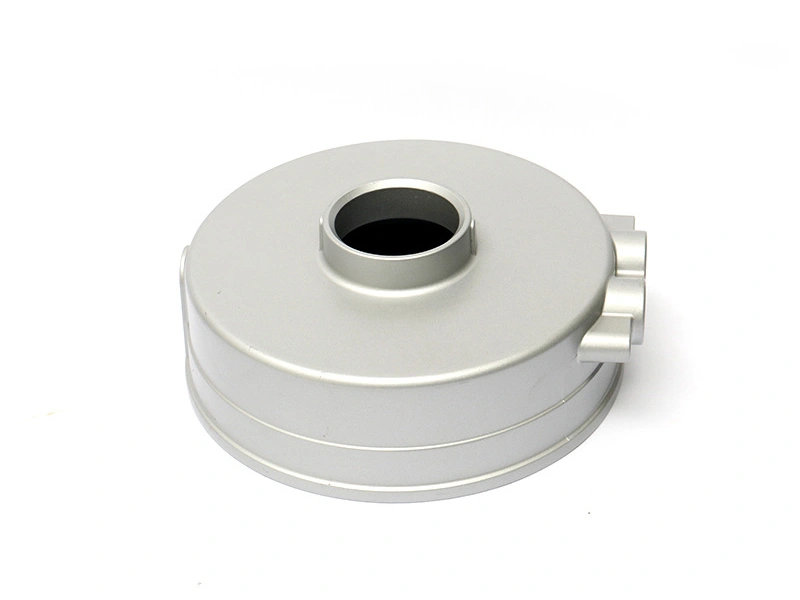
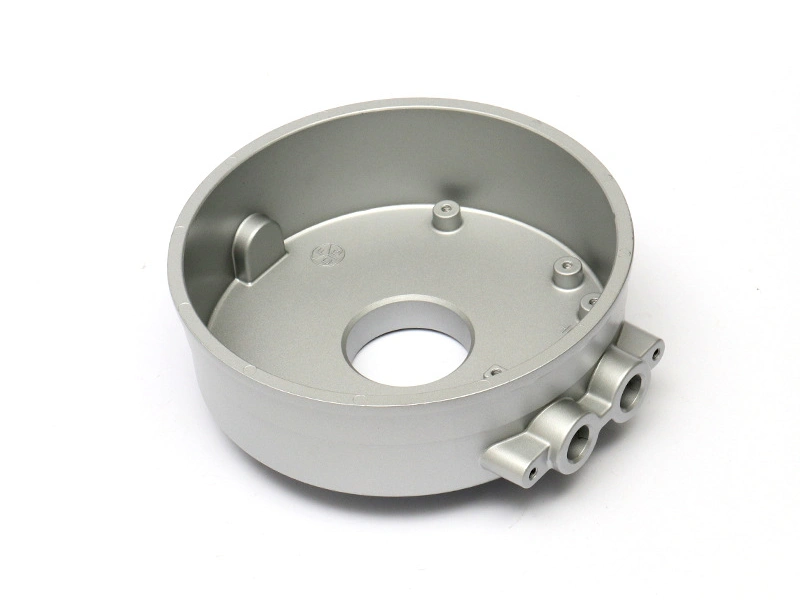
Consider a hypothetical high-silicon aluminum pump housing. The drawing specifies LM6, while a regional source quotes A413. The housing has a cored fluid path, machined seal, threaded ports and a buyer-defined leakage requirement. The photographs in this article do not identify either grade and are not evidence for the scenario.
The buyer first compares current BS 1490 and ASTM B85 requirements, with special attention to iron, copper and residual limits. The supplier provides its A413 target chemistry and a traceable sample melt result. The team checks whether the proposed pressure die-casting route matches the property and process data used in the comparison.
Trial parts are machined from the planned datums and inspected for seal-face cleanup, port position, wall and opened discontinuities. Leakage is tested under the drawing's medium, pressure, duration and fixture. The finish, fluid and corrosion conditions are reviewed separately. A relevant A413 pump-body reference may inform the review but cannot approve this hypothetical housing.
If all acceptance criteria pass, the design owner issues a time- or source-bounded deviation and defines repeat-lot records. If any standard limit, pressure requirement or contract condition is unresolved, the buyer rejects the equivalent claim. This case illustrates a decision path, not a Neway project or performance promise.
What Documents Should Support an Alloy Substitution?
The substitution package should contain the controlling drawing, LM6 requirement, proposed A413 standard and revision, side-by-side chemistry limits, supplier target, actual sample melt chemistry, property sources, casting-process description, trial inspection, finish or corrosion evidence where relevant, functional results, deviation approval and retention rule. Each document needs an issuer, revision or date and traceable part or lot identity.
A certificate of conformity states compliance but may not show measured chemistry. A material certificate or spectrometer report can show actual elements but not finished-part function. A first-article report shows selected characteristics on samples but not every future lot. Keep these scopes separate and combine them rather than asking one document to prove everything.
The approval should name revalidation triggers: material source, standard revision, chemistry target, return-metal practice where controlled, casting process, tool or cavity, heat treatment if any, machining fixture, finish, pressure test or critical geometry. Engineering change control should carry the decision into the drawing or approved deviation list.
What Information Should Buyers Include in the RFQ?
RFQ Item | Why It Matters | Supplier Evidence | Buyer Approval Action |
|---|---|---|---|
Original material callout and standard revision | Defines the contractual baseline | Confirmed designation and source document | Resolve ambiguity before quote comparison |
Whether equivalents are allowed | Separates compliant quote from proposed deviation | Named alternative and equivalence matrix | Approve, condition or reject in writing |
Fluid, pressure, corrosion and temperature duty | Sets substitution risk and functional tests | Material/process concerns and validation proposal | Confirm method and acceptance criterion |
Cast and machined critical features | Connects material to fill, stock and opened-porosity risk | DFM, datum and machining plan | Release CTQ map before tooling |
Finish and cosmetic requirement | Cast chemistry and surface condition affect result | Actual-alloy finish sample plan | Approve defect standard and master sample |
Prototype, annual volume and records | Controls route, source and traceability cost | Trial stages, certificate fields and change triggers | Freeze production release package |
Use the RFQ to force a transparent comparison. Ask the supplier to mark every assumption, identify unavailable data and separate standard compliance from proposed equivalence. The broader aluminum die-casting alloy comparison can support initial screening, while this LM6/A413 package controls the actual substitution.
The release decision is complete only when purchasing, engineering and quality reference the same approved material and process. A buyer can then source aluminum die cast parts without relying on an ambiguous equivalent note that changes meaning from one supplier or lot to the next.
FAQ
