Which industries benefit most from the material flexibility of sand casting?
Industries benefit most from sand casting's material flexibility when they buy large, cored, specialized or changing metal parts in grades that permanent tooling, stock machining or another local process cannot supply economically. Heavy machinery, pumps and valves, energy equipment, marine systems, vehicle development and selected aerospace or high-consequence programs are common examples. The benefit comes from matching an exact casting grade to product duty, not from an industry label.
Material Flexibility Must Solve a Program Problem
A broad foundry process is valuable when a product family needs iron damping in one housing, aluminum mass reduction in another, or a bronze grade for a specific medium while retaining similar low-tooling development methods. It is also useful when an exact steel or iron casting grade is unavailable as economical stock. Flexibility has little value if one approved material and another process already meet cost, quality and capacity.
Buyers should assess demand, revision rate, part mass, cored geometry, machining, qualification and supply concentration. Switching alloy families changes gating, feeding, pattern compensation, heat treatment and tests. It is not a simple material dropdown on an unchanged process.
Application-to-Evidence Matrix
| Application group | Why material range may help | Evidence that still governs |
|---|---|---|
| Machine and gearbox structures | Iron damping, ductile-iron strength or steel grade options | Matrix/properties, bores, heavy-section quality and load test |
| Pumps, valves and fluid handling | Iron, steel, brass or bronze selected by medium and pressure | Chemistry, wall/passage condition and defined leak/proof test |
| Thermal and power equipment | Grade choice for temperature, oxidation, conductivity or mass | Material condition, thermal duty and relevant examination |
| Vehicle development | Iron or aluminum prototypes and production-route comparison | Test boundary and process-specific transfer qualification |
| Marine hardware | Environment-specific bronze, steel, iron or aluminum grades | Exact media, galvanic system, material records and service test |
Heavy Machinery and Industrial Equipment
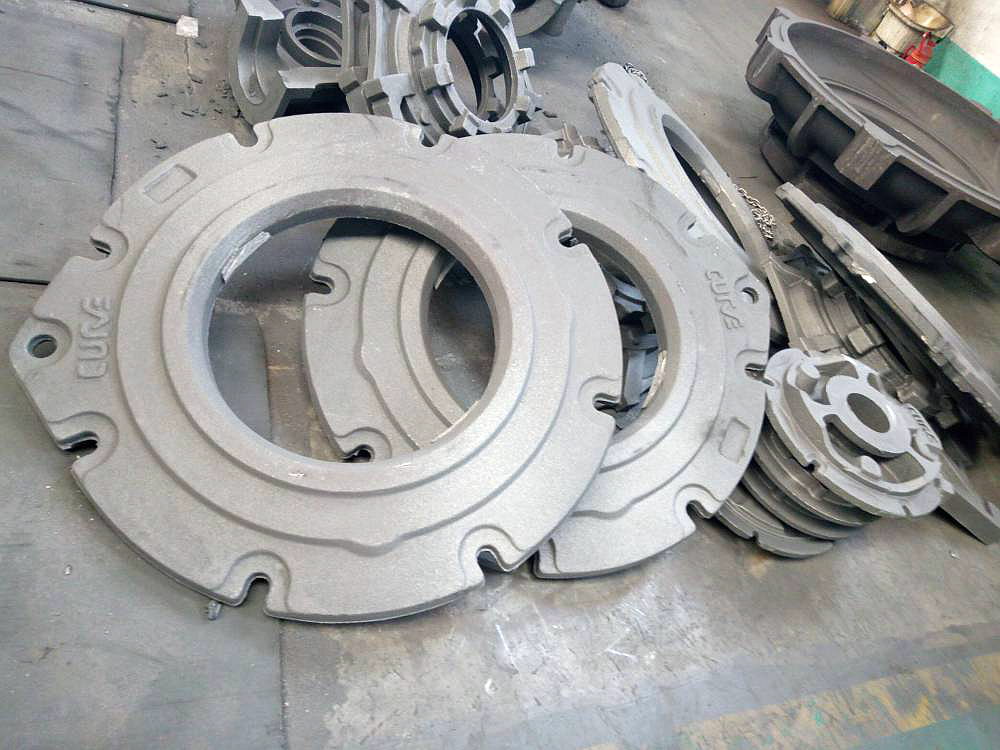
Machine bases, gearboxes, bearing carriers, hydraulic bodies and wear components can require damping, stiffness, toughness or abrasion resistance in large near-net shapes. Gray iron, ductile iron, cast steel or a wear-resistant grade may be candidates. Geometry, duty and repair strategy determine which.
Acceptance can include chemistry, microstructure, hardness/property samples, internal-quality examination and machined-bore relationships. A grade described as heavy duty does not prove impact or wear life. Define the load and failure mode, then select evidence.
Pumps, Valves and Process Equipment
Fluid-handling equipment may compare iron, cast steel, stainless grades, brasses or bronzes for pressure, corrosion, erosion, temperature and cost. Sand cores can form volutes and passages while the alloy selection follows the actual medium. Family reputation is not sufficient for aggressive chemicals, seawater or changing process streams.
Specify restricted elements, corrosion basis, pressure class or buyer test, heat treatment, repair limitations, wall acceptance and final machining. A leak test demonstrates the stated condition and method; it does not establish long-term corrosion performance.
Energy and High-Temperature Equipment
Generator, compressor, thermal-system and power-equipment parts may need steels, irons, aluminum or copper-based grades according to temperature, strength, oxidation, thermal transfer and mass. Material flexibility supports screening and low-quantity supply, but qualification may be substantial.
Define temperature-time-load duty, material condition, internal-quality requirements, nondestructive methods and functional testing. Applicable owner, code or product specifications control eligibility. Sand casting itself is not certification for pressure or high-temperature service.
Vehicle and Mobility Development
Development engine, transmission, motor, thermal-management and structural parts may use iron or aluminum sand castings before permanent tooling is justified. The route can provide relevant metal envelopes, machine stock and selected functional evidence. It can also compare material concepts if each test remains properly scoped.
A sand-cast aluminum prototype does not automatically predict a later high-pressure die casting, and an iron prototype cannot validate an aluminum redesign. Density, stiffness, thermal behavior, microstructure and discontinuities change. Preserve product findings and repeat material/process qualification for production.
Marine and Corrosive Environments
Marine pumps, propulsive hardware and deck machinery may evaluate bronze, brass, steel, iron or aluminum casting grades. Suitability depends on exact water chemistry, velocity, temperature, galvanic contacts, fouling, load and maintenance. "Marine bronze" without a grade and condition is not enough.
Procurement should require chemistry, material traceability, specified corrosion or mechanical evidence, repair rules and part testing. Lead or other restricted elements may affect market eligibility. The design authority should approve the complete material system, including fasteners, coatings and joining.
Aerospace and Other Controlled Programs
Selected aerospace, defense and other controlled programs may use sand casting for development hardware or approved parts in qualified grades. Material flexibility can support early trade studies, but drawing authority, approved sources, special-process controls, traceability, inspection and testing determine release.
Do not infer flight or safety suitability from a grade name or a foundry's general alloy list. Confirm whether the supplier and process are approved for the exact program. Separately cast samples may not represent local cored or heavy sections.
Commercial and Supply-Chain Decision
Compare quotes at the same final condition: exact grade, heat treatment, machining, finish, inspection, reports and accepted quantity. A specialist alloy may have minimum melt, dedicated furnace, external laboratory or longer sourcing implications. A supplier handling several families may still outsource key operations.
Use a casting material review to qualify each grade and a low-volume manufacturing review to confirm lot, capacity and repeat terms. Material range has business value only when the accepted route is available at the required cadence.
Buyer Release Checklist
Send exact material options, specifications/conditions, CAD, section map, demand, service environment, loads, temperature, pressure, machining, joining, finish, repair limits, tests and records. Ask the supplier to state routine versus development grades, melt/mold route, external operations, deviations, sampling and change notification.
The industries that benefit most are those whose product mix genuinely needs different foundry alloys and whose quality system can control each route. Select the grade from duty, qualify the supplier and keep industry claims within the evidence delivered for the actual part.