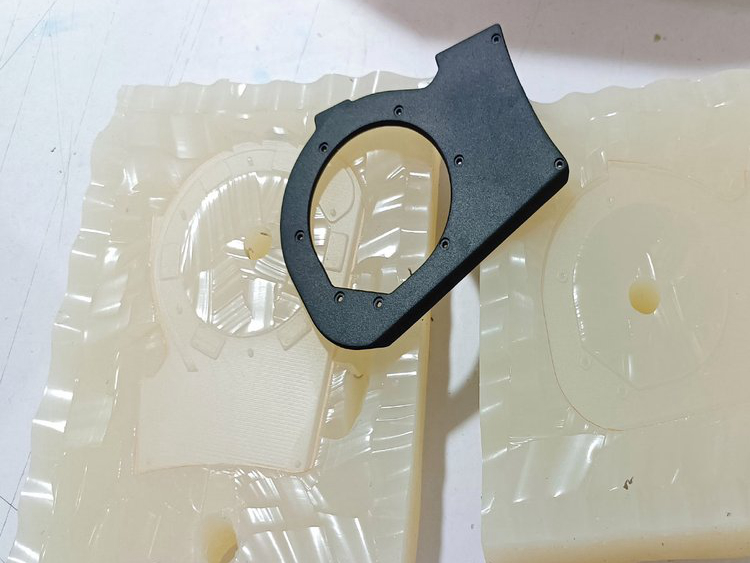
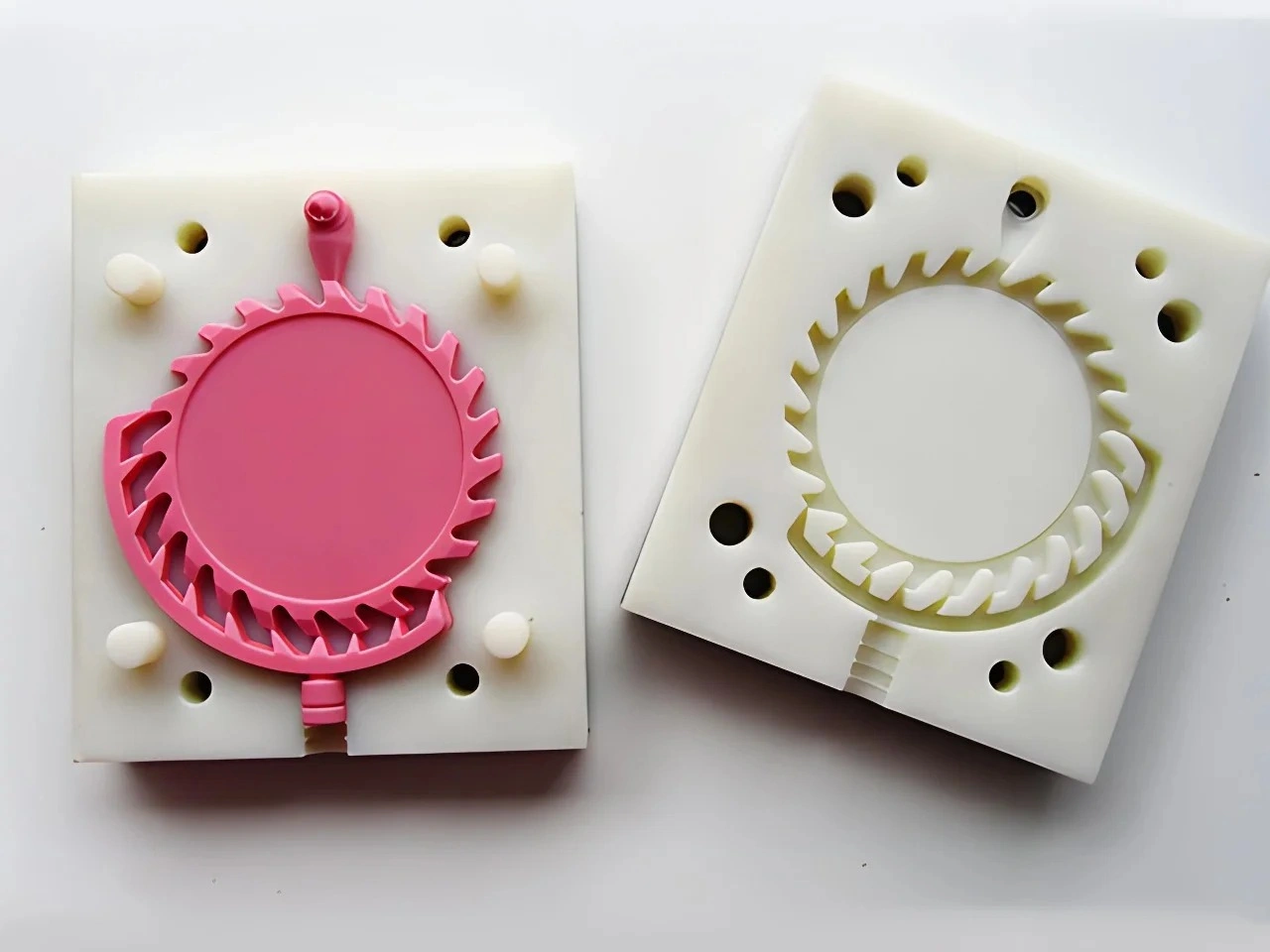
How do silicone molds in urethane casting compare to metal tooling?
Silicone molds are flexible, lower-commitment tools for casting polyurethane prototypes and limited repeated parts; metal tools are rigid production assets built for an injection, die-casting or other defined process. Silicone can expose less investment while geometry changes and can release some undercuts without slides. Metal tooling supports production material, controlled ejection, rate and longer-term process development. Compare the complete program, not tool price alone.
Tool Comparison Matrix
| Decision factor | Silicone mold | Metal tooling | Buyer implication |
|---|---|---|---|
| Source asset | Approved master plus flexible cavity | Engineered rigid mold and process hardware | Different DFM and ownership records |
| Part material | Cast polyurethane system | Specified thermoplastic or casting alloy | Material/process evidence does not transfer automatically |
| Geometry release | Flexes around selected undercuts | Uses draft, splits, cores/slides and ejection | Prototype geometry may need production redesign |
| Recurring work | Manual mix, cast, cure, demold and trim | Machine cycle plus setup and secondary work | Capacity and cost curves differ |
| Wear decision | Texture, tear, flash and dimensional condition | Tool wear, maintenance and process capability | No universal output applies to either tool |
Silicone Tooling Reduces Early Asset Exposure
A silicone mold needs an approved master, mold split, gates, vents, support and cure. These tasks may involve less nonrecurring engineering and fabrication than a production metal tool, but they are not negligible. Master finishing and repair belong in the tooling comparison.
If CAD changes, the master, mold, trim aids and existing parts may become obsolete. That loss can be smaller than modifying or replacing a production tool, which gives silicone value during uncertain design. Record revision and change terms instead of calling iteration free.
Metal Tooling Provides Production-Process Evidence
An injection mold processes the specified thermoplastic under production-intent filling, cooling and ejection conditions. A die-casting tool processes metal with a different thermal and flow regime. These tools can reveal gate effects, weld lines, orientation, shrinkage, residual stress, porosity or ejection behavior relevant to their process.
Silicone-tool urethane casting cannot establish those signatures. It may validate envelope, interfaces, appearance and bounded function. When production material and process control the decision, metal-tool samples or another production-relevant route are required.
Flexibility Enables and Limits Geometry
Silicone can peel away from some undercuts and organic forms that would require slides in rigid tooling. Deep hooks, trapped volumes, thin silicone ligaments and long extraction paths can still tear the mold or deform a part. Each manual demolding action also affects cycle and repeatability.
Metal tooling requires an intentional release path, draft and ejection strategy but can use slides, lifters or cores where justified. A geometry that works in silicone should undergo production DFM rather than being copied into the metal tool unchanged.
Mold Life Is an Acceptance Decision
Silicone output depends on material pair, cure heat, part geometry, release practice, extraction strain and the quality limit. One buyer may reject early texture softening while another accepts a hidden bracket with more flash. Define what triggers replacement and price planned mold count.
The silicone mold output factors support a project estimate, not a fixed shot count. Metal tools also need defined maintenance and acceptance, although their purpose and wear mechanisms differ.
Ownership and Retention Differ
For silicone tooling, define ownership of the master, digital source, molds, support shells, trim aids and appearance standards. Silicone can age or deform in storage, so possession alone does not ensure a repeat release. State retention, condition checks and remake terms.
Metal tooling needs its own ownership, maintenance, storage, modification authority and transfer records. Its long-term value depends on condition, production data and access to compatible equipment. Compare usable assets, not merely invoices labeled tooling.
Changes Have Different Commercial Consequences
A urethane revision may remake the master and mold while leaving resin and finish learning partly useful. A metal-tool change may modify inserts, slides, cooling or cavity steel and require resampling. The effect depends on feature location and tool construction.
Use a change ledger with affected assets, work in process, tests and schedule. Lower early commitment gives silicone tooling flexibility, but neither route absorbs changes without cost or evidence impact.
Capacity Is More Than Tool Count
Parallel silicone molds can increase casting opportunity, but resin handling, cure space, demolding, trim, finish and inspection may remain bottlenecks. Additional molds also need cavity comparison. Metal tooling can support higher recurring rate when press, automation and downstream capacity are available.
Ask for accepted output by release and dated capacity, including first-part approval. A theoretical tool capability does not establish shipment rate when another stage controls the path.
Compare Cumulative Economics
For silicone tooling, include master, molds, replacements, manual labor, resin, finish, inspection, fallout and revisions. For metal tooling, include design, fabrication, sampling, modification, production material, setup, recurring processing, maintenance and qualification. Compare committed and likely cumulative demand at the same revision.
The transition decision should be revisited when demand, rate, design stability or required material evidence changes. No fixed piece count decides every project.
Tooling RFQ Checklist
Send controlled CAD/drawing, prototype question, target production process/material, quantity scenarios, revisions, appearance, critical dimensions, inserts, finish, tests and cadence. Ask for tool route, ownership, maintenance/replacement, accepted output assumption, capacity, technical deviations and change terms.
Silicone and metal tools are complementary when each is used for evidence and economics it can support. Soft tooling reduces early commitment; metal tooling establishes the production process. Neither should be ranked without the actual program.