Is powder coating a good option for zinc die cast housings and hardware?
Powder coating is a good option for zinc die cast housings and hardware when an opaque color or texture, organic barrier and handling resistance match the product. It is conditional on zinc-compatible cleaning and pretreatment, controlled outgassing and cure, adequate film in recesses and edges, and masking or allowance at threads and fits. It is not automatically better than liquid paint or plating.
Where powder coating fits
Equipment covers, brackets, handles and enclosures often suit powder because broad visible faces can carry a consistent opaque film and texture. The finish can coordinate color across an assembly and isolate zinc from some contacts. Product geometry, exposure and coating chemistry determine whether those benefits are realized.
A bright metallic appearance, very fine unsoftened detail, low film build or a conductive surface may favor another route. A hidden internal part may not justify the preparation and masking cost. Select the finish from requirements, not from a general claim of toughness.
Outgassing and cure need production-part trials
Zinc castings can contain pores or trapped contaminants that release gas during heating. The coating may show pinholes, craters or bubbles even when powder application looked uniform. Cleaning, casting control, pre-bake and cure adjustments can influence the result, but no generic pre-bake rule fits every geometry and powder.
Qualify the actual casting through the intended pretreatment and thermal cycle. Record substrate lot, rack position, oven profile and defect location. If pinholes cluster near heavy bosses or machined pores, correct the substrate or design rather than adding repeated coating rework.
Film distribution is geometric
Feature | Coating risk | Control | Evidence |
|---|---|---|---|
Deep recess or narrow channel | Electrostatic shielding and low deposition | Revise geometry/application or define coverage priority | Film map and environmental check at recess |
Sharp external edge | Thin or damage-prone barrier | Edge design, pretreatment and handling control | Edge inspection after exposure/impact |
Thread, bore or snap fit | Film reduces clearance or changes engagement | Mask, compensate or finish machine | Finished dimension and mating test |
Sealing or ground land | Insulating film blocks function | Repeatable mask or post-process land | Leak or electrical resistance test |
The powder coating route should include rack and mask drawings where geometry is dense. Film measured on an easy flat face does not prove coverage inside a pocket or clearance at a threaded boss.
Housing-specific decisions
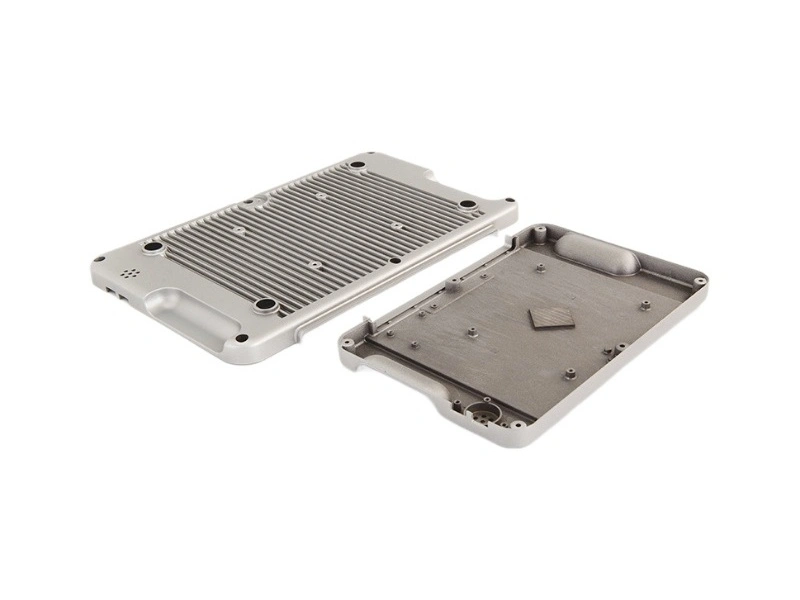
Housings often have gasket grooves, parting flanges, EMI contacts, heat-transfer lands and internal bosses. Decide which remain coated. An external barrier may be useful while an internal ground path needs masking. Coating on a flange can change compression and flatness; cure may reveal residual distortion that was not apparent before heating.
Test the assembled housing after cure. Include fasteners, seals, connectors and mating covers. Appearance release alone cannot detect a blocked ground, tight bore or changed gasket load.
Hardware-specific decisions
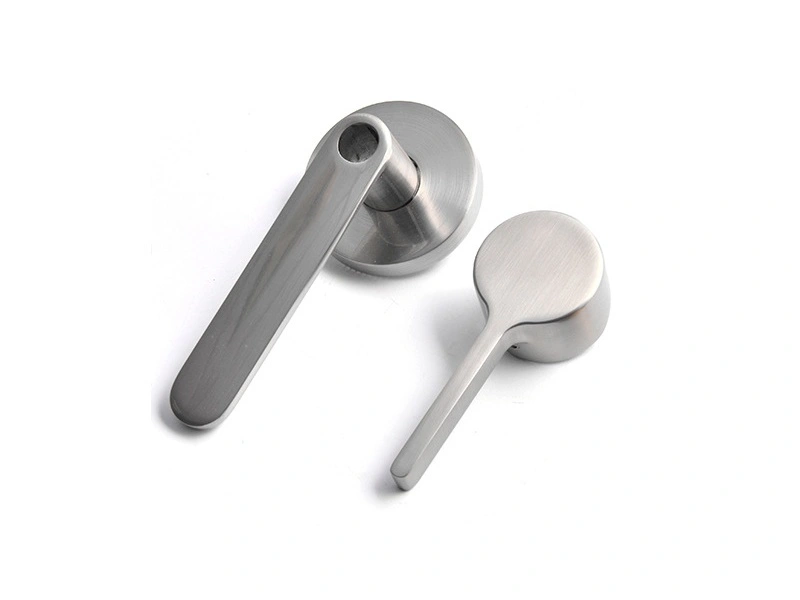
Handles and brackets see edge impacts, abrasion around fasteners and damage during installation. Define allowable chips and whether field touch-up is permitted. A thick film may soften decorative lines or alter grip feel. Repeated contact can wear through to zinc, so the test should reproduce mating material and motion.
Pretreatment is part of the finish
Powder adhesion depends on the surface entering application. Die lubricant, polishing compound, machining fluid, fingerprints and corrosion product can all disrupt cleaning or pretreatment. Define the time and storage condition between casting, preparation and coating. If parts travel between suppliers, packaging must prevent both mechanical damage and contamination; a clean-looking surface is not proof of a controlled interface.
Approve the cleaning and pretreatment with the selected zinc alloy and actual upstream residues. Monitor the process variables identified by the coating source, then use adhesion and exposure results to confirm the route. Changing cleaner, pretreatment chemistry or casting lubricant can require revalidation even when powder color is unchanged.
Rack, mask and cure plans belong in the quote
Racks determine orientation, grounding, part spacing and contact marks. Masks add labor and can leave a ridge or exposed transition. The quotation should identify reusable tooling, manual masking, inspection access and expected touch points rather than treating them as incidental shop choices. A dense housing may cost more to mask and inspect than its broad exterior suggests.
Cure evidence should represent part temperature and geometry, not just oven air. Heavy and thin regions can heat differently, and inserts or sealants may impose their own limit. Confirm the approved cure route with the actual load pattern and fixture. If a repair bake or second coating cycle is allowed, assess its dimensional and appearance effect separately.
Approve production-intent parts, not only flat coupons
Coupons can monitor chemistry, color or adhesion, but they do not reproduce a zinc housing's pores, recesses, sharp edges, rack marks and masks. First-article approval should include representative cavities and rack positions. Inspect before coating, after cure and after assembly so a tight fit or pinhole is assigned to the correct stage.
Define failure endpoints before exposure: blistering, creep, color change, chip growth, adhesion loss, corrosion product and product function are distinct observations. A specified result on a complete part supports the decision; a generic coating data sheet does not establish performance for this casting.
Qualification plan
Substrate limits, cleaning and pretreatment process.
Powder identity, color/texture, application and cure evidence.
Film distribution at flats, edges, recesses and masked transitions.
Adhesion, impact/abrasion or chemical tests tied to service.
Environmental exposure on complete parts with defined endpoints.
Finished dimensions, assembly, packaging and damage inspection.
For purchasing, request the casting acceptance state, pretreatment identity, powder system, rack/mask drawing, cure record, inspection plan and change-notification boundary. This makes a quote comparable and prevents a later dispute over whether pinholes, blocked threads or cosmetic contact marks were included.
Powder is a strong candidate when the complete system passes these conditions. The guidance on coating thickness and assembly fit should be applied to the actual tolerance stack. Film thickness by itself is neither a fit guarantee nor a corrosion-life claim.