How to Choose a Die Casting Supplier for Custom Metal Parts
How to Choose a Die Casting Supplier for Custom Metal Parts
Choosing the right die casting supplier is important for buyers who need custom metal parts, precision die cast components, finished die casting parts, or long-term production support. A reliable supplier should not only produce castings. It should also help evaluate materials, review drawings, develop tooling, control die casting production, support CNC machining, manage surface finishing, inspect quality, handle assembly, and maintain repeat production consistency.
When buyers search for a die casting supplier, they are usually comparing factories, preparing RFQs, checking manufacturing capability, and deciding which supplier can support custom aluminum, zinc, copper, or multi-material metal casting projects.
This guide explains how buyers can shortlist die casting suppliers, compare quotations beyond unit price, verify tooling and post-processing capability, approve a supplier before production, and reduce long-term supply risk for custom die cast parts.
Why Buyers Search for a Die Casting Supplier
Buyers searching for a die casting supplier are usually already in the supplier selection stage. They may have a 3D model, 2D drawing, sample, material direction, tooling requirement, surface finishing requirement, or production volume target.
The search intent is different from general process research. These buyers need a manufacturing partner that can turn custom metal part requirements into stable production, not only a factory that can run die casting machines.
Buyer Situation | What It Usually Means | Supplier Capability Needed |
|---|---|---|
Custom die casting parts requirement | The buyer has drawings, samples, or product-specific metal part needs. | DFM review, material selection, tooling, casting, machining, and inspection. |
Aluminum, zinc, or copper material direction | The buyer may need help confirming the right casting material. | Multi-material evaluation and application-based material recommendation. |
Tooling development requirement | The part needs a custom die casting mold for repeat production. | Tool design, trial mold, tool correction, maintenance, and revision control. |
CNC and finishing requirement | The buyer needs finished parts, not only raw casting blanks. | CNC machining, post-machining, surface finishing, assembly, and packaging. |
Supplier quotation comparison | The buyer is checking cost, scope, lead time, quality, and long-term risk. | Detailed quotation, clear service scope, inspection plan, and production support. |
Choosing a die casting supplier should be based on full manufacturing capability, not only casting price. The supplier must be able to control the process from material and tooling to finished part delivery.
What Makes a Die Casting Supplier Reliable?
A reliable die casting supplier can support the complete project, not only one isolated production step. Buyers should check whether the supplier has material knowledge, engineering support, tooling capability, casting process control, CNC machining, finishing support, inspection systems, and mass production experience.
Supplier Factor | Why It Matters | Buyer Should Check |
|---|---|---|
Material capability | Determines whether aluminum, zinc, copper, or other casting materials fit the project. | Can the supplier recommend materials based on function, weight, surface, conductivity, and cost? |
Engineering support | Reduces drawing risk, tooling risk, manufacturing defects, and assembly problems. | Can the supplier provide DFM review before tooling? |
Tooling capability | Determines mold stability, part consistency, surface quality, and long-term production reliability. | Can the supplier design, build, trial, modify, and maintain die casting molds? |
Die casting production | Controls forming quality, defect control, cycle stability, and production efficiency. | Does the supplier have stable process control and production records? |
CNC support | Critical features often need tighter accuracy than as-cast surfaces. | Can the supplier machine holes, threads, sealing surfaces, datums, and assembly faces? |
Finishing support | Surface finishing affects appearance, protection, coating thickness, and final value. | Can the supplier control painting, powder coating, anodizing, tumbling, and other finishes? |
Inspection system | Batch quality must be verified with more than visual checks. | Does the supplier support CMM, X-ray, material records, coating checks, and inspection reports? |
Mass production support | Repeat orders require stable tooling, material, process, inspection, and delivery control. | Can the supplier support long-term production instead of only samples? |
A strong supplier should be able to explain how each process affects the final part. If a supplier only gives a low unit price without explaining material, tooling, machining, finishing, and quality risks, buyers should review the project more carefully.
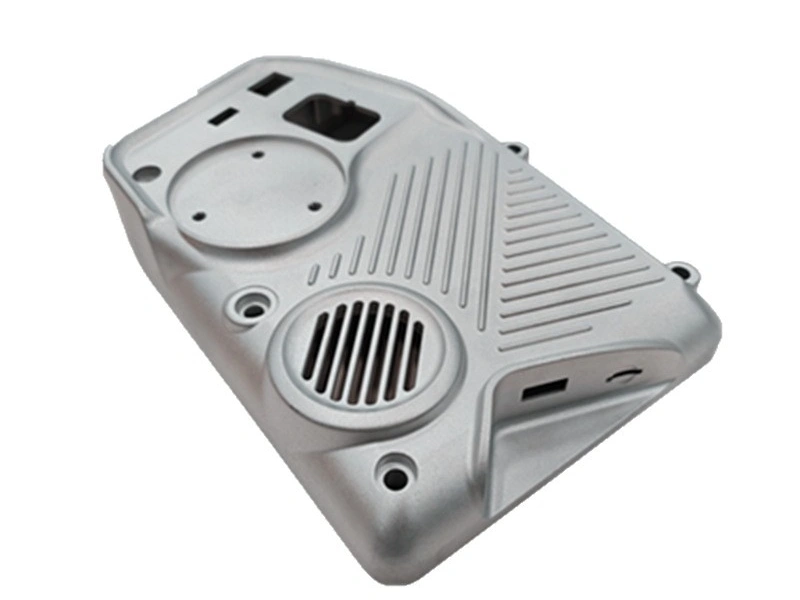
How to Shortlist Die Casting Suppliers Before RFQ
Before sending an RFQ to multiple suppliers, buyers can create a shortlist based on technical fit and project scope. This helps avoid comparing suppliers that cannot support the full requirement.
A useful shortlist should check whether the supplier can support multi-material casting, engineering review, tool and die making, CNC machining, surface finishing, dimensional inspection, prototype support, low-volume trial production, mass production, assembly, and packaging.
Shortlist Question | Good Supplier Signal | Risk Signal |
|---|---|---|
Can they advise on materials? | They can compare aluminum, zinc, copper, and casting material options by application. | They simply say every material is possible without explaining trade-offs. |
Can they support tooling? | They can manage mold design, tool trial, correction, maintenance, and revision records. | Tooling is fully outsourced and mold design responsibility is unclear. |
Can they finish parts? | They can support CNC machining, post-machining, and surface finishing. | They only deliver raw castings and leave secondary processes to the buyer. |
Can they inspect parts? | They can provide dimensional checks, inspection reports, and quality records. | They rely only on simple visual inspection. |
Can they scale production? | They can support samples, trial production, low-volume runs, and mass production. | They can make samples but cannot explain repeat production control. |
Buyers can also review whether the supplier supports supplier DFM review for die casting, tool and die making for custom die casting, CNC machining for die cast parts, and surface finishing from a die casting supplier.
How to Match Die Casting Suppliers to Material Requirements
Different custom metal parts need different material capabilities. A supplier that is strong in aluminum housings may not be the best choice for small decorative zinc parts or conductive copper alloy components. Buyers should match supplier capability to material requirements before approving a project.
Material Requirement | Supplier Capability Needed | Best-Fit Service Direction |
|---|---|---|
Lightweight structural parts | Aluminum die casting, tooling control, heat treatment or finishing review, and machining support. | |
Small complex detailed parts | Zinc alloy casting, fine detail reproduction, surface finishing, and dimensional stability. | |
Conductive or thermal parts | Copper alloy casting experience, material knowledge, and functional inspection. | |
Multi-part project | Ability to compare material choices and manage different metal part families. | One-stop die casting supplier with multi-material project management. |
Finished components | Casting, CNC machining, finishing, assembly, inspection, and packaging. | Integrated die casting supplier for finished die cast components. |
If the buyer has different types of custom metal parts, choosing a supplier with broader casting material selection support can reduce material mismatch and supply chain complexity.
How to Compare Die Casting Supplier Quotations Beyond Unit Price
Die casting supplier quotations should not be compared only by unit price. A low part price may not include tooling correction, CNC machining, surface finishing, inspection reports, packaging, or long-term production support. Buyers should compare the full quotation scope.
Quotation Item | What Buyers Should Check | Risk If Ignored |
|---|---|---|
Tooling cost | Whether it includes mold design, trial mold, correction, and basic maintenance rules. | Unexpected tooling modification or mold repair cost later. |
Part price | Whether it includes raw casting only or finished part requirements. | The quoted unit price looks low but does not include machining or finishing. |
Material | Whether alloy grade, material standard, and material records are clearly stated. | Material performance disputes and poor traceability. |
CNC machining | Whether holes, threads, datum faces, and critical dimensions are included. | Assembly failure or extra machining cost. |
Surface finishing | Whether coating, color, appearance standard, thickness, and masking are included. | Appearance rework, finish disputes, or coating-related fit issues. |
Inspection | Whether CMM, X-ray, coating inspection, or dimensional reports are included if required. | Quality cannot be verified or traced during repeat production. |
Packaging | Whether finished parts are protected from scratches, dents, coating damage, and mixed batches. | Transport damage and incoming rejection. |
Lead time | Whether tooling, sampling, finishing, inspection, and production time are all included. | Wrong delivery expectation and project delay. |
A complete quotation should make the project scope clear. Buyers should confirm whether the supplier is quoting a casting blank, a machined part, a finished part, or an assembled component.
Tooling Capability Questions to Ask a Die Casting Supplier
Tooling capability is one of the strongest indicators of supplier reliability. A die casting mold affects part quality, defect control, dimensions, surface quality, repeatability, and long-term cost. Buyers should ask specific tooling questions before approving a supplier.
Tooling Question | Why It Matters |
|---|---|
Do you support DFM before tooling? | DFM review helps reduce mold rework, casting defects, machining conflicts, and late design changes. |
How do you plan gates and vents? | Gate and venting decisions affect filling, internal defects, surface marks, and casting stability. |
How is tool maintenance managed? | Maintenance records help control flash, burrs, wear, dimensional drift, and surface defects. |
Can tooling support repeat orders? | Repeat production depends on mold durability, cavity consistency, and maintenance planning. |
Are tooling changes recorded? | Tool revision records help avoid wrong-version production after design or process updates. |
Buyers should also check whether the supplier can recommend die casting tooling materials and suitable mold steel options such as H13 die casting mold steel when tool life and production stability are important.
How to Verify CNC, Finishing and Assembly Capacity
A die casting supplier should be evaluated by its ability to deliver finished parts, not only castings. Many custom die cast parts require CNC machining, post-machining, surface finishing, assembly, and protected packaging before they can be used.
Capability | Supplier Audit Point | Risk If Missing |
|---|---|---|
Can the supplier control holes, threads, sealing faces, locating features, and datum surfaces? | Assembly failure, functional mismatch, and unclear responsibility for dimensions. | |
Can the supplier manage fixtures, machining allowance, deburring, and reinspection? | Dimension disputes, burr problems, and poor assembly fit. | |
Surface finishing | Can the supplier control painting, powder coating, anodizing, tumbling, and surface standards? | Surface rework, coating failure, appearance rejection, and assembly interference. |
Assembly | Can the supplier perform trial assembly or deliver assembled die casting components? | The buyer may need to coordinate secondary suppliers and solve fit problems alone. |
Packaging | Can the supplier protect finished surfaces, machined areas, threads, and batch identity? | Transport damage, scratches, mixed batches, and incoming quality failures. |
For finishing support, buyers can review whether the supplier can provide painting for die cast parts, powder coating for die cast parts, anodizing for aluminum die cast parts, and tumbling for die cast parts.
Quality Control Signals of a Professional Die Casting Supplier
Quality control is a major difference between a basic die casting factory and a professional die casting supplier. Strong suppliers can prove that material, dimensions, internal quality, surface finishing, coating, function, and batch consistency are controlled.
Quality Signal | What It Proves | Buyer Value |
|---|---|---|
Material records | The material grade and batch can be traced. | Reduces performance disputes and supports repeat order consistency. |
First article inspection | Early samples are checked against the drawing before production release. | Reduces tooling and process risk before scaling. |
Critical dimensions, datums, holes, and machined areas can be measured. | Improves assembly reliability and dimensional confidence. | |
Internal defects can be checked when structural or functional reliability matters. | Improves confidence in critical custom metal parts. | |
Coating inspection | Surface finishing thickness, adhesion, appearance, and coverage can be verified. | Reduces appearance risk and coating-related assembly issues. |
Batch records | Production conditions and inspection results can be traced across orders. | Supports long-term purchasing and quality investigation. |
For repeat orders, quality control for die casting supplier should include approved samples, inspection checklists, material records, process records, and traceable production data.
How to Approve a Die Casting Supplier Before Production
Supplier approval should not be based only on one sample. A sample can look acceptable, but the supplier may still lack tooling control, inspection records, production planning, finishing support, or long-term repeatability. Buyers should approve a supplier through a controlled process.
Approval Step | Buyer Should Confirm | Supplier Output |
|---|---|---|
Capability review | Material, tooling, casting, CNC machining, finishing, inspection, and production capacity. | Capability summary and process overview. |
DFM review | Whether the drawing is suitable for die casting, machining, finishing, and assembly. | Engineering feedback and risk notes. |
Quotation review | Whether the quotation scope includes tooling, part price, machining, finishing, inspection, packaging, and lead time. | Detailed quotation with clear process scope. |
Tooling plan | Mold design direction, cavity plan, lead time, revision process, and maintenance strategy. | Tooling proposal. |
Sample production | Dimensions, appearance, material, machining, surface finish, and basic function. | Sample and inspection report. |
Process review | How the supplier will manage mass production, inspection, packaging, and repeat orders. | Production plan and quality checklist. |
Final approval | Whether the supplier is ready for pilot run, low-volume production, or mass production. | Approved supplier status and production release. |
For early-stage projects, buyers may also need prototype support from die casting supplier or trial production for die cast parts before full production approval.
How to Reduce Long-Term Supply Risk With a Die Casting Supplier
Long-term supply risk often appears after the first sample is approved. Buyers may face tool wear, material variation, dimensional drift, finish inconsistency, wrong drawing versions, delivery damage, or supplier capacity issues. These risks should be managed before repeat production begins.
Long-Term Risk | Prevention Method |
|---|---|
Tool wear | Use mold maintenance records, tool inspection, and production monitoring. |
Material variation | Define alloy standards, material records, and batch traceability. |
Dimensional drift | Use CMM inspection, process sampling, fixture checks, and tooling maintenance. |
Finish inconsistency | Use approved finish samples, visual standards, coating inspection, and batch comparison. |
Wrong drawing version | Control drawing revisions, tooling changes, CNC programs, and inspection documents. |
Delivery damage | Define packaging standards for finished surfaces, machined areas, threads, and assemblies. |
Capacity shortage | Review production planning, lead time, repeat order communication, and mass production capacity. |
For long-term purchasing, buyers should choose a supplier that can support mass production die casting supplier projects with stable material, tooling, process, inspection, packaging, and delivery control.
Why a One-Stop Die Casting Supplier Can Be Safer
A one-stop die casting supplier can reduce risk by coordinating engineering, tooling, casting, CNC machining, surface finishing, inspection, assembly, packaging, and mass production under one project workflow. This is especially useful for custom die cast parts that require functional features, finished surfaces, or assembly-ready delivery.
Separate Supplier Risk | One-Stop Supplier Advantage |
|---|---|
Tooling and casting mismatch | Tooling and production teams coordinate mold design, trial casting, correction, and repeat production. |
CNC responsibility gap | Post-machining, inspection, and assembly fit are managed in the same workflow. |
Finish affects assembly | Surface finishing thickness, masking, and assembly clearance are planned together. |
Delivery coordination problem | Production, finishing, inspection, packaging, and shipment are managed under one project plan. |
Quality disputes | Material, tooling, casting, machining, finishing, and inspection records are connected. |
Packaging damage | Finished parts and assemblies can be protected before shipment using agreed packaging standards. |
If buyers need finished die casting components or custom die cast parts with secondary operations, a one-stop die casting supplier can reduce coordination risk and improve production traceability. For projects requiring final components, assembly support from die casting supplier can also reduce buyer-side secondary work.
Summary
Choosing a die casting supplier is not only about finding the lowest unit price. Buyers should evaluate material capability, engineering support, tooling control, die casting production, CNC machining, post-machining, surface finishing, inspection systems, assembly support, packaging, and mass production stability.
A reliable die casting supplier should help buyers reduce risk before RFQ, during tooling, after sample approval, and throughout repeat production. For custom metal parts, multi-material projects, and finished die casting components, supplier capability should be judged by full project control rather than casting capacity alone.
Supplier Evaluation Area | Key Buyer Question | Recommended Check |
|---|---|---|
Material capability | Can the supplier support aluminum, zinc, copper, or multi-material projects? | Review material recommendations, casting material selection, and application matching. |
Engineering support | Can the supplier identify risks before tooling? | Check DFM review, wall thickness, draft, machining allowance, surface finish, and assembly review. |
Tooling capability | Can the supplier manage molds for stable repeat production? | Check mold design, gate and venting, tool materials, maintenance records, and revision control. |
Secondary processes | Can the supplier deliver finished parts instead of raw castings? | Verify CNC machining, post-machining, painting, powder coating, anodizing, tumbling, assembly, and packaging. |
Quality control | Can the supplier verify dimensions, material, internal quality, surface, and function? | Check material records, first article inspection, CMM inspection, X-ray inspection, coating checks, and batch records. |
Long-term supply | Can the supplier support repeat orders reliably? | Review tooling maintenance, approved samples, version control, packaging standards, production planning, and mass production support. |
FAQ
How Should Buyers Shortlist a Die Casting Supplier Before RFQ?
What Capability Signals Show a Die Casting Supplier Can Handle Multi-Material Projects?
How Can Buyers Compare Die Casting Supplier Quotations Beyond Unit Price?
What Should Buyers Verify Before Approving a Die Casting Supplier?
How Can Buyers Reduce Long-Term Supply Risk With a Die Casting Supplier?